







Jamaican Blue Mountain Coffee: Cost, Brewing, and Flavor
Jamaican Blue Mountain coffee comes from a small growing area in the Blue Mountains, where cool temperatures and mist slow the ripening of the cherries. The island produces very little compared to major exporters, and much of the crop is bought by Japanese roasters. Scarce supply, strict grading, and steady demand push the price well above most single-origin coffees.
For pour-over, use a medium grind and water just off the boil, around 200 degrees Fahrenheit, with a 1:16 ratio. The cup is mild and balanced, with soft acidity, gentle sweetness, and notes of cocoa and citrus. It lacks the heavy body of Sumatran coffees, so brew it clean and avoid over-extraction. Buy from a seller who lists the harvest year and roast date.
Blue Mountain coffee is a legend in the hearts of many coffee lovers, but its high price often keeps people away. This article starts with the history of coffee cultivation in Jamaica, tracing how Blue Mountain went from a small Caribbean island to becoming one of the world's top growing regions, then discusses the impact of the Japanese quota system on prices, as well as the changes that now allow Blue Mountain beans to be purchased directly in the domestic market. At the same time, Front Street will share the origin background of Blue Mountain No. 1, the characteristics of its barrel packaging, and the specific parameters used in-store for pour-over, including the KONO dripper, 88°C water temperature, and 1:15 coffee-to-water ratio, to give you a complete picture of this classic Blue Mountain flavor.
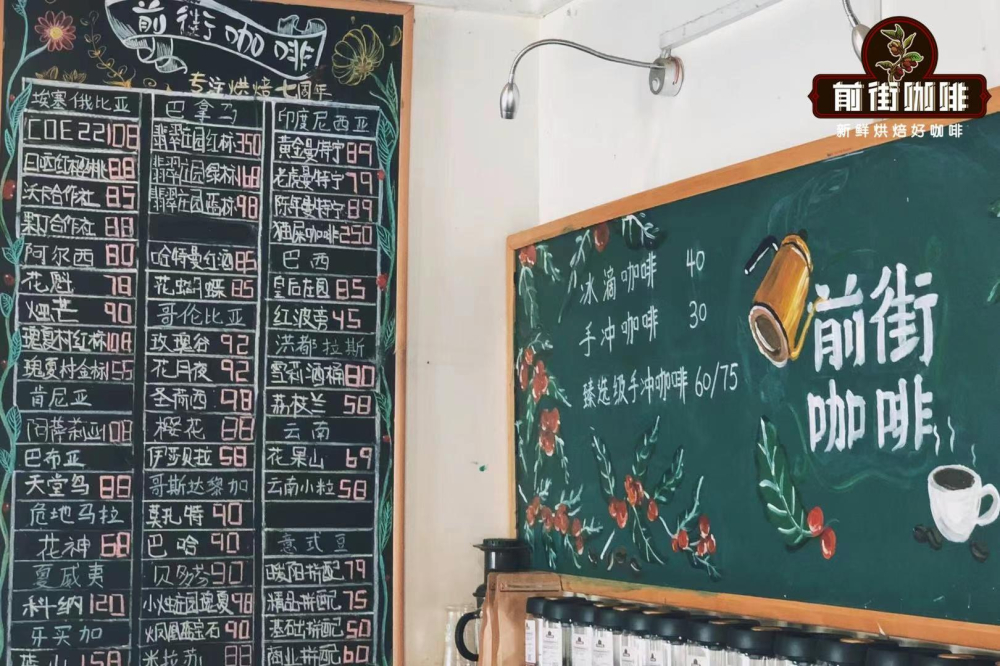
Many people have long heard of Blue Mountain coffee, yet because of its relatively high price they have never truly tasted it, while at the same time being full of curiosity about what it actually tastes like. Front Street takes this opportunity to talk about why Jamaican Blue Mountain coffee has been pushed to such an expensive position.
The development path of Jamaican coffee
Jamaica is a small island nation located in the Caribbean. In 1728, Sir Nicholas Lawes brought the first batch of coffee seedlings here from Martinique, and Jamaica's coffee-growing history has now spanned nearly three hundred years. The seedlings were initially planted in the St. Andrew area and later gradually expanded to the Blue Mountain Range. The Blue Mountain area has the highest peaks in the Caribbean region, and its uneven terrain has created rich and varied microclimates. It is shrouded in mist and clouds year-round, with abundant rainfall, a cool and pleasant climate, and fertile soil brought by volcanic ash, creating excellent conditions for crop growth. Locals also often interplant coffee trees with banana trees.
By the late eighteenth century, the number of coffee farms across Jamaica had surpassed six hundred, and by 1814 annual coffee production reached 15,000 tons. However, with the abolition of slavery, the coffee industry rapidly declined, large numbers of plantations were abandoned, and production shrank drastically. To revive the coffee industry, the Jamaican government passed legislation in 1891 and sent people to guide Blue Mountain growers in cultivation, management, and green bean processing in order to increase production. Once production rose, quality also needed to be guaranteed simultaneously, so in 1950 the government formally established the Jamaica Coffee Industry Board, CIB, authorizing it to improve and control the quality of Jamaican export coffee. It is precisely because of the CIB's strict oversight that Blue Mountain coffee was able to rank among the world's top coffees.
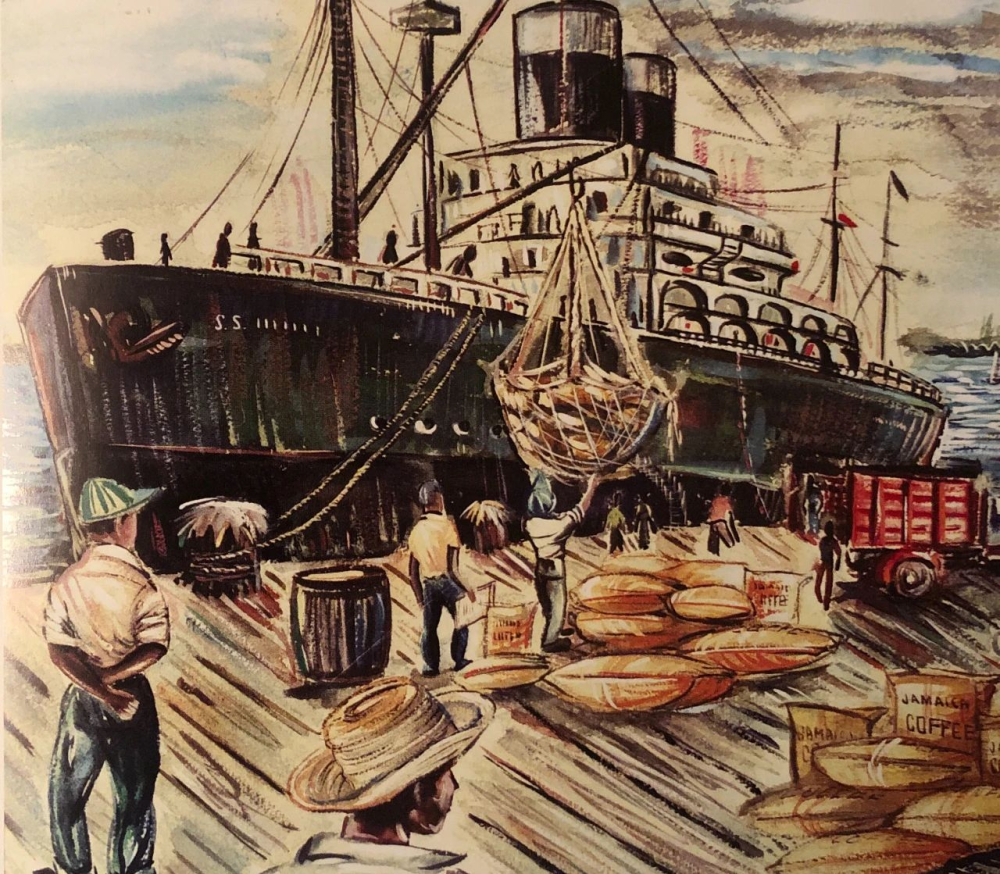
Before the 1960s, Jamaican coffee beans were quite favored in the specialty market, and prices remained at a relatively high level. In 1969, Jamaica suffered a severe hurricane disaster, and many industries fell into hardship; the coffee industry did not escape either. At this time, the Japanese company UCC extended a helping hand to the Jamaican coffee industry, providing financial support and introducing scientific ecological cultivation methods. To express its gratitude, the Jamaican government signed a 30-year contract with Japan, promising to supply 80% of the quota of high-quality Blue Mountain coffee to Japan, with the remaining 10% allocated to European and American countries.
During that period, Japan's domestic market did not fully consume all of this Blue Mountain coffee, and some beans were resold at high prices to other Asian countries and regions. Coupled with Japan's vigorous promotion, many coffee lovers in nearby areas also began chasing Blue Mountain coffee, such as in Singapore, South Korea, Taiwan, China, and Hong Kong, China. Around 2000, the "Blue Mountain craze" gradually spread to mainland China, which also created the situation of high Blue Mountain coffee prices and difficulty in obtaining even a single bean.
When the global economic crisis broke out in 2008, Jamaica began trying to sell Blue Mountain coffee to more countries. It happened that the agreement with Japan had also expired, so more quotas were allocated to other countries. According to media reports, in 2010 the Hangzhou Coffee and Western Food Industry Association was invited to visit Jamaica, during which a letter of intent for cooperation was signed as the sole general agent for Blue Mountain coffee green beans in China, and in 2011 the first batch of Blue Mountain coffee beans was officially purchased directly from Jamaica and entered the mainland China market.
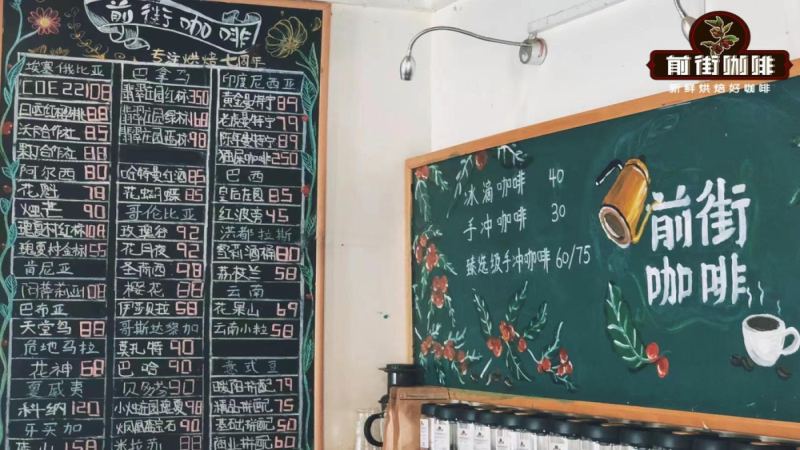
As China's coffee consumption demand continues to grow, many domestic merchants are now able to import Blue Mountain coffee beans directly from Jamaica, and consumers no longer need to pay exorbitant prices to drink it. For example, the Blue Mountain No. 1 coffee beans listed by Front Street sell for 158 yuan per 100-gram pack, while the in-store Blue Mountain pour-over is 60 yuan per cup.
Top-grade Jamaican Blue Mountain coffee
The Blue Mountain purchased by Front Street belongs to the highest grade, Blue Mountain No. 1, from the historically rich Clifton estate growing region, using Typica variety planted at a specific elevation of 910 meters to 1,700 meters. Green beans must reach screen size 17 or above, the proportion of defective beans must not exceed 2%, moisture content must be controlled at around 10% to 12.5%, and in cupping it must also present just the right acidity, sweetness, bitterness, body, and aroma.
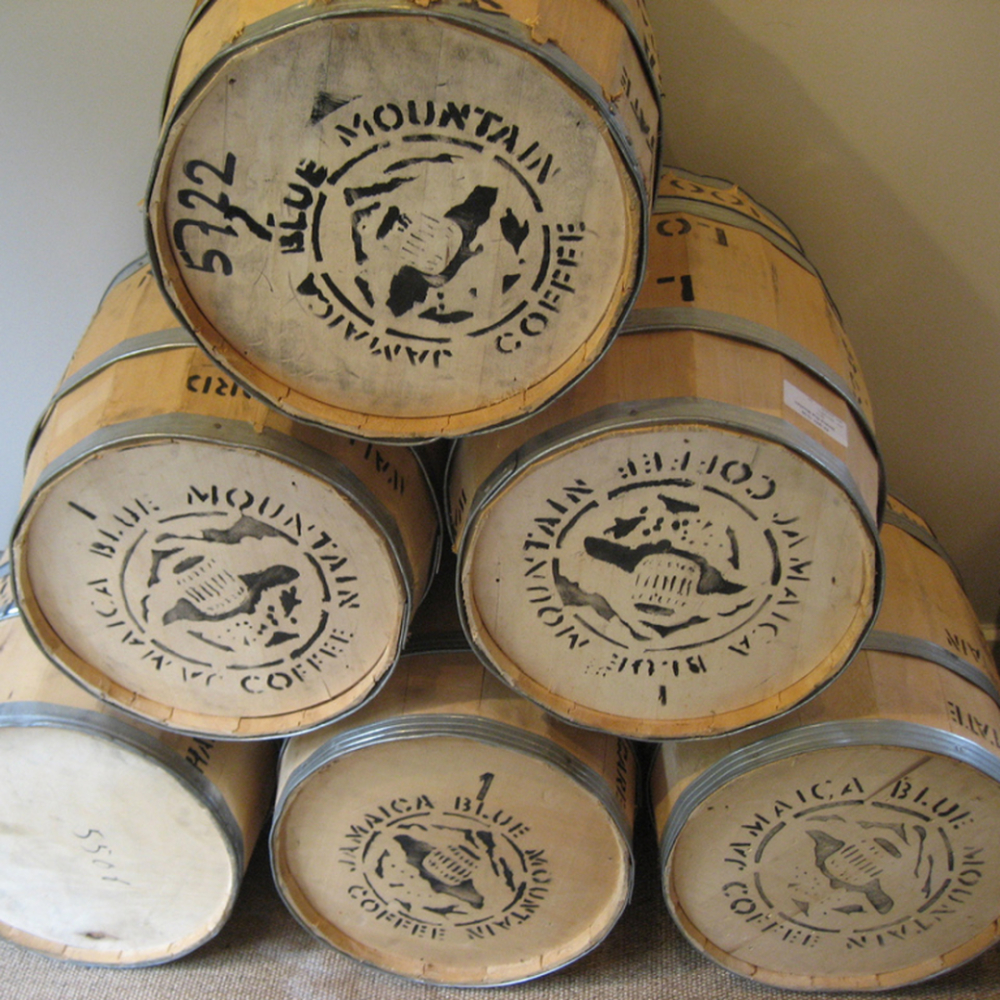
Front Street's store also displays a certified Clifton estate origin certificate, as well as the handmade wooden barrels used to transport Blue Mountain coffee. Unlike other countries, Blue Mountain coffee is the only coffee-producing region that uses wooden barrels to hold green beans, while other regions generally use burlap sacks. The advantage of oak barrels is that they can absorb and release internal and external moisture while blocking the escape of coffee aroma, allowing the beans to maintain a more stable moisture content and thereby making the roasting process more stable. The rainforest water frog logo on the barrel indicates that Clifton estate meets the "Sustainable Agriculture Standard" and has obtained Rainforest Alliance certification.
The so-called classic Blue Mountain flavor has rich aromas of chocolate and roasted nuts, soft acidity, and a full-bodied mouthfeel. To reproduce this classic taste, Front Street's roaster uses a medium-dark roast, which both highlights the roasted aroma and retains some acidity. Through cupping, Front Street tasted that Blue Mountain No. 1 has a balanced flavor of acidity, sweetness, aroma, bitterness, and body, so FrontStreet Coffee's baristas also formulate corresponding brewing approaches according to this flavor direction.
Before brewing, Front Street recommends choosing freshly roasted coffee beans. Especially for specialty beans like Blue Mountain No. 1, freshness largely determines whether the flavor will be full during brewing. Therefore, the beans shipped by Front Street are all freshly roasted within 5 days, so that when each customer receives them they are exactly at their peak flavor. We also hope everyone can finish them within the best-tasting period, so as not to let precious Blue Mountain coffee beans go to waste.
When brewing coffee beans with a mainly bitter profile, Front Street usually gives priority to the KONO dripper, with the aim of highlighting the coffee's full-bodied mouthfeel. The upper part of the KONO dripper allows the filter paper to fit more closely, and compared with the v60 dripper, its extraction method is mainly immersion-style, which can increase the overall concentration of the coffee and thus enhance body. Likewise, the KONO dripper is also suitable for brewing Brazil Queen estate coffee beans and Golden Mandheling coffee beans.
The parameters for brewing Blue Mountain No. 1 in Front Street's store are: KONO dripper, 88°C water temperature, 1:15 coffee-to-water ratio, 15 grams of coffee grounds, grind size (75% passing through a No. 20 standard sieve), three-stage extraction.
Front Street's procedure is to first rinse the KONO dripper, then align and place the filter paper so that it fits the dripper more closely. After pouring out the water in the server, add 15 grams of coffee grounds, bloom with 30 grams of water for 30 seconds, then begin pouring in a small stream in circles starting from the center until reaching 125 grams, at which point segmentation begins. When the coffee bed drops to the halfway point of the dripper, pour the second stage in the same manner until 225 grams, and after all dripping is complete, remove the dripper.
Blue Mountain No. 1 coffee has on the palate the sweet fragrance of dark chocolate, the sweetness of caramel, and a soft, elegant acidity. The various flavors are balanced, and the mouthfeel is smooth, rich, and full-bodied, presenting a very typical Blue Mountain flavor.
For professional coffee knowledge exchange and more coffee bean information, please follow Coffee Workshop (WeChat public account cafe_style)
For more specialty coffee beans, please add the private WeChat of FrontStreet Coffee, WeChat ID: qjcoffeex
The above content is compiled by CoffeeHunters, a coffee news website.


