







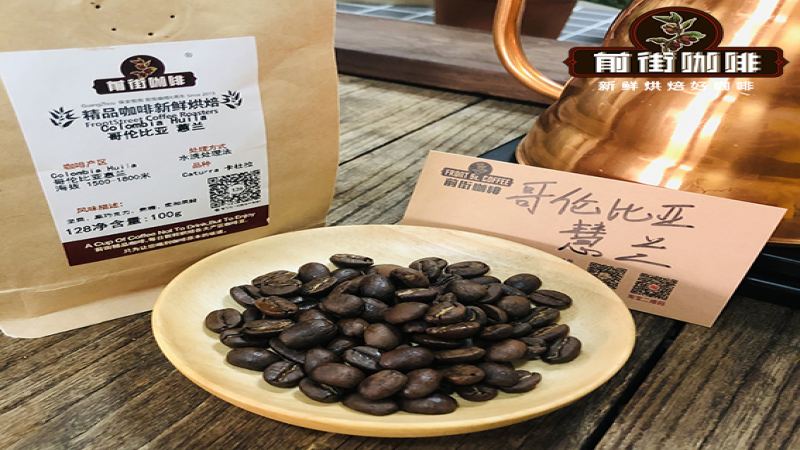
How does Huila coffee get its nutty and chocolatey flavor?
Washed Huila coffee comes from the mountains of southern Colombia, where high altitude, volcanic ash soil and distinct dry and rainy seasons produce a clean, balanced cup. Its sweetness leans toward nuts, chocolate and caramel rather than the bright acidity of Yirgacheffe or the heavy body of Mandheling, which makes it an approachable choice for people starting with pour-over.
The Huila growing area stretches across the Andes near the Nevado del Huila volcano and the Magdalena River, and sits closer to the equator and higher than Colombia's northern zones. Each coffee farm there benefits from mountain shelter and cool breezes. Brewing typically uses a medium-dark roast, a KONO dripper and medium water temperature to draw out the roasted aroma.
The Huila region of Colombia lies among the mountains of the south, where high altitude, volcanic ash soil and a climate with distinct dry and rainy seasons together shape the clean, balanced and gentle character of its washed coffee. For those just getting into pour-over coffee, washed Huila beans are often the friendliest entry-level choice—they are not as bright and flamboyant in acidity as Yirgacheffe, nor as heavy and full-bodied as Mandheling, but instead present the sweetness of nuts, chocolate and caramel in a warm, gentle manner. Front Street Coffee lists it as its top recommended everyday bean, using a medium-dark roast paired with a KONO dripper and medium water temperature for extraction, allowing the bean's complex fruity juice-like quality and roasted aroma to be fully released. This article will break down the source of washed Huila coffee's flavor in full, from the growing environment of the region, variety composition, picking and processing, to brewing parameters.
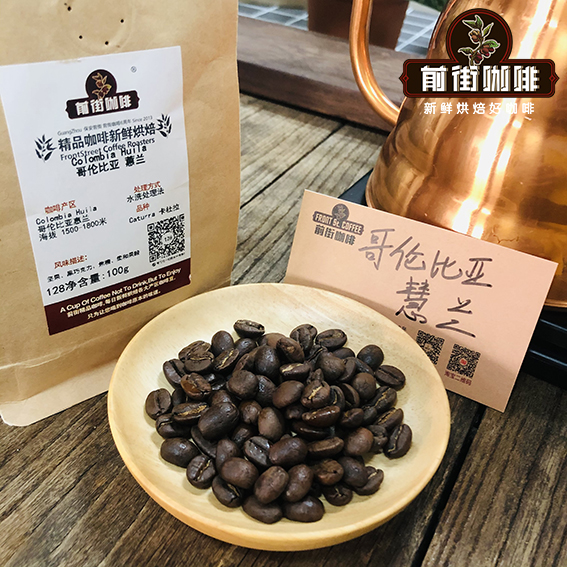
When Front Street recommends beans to friends just getting into pour-over coffee, Colombian Huila washed coffee beans are almost always the first to be mentioned. The reason is simple: Yirgacheffe's acidity is bright and jumpy, while Mandheling's body is on the heavier side; by comparison, Colombian coffee beans are especially friendly to beginners. Under traditional processing methods, the cleanliness, balance and gentleness it presents make for a very tender experience for those new to pour-over. And behind this gentle flavor lies not only the care the growing environment gives the coffee trees, but also the meticulous care people put into the bean-extraction process.
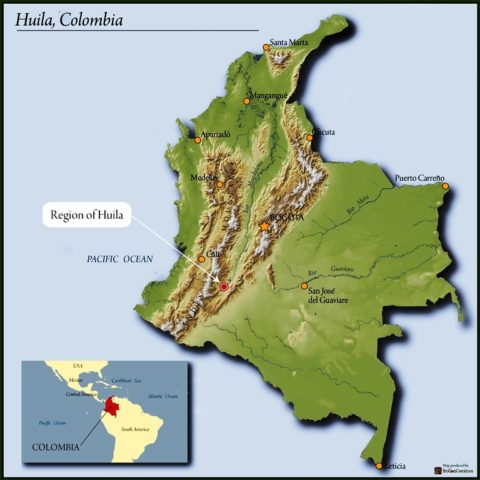
Huila is located in southern Colombia, a hilly area surrounded by mountains. The mountains block the cold wind for the coffee trees and send cool breezes to dispel the heat; Colombia's major rivers also flow through here, so it can be said that nature has arranged quite ideal growing conditions for the coffee trees here. It is precisely this superior geographical environment that makes Huila one of Colombia's most renowned specialty coffee regions.
The Huila production region stretches across the Andes, and within the province are famous sights such as the Nevado del Huila volcano and the Magdalena River. The coffee-growing areas are close to the equator, and at higher altitudes than in the north, so overall the fruity acidity tends to be more prominent and brighter. The southern growing belt has distinct dry and rainy seasons, with the dry season lasting from June to September, after which the coffee trees flower; the rainy season then runs from October all the way to May of the following year, and the harvest usually begins in April each year and ends around June.
Most of Huila's coffee trees are planted on slopes above 1,500 meters, where the volcanic ash soil is rich in nutrients. The temperature difference between day and night brought by high altitude, together with the mineral content in the volcanic soil, means the coffee beans produced often carry a captivating complex fruity juice-like quality, roasted nut aroma and caramel-like sweetness.
Colombia is vast, and its coffee varieties are quite rich as well. Besides the high-quality varieties common in Central America such as Caturra, Bourbon and Typica, there are also disease-resistant varieties that Colombia has bred itself, such as Castillo and Tabi, as well as the variety named after the country, "Colombia." As the pursuit of variety diversity grows, some estates have also begun introducing popular varieties such as Geisha.
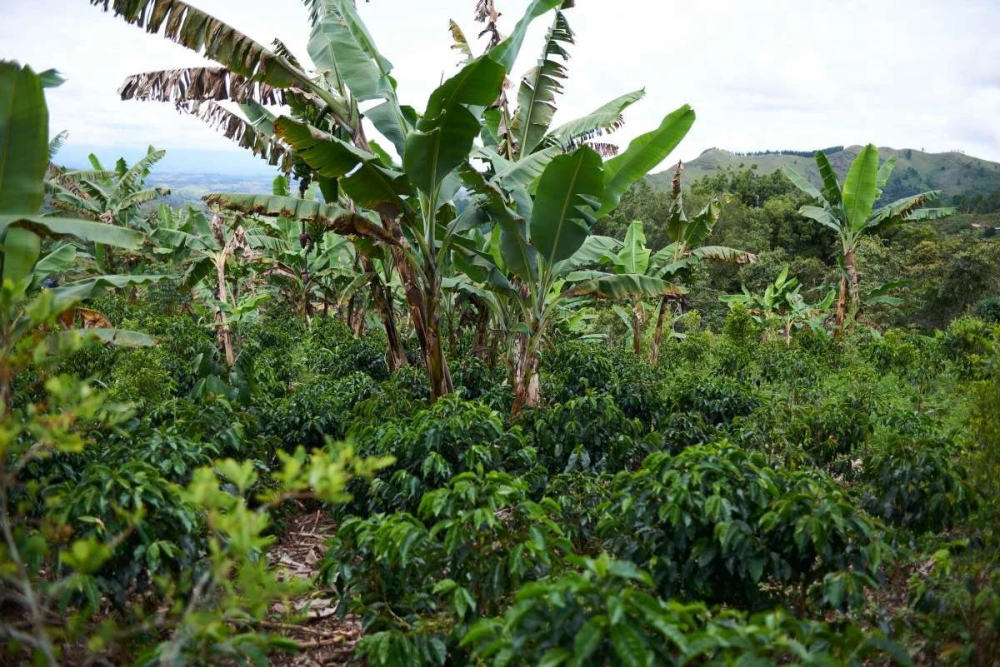
On these hills, people insist on purely hand-picking. One reason is to protect the growth of the coffee trees and the integrity of the fruit; another is that only fully ripe fruit is picked, so that in the subsequent bean-extraction processing the overall quality of the coffee beans can be better guaranteed, making the flavor cleaner and the sweetness more prominent.
The technique of using water tank fermentation to obtain green coffee beans is also a practice passed down through generations of Colombian coffee farmers. The water used in the Huila region is all natural mountain spring water, which contains more minerals than river water and allows the coffee beans to develop cleaner acidity and a fresh, sweet taste during fermentation.
Colombia is abundant in water resources, and most coffee is washed processed. Family-run farms usually have specially made green bean processing machines; the harvested coffee cherries are poured in, which not only removes the skin and pulp but also removes most of the mucilage using only a very small amount of water. The parchment beans with a small amount of remaining mucilage then go into a small tank or container—possibly a tiled tank—and are left overnight to ferment, allowing the residual mucilage to loosen, then the next day they are rinsed clean with fresh water and finally spread out in the sun to dry to the target moisture content. The washing step greatly reduces the defect rate, preserves the bean's own flavor, and also brings higher cleanliness.
In terms of roasting, to allow this Colombian coffee bean to better show its chocolatey sweetness, Front Street uses a medium-dark roast. A medium roast retains a bit of fruity acidity, while the caramelization process also brings washed Huila a roasted nut and caramel-like aroma.
Considering that the Huila everyday bean uses a medium-dark roast, with a flavor profile leaning toward the rich, full-bodied tone of nuts and chocolate, deepening the roast makes the coffee beans more porous and the coffee grounds more absorbent. To avoid over-extraction, Front Street uses a medium grind and medium water temperature, paired with a KONO dripper for extraction.
Brewing parameters: KONO dripper, 90°C water temperature, grind size with a 75% passing rate on a standard No. 20 sieve, 1:15 coffee-to-water ratio, 15 grams of coffee, three-stage extraction
Pour the coffee grounds into a V60 dripper, wet the coffee bed with twice the coffee's weight in water to form a dome and let it bloom for 30 seconds, then pour in a thin stream in a circular motion from the inside out until reaching 125 grams, then pause; when the coffee bed drops to the halfway point of the dripper, continue pouring the third stage with the same thin stream until reaching 225 grams, until all the coffee liquid has filtered through, then remove the dripper. The time is about 2 minutes.
This Colombian Huila everyday bean has an obvious roasted aroma of chocolate, nuts and caramel on entry, smooth and sweet, with a moderate body, a clean mouthfeel, and as the temperature drops you can sense a pleasant, gentle acidity.
For professional coffee knowledge exchange and more coffee bean information, please follow Coffee Workshop (WeChat public account cafe_style)
For more specialty coffee beans, please add the private WeChat of Front Street Coffee (FrontStreet Coffee), WeChat ID: kaixinguoguo0925
The above content is compiled by CoffeeHunters, a coffee news website.


