







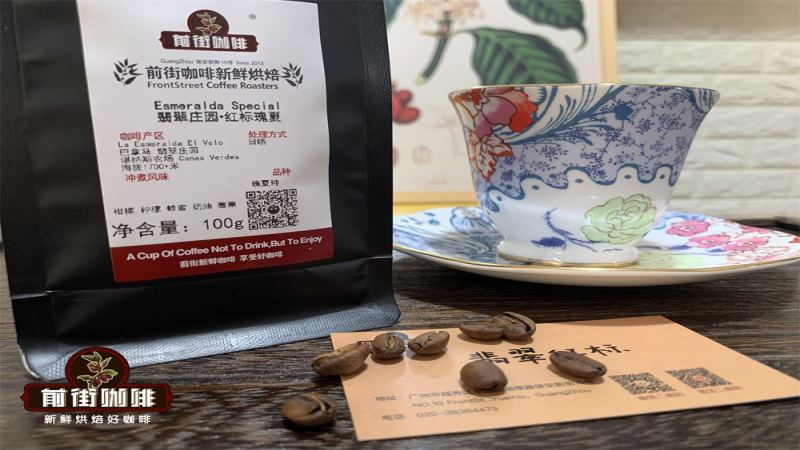
How should geisha coffee be tasted from hot to cold?
Geisha coffee should be tasted sequentially from high temperature to low temperature, finishing the cup within about 20 minutes. Smelling the aroma comes first, then tasting the flavor, then checking for defects, then judging portion and temperature. Leaving the coffee too long amplifies unpleasant flavors and weakens the overall mouthfeel, so the tasting window is short.
Panama geisha coffee from Hacienda La Esmeralda set the benchmark after the variety rose to fame there, and its price placed it among the most expensive coffees, with a reputation that overshadowed Blue Mountain. Ethiopia, the genetic homeland of geisha, produces a distinctly different flavor profile. Microclimates explain why geisha grown elsewhere, including Yunnan, has struggled to match Panama.
Since Geisha coffee rose to fame at Panama's Hacienda La Esmeralda, it has firmly secured its place as one of the most expensive coffees in the world, with a reputation that even surpasses Blue Mountain. Countries around the world have rushed to cultivate Geisha, including Yunnan in China, but the flavor has consistently struggled to match Panama's—and behind this lies the加持 of microclimates. So how should such an expensive Geisha be enjoyed to live up to its price tag? Front Street Coffee believes that tasting Geisha requires experiencing it sequentially from high temperature to low temperature, finishing within 20 minutes, progressing layer by layer from smelling the aroma, tasting the flavor, identifying defects, to portion and temperature. At the same time, Ethiopia, as the genetic homeland of Geisha, produces a Geisha that is entirely different in flavor from Panama Geisha. This article will also sort out the differences between the two, along with Front Street's roasting and brewing recommendations.
Professional coffee knowledge exchange For more coffee bean information, please follow Coffee Workshop (WeChat public account: cafe_style)
After Geisha coffee made its name at Panama's Hacienda La Esmeralda, its price skyrocketed, placing it among the world's most expensive coffees, with a fame that even overshadowed Blue Mountain coffee. Today, Geisha cultivation can be seen from all over the world to Yunnan, China. However, Geisha from other regions has consistently struggled to match Panama's flavor, and Panama's unique microclimate plays an indispensable role in this. In other words, Hacienda La Esmeralda's Geisha has always been imitated but never surpassed.
Faced with such an expensive Geisha, how should one drink it to avoid wasting it? Front Street Coffee's suggestion is that when tasting, one should progressively experience it from hot to cold, so as to capture the layers of flavor the coffee exhibits across different temperature ranges. Of course, one should not take too long—it's best to finish within about 20 minutes, because if left too long, the unpleasant flavors in the coffee will be amplified, and the overall mouthfeel will be compromised. So how exactly should this uniquely flavored and pricey coffee be tasted? Front Street believes one can approach it from the following aspects:
1. Smell the aroma ——The coffee aroma is full and rich, giving a fresh and pleasant sensation.
2. Taste the flavor ——Balanced, slightly sweet, mild bitterness, no astringency, clean aftertaste, lingering finish.
3. No defects ——No defective flavors such as cardboard, diesel, stale vinegar, scorched, or smoky (refer to the flavor wheel).
4. Appropriate portion, suitable temperature. A standard cup of coffee has a full aroma and a delicate, smooth mouthfeel when hot; as the temperature drops to room temperature, although the flavor and mouthfeel may change, no defective flaws will appear. The consistency between hot and cool is good, and the flavor expression is stable.
Geisha Coffee
Ethiopia is the birthplace of coffee, with extremely rich varietal resources. Geisha was originally discovered in a forest in Ethiopia. At the time, it had low yield, tall plants, and was difficult to harvest, far less popular than Caturra and Catuai, so it was often used as a windbreak tree. In 1931, Geisha was introduced from Geisha Mountain in southwestern Ethiopia to coffee research institutes in Kenya and Tanzania, and then made its way to Uganda and Costa Rica. By the 1960s and 1970s, Don Pachi estate introduced Geisha from Costa Rica to Panama for cultivation. In 2004, Panama's Hacienda La Esmeralda entered Geisha in the Best of Panama (BOP) competition and won first place, defeating consistently winning varieties such as Bourbon, Caturra, Catuai, and Typica, and subsequently went on to win gold in the 2005, 2006, and 2007 Panama National Treasure Bean cupping competitions.
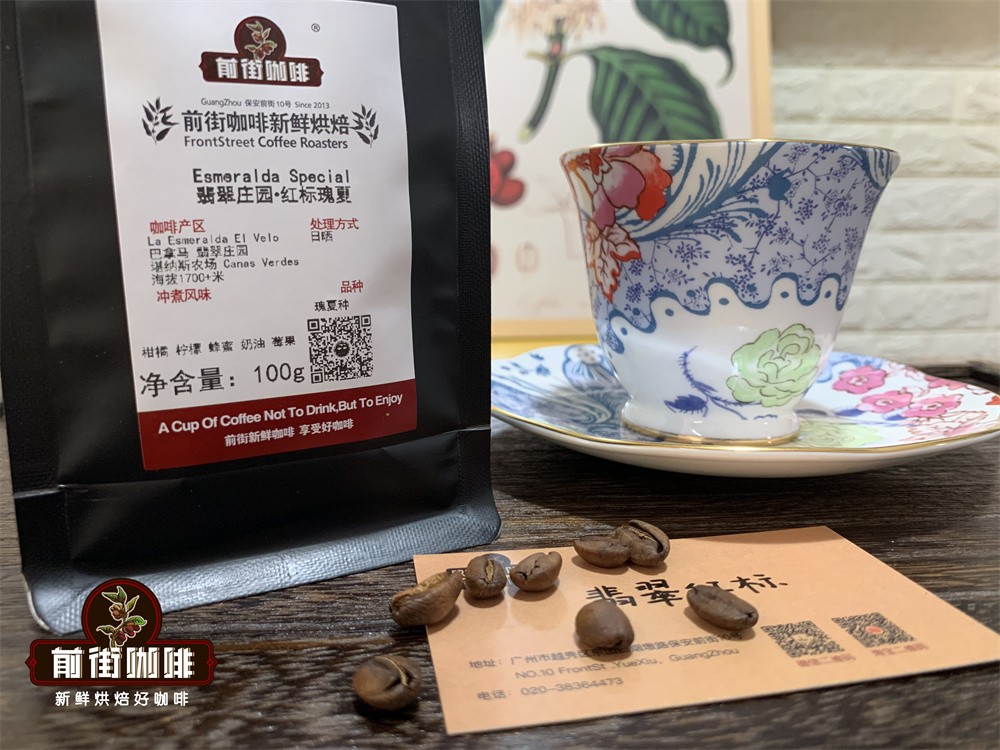
Ethiopian Geisha Coffee
Although Ethiopia is a genetic treasure trove of coffee, the key to the Geisha variety's ability to present delicate and elegant flavors lies in its specific growing environment. Geisha is quite "picky" about growing conditions, requiring high altitudes, cloud cover or abundant shade trees, and fertile soil to produce rich floral aromas, delicate fruit acidity, and a tea-like sweetness in the finish. Ethiopian Geisha coffee is divided into three branches: Gori Gesha (GG), which replicates the genetic diversity within the Gori Gesha coffee forest; Illubabor Forest 1974 (IF), discovered during a 1974 expedition to the Illubabor forest and later bred by the Ethiopian research center as a resistant variety; and Gesha 1931 (G31), which combines varieties from different forests and is very similar to Panama Geisha, selected through observation of plant morphology, bean appearance, screen size, and cupping flavor.
The first two Geisha coffee beans are genetically completely different from Panama Geisha, while Gesha 1931, according to official descriptions, is closest to Panama Geisha in both plant shape and cupping performance, but in reality the degree of genetic consistency is very small. Therefore, the flavors of Ethiopian Geisha and Panama Geisha can be said to be entirely different. As the birthplace of coffee, Ethiopia has coffee from each producing region with its own distinctive characteristics, and Front Street alone has brought in over a dozen Ethiopian coffees.
Panama Geisha Coffee
The most renowned in Panama is undoubtedly Hacienda La Esmeralda's Geisha coffee, and the Boquete producing region where Hacienda La Esmeralda is located also contains numerous Geisha estates producing high-quality specialty coffee, such as Elida Estate and Kotowa Duncan Estate. Panama borders Costa Rica and Colombia, and its east-to-west topography allows cold air currents to flow through the central mountain range and converge at areas above 1,900 meters in elevation, thereby forming a very unique microclimate in the Boquete and Piedra de Candela regions, with temperatures and rainfall highly suitable for plant growth. This microclimate zone is precisely Panama's main coffee producing area. In addition to climate, the land surrounding this region is nutrient-rich, and the fertile soil provides perfect cultivation conditions for coffee growth, shaping a large number of unique, high-quality coffees. The various factors of the Panama region allow Geisha coffee beans to develop delicate and elegant fruit acidity as well as pronounced floral aromas, and it is precisely because of this that Panama's Geisha coffee has become popular worldwide.
Geisha coffee has excellent flavor, and in order to let more coffee lovers taste the deliciousness of Geisha, Front Street has listed the washed Boquete Geisha coffee from the Boquete producing region as one of its staple beans.
Costa Rican Geisha Coffee
Costa Rica has been growing coffee for nearly two hundred years. As an important economic crop for the country, the coffee industry is very mature, and today there is no shortage of newly built estates. These estates mostly have the resources and willingness to grow the Geisha variety, the most famous of which is the Geisha coffee beans from Elida Estate, such as Front Street's Costa Rica Mirazu Geisha blend coffee.
Front Street roasting and brewing parameters:
In order to highlight this bean's characteristics and aroma, Front Street uses a light roast, as this roast level can better bring out the bean's inherent qualities, while too dark would deplete the floral aroma and fruit acidity. Of course, this also needs to be adjusted according to the characteristics of the coffee beans and the roaster's understanding of the beans themselves. Through cupping, Front Street found that Panama Geisha coffee beans have a very rich layering, so it is suggested to slightly lower the coffee concentration during brewing to make the layers of Geisha coffee flavor clearer. Dripper: Hario V60, Water temperature: 91°C, Dose: 15g, Coffee-to-water ratio: 1:15, Grind size: 80% passing through China standard No. 20 sieve.
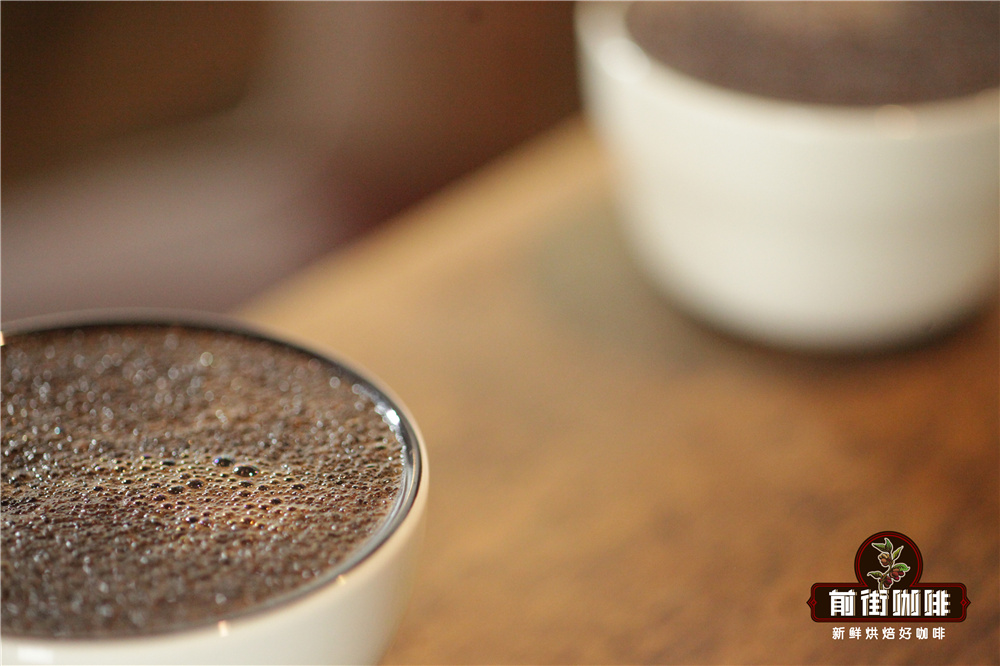
Appreciating Coffee
Appreciating coffee should be done with careful tasting to appreciate its essence. No matter how the coffee is brewed, there is no need to rush to finish it in one gulp. First smell the coffee's original aroma, then take a small sip to try the original taste, then add an appropriate amount of sugar according to personal preference, and stir with a small spoon. While the coffee is swirling from stirring, slowly add creamer, letting the oils float on top of the coffee—on one hand, this can keep it warm, and on the other hand, the heat of the coffee can evaporate the creamy aroma.
A freshly brewed cup of coffee has three stages for appreciation, generally divided into the front, middle, and back stages.
The front stage refers to tasting the mouthfeel of the coffee at around 85°C shortly after brewing. Good coffee should possess aroma, purity, and richness, with a smooth entry; The middle stage refers to the lingering aroma the coffee gives off at medium temperature. According to experts, coffee at medium temperature in the mouth can be divided into over 100 kinds of aromas, varying from person to person; The back stage refers to the residual sweetness after the coffee has cooled.
Step One: Visual Observation
As for the appearance of a cup of coffee, one can scoop a spoonful to observe. Good coffee should be clear, not cloudy, and lustrous; if it is espresso, it should have a layer of reddish-brown crema. Too dark a coffee color represents over-extraction, too light a coffee color represents under-extraction, an off-white color is caused by over-long extraction, and too little crema may indicate insufficient coffee freshness, too coarse a grind, or insufficient tamping pressure, among other factors.
Step Two: Smelling
The second level of flavor appreciation begins with grinding the coffee. At this point, volatile aromatic compounds are released in large quantities. To appreciate the dry aroma of coffee grounds, it is best to use the "far and near" method—that is, constantly changing the distance between the nose and the coffee grounds.
Because the lightest molecular weight floral, herbal, and fruity acidic aromas—what the cupping world commonly calls "enzymatic" flavors—are highly volatile and released first; next to be released are medium molecular weight caramel, nut, chocolate, and almond notes, but their diffusion distance is shorter than the lighter molecular weight ones, so one needs to move slightly closer; finally, high molecular weight pine resin notes, mercaptans, and roasted aromas emerge. Since they are the heaviest molecules with the shortest diffusion, these aromas mostly appear only at medium-dark roasts, and one needs to bring the face and nose close above the coffee grounds to more easily capture them. When appreciating coffee, constantly changing the distance between the nose and the coffee grounds makes it easier to smell the diverse aromas of low, medium, and high molecular weights.
However, some volatile aromatic compounds cannot vaporize at room temperature and require brewing with hot water to release their aroma. This is the wet aroma of brewed coffee, which is the third level of coffee flavor appreciation. When appreciating, likewise adopt the alternating far-and-near method to smell the aroma. At this point, the coffee's floral-fruity acidity, caramel notes, as well as defective notes like medicinal, carbonized, woody, and earthy, are more obvious and easier to detect in the wet aroma than in the dry aroma.
Step Three: Tasting
Dry aroma and wet aroma are volatile aromas. As for the water-soluble flavors of brewed coffee—the fourth level of flavor—these need to be captured by the taste buds on the tongue. When coffee enters the mouth, the taste bud receptor cells for sour, sweet, bitter, and salty immediately capture the water-soluble flavor molecules. In principle, all areas of the tongue can perceive the four tastes of coffee, but the tip of the tongue is more sensitive to sweetness, the sides of the tongue to sourness and saltiness, and the base of the tongue to bitterness. These four tastes mutually restrain and compete with one another; if one taste is too prominent, it will suppress or enhance the expression of the others, and may even affect the mouthfeel.
Tasting coffee requires not only drinking but also smelling. Although there is no absolute formula for judging coffee as good or bad, Front Street believes that with more drinking, more tasting, and more practice, one will certainly be able to truly experience coffee culture and experience the local customs of coffee origins.
Front Street Coffee Brewing Recommendations:
Regarding coffee brewing, Front Street has always believed that the freshness of coffee beans has a great relationship with coffee flavor. Therefore, the coffee beans shipped by Front Street Coffee (FrontStreet Coffee) are all within 5 days of the roast date. Front Street's roasting philosophy is "freshly roasted good coffee," so that every customer who places an order receives the freshest coffee when they get it. The resting period for coffee is about 4-7 days, so when the customer receives it, it is at its optimal flavor.
For friends who need ground coffee, Front Street offers a warm reminder: once coffee beans are pre-ground, there is no need for further resting, because during transport, the pressure from carbon dioxide inside the packaging can also make the coffee flavor rounder, so upon receiving the ground coffee, one can immediately brew a cup and drink it. However, ground coffee needs to be brewed promptly, because after ground coffee contacts air it oxidizes relatively quickly—that is, the coffee flavor will dissipate relatively quickly, and the coffee flavor will not be as good. Therefore, Front Street recommends buying whole beans and grinding fresh before brewing, so as to better taste the coffee's flavor.
For more specialty coffee beans, please add the private WeChat of Front Street Coffee (FrontStreet Coffee), WeChat ID: qjcoffeex
The above content is compiled by CoffeeHunters, a coffee news website.


