







What Temperature Should You Make Americano At?
Hot Americano tastes right served at 75 to 80 degrees Celsius, according to tests comparing the same coffee at 60, 70, 80 and 90 degrees. A dark-roast espresso blend and a light-roast single-origin were each brewed as Americano, and the medium-high range held the most aroma and balance before bitterness took over as the cup cooled.
Temperature changes how bitterness registers. As an Americano drops from hot to warm to cool, the bitterness becomes more pronounced, which answers the question of how bitter is americano over time. Preheating the cup slows that cooling and extends the window for the flavor to stay at its peak, so the drink holds its character longer.
Coffee enthusiasts have different preferences for drinking temperature, from scalding hot to ice cold, but the actual impact of temperature on flavor is often overlooked. This article focuses on hot Americano, a category that draws much attention in winter, and explores the changes in aroma and mouthfeel at different serving temperatures. Front Street Coffee uses a dark-roast espresso blend and a light-roast single-origin bean to make Americanos respectively, comparing them one by one at four temperatures: 60°C, 70°C, 80°C, and 90°C, in an attempt to find the range with the best flavor performance. The test also focuses on the evolution of taste as the coffee cools, and the phenomenon that bitterness intensifies as the temperature drops. The final conclusion points to serving at a medium-high temperature of 75–80°C, and recommends using preheated cups to extend the optimal tasting time.
Everyone has their own standard for what temperature coffee should be drunk at. Some people love hot drinks at seventy or eighty degrees, while others prefer iced coffee close to zero degrees; as long as it is acceptable to drink, any temperature is fine. However, in daily life we divide temperatures into just a few categories: scalding, hot, cold, and iced. Aside from the two extremes of drinking it hot and iced coffee, there are actually not many people willing to drink coffee that is lukewarm, cooled, or even cold—unless it is for a cupping session to evaluate bean quality.
Front Street has always felt that the most wonderful thing about coffee is this: the same cup, from hot to warm and then left to cool, brings a different taste experience at every stage. Of course, the premise is that the coffee itself is of good quality; if the beans are badly roasted or the brewing fails, then it will probably be hard to swallow from beginning to end.
In the cold of winter, hot Americano, which usually has little presence, suddenly becomes the focus. Although its sales still cannot catch up with iced Americano, at least it is no longer forgotten. As order rates rise, some observant friends have noticed a phenomenon: the hot Americanos made by different cafés seem to have different temperatures. Some are around 60°C, while others are as high as 80°C or even hotter. Which temperature range can bring hot Americano’s flavor and mouthfeel to their best?
To obtain a relatively objective answer, Front Street prepared two beans with very different styles—one is a full-bodied dark-roast espresso blend, and the other is a medium-light roast single-origin bean that highlights fruity acidity—and then set four serving temperatures (60°C, 70°C, 80°C, 90°C) for comparison in sequence, keeping other parameters and operational details as consistent as possible. Without further ado, let’s begin.
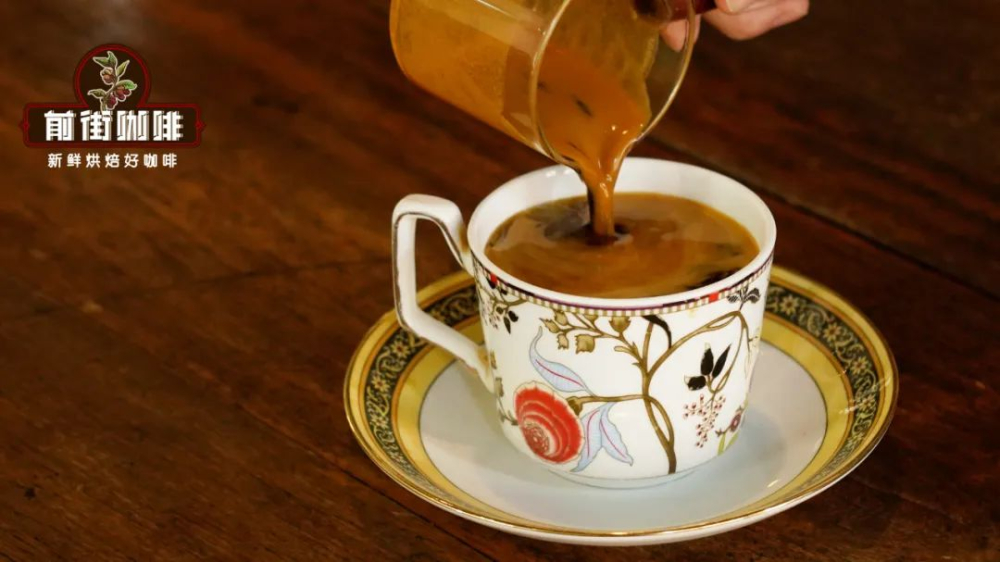
The espresso extracted from the dark-roast blend had a rich crema, and all four finished cups smelled of hazelnut and caramel sweetness. The Americanos at 60°C and 70°C were at moderate temperatures and could be drunk immediately, so the crema was best preserved during tasting. Comparing the two, the 70°C cup was more prominent in flavor, with distinct layers of creamy chocolate, nuts, and caramel biscuit-like richness, and the sweet aftertaste came through more clearly. The 80°C coffee was a bit hot on first sip, so it could only be tried in small mouthfuls; at first it was not particularly impressive, but as the temperature slowly dropped, the layered changes in aroma and sweetness became the richest of all.
After sitting indoors for twenty minutes, the 60°C cup had dropped below 45°C, the aroma had clearly weakened, bitterness began to emerge, and its golden tasting window was the shortest. As for the 90°C version, because water close to boiling was used, it took a full fifteen minutes after preparation before one dared to take a big sip; by then the crema had almost completely disappeared, most of the aroma had escaped, leaving only a burnt bitterness mixed with a hint of dullness.
Hot Americano aroma and mouthfeel ranking: 70°C > 80°C > 60°C > 90°C
Switching to the light-roast single-origin bean, the 80°C cup was the most surprising. As it cooled to around 70°C, it released delicate floral notes and a clean sweetness similar to raisins. Similar to the dark-roast group, the 90°C hot Americano was dominated overall by acidity, with the flattest aroma. The 60°C and 70°C cups were mediocre; although there were no unpleasant off-flavors, because the starting temperature was low and they cooled too quickly, the optimal drinking window was correspondingly shortened.
Hot Americano aroma and mouthfeel ranking: 80°C > 70°C > 60°C > 90°C
From the two sets of tests combined, it can be seen that whether using light-roast or dark-roast beans, it is not recommended to use water above 80°C to make hot Americano. Too high a temperature not only easily scalds the mouth, but when the scorching liquid contacts the tongue, it also suppresses the sensitivity of the taste buds, making the sense of taste dull. Moreover, coffee that is too hot requires a longer waiting time before it can be drunk, and during this period volatile aromatic substances continuously dissipate, so the flavor naturally suffers greatly.
In addition, people who often drink pour-over black coffee should deeply understand this: coffee liquid presents very different flavor directions at different temperatures, and bitterness becomes more prominent as the temperature decreases, especially after it drops below normal human body temperature. Therefore, in addition to paying attention to the optimal tasting temperature, Front Street also considers that most people need more than twenty minutes to finish a cup of coffee, so when serving hot Americano, it tries to use preheated cups and controls the temperature within the medium-high range of 75–80°C. Otherwise, before a cup of coffee has been drunk even a few sips, it has already gone completely cold; let alone savoring it carefully, even comfortably finishing the whole cup becomes a problem.
The above content is compiled by CoffeeHunters, a coffee news website.


