







How Are Geisha Coffee Beans Graded at Gesha Village?
Ethiopia's Gesha Village Coffee Estate sorts its geisha coffee beans into Auction, Gold, Red, Green and Chaka lots, a separate system from Panama's Hacienda La Esmeralda. The estate was founded after Adam Overton and Rachel Samuel met Willem Boot in 2009, then searched the Bench Maji forest near South Sudan, at 1,700 to 2,100 meters.
Each lot carries a different position in the estate's coffee bean grades. Auction lots sit at the top, followed by Gold, Red and Green, with Chaka filling out the range. The surrounding Gera coffee forest, where wild Geisha trees were found, supplies the genetic material, and plot-by-plot management keeps the separation clear from harvest through export.
After Geisha coffee became popular in the specialty market, Panama's Hacienda La Esmeralda and Ethiopia's Gesha Village Coffee Estate are often confused by enthusiasts. From the perspective of Front Street Coffee, this article sorts out the founding background, estate scale, and plot management methods of Gesha Village, focusing on explaining the grading logic and respective positioning of the Auction, Gold, Red, Green, and Chaka lots, and includes the origin information, roasting approach, cupping, and pour-over parameters of Front Street's currently available Gesha Village Red, Green, and Chaka, helping readers understand the Gesha Village system at once.
After Geisha coffee became popular in the specialty coffee circle, it attracted a large number of coffee enthusiasts. At Front Street's shop, beginners often come in asking whether there are Geisha coffees to recommend. Many people know that Panama's Hacienda La Esmeralda has the most famous Geisha, and its price is also determined by the estate's internal lot grading. But Front Street also has a Geisha coffee bean from Ethiopia's Gesha Village Coffee Estate, which likewise uses the estate's internal grading system. Because of this, Geisha from the two origins is often mixed up. Below, Front Street will systematically sort out the relevant information about Gesha Village coffee beans.
The Origin of Gesha Village Coffee Estate
The story begins in 2007. Documentary director Adam Overton and his photographer wife Rachel Samuel were filming a coffee-themed documentary for the Ethiopian government at the time. During that period, they came into contact with the Gera coffee forest in the Bench Maji area, which gave rise to the idea of establishing their own coffee estate and brand.
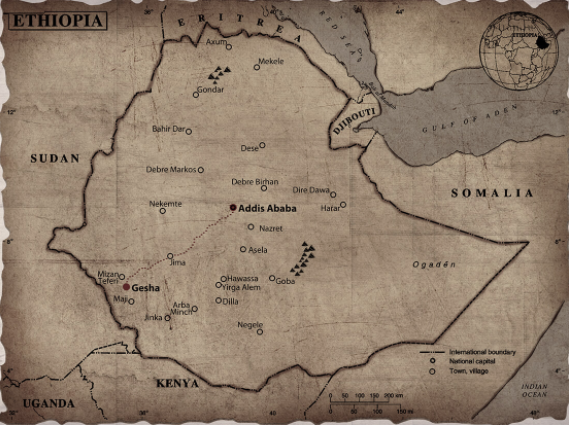
In 2009, they met Willem Boot, the owner of Finca La Mula and a BOP judge, and this encounter became an important turning point. Willem Boot suggested returning to Ethiopia to look for the birthplace of Geisha, so they went to the area of Ethiopia closest to South Sudan—Bench Maji, at an altitude of about 1,700-2,100 meters. Many local places are called Gesha Village, and this area is also considered the most likely zone for finding original Geisha. Adam followed Willem Boot to explore the forests around the estate and found many wild tree varieties in a jungle wrapped in dense forest, among which the most surprising was wild Geisha.
Only later did they learn that this was the Gori Gesha forest, the place where the Geisha variety was first discovered. They collected seeds from native Geisha trees, selected them, and planted them in Gesha Village, where they established a coffee estate named Gesha Village Coffee Estate, which is also the origin of the Ethiopian Gesha Village coffee beans currently on Front Street's coffee list.
Gesha Village Coffee Estate
This Ethiopian Gesha Village coffee bean from Front Street has performed actively in the specialty coffee market in recent years and has a good reputation, so Front Street also brought it into the shop for coffee fans to taste.
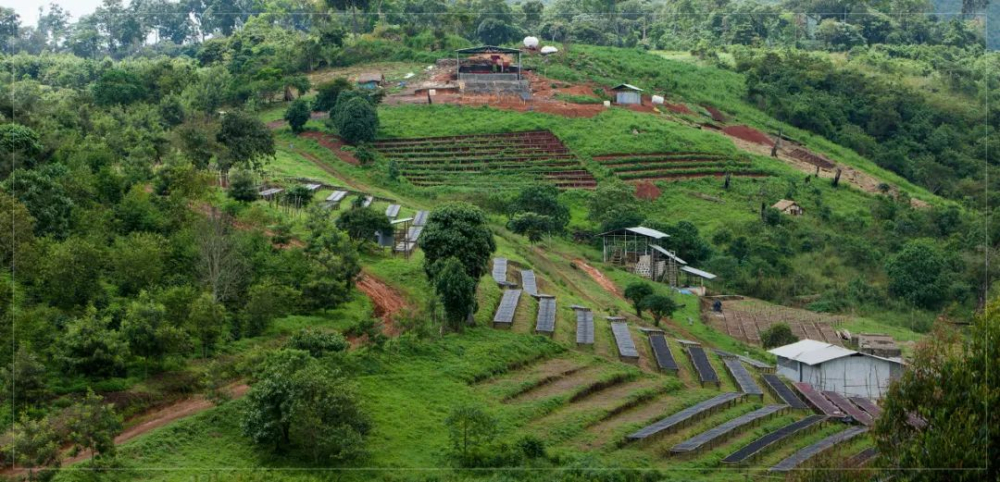
According to Front Street's understanding, Gesha Village is not a small estate but a large coffee estate with a total area of 471 hectares, producing coffee with a bright and clean flavor.
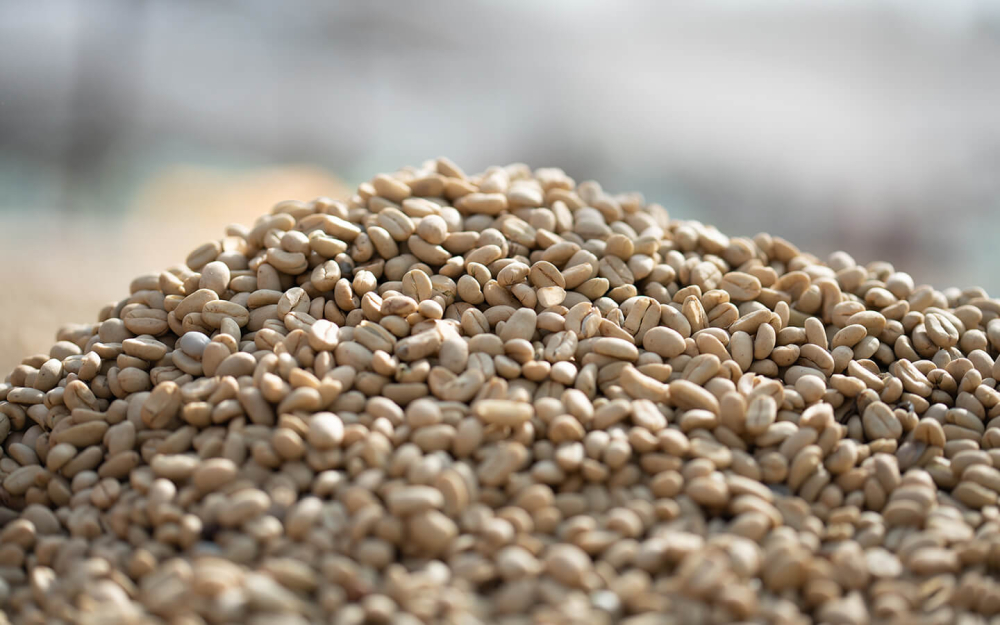
The estate is also divided into 8 plots, each with a unique microclimate and different soil characteristics. From the beginning, the estate owner continuously screened coffee varieties, ultimately determining suitable seeds and planting methods, and then confirming through cupping. Therefore, corresponding grades were also assigned to Gesha Village coffee beans, namely the Gesha Village Gold, Red, and Green coffee beans in Front Street's shop.
How Does Gesha Village Grade Its Coffee Beans?
As Front Street mentioned above, Gesha Village is very large, and different microclimates cause subtle differences in the coffee beans grown in each plot. In order not to let down Gesha Village's reputation for flavor, the estate implements a strict internal grading system.
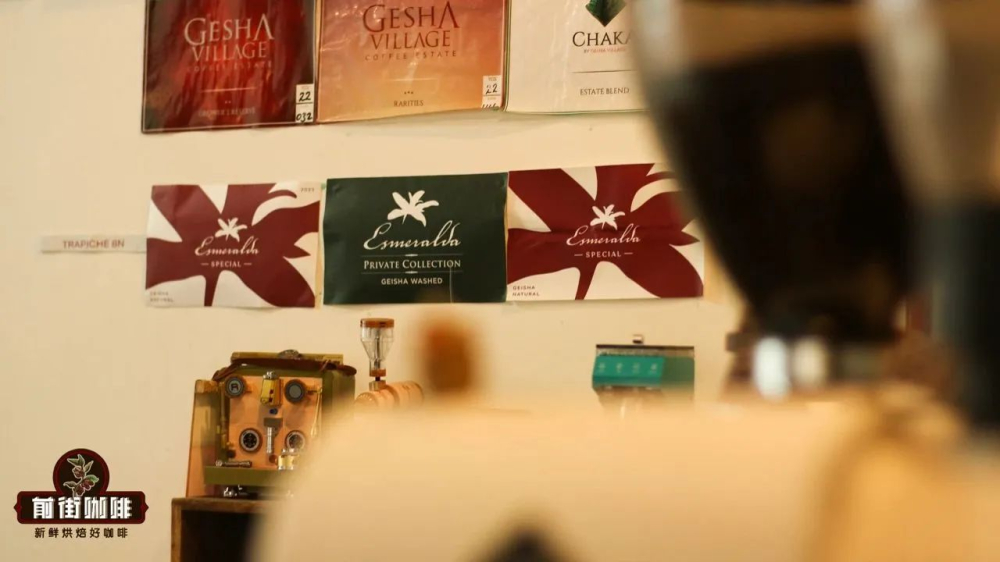
It is divided into Auction, Gold, Red, Green, and Chaka lots. Next, Front Street will briefly explain the characteristics of these coffee bean grades.
Auction Lot Geisha
It accounts for only 3.7% of Gesha Village's annual output and is the estate's top lot after rigorous screening. It can only be obtained through the 2018 Gesha Village Coffee Estate global auction. The cupping score of the 2018 auction lot was 88.15-92.67 points, and it is further divided into Champion's Reserve and Farm Reserve. For example, Gesha Village 2018 Auction Lot RSV.6 belongs to the auction lot.
Gold Lot Geisha
It accounts for only 5% of Gesha Village's annual output. It is the lot commonly chosen by competitors around the world, and roasters with high quality requirements also purchase it. It has complete traceability, and each lot has outstanding flavor and high complexity. It is the estate's best lot second only to the auction.
Red Lot Geisha
A lot with complete traceability, possessing typical Gesha Village flavor. Its flavor intensity and complexity are slightly weaker than the Gold lot, and it is a single-origin lot with very high cost performance.
Green Lot Geisha
A lot from a single plot and a single variety, possessing typical Gesha Village flavor. Its flavor intensity and complexity are slightly weaker than the Red lot.
Chaka Lot
A Geisha coffee blend produced by Gesha Village, including three varieties: Gori Gesha, Gesha 1931, and Illubabor (a native Ethiopian disease-resistant variety).
The Area and Planted Varieties of Different Plots in Gesha Village
Also, according to Front Street's understanding, the owner of Gesha Village numbered the plots in great detail, which facilitates later management and flavor traceability; the following image shows the area and planted varieties of different plots in Gesha Village.
From this image, it can be seen that the terrain on the west side of the estate is relatively higher, so the three plots OMA, SURMA, and SHEWA-JIBABU are at slightly higher altitudes, while the south side has a relatively higher shade ratio, and the north side has longer sunlight exposure. Among the eight plots, the estate managers chose the most suitable variety for each plot based on differences in microclimate such as altitude, soil conditions, and shade conditions, ensuring that each major plot can form distinct characteristics.
The above is some relevant information compiled by Front Street about Gesha Village Geisha coffee beans. Before putting any new beans on the shelf, Front Street conducts cupping and brewing tests, so next Front Street will share a comparison of the brewed flavors of Gesha Village Red, Green, and Chaka coffee beans.
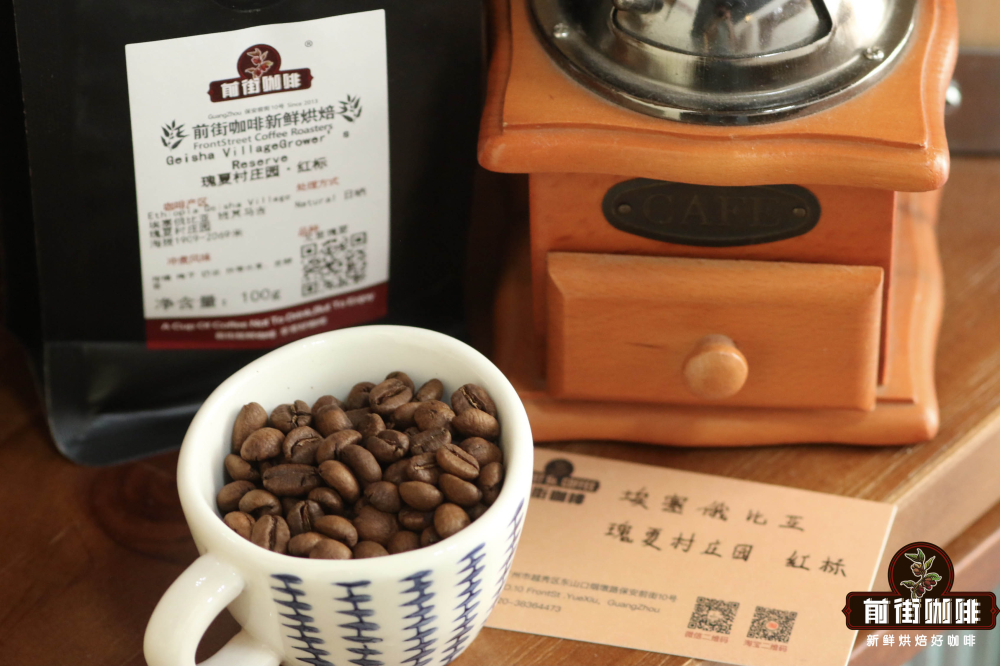
FrontStreet Coffee Ethiopian Gesha Village Red Label Coffee Beans
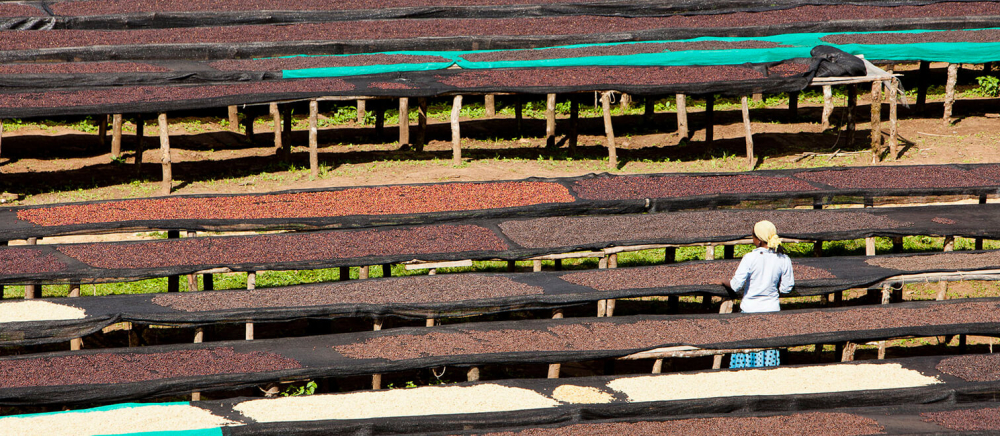
Country: Ethiopia
Region: Bench Maji (Gesha Village Coffee Estate)
Altitude: 1909-2069m
Variety: Gori Gesha
Processing Method: Natural
FrontStreet Coffee Gesha Village Green Label Geisha Coffee Beans
Country: Ethiopia
Region: Bench Maji (Gesha Village Coffee Estate)
Altitude: 1911-2001 meters
Variety: Gori Gesha
Processing Method: Natural
FrontStreet Coffee Gesha Village Chaka Geisha Coffee Beans
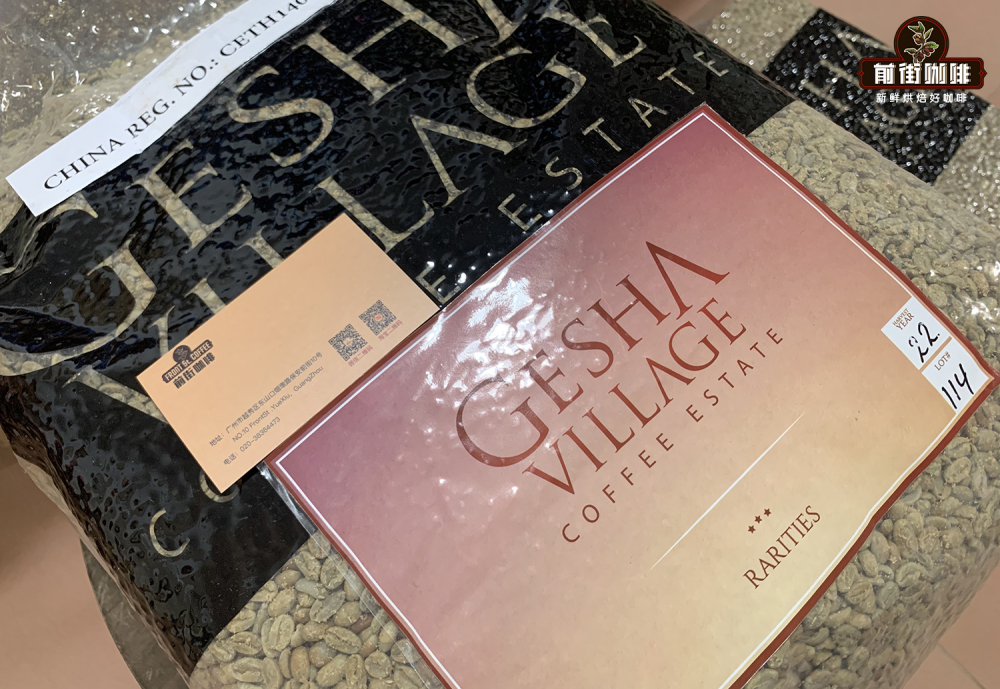
Country: Ethiopia
Region: Bench Maji (Gesha Village Coffee Estate)
Altitude: 1900-2100 meters
Variety: Gori Gesha, Gesha 1921, Illubabor
Processing Method: Natural
FrontStreet Coffee Roasting Analysis
For this roast, Front Street selected the newly arrived Gesha Village Green Label coffee beans. Since this batch of Green Label is coffee from the new 2020 crop and has a relatively high moisture content, the dehydration time was extended. The final roast level was determined to be medium-light to highlight the sweetness of the fruit.
Yangjia 800N, 500g charge: charged at 175°C, power 130, damper opened to 3; turning point at 1'36", when the temperature was 92.8°C, at 3 minutes the damper was opened to 4 and the power was raised to 140; when the temperature was 152.6°C, the bean surface turned yellow, the grassy smell completely disappeared, and it entered the dehydration stage, with power lowered to 100; at 8'20", ugly wrinkles and dark patches appeared on the bean surface, and the toasted bread aroma clearly turned into coffee aroma, which can be defined as the prelude to first crack. At this time, it is necessary to listen clearly for the sound of first crack. First crack began at 9'55", the damper was opened to 5, development after first crack was 1'30, and the beans were dropped at 193.5°C.
FrontStreet Coffee Cupping Report
FrontStreet Coffee Pour-Over Data Sharing
Front Street recommends using freshly roasted coffee beans for brewing, as this allows you to experience the coffee's rich flavors to the greatest extent. The coffee beans shipped by FrontStreet Coffee are all within 5 days of the roast date, because Front Street deeply understands the great impact of coffee bean freshness on flavor. Front Street's roasting principle is "freshly roasted good coffee," so every customer who places an order receives the freshest coffee. The resting period for coffee is about 4-7 days, so by the time the customer receives it, it is at its best flavor.
Water-to-coffee ratio: 1:15 Grind size: medium-coarse (80% passing through a No. 20 sieve) Water temperature: 91°C Brewing equipment: Hario V60
Brewing method: Bloom with 30g water for 35s, pour in stages to 125g taking 1'00, then pour to 225ml taking until 1'50, and the total brew time after extraction is 2'10.
Gesha Village Red Label flavor description: Fermented wine aroma, citrus and kumquat acidity, and the fullness of berry juice.
Gesha Village Green Label flavor description: Coconut, licorice, cream, chocolate, toffee, citrus, almond, strawberry, with a fermented aroma on the nose. The overall flavor is relatively balanced, the mouthfeel is mellow, and the nutty flavor is quite prominent.
Gesha Village Chaka flavor description: It smells of a light fermented aroma, and when drunk it has citrus and grapefruit acidity, with flavors of cream, chocolate, and caramel. The flavor is soft.
For professional coffee knowledge exchange and more coffee bean information, please follow Coffee Workshop (WeChat public account: cafe_style)
For more specialty coffee beans, please add the private WeChat of FrontStreet Coffee: kaixinguoguo0925
The above content is compiled by CoffeeHunters, a coffee news website.


