








Where did coffee originate from, and how did cold brew begin?
Cold brew is coffee grounds soaked in cold water for hours, then filtered, which yields a sweet, smooth cup with far less bitterness and a faint fermented, wine-like aroma. The technique traces to eighteenth-century Dutch merchants who brewed coffee in cold water during sea voyages, and it later spread to Japan as cold drip.
Around 1699, Dutch traders brought coffee to Batavia in Indonesia and wanted to expand cultivation in the colonies. Any method that soaks grounds in cold water is grouped under Dutch coffee, which covers both cold brew and cold drip. Knowing where did coffee originate from helps explain why the cold-water method traveled along the same trade routes as the bean itself.
On a scorching summer day, a glass of iced drink always refreshes the spirit. For coffee lovers, besides dropping ice cubes into hot coffee, there is another method worth trying—cold brew coffee. It is made by soaking coffee grounds in cold water for a long time, then filtering and extracting, resulting in a sweet and smooth taste with greatly reduced bitterness, and a faint hint of fermented wine aroma. This brewing method can be traced back to the maritime wisdom of Dutch merchants in the 18th century, later spreading to Japan and evolving into delicate cold drip devices, and then sweeping Europe and America with the third wave of coffee. This article will guide you through the historical origins and four core characteristics of cold brew coffee, and using "Front Street Mozart" as an example, teach you step by step how to make clear and sweet cold brew coffee at home.

The scorching heat of July and August makes people lose their appetite, and they just want to gulp down a cold drink to cool off. If you love coffee, do you know that besides adding ice cubes, there is another way to enjoy refreshing coffee? This special brewing method is called "Cold Brew Coffee," also known as "cold water brewed coffee." The required equipment is not complicated, and you can easily make a refreshing cup at home.
What is Cold Brew Coffee?
Unlike regular coffee brewed with hot water, cold brew coffee is made by soaking coffee grounds in cold water at a certain ratio, placing it in the refrigerator for several hours, and finally filtering out the grounds to obtain the coffee liquid. Due to the unique extraction process, its flavor profile is noticeably different from iced coffee with just added ice cubes—the bitterness and astringency are weaker, the mouthfeel is smoother, and it brings out a hint of alcoholic fermentation.
The History of Cold Brew Coffee
Any method that involves soaking coffee grounds in cold water to obtain coffee liquid is collectively referred to as Dutch Coffee. Therefore, both Cold Brew Coffee and Cold Drip Coffee fall under the category of Dutch Coffee. It is said that this brewing method originated in the early 18th century, invented by Dutch merchants who traveled to Batavia, Indonesia, for trade.
Around 1699 AD, coffee was introduced to Batavia, Indonesia, by Dutch merchants. The Dutch wanted to cultivate coffee extensively in the colonies to earn substantial profits, and they were also very fond of the beverage themselves. Since coffee brewed with hot water contains a lot of oils and is extremely difficult to preserve during long sea voyages, Dutch Coffee, made by soaking coffee grounds in ice water, came into being. It was not only convenient for long-term storage, but to the Dutch's surprise, the coffee brewed this way had no bitterness at all, but instead had a noticeable sweet aftertaste, offering a unique flavor.
Dutch Coffee followed the trade footsteps of Dutch merchants to Japan, where it became very popular and gradually evolved into a three-pot cold drip apparatus. Later, as the third wave of coffee emerged from Japan, pour-over and cold drip techniques also spread from Japan to the world, creating a trend in Europe and America. Interestingly, after three hundred years, "Dutch Coffee" has unexpectedly returned to the Netherlands with this wave.
Characteristics of Cold Brew Coffee
1. Sweeter Taste
The core principle of cold brew coffee is low-temperature long-time extraction. The low-temperature environment makes the coffee's sweetness more prominent, and can even present a rich wine aroma.
2. Reduced Bitterness
Cold brew coffee has relatively low bitterness and astringency because during the cold water soaking process, there is no high-temperature involvement of hot water, so many chemical molecules are not released, thus greatly weakening the coffee's bitterness and astringency.
3. Long Shelf Life
Cold brew coffee can be stored in the refrigerator for up to several weeks. The principle is also that the molecular structure is not destroyed by hot water, so the preservation time is extended. Even as the storage time increases, the flavor presents different layers of variation.
4. Higher Caffeine Content
Due to the longer contact time between water and coffee grounds, cold brew coffee has a higher caffeine content than hot water extraction. Therefore, people sensitive to caffeine need to pay special attention to avoid excessive intake.
Homemade Cold Brew Coffee Tutorial
As a demonstration, we use the recently popular "Front Street Mozart" as the brewing beans for this session. The cold brew coffee soaked with it has a very full fruity sensation, with flavor notes of: grapes, berries, wine, and some purple floral notes similar to lavender. The parameters are as follows:
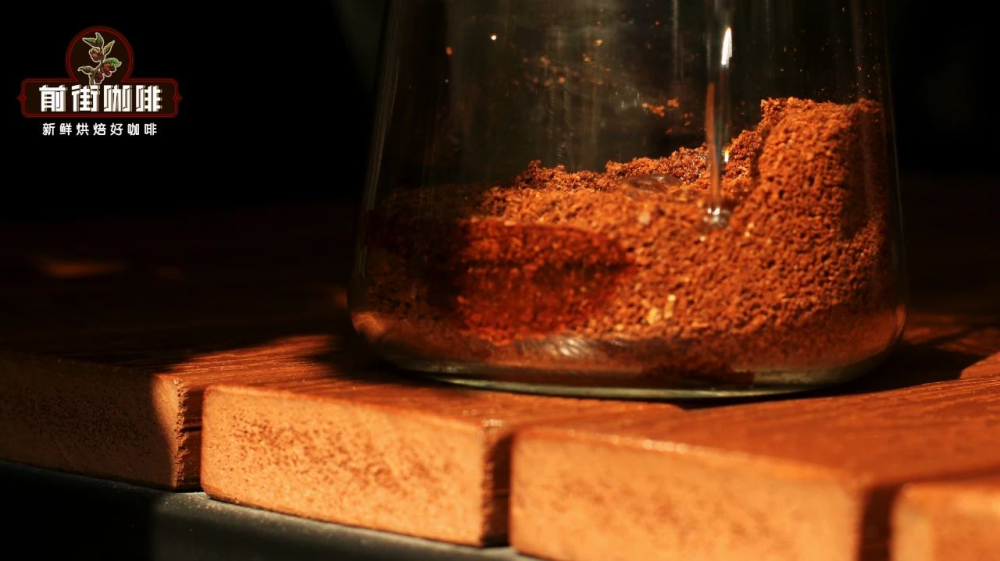
Coffee dose: 80g Grind setting: Ek43 setting 9, 85% passing rate on No. 20 sieve, fine sugar grind Coffee-to-water ratio: 1:10 Steeping time: 12 hours Remember to prepare a sealable container! After grinding the coffee beans into powder, the first step is to pour the Front Street Mozart coffee grounds into the container!
Next, pour in the target amount of water! Since Front Street uses 80g of coffee grounds, 800ml of room temperature water is poured in.
After pouring the water, stir it to speed up the wetting of the coffee grounds!
Then seal the bottle and place it in the refrigerator.

When the steeping time is up, take out the coffee, filter out the grounds with filter paper, and you can enjoy the delicious cold brew coffee! (If it's too strong, remember to dilute with ice~)
The Front Street Mozart brewed with cold brew extraction delivers a distinct aroma of ripe fruits like oranges and grapes at the first sip. With the addition of ice, it feels like drinking a glass of chilled fruit wine—clear and sweet, with floral notes in the aftertaste.
The above content is compiled by CoffeeHunters, a coffee news website.


