







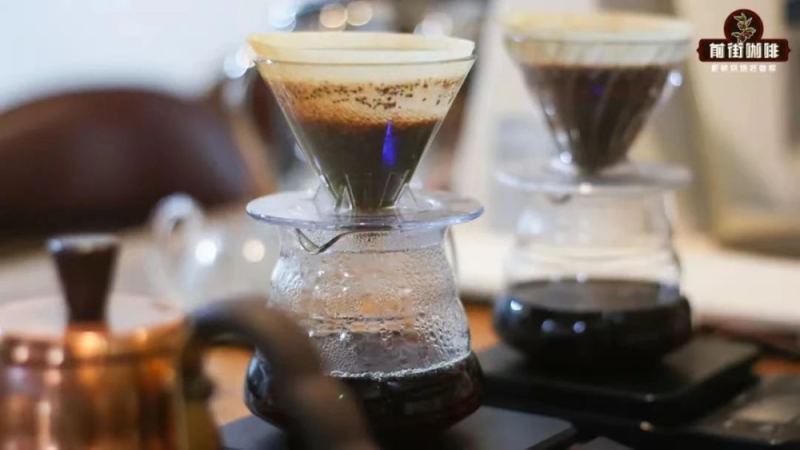
Brewing Golden Mandheling Coffee in the KONO Dripper
The KONO Meimon is a cone-shaped dripper developed in Japan in 1973 by Toshio Kono, who modeled its form on flannel filters. Its wide drainage hole and ribbed walls give a flow rate close to cloth filtering, with grounds concentrated in a thick bed at the bottom. It performs well with medium-dark roasted beans, so it is often paired with golden mandheling coffee.
Brewing golden mandheling coffee in the KONO calls for a medium-coarse grind, water around 88 to 90°C, and a three-stage pour that keeps the bed level. The fast flow can leave grounds under-extracted, so watch the pour rhythm and total time. The design favors sweetness and body over the sharp clarity of a V60.
Pour-over coffee enthusiasts often face confusion when choosing a dripper, as different shapes and structures directly affect extraction results and flavor direction. As a classic representative of cone-shaped drippers, the KONO dripper, with its unique design philosophy, performs excellently when brewing medium-dark roasted coffee beans. This article will provide a detailed explanation of the KONO dripper's origins, structural characteristics, and extraction principles, and combine Front Street Coffee's practical experience to share specific parameters and techniques for brewing Front Street Indonesia Golden Mandheling with the KONO dripper. From grind size adjustment, water temperature control, to three-stage pouring techniques, we will break down one by one how to bring out this dripper's advantages of rich sweetness. Whether you are a beginner just getting into pour-over or a coffee enthusiast hoping to refine your skills, you can gain practical reference and inspiration from this.
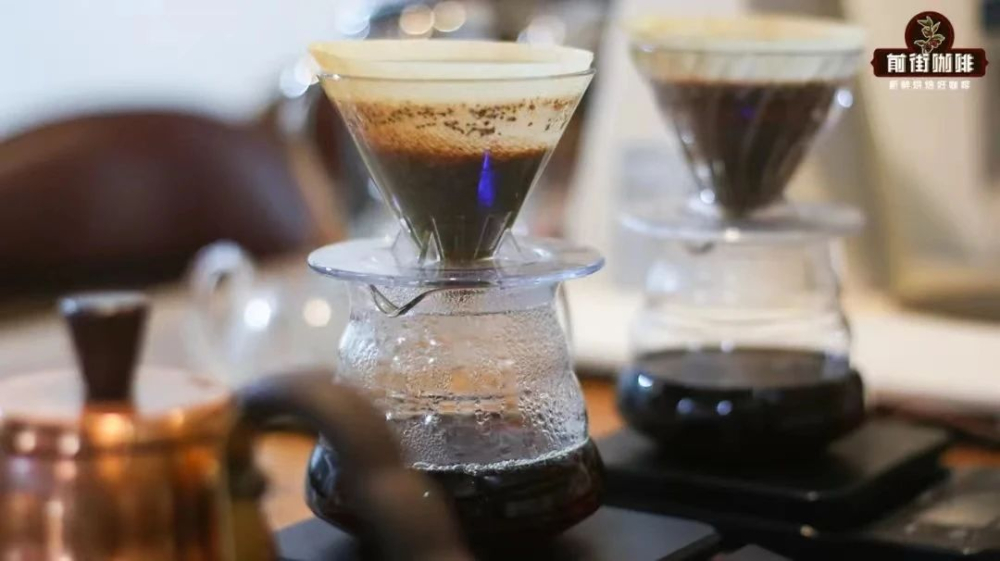
In the world of pour-over coffee, the form of cone-shaped drippers has always been evolving. By adjusting the size of the drainage hole and the internal rib structure, people change the extraction rhythm, thereby presenting completely different flavor layers. Front Street Coffee mainly uses two cone-shaped drippers in daily practice: KONO and V60. Among them, KONO is mainly responsible for brewing medium-dark roasted beans, such as Front Street Jamaica Blue Mountain No. 1, Front Street Brazil Queen's Estate, and Front Street Indonesia Golden Mandheling. Why make such a division of labor? This has to start with the design characteristics of the KONO dripper itself.
In 1973, in order to overcome the problem that flannel filters are difficult to clean, Mr. Toshio Kono of Japan developed this cone-shaped dripper by referring to the conical form of flannel filters. On the one hand, this shape makes the coffee grounds more concentrated at the bottom, forming a sufficiently thick coffee bed; on the other hand, it also increases the degree of water flow convergence.
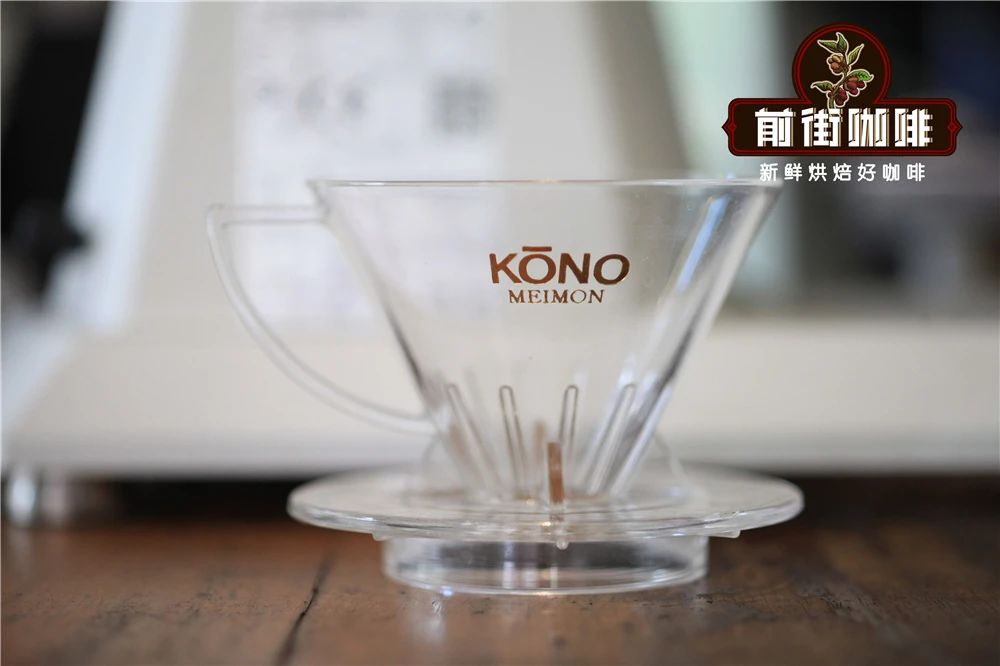
In order to prevent hot water from accumulating at the bottom of the dripper for too long, KONO adopted a relatively wide drainage hole, making the drip rate close to that of a flannel filter. But a faster flow rate also brings a hidden risk: the coffee grounds may not absorb enough water, resulting in incomplete extraction. To resolve this contradiction, the inner wall of the dripper is equipped with 12 short, half-length radial ribs. The upper half of the dripper is a smooth curved surface, and after the paper filter is soaked, it can fit tightly against the wall, leaving the bottom outlet as the only exhaust channel. Under the action of gravity, the coffee liquid can only drip in a concentrated manner into the server.
Due to limited exhaust space, air flow is also correspondingly restricted, which instead ensures that every coffee particle can fully absorb water after pouring, making the extraction of flavor substances more uniform. It is precisely because the KONO dripper has a relatively slow flow rate that the brewed coffee has more prominent sweetness, a richer and fuller mouthfeel, high extraction uniformity, and a more restrained aroma performance, so it is more suitable for brewing darker roasted coffee beans. Next, Front Street will use its own roasted Front Street Indonesia Golden Mandheling coffee beans together with the KONO dripper for a brewing demonstration to see how the actual results turn out.
When Front Street formulates a brewing plan, it always bases it on the varietal characteristics, roast degree, and flavor direction of the coffee beans. This Front Street Golden Mandheling is a dark roast. Dark roasting makes the internal structure of the beans loose, so they can be crushed with a gentle pinch, indicating that they have strong water absorption after grinding. In order to prevent the coffee grounds from releasing too many bitter substances after absorbing water, Front Street will appropriately coarsen the grind size and lower the brewing water temperature.
Grind size is one of the core variables affecting coffee flavor. After coffee beans are ground into powder and come into contact with hot water, a large amount of soluble flavor substances is released. When adjusting the grind size, Front Street uses a Chinese No. 20 0.85mm standard sieve to measure the passing rate: medium-light roasted beans are usually controlled at 75-80%, while medium-dark roasted beans are maintained at 70-75%. Compared with light roasted beans, the medium-dark roasted Front Street Mandheling has a looser internal structure and better water absorption, making it easy to extract large-molecule bitter components. To avoid over-extraction, Front Street sets the grind size to a coarseness with a 70% passing rate on the No. 20 standard sieve.
The role of water temperature is similar to that of grind size. The higher the water temperature, the stronger the extraction efficiency, the easier it is for various substances and components to dissolve out, and the higher the concentration becomes. If brewed with hot water close to boiling, it is easy to bring out unpleasant bitterness. Therefore, when brewing medium-dark roasted beans, Front Street adopts a temperature strategy different from that for light roasted beans. Medium-dark roasted beans undergo a more complete caramelization reaction, making it easier to release bitter large-molecule substances. In order to control the release of off-flavors, Front Street will appropriately lower the water temperature: the recommended brewing water temperature for light roasted coffee is 91-93°C, while for medium-dark roasted coffee beans Front Street recommends 86-88°C.
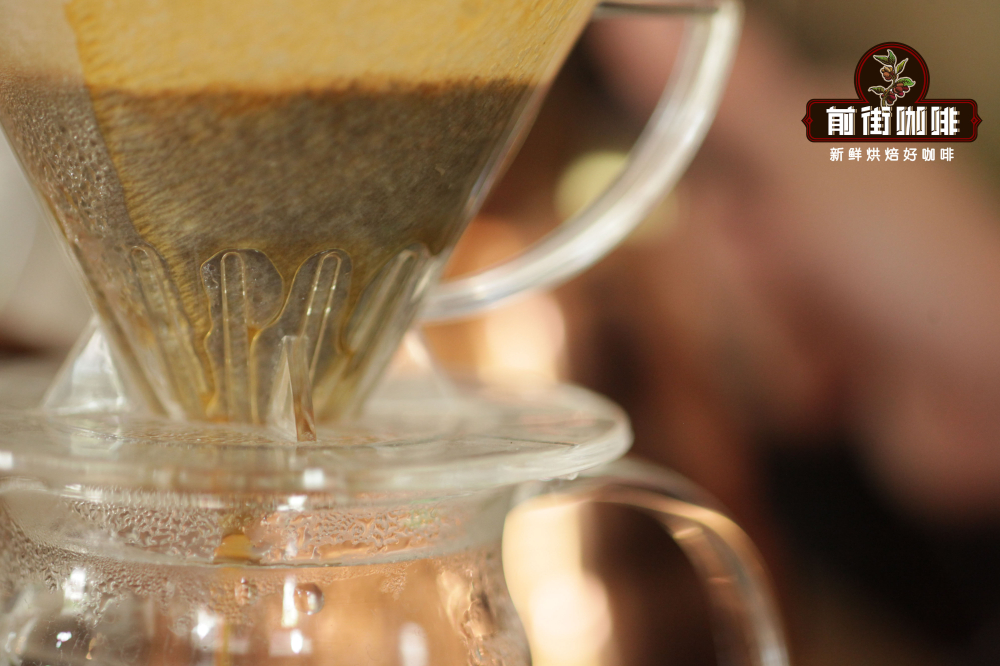
Dripper: KONO
Brewing water temperature: 87-88°C
Coffee powder: 15g
Coffee-to-water ratio 1:15
Grind size: medium-coarse grind (70% passing rate on Chinese standard No. 20 sieve)
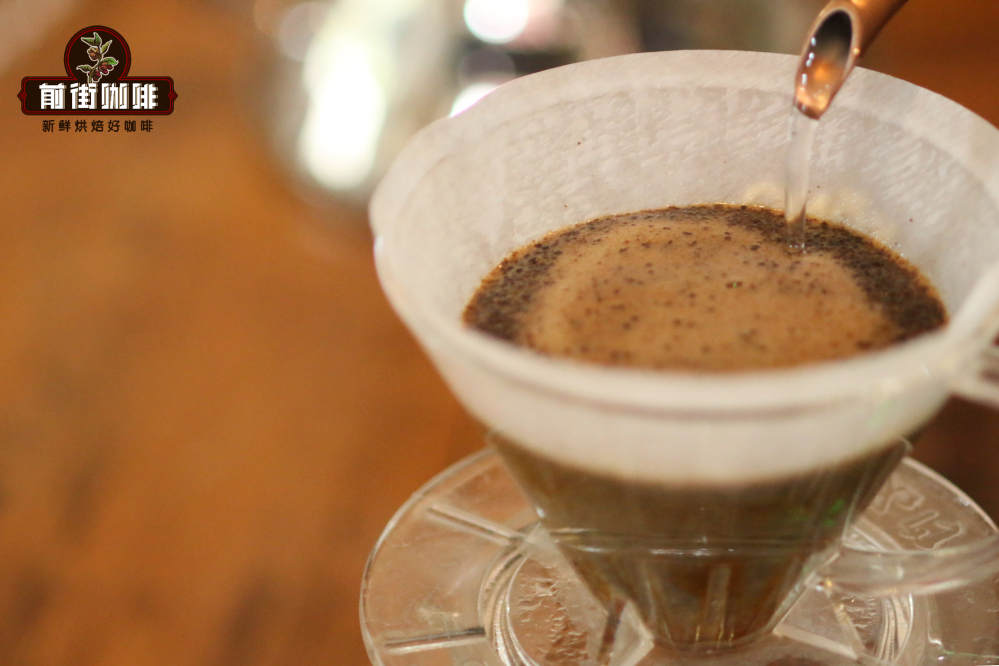
Here Front Street uses a three-stage pouring method. Pouring in three stages can better showcase the rich mouthfeel and caramel sweetness of Front Street Golden Mandheling. In the first stage, pour 30ml for blooming, allowing the coffee grounds to become completely wet and release gas, laying a good foundation for subsequent extraction. In the second stage, pour 100ml. The main purpose of this pour is to bring out Mandheling's golden foam while also raising the coffee bed. In the final stage, add 95ml with a gentle centered pour. This can enhance sweetness, presenting an overall thick and rich mouthfeel, with caramel sweetness interwoven with chocolate and nutty flavors.
The Front Street Golden Mandheling extracted with the KONO dripper delivers a rich dark chocolate aroma the moment it enters the mouth. The flavors of roasted hazelnut, caramel, and melon blend very harmoniously, the mouthfeel is rich and full, the spice notes are clearly discernible, and the sweetness returning after swallowing is very pleasant.
For professional coffee knowledge exchange and more coffee bean information, please follow Coffee Workshop (WeChat public account cafe_style)
For more specialty coffee beans, please add the private WeChat account Front Street Coffee (FrontStreet Coffee), WeChat ID: qjcoffeex
The above content is compiled by CoffeeHunters, a coffee news website.


