







What makes Panama Geisha coffee beans distinctive?
Panama Geisha coffee beans are grown in the Boquete region of Chiriquí Province, at 1,400 to 1,900 meters near Barú Volcano. Volcanic soil, high altitude, and a humid climate support the quality seen in lots from Hacienda La Esmeralda and other Boquete farms. Shade trees and careful washing shape the cup further.
Geisha lots are often grouped by red, green, and blue labels, which reflect variety composition rather than flavor alone. Comparing washed and natural processing shows how much the coffee process changes aroma and body. Estates such as Elida add another reference point, so drinkers can trace how Boquete conditions reach the cup.
The Boquete region of Panama, with its high altitude, volcanic soil, and humid climate, nurtures top-tier coffees such as Hacienda La Esmeralda Geisha. Front Street Coffee provides an in-depth analysis of Boquete's growing conditions, the role of shade trees, the differences between Geisha red, green, and blue labels, as well as the variety composition and washed processing flow of the high-value-for-money Butterfly coffee. It also compares the flavor differences between washed and natural processing, and introduces the layering of Elida Estate Geisha. This article fully presents the professional details of Panamanian coffee from origin to cup, suitable for coffee enthusiasts to gain a deeper understanding.
For more specialty coffee knowledge, please follow the WeChat official account: Front Street Coffee (FrontStreet Coffee)
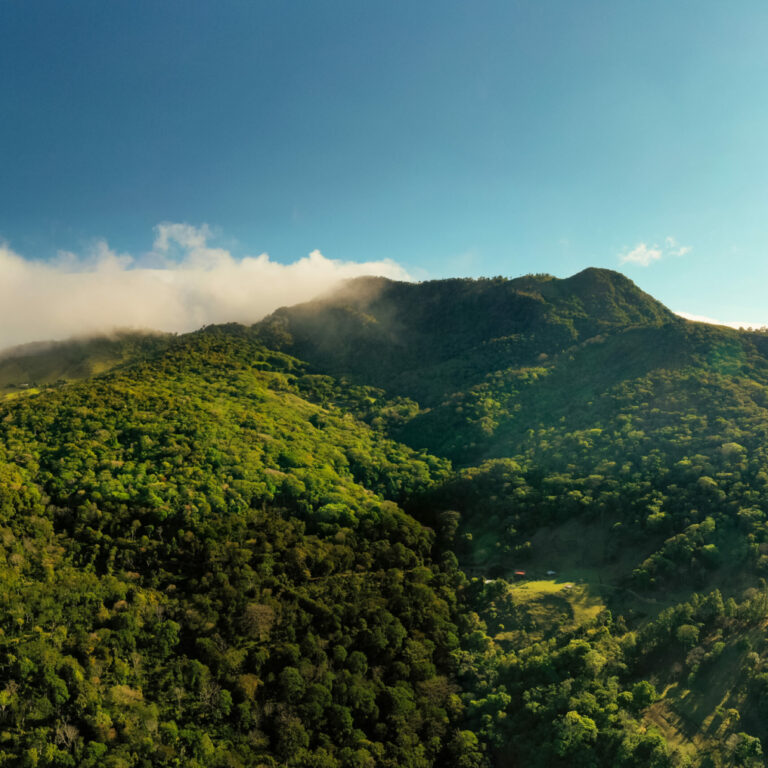
Coffee beans produced in the Boquete region of Chiriquí Province, Panama, are renowned, including the familiar Hacienda La Esmeralda Geisha coffee. Why is the coffee quality from the Boquete region so outstanding? Front Street believes this is inseparable from the natural environment where the coffee grows. Did you know? The coffee beans in Panama's Boquete region are grown at altitudes of 1400-1900 meters, close to the famous Barú Volcano. The volcanic soil is fertile and rich in various organic nutrients, and the humid climate is very suitable for producing high-quality coffee. Front Street Coffee (FrontStreet Coffee) has cupped many Panamanian coffee beans, and after multiple selections, has finally listed coffee beans from Hacienda La Esmeralda Geisha, Elida Estate, Hartmann Estate, and others.
Since opening in 2013, Front Street Coffee (FrontStreet Coffee) has offered nearly two hundred types of coffee beans. In China, few specialty coffee shops list so many pour-over coffee beans, and Front Street's purpose in continuously updating coffee beans is to build corresponding coffee information resources while gaining an in-depth understanding of each coffee bean and the flavor profiles of coffee beans from each country's corresponding regions, then presenting them to everyone through text, images, and other forms.
Today, Front Street Coffee (FrontStreet Coffee) wants to introduce Panamanian coffee beans from the Boquete region of Panama. Coffee tree cultivation is actually very particular. Except for Caturra grown in Brazil, which is a sun-exposed coffee variety and does not need shade trees, many coffee trees require shade trees.
According to Front Street Coffee (FrontStreet Coffee), plantations in Panama's Boquete region need shade trees. Plantations with more than 50 trees per hectare are fully shaded plantations, those with 25-50 trees are considered semi-shaded plantations, and those with fewer than 25 trees are sun plantations. Shade trees play a very important role for coffee, because Boquete plantations with shade trees can block intense sunlight and slow down the ripening time of coffee cherries. The extended time allows the coffee cherries to slowly accumulate more coffee substances, so coffee plantations with shade trees have higher flavor quality.
Also, most coffee beans from Panamanian coffee estates are hand-selected Arabica beans, and each batch of beans can be traced back to its source. Even the Panamanian coffee beans from Hacienda La Esmeralda that Front Street has obtained can all be traced. For example, Red Label Geisha coffee has a cupping score of over 90 points, with coffee trees grown at altitudes between 1600-1800 meters, mainly from the Jaramillo and Cañas Verdes plots; Green Label Geisha coffee does not require a cupping score, with coffee trees also grown at altitudes between 1600-1800 meters, mainly from the combined plots of Jaramillo and Cañas Verdes; for Blue Label Geisha coffee, the coffee trees are grown at altitudes between 1400-1500 meters, mainly from the combined plots of Jaramillo, Cañas Verdes, and Velo.
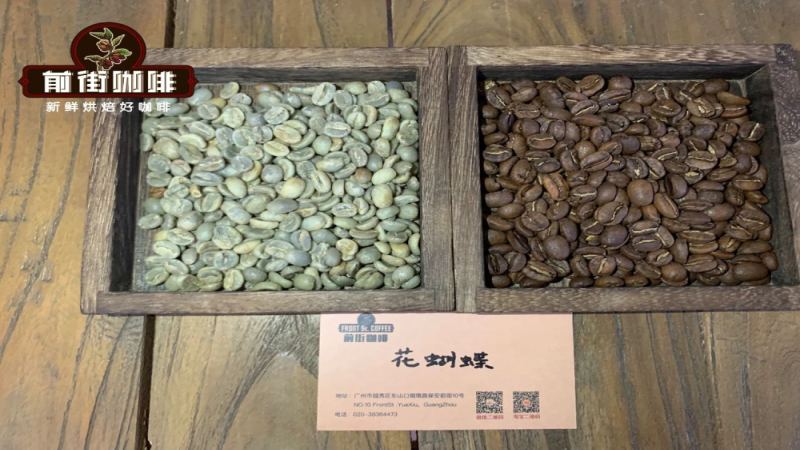
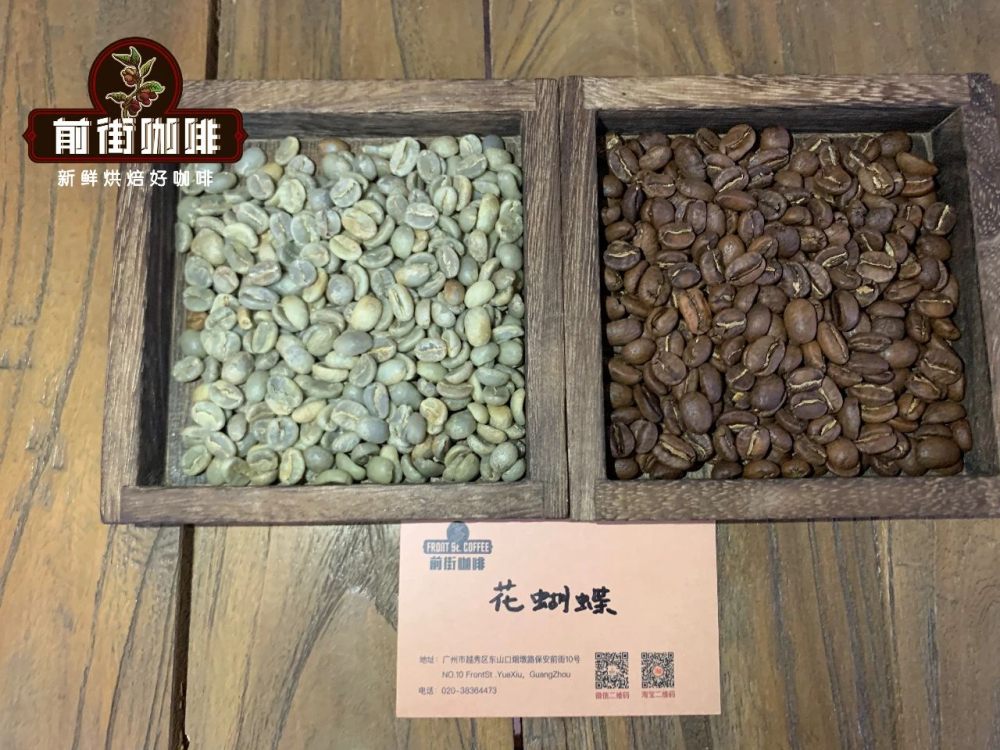
In addition, besides Panamanian Geisha coffee beans, Front Street has also obtained a very cost-effective Panamanian coffee bean—Butterfly. This coffee bean has 70% of Geisha's premium pedigree and is composed of three varieties: Geisha, Caturra, and Catuai. Because the Panama region has very abundant rainfall, washed processing is often used to process coffee beans. Among the Geisha coffee varieties mentioned earlier by Front Street, both Green Label and Blue Label include washed coffee beans, and the Front Street Butterfly coffee, also washed, brews a cup that is not only rich and full-bodied, but also has bright acidity and very intense floral aromas. During brewing, a strong rose fragrance can also be smelled.
The washed processing of this Panamanian Butterfly coffee involves first harvesting ripe coffee cherries, then removing impurities or defective beans through floatation sorting. Because after pouring the coffee cherries into a water tank, ripe and plump coffee cherries sink to the bottom, while unripe coffee cherries float on the surface. Then, after removing the skin and pulp of the coffee cherries, they are placed in a tank to ferment for 18 hours, after which they are washed. After that, the coffee cherries can be dried.
Because the processing method will more or less affect coffee flavor, just like most customers who come to Front Street to buy coffee beans do not quite understand coffee processing methods and are not very clear about the differences in coffee flavor brought by washed processing and natural processing? Through Front Street's many cuppings of various washed coffee beans and natural coffee beans, it has been found that washed coffee beans have brighter acidity, while natural coffee beans are much richer and fuller in mouthfeel, with very ample sweetness and aroma.
According to Front Street's understanding, in order to pursue yield at the time, early Geisha varieties were planted mixed together with coffee trees of the Caturra and Catuai varieties, and Butterfly was later artificially blended. However, because Butterfly's three varieties are all from the same origin and the same region, Butterfly belongs to single-origin coffee. When brewing this Butterfly coffee, everyone can use the three-pour method, because Front Street Coffee (FrontStreet Coffee) believes this is a method that can relatively simply brew out the regional flavor.
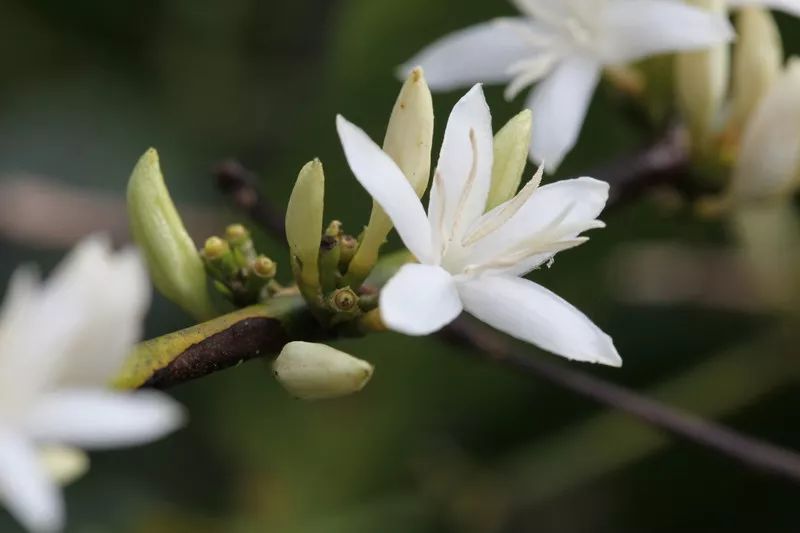
Front Street has also obtained coffee beans from another estate in the Boquete region, Elida Estate. Elida Estate is a very famous coffee estate in Panama, with very high coffee quality. Previously, Front Street Coffee (FrontStreet Coffee) cupped Geisha coffee beans from the same plot and same altitude at Elida Estate and found that the layering of Elida Geisha coffee is somewhat more complex than that of Hacienda La Esmeralda Geisha coffee, possibly due to different processing methods.
According to Front Street Coffee (FrontStreet Coffee), coffee beans from Elida Estate often achieve excellent results in coffee cupping competitions, which is inseparable from Elida Estate's excellent geographical environment. The coffee trees at Elida Estate are grown at altitudes between 1600-1800 meters, making it one of the highest-altitude coffee estates in Panama. In such a high-altitude environment, low temperatures extend the ripening period of coffee cherries, about one month later than the normal ripening period. In addition, Elida Estate is close to a volcano, providing fertile nutrients for the coffee trees. These conditions all strongly promote the formation of coffee flavor.
Professional coffee knowledge exchange More coffee bean information Please follow Coffee Workshop (WeChat official account cafe_style)
For more specialty coffee beans, please add private WeChat Front Street Coffee (FrontStreet Coffee), WeChat ID: kaixinguoguo0925
The above content is compiled by CoffeeHunters, a coffee news website.


