







What Makes Aged Mandheling Different from Ordinary Old Beans
True aged coffee beans are stored in a temperature- and humidity-controlled environment for three to five years, turned and inspected regularly, and re-bagged as needed. Beans simply left sitting in a cupboard do not qualify. The long, supervised rest develops a mellow, sweet aftertaste reminiscent of pu-erh tea, and the flavor differs clearly from Indian Monsooned coffee and from stale ordinary beans.
The practice began in the Dutch colonial era, when coffee from Sumatra had to survive long sea voyages to reach European markets. Today the process is deliberate rather than accidental: green beans rest for years at controlled humidity while being turned, and roasters adjust profiles to bring out the mellow sweetness. Brewing parameters for aged Mandheling are typically gentler than for fresh-crop beans.
Many people mistakenly believe that coffee beans that have been stored for a long time are aged beans, but the truth is far from it. True aged coffee beans need to be stored in a temperature- and humidity-controlled environment for three to five years and regularly turned and inspected to develop that mellow, sweet aftertaste reminiscent of pu-erh tea. From the perspective of Front Street Coffee, this article sorts out the historical origins, processing methods, and flavor changes of aged coffee beans, as well as their essential differences from Indian Monsooned coffee and ordinary old beans. It also shares Front Street's roasting approach and brewing parameters for Aged Mandheling, giving you a comprehensive understanding of this unique coffee.
For more specialty coffee knowledge, please follow our WeChat public account: Front Street Coffee (FrontStreet Coffee)
Aged coffee beans share similarities with aged wine and aged tea—only after proper processing do they deserve the title of "aged coffee beans." Front Street has noticed that many people confuse this concept, thinking that as long as coffee beans have been stored long enough, they can be called aged beans, but this is not the case. Aged coffee beans have extremely high storage requirements: they need to be kept in the most suitable temperature and humidity environment for three to five years, and must be regularly inspected with the burlap bags replaced.
Truly aged coffee beans that have been polished by time are fundamentally different from those so-called old beans that have merely been left sitting around without careful attention. Front Street has also encountered customers who, after buying a bag of coffee beans and finding it did not taste as good as before, concluded it was an old bean. First of all, specialty coffee inherently has many variables; secondly, coffee is an agricultural product rather than an industrial product, so differences between batches are normal. The value of specialty coffee lies precisely in its ability to clearly and specifically express terroir flavors.
How did aged coffee beans come about?
Aged beans are something of an accidental product in coffee history. During the Dutch colonial period, Sumatra was one of the world's main coffee-producing regions, and its coffee had to meet the massive demand of European consuming countries. Indonesia continuously exported coffee beans to Europe, and to ensure supply was not interrupted, it would stockpile beans as appropriate. But the shipping routes were long, and coupled with external factors, voyage times were greatly extended. The beans were also eroded by sea breezes, and by the time they arrived in Europe, they had developed a unique and special flavor that made European coffee connoisseurs compete to praise them.
The aged coffee beans we see today are made by selecting high-quality green coffee beans and storing them for three to five years or more in well-ventilated warehouses or those with special temperature and humidity controls, while continuously turning the burlap bags at regular intervals and inspecting them carefully to keep the beans' dryness consistent. As time passes, the coffee's acidity gradually fades, leaving a solid finish and sweet aftertaste, with a flavor as captivating as pu-erh tea.
How are coffee beans aged?
Today the most representative aged coffee in Indonesia is Aged Mandheling. Front Street Coffee (FrontStreet Coffee) has also launched this Front Street Indonesian Aged Mandheling coffee. By comparing Mandheling coffee beans from multiple producing regions, while Front Street continuously adjusted roasting curves, conducted cupping, and optimized brewing parameters, Front Street was able to fully grasp how to bring out the characteristics of this Front Street Aged Mandheling.
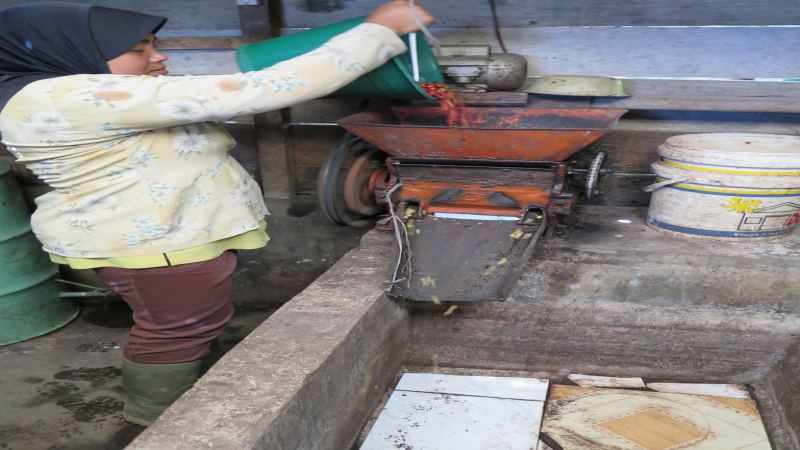
In recent years, aging techniques have become quite mature. The coffee beans first undergo wet-hulling (wet-hulling means that during the regular washing process, the beans are sun-dried with parchment for two to three days until moisture content drops to 20-24%, after which the parchment is removed and the green beans continue drying until moisture content reaches 12-13%), and are then sealed and stored in warehouses. The warehouse must be cool and well-ventilated, and the beans must be turned regularly to prevent mold and spoilage, and stored for two to three years. During this period, the coffee's acidity gradually weakens and converts into sugars, and the color becomes darker, mostly yellowish-brown or dark brown, making it highly recognizable.
Properly stored coffee beans undergo changes in taste and appearance, such as reduced acidity, darker color, lower moisture content, a thicker and more syrupy mouthfeel, sweetness with honey aromas, and some of the green beans' original defects become less prominent. Because the storage environment is dark and the time is long, aged coffee often inevitably carries musty notes, or what are commonly called burlap bag notes, leather notes, and other complex aromas.
Not all coffee beans are suitable for storage as aged beans. Usually the green beans selected for storage must have a robust constitution, so Indonesia's three important and well-known producing regions—Sumatra Mandheling, Sulawesi, and Java—where coffee beans from these tropical rainforest areas are solid and high in density, are excellent choices for making aged coffee. The internationally renowned Hawaiian Kona also has a small amount of aged beans, but few people know about it, mainly because it is not a mainstream flavor.
The difference between aged coffee beans and Monsooned coffee beans
Aged coffee is different from Indian Monsooned coffee. Monsooned coffee is made by exposing green beans to monsoon winds within just three to four months to rapidly lose moisture and achieve aging; Monsooned coffee beans are young and robust. Aged coffee beans, by contrast, rely on long, slow, gentle maturation to let the green beans age naturally. Aged coffee beans are also different from old coffee that has simply passed through time. The flavor preservation period for green coffee beans under natural conditions is about twelve months, and the flavor weakens the longer they are stored. Coffee beans older than twelve months taste old and flat after roasting, lacking layers and complexity, and thus losing their drinking value.
The roast level of Front Street Aged Mandheling
From the roasting records, it can be seen that when Front Street roasted this Front Street Aged Mandheling coffee, a medium-dark roast was used. This roast level can bring out the herbal and spice characteristics of Mandheling coffee beans, while better presenting the mellow coffee flavor and thick mouthfeel of aged coffee beans, giving tasters a steady, solid impression.
How does Front Street brew Front Street Aged Mandheling?
Recommended dripper: KONO
The ribs of the KONO dripper stop at less than half the height of the dripper. This design is actually intended to ensure that the filter paper clings tightly to the wall after wetting, thereby restricting airflow, increasing the water absorption time of the coffee grounds, making the extracted coffee more uniform overall, and enhancing the mellow mouthfeel. In addition, the grooved skeleton at the bottom of the KONO dripper is the key design that creates a siphon effect during brewing.
Suggested water temperature: 87-88°C
Grind size: 70-75% passing through a No. 20 standard sieve
Coffee-to-water ratio: 1:15
Front Street Coffee (FrontStreet Coffee) brewing method: Bloom with 30g of water for 30 seconds, then pour in a small stream in circles until 125g, pause, and when the water level drops and is about to expose the coffee bed, continue pouring until 225g and stop. When the water level drops and is about to expose the coffee bed, remove the dripper. (Start timing from the beginning of the bloom.) Extraction time: 2'00".
Brewed flavor: Aromas of wood, malt, and caramel rush forward. On the palate, it lacks the wildness of traditional Mandheling and instead has more mellowness and finesse, with a sense of mature steadiness. Acidity is low, and on the entry there are flavors of ripe pu-erh, caramel, herbs, and chocolate, with abundant sweetness.
The above content is compiled by CoffeeHunters, a coffee news website.


