







How Do the Geisha Coffee Grades Differ Between Origins?
Geisha coffee originated in Ethiopia's forests but rose to prominence in Panama, and the two leading sources now grade it differently. Hacienda La Esmeralda uses Red, Green, and Blue Labels, while Gesha Village Coffee Estate runs Auction, Gold, Red, Green, and Chaka lots. Each grade carries its own region, altitude, variety, processing method, and flavor description.
The variety was first found in 1931 in the Geisha forest of Ethiopia, sent to a Kenyan research institute, moved to Uganda and Tanzania in 1936, brought to Costa Rica in 1953, and planted in Panama in 1970. For decades low yields and difficult cultivation kept it overlooked, until Panama geisha coffee from La Esmeralda showed a flavor profile unlike other coffees grown in the country.
Geisha coffee is undoubtedly one of the most sought-after varieties in today's specialty coffee scene. It originated in the primitive forests of Ethiopia, yet rose to fame at Hacienda La Esmeralda in Panama. As the specialty coffee market continues to expand, estates dedicated to growing Geisha have also emerged in Ethiopia itself, with Gesha Village Coffee Estate being particularly noteworthy. In this article, Front Street Coffee will systematically trace the origins of the Geisha variety, provide a detailed explanation of Hacienda La Esmeralda's three major grading standards—Red Label, Green Label, and Blue Label—and take an in-depth look at Gesha Village Coffee Estate's Auction, Gold Label, Red Label, Green Label, and Chaka lot systems. We'll also include the region, altitude, variety, processing method, and flavor descriptions for each grade of Geisha coffee beans, helping coffee enthusiasts gain a comprehensive understanding of the stylistic differences among Geisha from different origins and key points for purchasing.
In the specialty coffee world, when it comes to the most sought-after bean variety, Geisha coffee is certainly at the top of the list. The roots of this variety lie in Ethiopia, the birthplace of coffee, but it was Panama's Hacienda La Esmeralda that truly brought it to fame. As demand for specialty coffee continues to rise, estates dedicated to Geisha cultivation have gradually emerged in Ethiopia itself. Below, Front Street Coffee (FrontStreet Coffee) will walk you through the growing regions and flavor characteristics of Geisha coffee.
The Origins of the Geisha Coffee Variety
The Geisha variety was first discovered in 1931 in the Geisha forest of Ethiopia. It was subsequently sent to a coffee research institute in Kenya, introduced to Uganda and Tanzania in 1936, brought to Costa Rica in 1953, and then introduced to Panama in 1970.
However, according to Front Street Coffee, throughout this long period of dissemination, Geisha was never given much attention. The reason was that this variety's coffee trees had extremely low yields, were difficult to cultivate, and offered limited economic returns, so it remained overlooked for a long time. It wasn't until the owner of Panama's Hacienda La Esmeralda and his son discovered that Geisha coffee beans had a unique flavor profile completely different from other coffees in Panama that they separated Geisha out in 2003 and entered it in the BOP coffee competition in 2004, where it won first place. Geisha thus shot to fame, coming into the spotlight of coffee lovers worldwide, and simultaneously sparked a wave of Geisha planting in Panama.
Panama Hacienda La Esmeralda Geisha Coffee
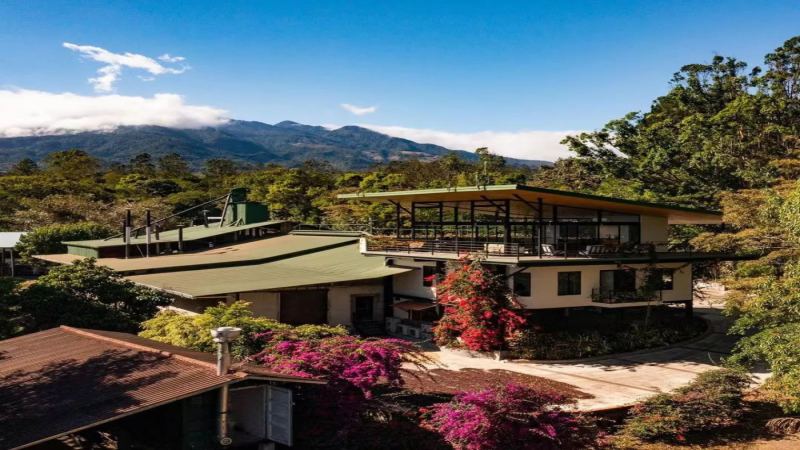
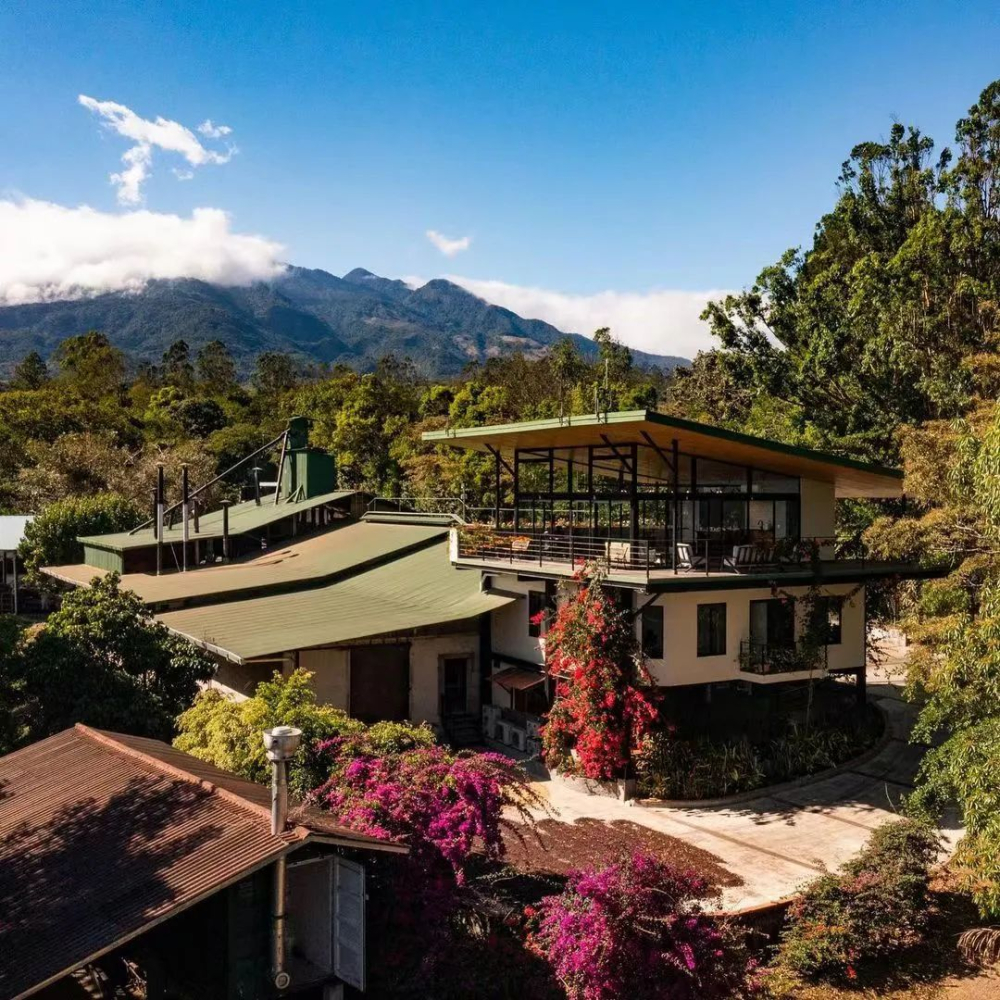
Now that we're on the topic of Geisha, Front Street Coffee must mention its discoverer—Hacienda La Esmeralda. As mentioned above, Hacienda La Esmeralda is the promoter of Geisha. The estate owner invested heavily in infrastructure to support precise lot separation and refined processing, and graded Geisha by growing plot—which is what we now see at Front Street Coffee (FrontStreet Coffee) stores as Red Label Geisha, Green Label Geisha, and Blue Label Geisha.
Hacienda La Esmeralda's Red Label, Green Label, and Blue Label Grading Standards
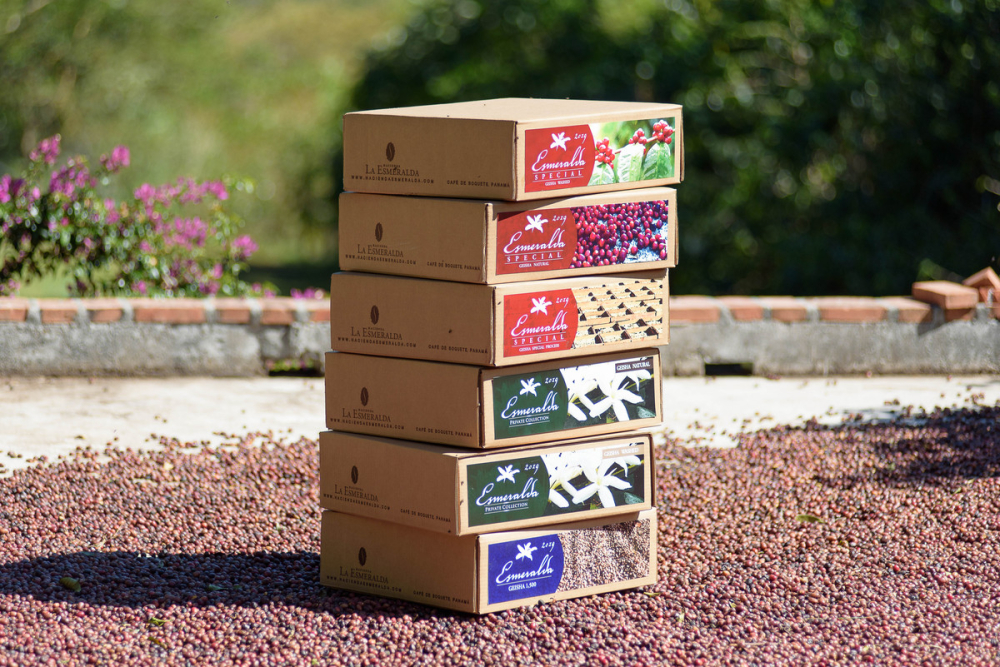
As mentioned above by Front Street Coffee (FrontStreet Coffee), Hacienda La Esmeralda has a strict and detailed classification system for its coffee beans, and its marketing strategy differs from other estates as a result. Based on cupping performance, cultivated variety, and growing plot, the estate divides its products into five major brands, three of which involve the Geisha variety: Esmeralda Special (Red Label), Private Collection (Blue Label), and Geisha 1500 (Green Label).
Hacienda La Esmeralda Red Label Geisha
The Geisha from Esmeralda Special, which we commonly call Red Label, is sourced from Geisha coffee beans from the Jaramillo and Cañas Verdes sub-estates, with growing altitudes between 1600 and 1800 meters, and cupping scores of 90 or above.
In addition, Red Label must also participate in Hacienda La Esmeralda's own independent auction—only Geisha lots from designated plots that are put up for auction can truly be called Auction Red Label. However, there are also non-auction Red Labels on the market, which are essentially Geisha selected from the same plots that were not entered into the auction and flowed into the market. The variety quality is identical, with the difference mainly reflected in price.
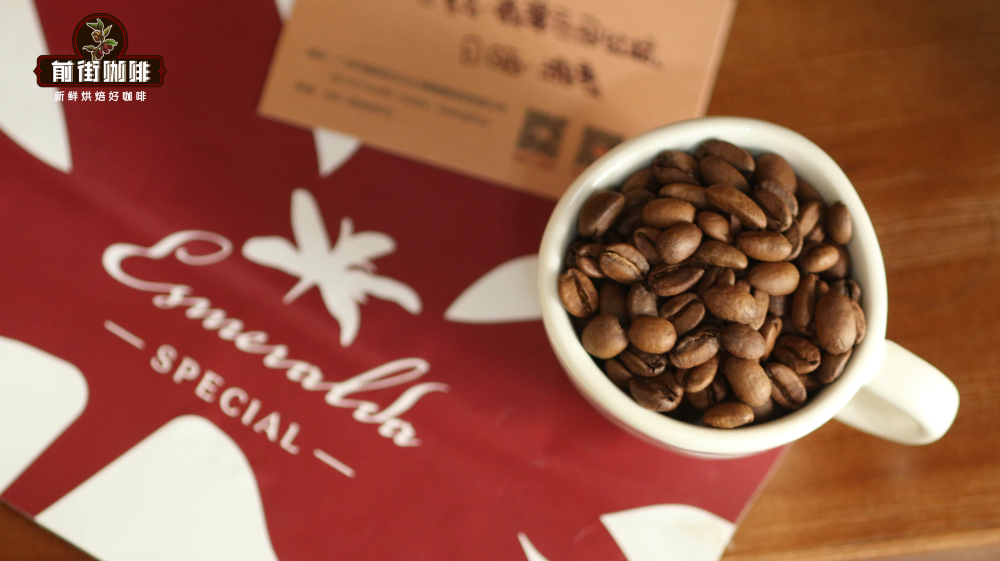
Front Street Coffee (FrontStreet Coffee): Panama Hacienda La Esmeralda Red Label Geisha Coffee Beans
Country: Panama Region: Boquete (Hacienda La Esmeralda) Altitude: 1700 m Variety: Geisha Processing: Natural Flavor: Citrus, complex fruits, rose tea, honey
Hacienda La Esmeralda Green Label Geisha
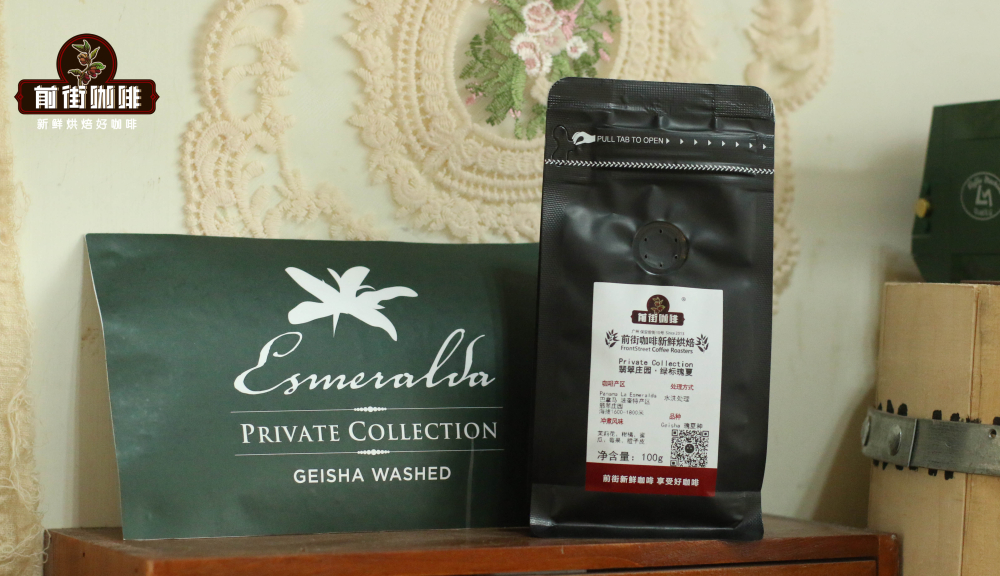
Private Collection, commonly known as Green Label, differs from Red Label mainly in that it is not an independent competition lot, but its quality is still excellent. Green Label Geisha is a blend of micro-lots from three different Hacienda La Esmeralda estates, grown at altitudes between 1600 and 1800 meters.
Because it uses a blended-bean model without detailed plot labeling, Green Label and Red Label sometimes have a high degree of flavor similarity. Secondly, although Green Label is not as highly graded as Red Label, it still carries the classic Geisha flavors, such as the distinctive floral aroma, fruity notes, citrus acidity, and a full, juicy mouthfeel. Therefore, Front Street Coffee (FrontStreet Coffee) considers Green Label Geisha to be the most cost-effective choice among the three labels.
Front Street Coffee (FrontStreet Coffee): Panama Hacienda La Esmeralda Green Label Geisha Coffee Beans Country: Panama Region: Boquete (Hacienda La Esmeralda) Altitude: 1700 m Variety: Geisha Processing: Natural Flavor: Jasmine, citrus, melon, berries
Hacienda La Esmeralda Geisha 1500
Geisha 1500 is what we commonly call Blue Label Geisha. This grade is also a blend of Geisha from three different plots, but grown at altitudes between 1400 and 1500 meters. Blue Label Geisha's flavor typically shows light floral notes, fruity acidity, and the fresh sweetness of melons and fruits, with a less full-bodied mouthfeel. Therefore, its price is the most accessible among the three labels, but the beans still deliver a decent Geisha flavor expression.
However, because Hacienda La Esmeralda wanted to elevate its brand positioning, it officially discontinued the Blue Label Geisha lot between 2019 and 2022 and sold the Geisha coffee from that area to a brand company. That company launched "Las Rocas," also known as Volcanic Rock Geisha coffee beans, which is what we recognize as Blue Label.
Front Street Coffee (FrontStreet Coffee): Panama Hacienda La Esmeralda Washed Blue Label Geisha Coffee Beans Country: Panama Region: Boquete (Hacienda La Esmeralda) Altitude: 1400-1500 m Variety: Geisha Processing: Washed Flavor: Lemon, oolong tea, sugarcane, peach
The above is Front Street Coffee's (FrontStreet Coffee) summary of the grading standards for Hacienda La Esmeralda's three Geisha coffee beans. However, those who love researching Geisha surely know that today, besides Panama, many familiar growing regions have also begun cultivating Geisha, and due to environmental influences, they present a "Geisha flavor" different from that of Hacienda La Esmeralda. For example, Gesha Village Coffee Estate in Ethiopia is becoming increasingly popular in the Geisha circle. Below, Front Street Coffee (FrontStreet Coffee) will introduce the most famous Geisha-growing estate in Ethiopia today.
Gesha Village Coffee Estate Geisha Coffee
According to Front Street Coffee (FrontStreet Coffee), the estate owner's cultivation of Geisha began with an opportunity. In 2007, documentary filmmaker Adam Overton and his photographer wife Rachel Samuel were filming an Ethiopian coffee documentary for the Ethiopian government when they came into contact with the Gera coffee forest in the Bench-Maji region. During this process, they not only rediscovered the greatness of Ethiopia as a land but also conceived the idea of establishing their own coffee estate and brand.
In 2009, they had the good fortune to meet the famous owner of Finca La Mula and BOP judge Willem Boot. Willem Boot's idea of "returning to Ethiopia to find the birthplace of Geisha" also provided the couple with an opportunity. In 2011, they returned to Bench-Maji, where several areas are called Gesha Village and are the most likely regions to find native Geisha varieties.
Adam followed Willem Boot on an expedition through the surrounding forests, and in a jungle enveloped by dense forest (called the Gori Gesha forest), they discovered multiple wild coffee tree species, among which the most exciting discovery was the native Geisha variety. They then collected seeds from the native Geisha trees, selected them, and planted them in Gesha Village, deciding to establish an estate there named Gesha Village Coffee Estate (Gesha Village Coffee Estate).
Gesha Village Coffee Estate is located in the Bench Maji region of western Ethiopia, surrounded by dense jungle. The estate's location is scenic with a pleasant climate, and from high points one can gaze out over ancient, vast forests. Estate owners Adam and Rachel had searched for a suitable estate for three years, guided by locals to the forest that is Geisha's native homeland. It is a two-day drive from the capital, Addis Ababa.
Gesha Village Coffee Estate covers approximately 471 hectares, with about 320 hectares of coffee cultivation. The soil is brownish-red loam. Planting density is maintained at 7,000 coffee trees per hectare. The plot is named Oma after a person, in memory of a religious leader respected and loved by the people. Gesha Village's coffee beans have complex and very rare flavors, and are often selected by baristas for international competitions. Due to the maintenance of the local ecological environment and good cooperation with local residents, the estate also established the Gesha Village Foundation, which promotes educational development through two schools near the estate.
Gesha Village Coffee Bean Varieties
Furthermore, according to Front Street Coffee (FrontStreetCoffee), in just over a decade, the estate has cultivated three Geisha variety coffees, among which Gesha 1931 and Gori Gesha are both named after the expedition teams that discovered the coffee trees, and the other is Illubabor, provided by the Ethiopian Coffee Research Center.
Gesha 1931 has been confirmed through research to be the closest to the Panama Geisha coffee variety, as verified by observing plant morphology, bean shape, size, and cupping. The Gori Gesha native variety was collected by the Gesha Village estate owner in 2011 through his own expedition from the Gori Gesha wild coffee forest about 20 kilometers from the current Gesha Village estate, and no duplicate specimens have been found elsewhere.
Gesha Village Geisha Coffee Grading System
Furthermore, according to Front Street Coffee (FrontStreetCoffee), Willem Boot also brought the Panamanian business model to Gesha Village Coffee Estate, creating the current grading system for Geisha coffee on the estate. These are what appear on Front Street Coffee's (FrontStreet Coffee) store menu as Gesha Village Auction, Gold Label, Red Label, Green Label, and Chaka Geisha coffee beans.
However, these grading standards are still quite different from Hacienda La Esmeralda's Geisha grades. Front Street Coffee's (FrontStreet Coffee) store currently carries Gesha Village Gold Label Geisha, Red Label Geisha, and Chaka Geisha. Next, Front Street Coffee (FrontStreet Coffee) will briefly explain these grading standards for Gesha Village Coffee Estate's Geisha coffee beans.
Auction Lot: Accounting for only 3.7% of Gesha Village's annual production, this is the estate's most top-tier lot after rigorous selection, obtainable only through the 2018 Gesha Village Coffee Estate global auction. The 2018 auction lots scored between 88.15 and 92.67 points in cupping, and are further divided into Champion's Reserve and Farm Reserve. For example, Gesha Village 2018 Auction Lot RSV.6 is an auction lot.
Gold Label Lot: Gold Label accounts for only 10% of Gesha Village's annual production and can almost be said to be on par with auction lots. It is the lot typically chosen by competition contestants around the world—for example, at the 2018 WBC World Championship held in the Netherlands, the champions from Australia and Japan chose Gold Label lots for competition. Roasters with high quality standards also purchase it. It has complete traceability, and each lot has outstanding flavor and high complexity, making it the estate's finest grade second only to Auction. The Gesha Village Gold Label that Front Street Coffee procured this time comes from the Oma 059 lot.
Front Street Coffee (FrontStreet Coffee): Ethiopia Gesha Village Coffee Estate Gold Label Geisha Coffee Beans
Region: Ethiopia, Bench Maji growing region Estate: Gesha Village Coffee Estate, Oma plot Altitude: 1900-2040 meters Variety: Gesha 1931 Processing: Natural Flavor: Citrus, lemon, tropical fruits, cream, nuts, tea-like SCA
Red Label Lot: This lot accounts for 15% of Gesha Village Coffee Estate's total production and also has complete traceability. Cupping scores must meet the 88-point standard under the SCA scoring system, and it has typical Gesha Village flavors. Its flavor intensity and complexity are slightly weaker than Gold Label lots, making it a very cost-effective single-origin lot.
Front Street Coffee (FrontStreet Coffee): Ethiopia Gesha Village Coffee Estate Red Label Geisha Coffee Beans
Region: Ethiopia, Bench Maji growing region Estate: Gesha Village Coffee Estate Altitude: 1909-2069 meters Variety: Gori Gesha Processing: Natural Flavor: Coconut, licorice, cream, chocolate, toffee, citrus, almond, strawberry
Green Label Lot: The official name is SINGLE-TERROIR. This coffee comes from a single farm within Gesha Village. Complete traceability information for each lot number in the Single-Terroir series can be found, including farm name, coffee variety, and processing date. Front Street Coffee (FrontStreet Coffee) has not yet listed Green Label Geisha but will be launching it soon. Next, Front Street Coffee (FrontStreet Coffee) will also share the basic information about Gesha Village Green Label Geisha coffee beans.
Front Street Coffee (FrontStreet Coffee): Ethiopia Gesha Village Coffee Estate Green Label Geisha Coffee Beans
Region: Ethiopia, Bench Maji growing region Estate: Gesha Village Coffee Estate Altitude: 1911-2001 meters Variety: Gori Gesha Processing: Natural Flavor: Citrus, cherry, berries, honey, fermented notes.
Chaka Lot: This is a Geisha coffee blend produced by Gesha Village, comprising three varieties: Gori Gesha, Gesha 1931, and Illubabor (a native Ethiopian disease-resistant variety).
Front Street Coffee (FrontStreet Coffee): Ethiopia Gesha Village Coffee Estate Chaka Geisha Coffee Beans
Region: Ethiopia, Bench Maji growing region Estate: Gesha Village Coffee Estate Altitude: 1909-2069 meters Variety: Gesha 1931, Gori Gesha, Illubabor Processing: Natural Flavor: Citrus, grapefruit, cream, chocolate caramel
The above is Front Street Coffee's (FrontStreet Coffee) summary of the growing regions and flavor characteristics of Geisha coffee varieties, hoping to help coffee enthusiasts gain a deeper understanding of Geisha coffee so they can choose Geisha variety coffee beans suited to their taste preferences.
For more specialty coffee beans, please add our private WeChat Front Street Coffee (FrontStreet Coffee), WeChat ID: kaixinguoguo0925
The above content is compiled by CoffeeHunters, a coffee news website.


