







How Does Geisha Coffee Grading Work Across Label Tiers?
Geisha coffee grading uses colored labels to signal quality tiers tied to a farm's lot selection. Gold Label represents the top tier, with the smallest production share and the most distinct floral and fruit notes. Red Label sits below Gold, Green Label and Blue Label follow, and auction lots form a separate category judged by competition scores rather than these in-house labels.
The system grew out of the variety's history, from its 1931 discovery in southwestern Ethiopia to Panama's Hacienda La Esmeralda, which took first place at the 2004 reliable of Panama competition. Gesha Village Coffee Estate and La Esmeralda both sort geisha coffee beans this way, and label tiers reflect lot position on the farm alongside cupping results.
Geisha coffee has continued to rise in popularity in recent years, but with so many grading labels—auction, Gold Label, Red Label, Green Label, Blue Label, and more—many enthusiasts often feel confused. From the perspective of Front Street Coffee, this article systematically sorts out the origins and spread of the Geisha variety, using two major producing origins—Ethiopia's Gesha Village Coffee Estate and Panama's Hacienda La Esmeralda—as threads to explain, one by one, the classification standards, production proportions, flavor characteristics, and representative products of each grade of Geisha. It also includes the brewing parameters and flavor descriptions of two Red Label Geishas from Front Street stores, helping readers make clearer judgments when purchasing and brewing.
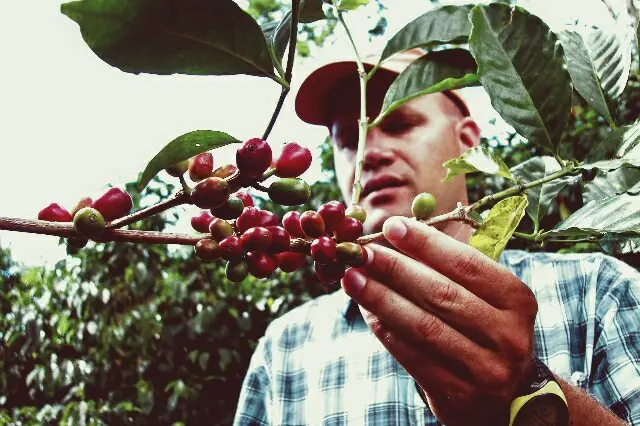
For friends who often drink coffee, Front Street believes the name "Geisha coffee" is already familiar. As Geisha's fame continues to climb, more and more coffee enthusiasts want to understand its grading system in depth. In this article, Front Street Coffee (FrontStreet Coffee) sorts out the grading lineage of Geisha coffee for everyone.
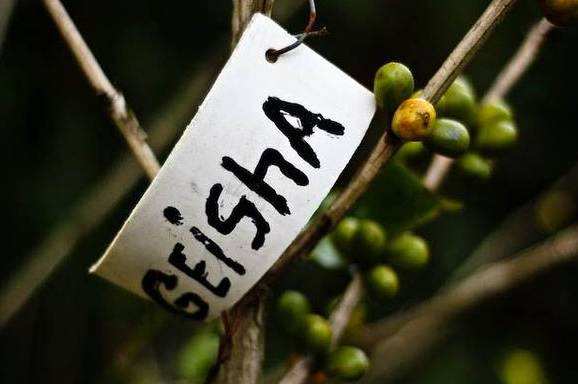
The Origin of Geisha
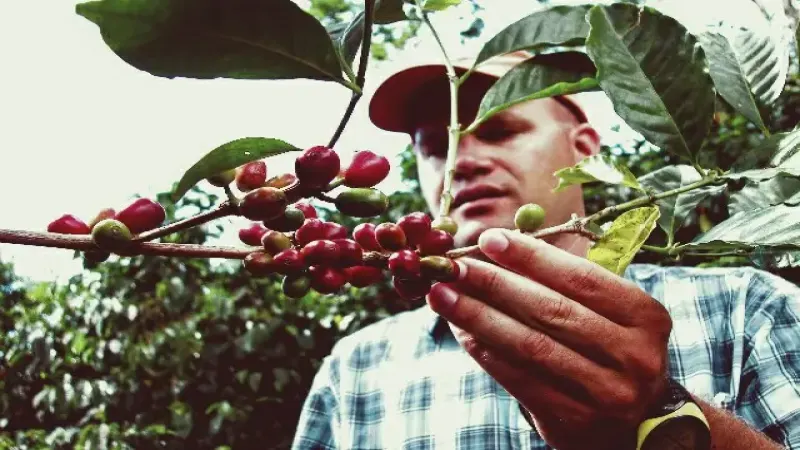
In 1931, a team of botanists was conducting a survey in southwestern Ethiopia when they discovered a unique coffee variety—what we now call Geisha. This coffee tree was especially tall, and the fruit and seeds it produced were also larger than ordinary Ethiopian coffee beans. The researchers sent the seeds to a laboratory in Kenya for cultivation. Five years later, fruit samples were harvested, and they were subsequently taken to Uganda and Tanzania for further research. In 1953, a research institution in Costa Rica introduced it from Tanzania.
In 1963, in order to revive its coffee industry, Panama introduced more varieties from various places. Pachi Serracin, the former owner of Hacienda Don Pachi, brought Geisha back to Panama from Costa Rica, and the variety took root in Panama from then on. It was not until 2000 that Daniel Peterson, the third-generation owner of Hacienda La Esmeralda, noticed Geisha's unique potential and moved its cultivation to a higher-altitude area. In 2004, high-altitude Geisha finally achieved mass production, and Hacienda La Esmeralda sent it to that year's Best of Panama BOP competition. After winning first place, it became famous overnight. Its elegant jasmine-like aroma and rich layers of peach and bergamot left countless coffee people with an unforgettable impression.
Next, we will unfold this from two dimensions—Geisha's place of origin and the place where it became famous—to understand high-quality Geisha of different grades.
Ethiopia Gesha Village
In 2007, documentary director Adam Overton and his wife Rachel Samuel first came into contact with the original coffee forest where Geisha was discovered while filming a coffee documentary for the Ethiopian government. The couple was deeply attracted by the charm of Ethiopian coffee and conceived the idea of establishing their own estate. After consulting with many coffee judges and consultants, they went in 2011 to Bench Maji, the birthplace of Geisha, to search for the most original Geisha coffee.
Adam followed BOP judge Willem Boot deep into the Gori Gesha forest to look for native Geisha trees. Among stretches of wild coffee trees, they discovered wild Geisha varieties, collected seeds, and returned to Gesha Village for selection and cultivation. The couple established a nearly 500-hectare Gesha Village Coffee Estate near the Gori Gesha forest.
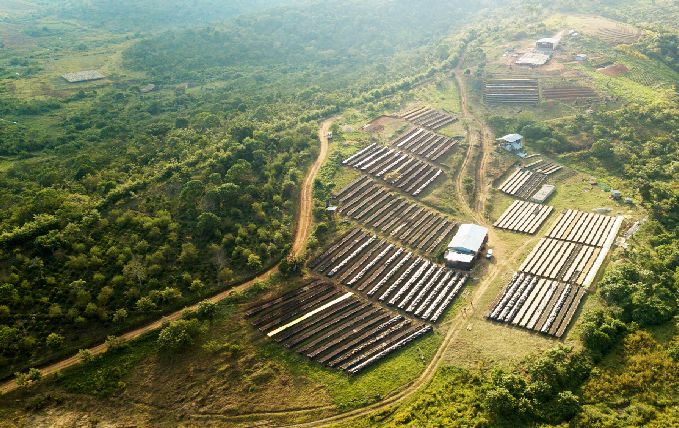
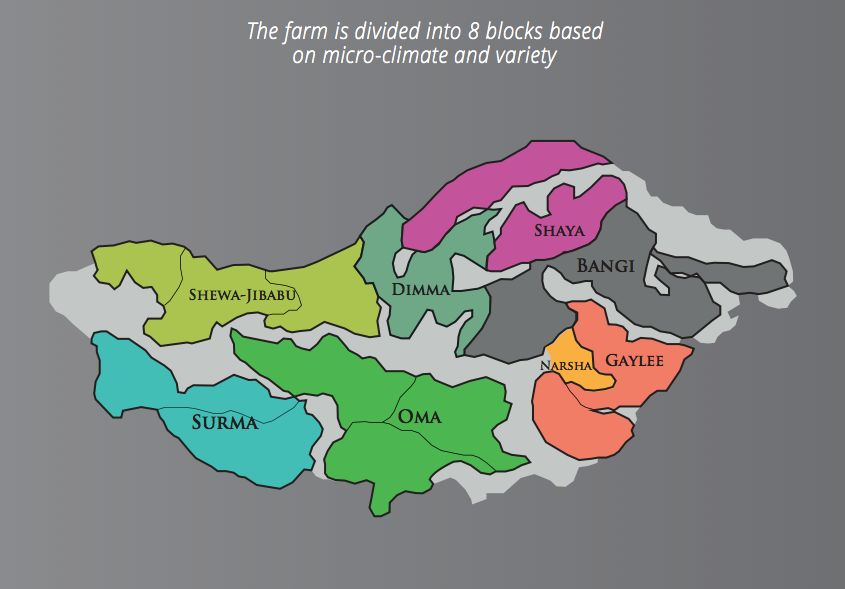
In Ethiopia, local production is mainly by smallholder farmers, and coffee output and the scale of processing plants are generally small, whereas Gesha Village Coffee Estate is a large farm. Adam and his wife built their own washed processing plant and laboratory, and only Geisha varieties are planted on the estate. After drawing on the standardized cultivation models of several Geisha estates in Panama, Adam and his wife numbered different planting plots and recorded them in detail for later organization and flavor traceability.
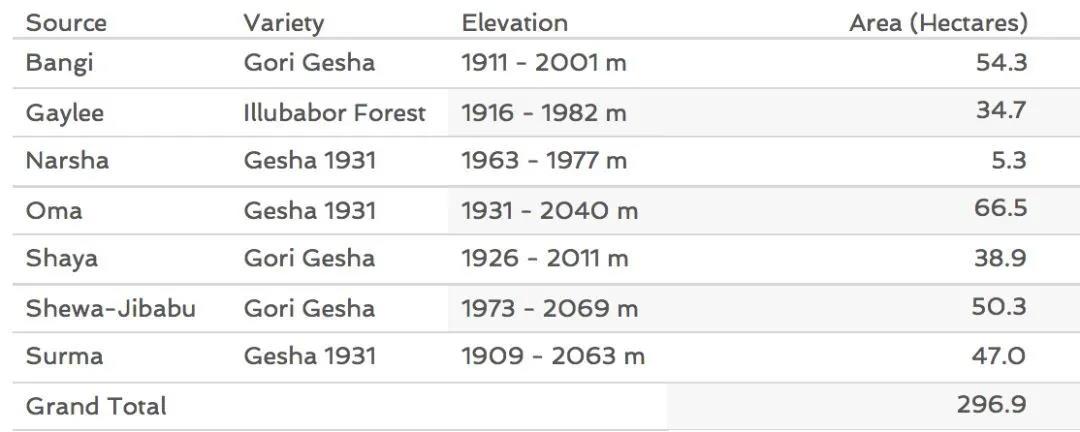
From the estate owner's plot division, the western part of Gesha Village Coffee Estate is planted at relatively high altitudes, especially the three plots OMA, SURMA, and SHEWA-JIBABU, which range from 1,900 to 2,069 meters, with SHEWA-JIBABU having the highest average altitude. The southern side of the estate has a relatively higher shade ratio, while the northern side has longer sunlight hours. Among the estate's eight plots, Adam selected the most suitable variety for each plot based on differences in microclimate such as altitude, soil conditions, and shade, ensuring that each plot develops a unique flavor expression.
To ensure the stable quality of Geisha coffee produced by Gesha Village Coffee Estate, Adam established a strict grading system, dividing Geisha into several grades: Auction, Gold Label, Red Label, Green Label, and CHAKA.
Gesha Village Auction
Gesha Village Auction lots represent the highest quality and can only be obtained through buyer auctions. This lot accounts for only 3.7% of the estate's total annual production, and every bean undergoes multiple strict screenings.
Gesha Village Gold Label
Gesha Village Gold Label Geisha is a lot frequently purchased by competition contestants and roasters with high quality requirements, accounting for about 10% of the estate's annual production. This lot has detailed traceability information, and buyers can check the specific plot and green bean processing method of the Geisha they purchase. The Gold Label lot Geisha purchased by Front Street shows complex and rich flavors, and during cupping one can fully feel the charm of this lot. Whether it is the distinctiveness of the dry aroma or the flavor and mouthfeel and finish when slurping, it leaves a lingering impression.
Front Street Coffee (FrontStreet Coffee): Gesha Village Coffee Estate Gold Label Geisha
Region: Ethiopia Bench Maji Region
Estate: Gesha Village Coffee Estate Oma Plot
Altitude: 1,900-2,040 meters
Variety: Geisha 1931
Processing Method: Natural Process
Flavor: Citrus, Berries, Cream, Caramel, Melon, Honey
Gesha Village Red Label
Gesha Village Red Label also has complete traceable information and accounts for 15% of total annual production. According to SCA standards, its cupping score must reach 88 points or above. Although it is not as intense or complex in flavor as the Gold Label and Auction lots, the Red Label presents a very classic Gesha Village flavor. Front Street believes this is a Geisha lot with extremely high cost-effectiveness and worth buying for Geisha enthusiasts.
Front Street Coffee (FrontStreet Coffee): Gesha Village Coffee Estate Red Label Geisha
Region: Ethiopia Bench Maji Region
Estate: Gesha Village Coffee Estate Shewa-Jibabu Plot
Altitude: 1,973-2,069 meters
Variety: Gori Gesha
Processing Method: Natural Process
Flavor: Lemon, Plum, Citrus, Tropical Fruit, Floral Tea
Gesha Village Green Label
Gesha Village Green Label lots refer to lots from a single plot and a single variety. Each lot number provides complete traceability information, including the farm plot name, coffee variety, and processing date. Unlike Red Label and Gold Label lots, Green Label has no cupping score threshold and can be regarded as an entry-level single-plot Geisha lot.
Front Street Coffee (FrontStreet Coffee) Ethiopia Gesha Village Coffee Estate Green Label Geisha
Region: Ethiopia Bench Maji Region
Estate: Gesha Village Coffee Estate Bangi Plot
Altitude: 1,911-2,001 meters
Variety: Gori Gesha
Processing Method: Natural Process
Gesha Village CHAKA
Unlike other lots from Gesha Village Coffee Estate, CHAKA blends Geisha coffee beans from all plots on the estate and all production seasons of the year, covering the three Geisha varieties planted at Gesha Village: Geisha 1931, Gori Gesha, and Illubabor.
Panama Hacienda La Esmeralda
If you are a Geisha coffee enthusiast, you must know Geisha's discoverer—Hacienda La Esmeralda.

Hacienda La Esmeralda is located in the Boquete region of Panama. Thanks to the local microclimate and fertile volcanic soil, as well as the suitable high altitude bringing significant temperature differences between day and night, the coffee cherries can mature slowly and accumulate more nutrients, thus creating Geisha coffee's rich jasmine aroma and excellent complex fruit flavors. Hacienda La Esmeralda has three estates under it: El Velo, Cañas Verdes, and Jaramillo.
After Hacienda La Esmeralda won the BOP championship in 2004, it became even more dedicated to the cultivation and management of Geisha coffee. Third-generation owners Daniel and Rachel adopted strict grading plans to make the Geisha coffee brand more high-end. Hacienda La Esmeralda formulated its own marketing strategy and divided it into five major brands based on cupping flavor performance as well as planted varieties and plots, among which Geisha occupies three: Esmeralda Special, Private Collection, and Geisha 1500, which are the Red Label, Green Label, and Blue Label on Front Street's bean list.
Esmeralda Auction
In 2022, Hacienda La Esmeralda separated a new brand from the Red Label lots—Esmeralda Auction—mainly used for lots auctioned to buyers. Hacienda La Esmeralda's independent auction is a much-anticipated event in the specialty coffee circle every year, and the final highest auction price often becomes a hot topic among Geisha enthusiasts.
Esmeralda Red Label
In addition to the exceptional Auction lots, Esmeralda Red Label is Hacienda La Esmeralda's highest-quality Geisha brand, also known as Esmeralda Special. Esmeralda Red Label is grown at altitudes between 1,600 and 1,800 meters, with cupping scores exceeding 90 points, and it is also Hacienda La Esmeralda's highest-quality Geisha bean. Selected from the Jaramillo and Cañas Verdes plots, it usually uses natural or washed processing, with flavors showing rich floral aromas and diverse complex fruity acidity and sweetness.
Front Street Coffee (FrontStreet Coffee): Red Label Geisha Coffee Beans
Region: Boquete Region
Estate: Hacienda La Esmeralda Cañas Verdes
Altitude: 1,700+ meters
Variety: Geisha
Processing Method: Natural Process
Flavor: Lemon, Honey, Berries, Orange Peel, Mango, Cream
Esmeralda Green Label
Hacienda La Esmeralda's Green Label Geisha is also called Private Collection. This lot does not participate in independent competitions. Its planting plots and altitude are the same as Red Label, but it does not emphasize a specific single plot, so Green Label is a blend of Geisha from multiple plots of Hacienda La Esmeralda. Although it does not receive as much attention as Auction and Red Label, Green Label still carries the classic Hacienda La Esmeralda Geisha flavor, and the washed Green Label Geisha has a clearer Geisha taste.
Front Street Coffee (FrontStreet Coffee): Green Label Geisha Coffee Beans
Region: Boquete Region
Estate: Hacienda La Esmeralda Cañas Verdes
Altitude: 1,700 meters
Variety: Geisha
Processing Method: Washed Process
Flavor: Jasmine, Ginger Lily, Sweet Orange, Lemon, Honey
Esmeralda Blue Label
Geisha 1500 is the Blue Label, grown at 1,400 to 1,500 meters and harvested as a blend of beans from different plots of Hacienda La Esmeralda's three sub-estates. The Geisha produced in this area is sold externally and becomes Volcanic Rock Geisha coffee beans, with a flavor consistent with the original Blue Label. At present, the Blue Label brand has been discontinued by Hacienda La Esmeralda, and this Geisha lot has been turned into an externally sold product, becoming Volcanic Rock Geisha coffee beans. Volcanic Rock shows a light floral aroma and fruity acidity and sweetness, and its mouthfeel is not as full as the other two brands.
Front Street Coffee (FrontStreet Coffee): Panama Volcanic Rock Geisha Coffee Beans
Region: Panama Boquete Region
Estate: Hacienda La Esmeralda
Altitude: 1,500 meters
Variety: Geisha
Processing Method: Washed Process
Flavor: Citrus, Floral, Bergamot, Honey
How to Brew Geisha Coffee So It Tastes Good
After discussing so much about Geisha grading, next we should talk about how to brew Geisha so it tastes good. Here Front Street Coffee (FrontStreet Coffee) selected the store's most popular Esmeralda Red Label Geisha and Gesha Village Red Label.
Preparation before brewing is crucial. Since these are high-quality coffee beans, if you want to taste the complete aroma, Front Street recommends choosing freshly roasted coffee beans. All coffee has a period when its flavor is at its best, generally 7 to 30 days after roasting, and only brewing within this time period avoids wasting good coffee. The coffee beans shipped by Front Street Coffee (FrontStreet Coffee) are all roasted within 5 days, ensuring that the coffee beans everyone receives after ordering are in the freshest condition and fall right within the best-tasting period.
The Geisha growing environments in Ethiopia and Panama are high-altitude, and the coffee beans are relatively hard. Front Street's roasters usually use a medium-light roast for beans with floral and fruity notes to retain more high-quality acidity. A light roast will not significantly change the internal structure of the coffee beans, so Front Street Coffee (FrontStreet Coffee) baristas use a higher water temperature and a finer grind to bring out Geisha's aroma.
Dripper: V60
Water Temperature: 91-92°C
Dose: 15g
Coffee-to-Water Ratio: 1:15
Grind Size: Fine sugar size (80% passes a No. 20 sieve)
Three-Pour Extraction: For the first pour, use 30g of water to bloom for 30 seconds, pouring evenly in circles to form a dome; for the second pour, add 95g of hot water, and when the coffee bed drops halfway, begin pouring the third pour of 100g until all the coffee has finished dripping. Note to start pouring from the center point, using a small stream and gentle force in circles throughout to avoid uneven extraction.
The Gori Geisha of Gesha Village Red Label tastes of tropical fruit, bergamot, and lemon, with creamy sweetness and a hint of fermentation. After it cools slightly, the jasmine aroma gradually unfolds. Esmeralda Red Label Geisha already reveals rich fruity notes on the palate, with delicate floral aromas and a soft tea-like body; the finish is the sweetness of berries, with a lasting sweetness in the aftertaste.
For professional coffee knowledge exchange and more coffee bean information, please follow Coffee Workshop (WeChat public account cafe_style)
For more specialty coffee beans, please add the private WeChat of Front Street Coffee (FrontStreet Coffee), WeChat ID:
qjcoffeex
The above content is compiled by CoffeeHunters, a coffee news website.


