







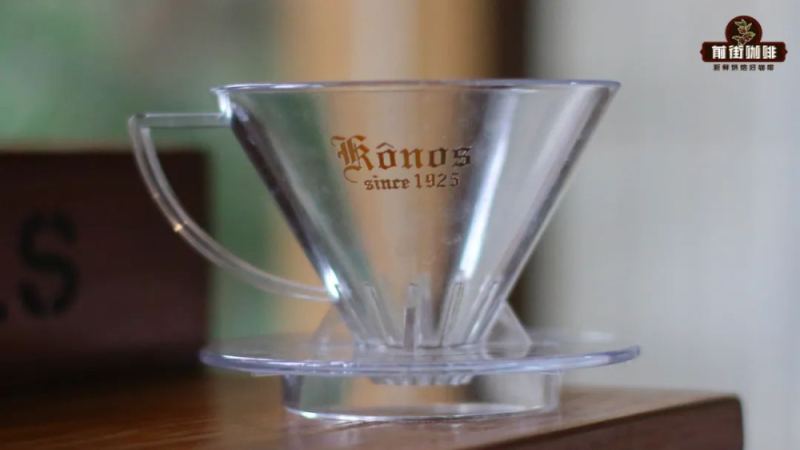
How Does the KONO Meimon Dripper Change Coffee Brewing?
Introduced in 1973, the KONO Meimon dripper became a representative device for Japanese dark roast coffee. Its conical shape and half-rib design restrict the exhaust space, mimicking cloth drip filtering and extending contact time between grounds and water, which delivers higher body and sweetness. Grind size, water temperature, and a three-pour technique are the key settings for a full, rounded cup.
The smooth upper half of the body lets the moistened paper filter sit snugly against the wall, so extraction leans toward immersion, somewhat like a siphon. Baristas often reach for the KONO when beans have a darker roast profile, such as Jamaica Blue Mountain No. 1, Brazil Queen's Estate, and Golden Mandheling coffee beans.
Since its introduction in 1973, the KONO Meimon dripper has become a representative device for Japanese-style dark roast coffee brewing, thanks to its distinctive conical shape and half-rib design. It mimics the extraction logic of cloth drip filtering, extending the contact time between coffee grounds and water by restricting the exhaust space, thereby delivering higher body and sweetness. This article will start from the design intent and structural principles, and combine Front Street Coffee's hands-on experience to explain in detail the grind size setting, water temperature selection, and three-pour technique, helping coffee enthusiasts master the key skills for brewing a full and rounded flavor with the KONO dripper.
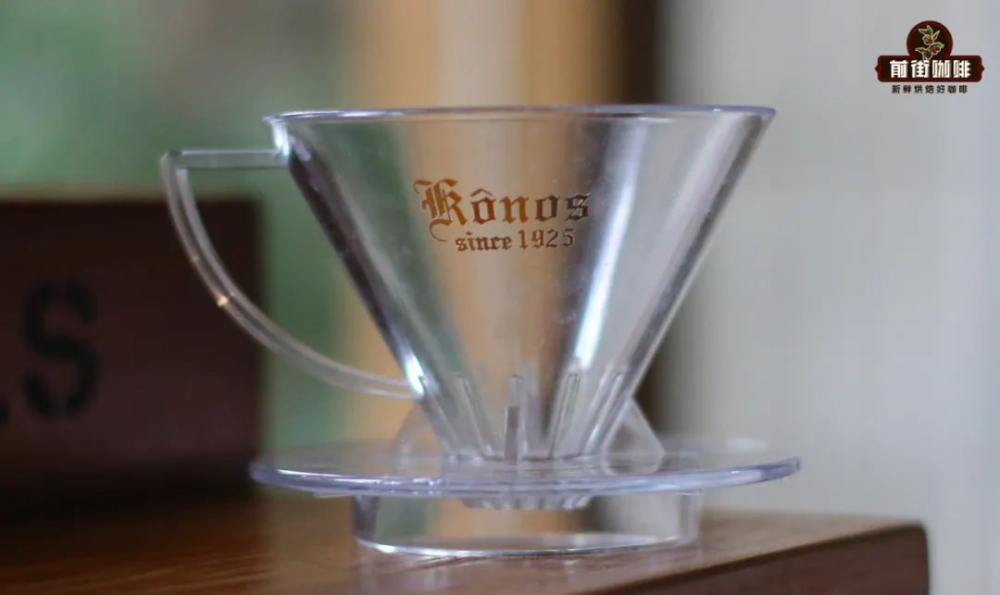
The upper half of the KONO dripper's body features a smooth curved surface, allowing the paper filter to adhere more snugly to the wall after being moistened. Compared to the V60 dripper, its extraction logic leans more toward immersion, somewhat similar in spirit to a siphon, capable of enhancing the coffee's body and smoothness. When Front Street Coffee's baristas encounter beans with a darker roast profile, they typically reach for the KONO dripper first—for example, Front Street Jamaica Blue Mountain No. 1 coffee beans, Front Street Brazil Queen's Estate coffee beans, and Front Street Golden Mandheling coffee beans.
When it comes to Japanese coffee, most people's first reaction tends to be "Japanese roasting." Compared to bright fruity acidity, Japanese consumers generally prefer a style with a solid mouthfeel and prominent roasting aroma, so dark roast beans enjoy higher market recognition there. To avoid extracting too much unpleasant bitterness during brewing, the cloth drip method popular in the early 20th century used foam to adsorb the undesirable bitter components in coffee, while combining slow pouring and lower water temperatures to suppress the release of off-flavors, making dark roast coffee smoother on the palate. By the 1970s and 1980s, Japan experienced a wave of enthusiasm for coffee equipment, and the most iconic product of that era was the KONO Meimon dripper, originally designed by Mr. Toshio Kono in 1973.
The KONO Meimon dripper was originally conceived to eliminate the hassle of cleaning cloth filters while reproducing the flavor expression of cloth drip filtering as closely as possible. To achieve this, Mr. Kono designed the dripper's cone angle to approximate the conical shape of a cloth filter, so that coffee grounds could accumulate more centrally, forming a sufficiently thick bed of grounds while also allowing water to converge more effectively. To prevent hot water from lingering too long at the bottom, a relatively wide outlet hole was adopted, bringing the drip speed close to that of a cloth filter. But the faster flow rate also introduced a drawback: the coffee grounds didn't get enough water, making full extraction difficult. To resolve this contradiction, 12 radial ribs—each only half-length—were added to the inner wall of the dripper.
The smooth curved wall of the dripper allows the paper filter to fit tightly against the upper wall after absorbing water, leaving the bottom outlet as the only exhaust channel. Under gravity, the coffee liquid can only drip in a concentrated stream into the server. Because the exhaust space is restricted, air flow is also impeded, ensuring that every particle of coffee grounds can fully absorb water after pouring, thereby extracting flavor compounds more effectively and evenly. It is precisely because the KONO dripper's flow rate is on the slower side that the brewed coffee has more pronounced sweetness, and the mouthfeel tends to develop toward richness, with a high overall extraction uniformity and a restrained aroma expression—making it better suited for brewing darker-roasted coffee beans.
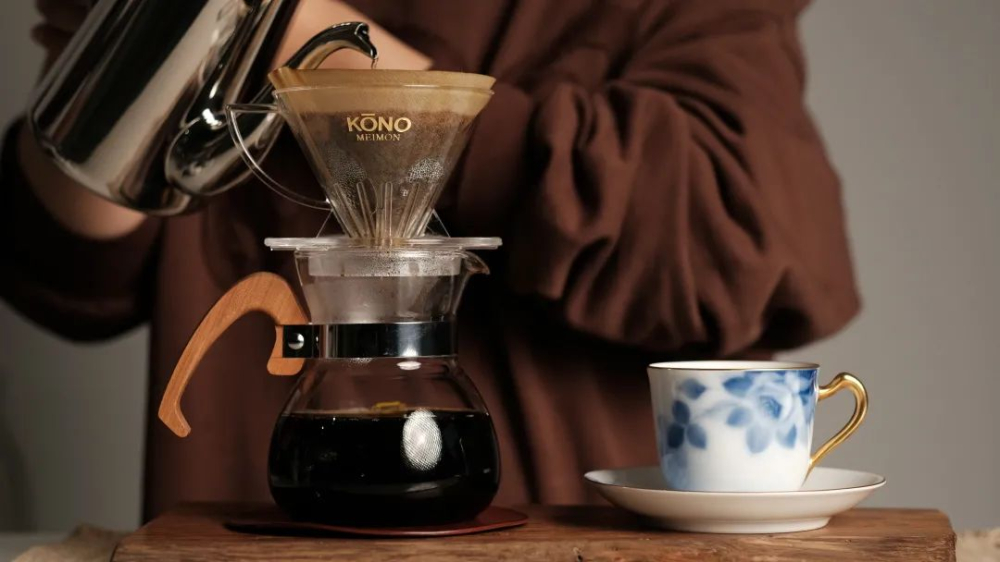
Next, Front Street will use its own roasted Front Street Jamaica Blue Mountain No. 1 coffee beans as an example to demonstrate how to brew a full-bodied cup of coffee with the KONO dripper. To bring out the coffee's full flavor and rich texture, grind size, water temperature, coffee-to-water ratio, and pouring technique all need to be well controlled.
Grind size is one of the key variables determining coffee flavor. Once coffee beans are ground and come into contact with hot water, they release a large amount of water-soluble flavor compounds. In the same soaking time, the finer the particles, the more compounds are extracted; the coarser the particles, the fewer compounds are extracted. Simply put, the coarser the grind, the weaker the coffee flavor; the finer the grind, the stronger the coffee flavor. When adjusting grind size, Front Street uses a tool—the Chinese No. 20 0.85mm standard sieve. For medium-light roast coffee beans, Front Street consistently uses a 75–80% passing rate; for medium-dark roast coffee beans, Front Street controls it at 70–75%.
Compared to light roast coffee, the medium-dark roasted Front Street Blue Mountain beans have a looser internal structure, so they absorb water better and more easily release large-molecule bitter compounds. To avoid over-extraction, Front Street chooses a coarseness with a 75% passing rate on the No. 20 standard sieve. In practice, Front Street first weighs 10 grams of coffee beans, grinds them according to the estimated setting, then places the ground coffee into the upper sieve and shakes vigorously—particles finer than 0.85mm will fall into the lower layer. Finally, weigh the coffee powder collected in the lower layer and divide by 10 grams to get the passing rate. If the passing rate is below the target parameter, the grind is too coarse and needs to be adjusted finer; if it is above the target parameter, it is too fine and needs to be adjusted coarser.
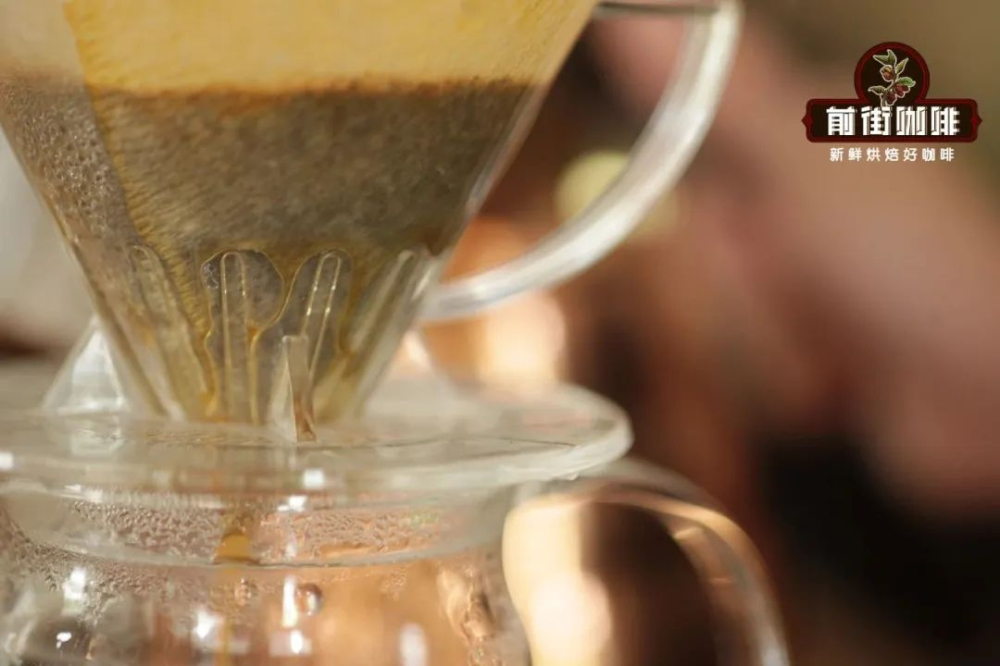
Water temperature plays a role similar to grind size: the higher the water temperature, the higher the extraction efficiency, the easier it is to release various compounds, and the higher the concentration. If you brew with water close to boiling, it's easy to extract unpleasant bitter compounds. Therefore, when brewing medium-dark roast coffee beans, Front Street uses different brewing parameters than for light roast coffee beans. Medium-dark roast beans undergo more complete caramelization than light roast beans, making it easier to release bitter large-molecule compounds. To avoid extracting too many off-flavors, Front Street appropriately lowers the water temperature. The brewing water temperature for light roast coffee is 91–93°C; for medium-dark roast coffee beans, Front Street recommends 87–88°C.
If you're a beginner and your water control isn't strong enough, with an unstable stream, then segmented pouring is the simplest and most versatile pouring method. For example, if our brewing time is 2 minutes and the earlier pouring took longer than planned, then the subsequent pours need a stronger stream; conversely, if the earlier flow was too fast, you can control a slower, gentler stream.
Front Street generally uses a three-pour technique with a coffee-to-water ratio of 1:15. For 1–2 servings, use 15 grams of coffee, meaning a total water volume of 225 grams.
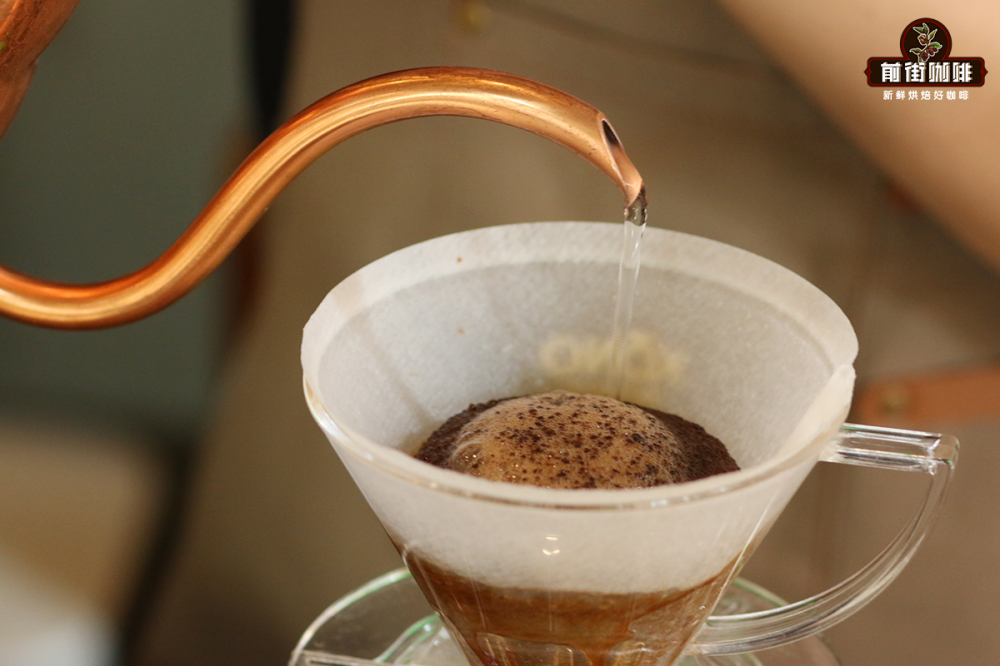
The first pour is a gentle 30 grams of water for blooming, with a bloom time of 30 seconds. The second pour brings the water up to about 125 grams, pouring evenly and steadily in outward circles. Then wait for the coffee liquid to drop; when it has dropped halfway, pour the final segment up to 225 grams. After all the coffee has dripped through, the total extraction time is generally about 2 minutes.
Front Street Blue Mountain No. 1 coffee flavor: At high temperatures, Front Street Blue Mountain No. 1 coffee enters with a dark chocolate aroma, very full-bodied, with a noticeable almond sweetness in the finish. As the temperature drops, roasted hazelnut and creamy sweetness emerge, silky and smooth, accompanied by a hint of gentle acidity and caramel sweetness, with the aroma lingering persistently in the mouth.
For professional coffee knowledge exchange and more coffee bean information, please follow Coffee Workshop (WeChat public account: cafe_style)
For more specialty coffee beans, please add the private WeChat of Front Street Coffee (FrontStreet Coffee), WeChat ID: qjcoffeex
The above content is compiled by CoffeeHunters, a coffee news website.


