







Are Robusta Coffee Beans Really Poor Quality?
Robusta coffee beans are widely cultivated and serve as a key raw material for many coffee products, yet the variety is often labeled poor quality and unpalatable. Botanically known as Coffee Robusta Linden and belonging to the Canephora species, Robusta originated in the Uganda and Congo regions of Africa and stands out for pest and disease resistance, strong adaptability, and fast growth.
Its bitter flavor comes largely from chlorogenic acid, but the variety plays an irreplaceable role in espresso blends, adding rich crema and a creamy mouthfeel. Hybrids such as Tim and Catimor, produced by natural crossing between Robusta and Arabica, are also grown today. The article shares how to use coffee robusta in blends so beginners can try it.
People who drink coffee regularly are no strangers to the name Robusta. It is often labeled as "poor quality" and "unpalatable," and its popularity is far below that of Arabica. But is that really the case? This article will help everyone rediscover this unfairly stigmatized variety: from its botanical classification and origins, to its disease-resistant and high-yield characteristics, to the bitter flavor brought by chlorogenic acid, and its irreplaceable role in espresso blends. Front Street will also share how to use Robusta in blends to give espresso rich crema and a creamy mouthfeel, offering beginners a starting point for those who want to try Robusta.
If you are someone who drinks coffee often, the name Robusta is probably familiar, and some people even call it "Robusta bean" for short. This variety is quite well known, yet it is always labeled as "poor quality" and "bad-tasting." By comparison, people prefer to choose another variety—Arabica. What exactly is the reason behind this? Today, follow Front Street and rediscover this long-misjudged coffee variety.
Robusta, with the Latin scientific name Coffee Robusta Linden, is one of the main coffee varieties widely cultivated around the world and an important raw material source for many popular coffee products on the market.
In the late nineteenth century, leaf rust, a natural enemy of coffee trees, caused large-scale withering and even death of Arabica coffee. At that time, coffee farmers also tried switching to Liberica, but this coffee had low yield and a rather heavy flavor with an obvious smoky note, making it hard for the public to accept, so it did not receive much attention. Later, people discovered Robusta. Front Street has learned that this variety originated in the Uganda and Congo regions of Africa. It has strong resistance to pests and diseases, excellent adaptability to growing environments, and fast growth, so it is favored by many farmers.
From a biological classification perspective, Robusta belongs to the Canephora species, also called Congo species or intermediate coffee. Geisha, which we often hear about, belongs to the Arabica species, while among the Canephora species only Robusta has been commercially promoted and cultivated, so Robusta has almost become synonymous with the Canephora line. Tim and Catimor, produced by natural hybridization between Robusta and Arabica, are now also quite widely planted and are classified under the broad Arabica category.
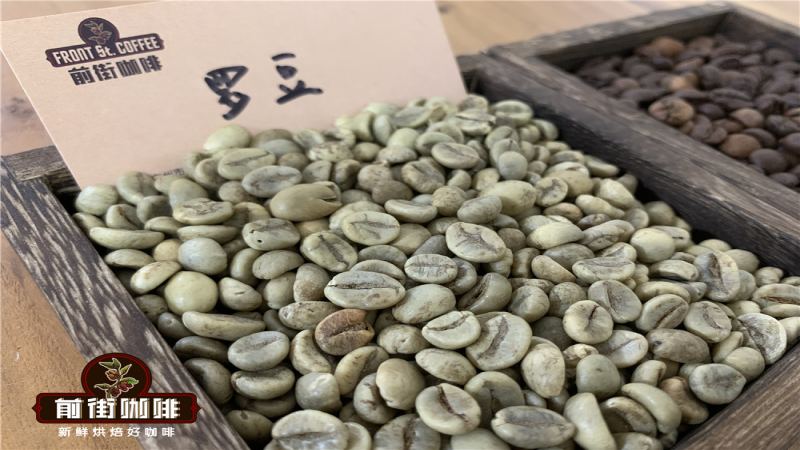
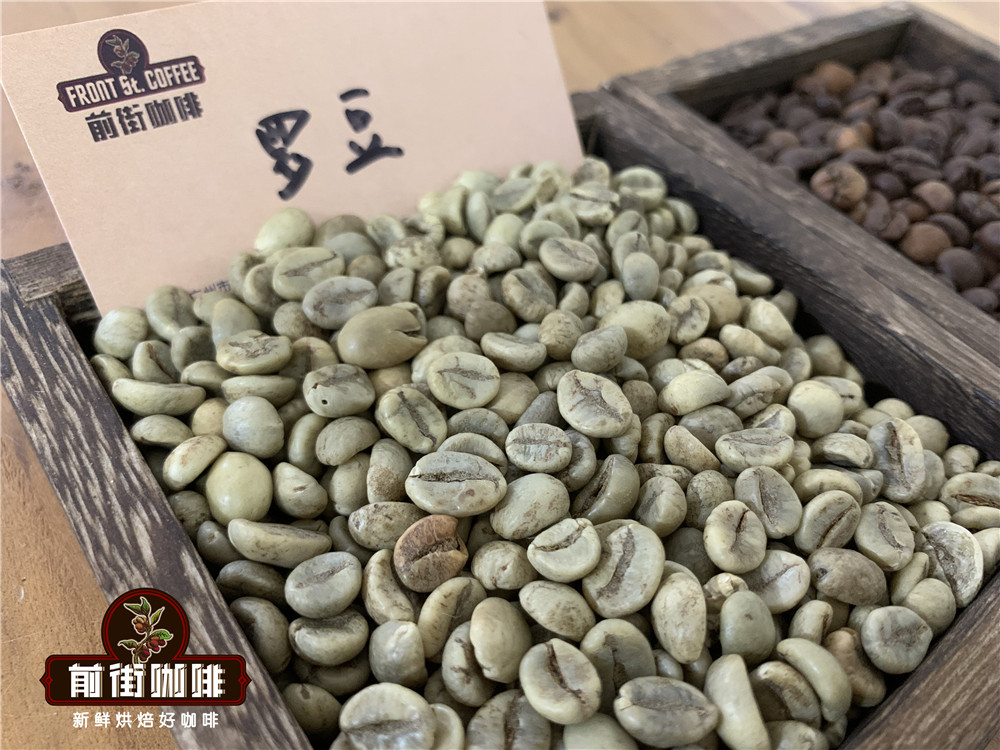
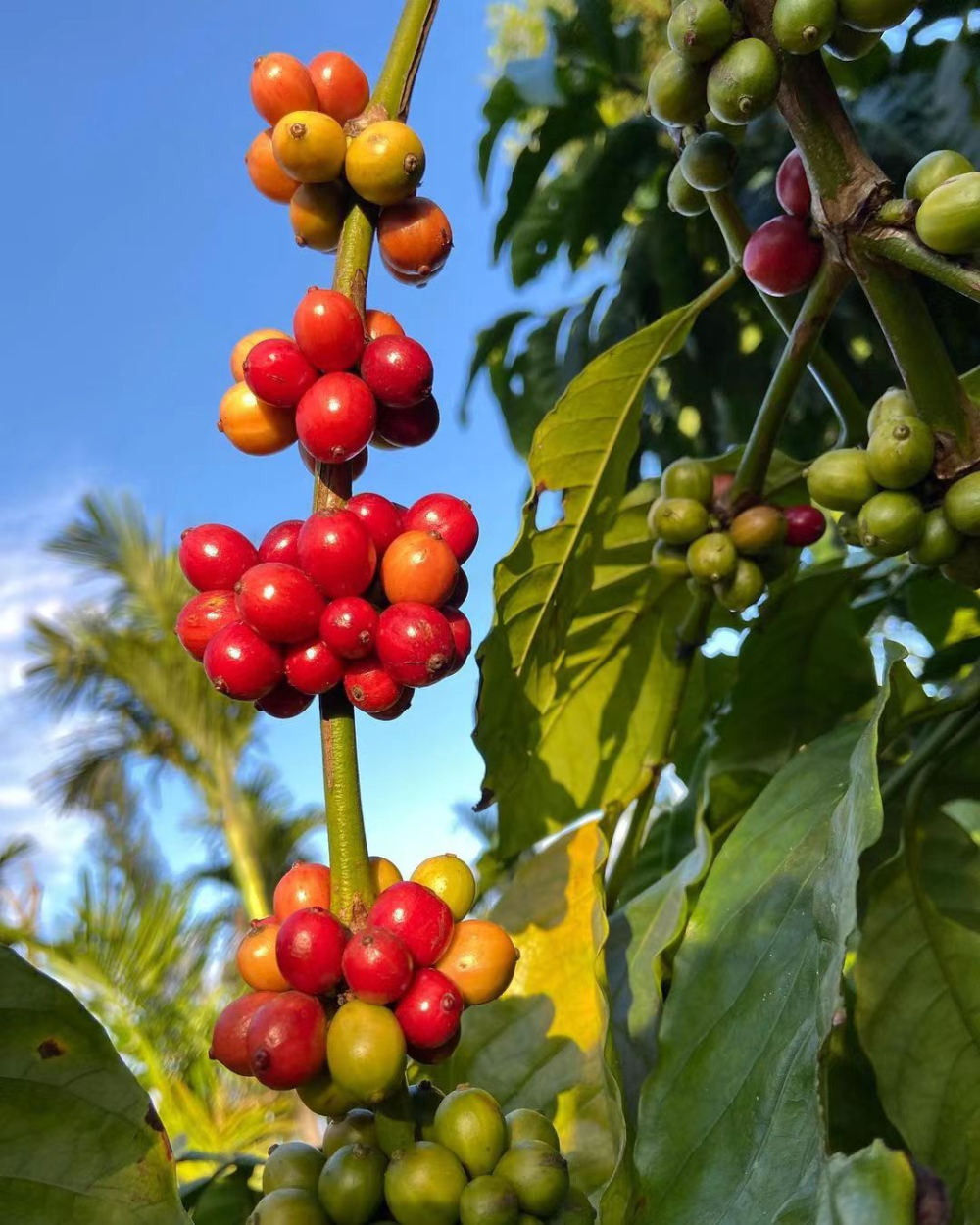
From a cultivation perspective, Robusta coffee trees are tolerant of high temperatures, cold, drought, and moisture, with a fairly high survival rate. Their caffeine content is also high (1.7%~3.0%), about twice that of Arabica. Caffeine is equivalent to a plant's natural pesticide, protecting Robusta from most insect infestation. A single Robusta tree has a very high yield, and the fruit is slightly rounder and smaller than Arabica, with a flat, round bean shape and a straight center crack.
It is precisely because Robusta has strong vitality, high yield, fast maturation, and strong adaptability to the environment, usually growing on low-altitude plains, and can also be managed and harvested uniformly by machine, that the production cost of growing Robusta is lower and it is more suitable for commercial mass production. Naturally, its selling price is also cheaper. For example, most of what is grown in Hainan, China, is Robusta. But even with these advantages, why do people still look down on this variety, and even dislike the derivative varieties of Robusta and Arabica?
According to scientific testing and analysis, Robusta coffee fruit has a very high chlorogenic acid content and a relatively low sucrose content. Chlorogenic acid is the source of coffee's bitter taste, while sucrose is the foundation for our perception of coffee's various aromatic substances. Therefore, Robusta beans often have low acidity, a mellow, deep bitterness, and flavors such as walnut, peanut, hazelnut, barley tea, and grain. When not handled properly, they can also have a strong, pungent earthy smell and a negative rubber-like taste, which is what people often call the "Robusta flavor."
Deeply roasted Robusta beans accumulate a large amount of gas and can release abundant crema when extracted into espresso. The solid mouthfeel also provides coffee with a richer aroma. We all know that coffee in the traditional sense tends to be strong, bitter, and mellow, with acidity not standing out. This happens to match the flavor characteristics of dark-roasted Robusta, and it is also the reason Robusta can still survive in today's specialty coffee era. For example, in Italy, locals mainly pursue coffee's intense taste and rich crema. When formulating espresso bean blends, many coffee shops add a certain proportion of Robusta beans for blending, which both enriches the crema and intensifies the "coffee flavor."
After reading this, I wonder whether everyone, like Front Street, wants to personally taste Robusta coffee. However, top-quality Robusta has higher input costs in production and also sells at a high price. Moreover, the overall flavor of Robusta beans is rich and intense, and not everyone can accept it, so Front Street suggests that everyone can start with espresso made from a Robusta blend.
As Front Street said above, dark-roasted Robusta produces abundant crema during extraction. Therefore, in order to make two espresso blend coffee beans present rich, fragrant crema, Front Street added 10% washed Robusta coffee beans, combining them with Colombian washed coffee beans (30%) + Brazilian semi-washed coffee (60%) to create Front Street commercial blend coffee beans. The resulting espresso has rich golden crema and a nutty aroma. When tasting it, there is a roasted coffee bitterness, but accompanying it is more of a creamy, full mouthfeel. After swallowing, the bitterness also fades away, leaving a lingering fragrance on the lips and teeth.
For professional coffee knowledge exchange and more coffee bean information, please follow Coffee Workshop (WeChat public account: cafe_style)
For more specialty coffee beans, please add the private WeChat of Front Street Coffee (FrontStreet Coffee), WeChat ID: qjcoffeex
The above content is compiled by CoffeeHunters, a coffee news website.


