







How did the coffee seed reach Brazil and spread?
Brazil is the largest coffee-producing country, yet three hundred years ago no coffee tree grew there. According to the familiar account, a Portuguese officer carried coffee seeds hidden in a bouquet from Cayenne in 1727, and those seeds took root and spread. By the 1820s coffee had become Brazil's main export crop.
Six major producing regions now cover the country: Bahia, Espírito Santo, Minas Gerais, São Paulo, Paraná, and Rio de Janeiro. Brazilian coffee is generally soft and smooth with mild acidity and nutty notes, which makes it approachable for beginners. Yellow Bourbon, such as Queen Farm, and Cerrado Red Bourbon show how variety and origin shape the cup.
Brazil is the world's largest coffee-producing country, yet over three hundred years ago there wasn't a single coffee tree here. From a romantic story of seed-passing in 1727 to today's six major producing regions spread across the country, Brazilian coffee has traveled a long and winding road. This article will trace the varietal origins and historical development of Brazilian coffee, introduce the distribution of the six major producing regions—Bahia, Espírito Santo, Minas Gerais, São Paulo, Paraná, and Rio de Janeiro—and highlight the origin information, processing methods, and flavor profiles of two Brazilian beans from Front Street Coffee: Queen Farm Yellow Bourbon and Cerrado Red Bourbon, helping coffee enthusiasts gain a comprehensive understanding of the appeal of Brazilian coffee.
Front Street Brazilian Coffee Bean Characteristics and Taste Soft and smooth, with mild acidity and rich nutty flavors. Front Street Brazilian coffee beans are one of the easiest for many coffee beginners to accept. They are also the first recommendation from Front Street baristas for customers who don't like acidity. If you follow news about the world coffee market, you'll more or less notice that Brazil appears every time there's news of futures prices rising. That's because Brazil is the world's largest coffee-producing country, but interestingly, over three hundred years ago, Brazil was a place without a single coffee tree.
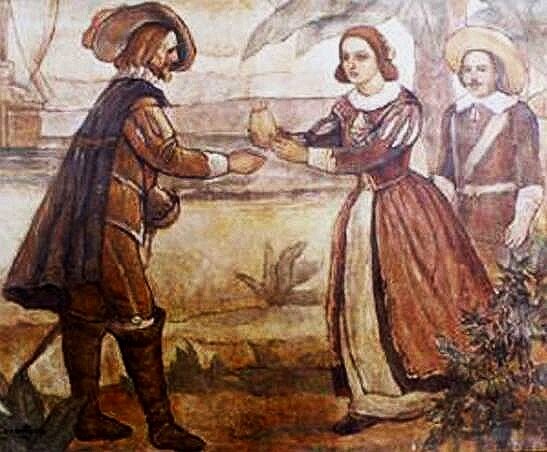
It is said that in 1727, Portuguese military officer Francisco was sent to the island of Guiana to handle a land dispute between France and the Netherlands. After arriving in Cayenne, he developed a secret romance with the local governor's wife. When he was leaving, the governor's wife gave him a bouquet of flowers, and coffee seeds were hidden inside the bouquet. These seeds were later brought to Brazil, took root in the local soil, and gradually multiplied and spread.
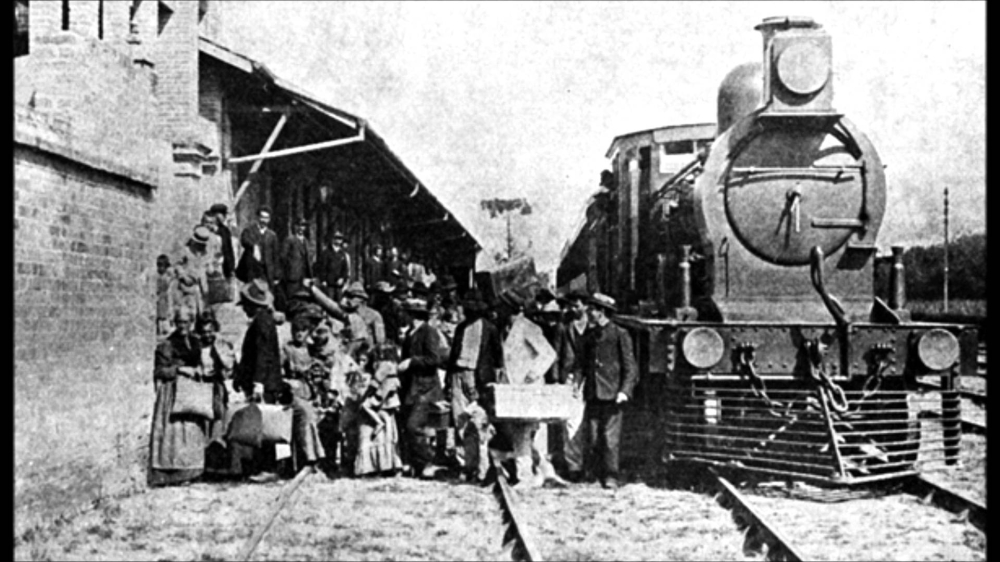
After the American War of Independence broke out in the late eighteenth century, coffee replaced tea as America's patriotic drink, the number of coffeehouses surged, and demand for Brazilian coffee beans climbed accordingly. By the 1820s, coffee had become Brazil's main export crop, generating considerable economic returns for the region, and railways were built directly from the ports to the coffee plantations. By the 1860s during the American Civil War, dependence on Brazilian coffee beans deepened further, and coffee even became a essential military supply.
However, the coffee variety mainly planted in Brazil at the time was Typica, and its productivity could not keep up with demand. So Brazilians went around the world looking for higher-yielding coffee varieties, and ultimately introduced the Bourbon variety from Réunion Island. In the 1870s, the Bourbon variety became the main coffee variety in Brazil.
Today, Brazil's coffee-producing regions are mainly distributed across six major states: Bahia, Espírito Santo, Minas Gerais, São Paulo, Paraná, and Rio de Janeiro.
On the FrontStreet Coffee bean list, the coffee beans from Brazil are all Bourbon varieties, but with a difference: one coffee bean from the Front Street everyday beans series is a Red Bourbon variety, while another from Brazil's Queen Farm is a Yellow Bourbon variety.
Front Street Brazil Queen Farm Yellow Bourbon
Region: Mogiana region, São Paulo State, Brazil
Farm: Queen Farm
Altitude: 1,400 meters—1,950 meters
Variety: Yellow Bourbon
Processing method: Natural
The Yellow Bourbon coffee variety was recorded as appearing in São Paulo State in 1871. It was initially thought to be a mutation in a Typica plant, but scientific verification later confirmed it to be a natural mutation of the Bourbon variety. Because the mucilage layer of the Yellow Bourbon variety is thicker than that of the Red Bourbon variety, and the mucilage layer is rich in sugars, the Yellow Bourbon variety has a more pronounced sweetness, along with a faint lemon aroma.
The Front Street Brazil Queen Farm Yellow Bourbon coffee sourced by Front Street comes from São Paulo State. Brazilian coffee beans occupy an important position among the state's cash crops, and because São Paulo State has the port of Santos, the state is also one of the regions with a long history. The Brazil Queen Farm selected by Front Street is located in Mogiana, the most important coffee sub-region under São Paulo State. The suitable planting altitude (900 meters—1,200 meters), moderate temperature (average temperature around 20 degrees Celsius), and complex terrain produce high-quality Brazilian coffee beans with abundant sweetness.
Queen Farm has a planting area of about 280 hectares, of which more than 200 hectares are planted with the slightly lower-yielding Yellow Bourbon variety. This Front Street Brazilian Yellow Bourbon coffee bean sourced by FrontStreet Coffee uses the natural processing method. Because the natural processing method requires a longer drying time, it consumes more manual labor. To ensure the quality of this Brazilian coffee bean, Queen Farm specifically adopted small-batch natural processing.
After selecting ripe Yellow Bourbon coffee cherries, they are evenly spread on raised beds to avoid contact with the soil, which could produce an earthy taste. At the same time, the coffee cherries need to be turned frequently to avoid the development of unpleasant sour or fermented flavors.
Another Brazilian coffee bean launched by Front Street is the Brazil Red Bourbon coffee from the Front Street everyday beans series. This Front Street Brazil everyday bean comes from the Cerrado region of Minas Gerais State. In the Front Street everyday beans series, the selected regions are all iconic producing regions, and to present the most basic flavors of the region, the processing method is mostly washed. Except for certain regions that follow local traditions—such as Front Street Indonesia Mandheling, which uses Sumatra's highly distinctive wet-hulled processing method—Brazil uses the semi-washed processing method.
Front Street Brazil Red Bourbon
Region: Cerrado region, Minas Gerais State, Brazil
Altitude: 1,100 meters
Variety: Red Bourbon
Processing method: Semi-washed
The reason Brazil initially adopted the semi-washed processing method on a large scale was that it wanted to increase coffee bean export volume at the end of the twentieth century. Compared with the most primitive coffee processing method—natural processing—washed processing can greatly shorten the drying time of coffee beans and improve the quality of green coffee beans. However, many places in Brazil do not have sufficient water resources, and washed processing requires a large capital investment. Brazil could not fully satisfy either of these two points for fully washed methods, so based on local conditions, pulped natural processing was developed—what everyone often hears called semi-washed processing.
The semi-washed processing method removes the skin and pulp of the coffee cherry, then evenly spreads it out to dry. This method effectively shortens the time required for natural drying, improves the quality of green beans, and at the same time brings a different experience to the coffee's flavor and mouthfeel. Sharp-eyed readers will notice that Brazil's semi-washed method has similarities to honey processing. In fact, Costa Rica's honey processing method borrowed from Brazil's semi-washed processing method.
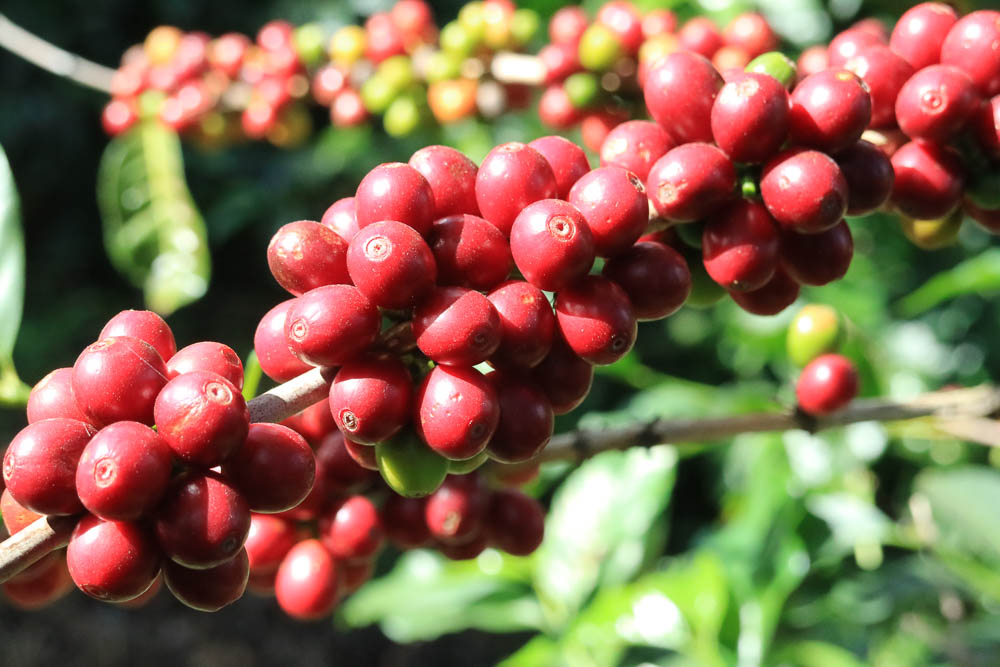
Brazil's Cerrado region belongs to Minas Gerais State. The state's coffee production in 2020 accounted for 40% of Brazil's total coffee production, making it one of Brazil's largest coffee-producing regions. In addition, the Cerrado region was the first coffee-producing region in Brazil to obtain Brazilian origin certification. This Front Street Brazil Cerrado coffee bean launched by Front Street has the classic Brazilian coffee flavor.
Because these two Front Street Brazilian coffee beans use a medium-dark roast level, when brewing, Front Street recommends using a water temperature of 88 degrees Celsius, a KONO dripper, and a medium-coarse grind.
Dripper: KONO dripper
Water temperature: 88 degrees Celsius
Coffee dose: 15 grams
Coffee-to-water ratio: 1:15
Grind level: 75% passing through China standard No. 20 sieve
First pour 30 grams of water to bloom for 30 seconds, then pour slowly in a small stream from the center in a circular motion to 125 grams, and just before the coffee bed is exposed continue pouring to 225 grams. Total extraction time is about 2 minutes.
[Front Street Brazil Queen Farm] Rich nutty flavors on entry, sugarcane sweetness, with a faint lemon aroma, dark chocolate finish, rich layers, and a smooth, rounded mouthfeel.
[Front Street Brazil Cerrado Red Bourbon] Rich roasted peanut and nutty flavors on entry, caramel sweetness, and a creamy, silky mouthfeel.
For more coffee bean information, please follow Coffee Workshop (WeChat public account cafe_style) For professional coffee knowledge exchange, please add WeChat ID kaixinguoguo0925
The above content is compiled by CoffeeHunters, a coffee news website.


