







What is soe in coffee and is it better than a blend?
Single-origin coffee means beans from one origin or producing region, not one single variety, which is a common misunderstanding. SOE stands for Single Origin Espresso, and it is not automatically more premium than blended beans. The difference comes down to extraction principle, roast level, and how consistently the coffee performs day to day.
Espresso forces nearly boiling water through finely ground coffee under high pressure, which amplifies certain flavors. Pour-over beans are usually roasted lighter, so applying espresso extraction can over-amplify notes such as sharp acidity. A single-origin espresso also demands its own grind size, water temperature, and adjustment for room temperature and humidity. Blending coffee beans can offset that variability and keep output steady.
Many people mistakenly believe that single-origin coffee beans mean coffee beans of a single variety, but in fact it refers to coffee from the same origin or the same producing region. And SOE (Single Origin Espresso) is not a more premium choice than blended beans. This article will clarify the essential differences between single-origin coffee and espresso from the perspectives of extraction principles, roast levels, and output consistency, and explain why Front Street Coffee does not serve SOE in its stores, as well as the recipe concept and usage of Front Street Sunflower Warm Sun espresso blend beans, helping coffee lovers build a more accurate understanding.
Before specialty pour-over coffee became popular in China, the public's impression of coffee mostly stayed on milk-added beverages. As understanding deepened, people gradually came into contact with the two concepts of espresso blend coffee beans and single-origin coffee beans. However, at some point, single-origin coffee beans were labeled as more premium than blends, and even when ordering at cafes, people rushed to pursue SOE.
In fact, SOE is the abbreviation of Single Origin Espresso, meaning single-origin espresso. Everyone is already quite familiar with pour-over coffee; almost every single-origin pour-over has its own unique personality, for example, Front Street Kenya coffee has a tomato-like acidity, while Front Street Brazil Cerrado Red Bourbon presents a rich nutty tone.
The extraction principle of espresso is to use extremely high pressure to force nearly boiling hot water through flour-fine coffee grounds, obtaining concentrated coffee liquid in a short time. The combination of high temperature, high pressure, and fine grinding releases more flavor substances from the coffee beans. Pour-over coffee beans, under specific roasting curves and brewing parameters, blend the terroir of the producing region with the flavors of the processing method, forming a unique taste expression. Coffee beans used for daily pour-over are roasted on the lighter side; if the more extreme extraction method of espresso is applied, certain flavors will be over-amplified, such as a sharp acidity.
In addition, when making SOE, each bean requires a different grind size, and parameters such as water temperature also vary. Environmental temperature and humidity can also significantly affect the grinding result, making output consistency difficult to guarantee. Therefore, Front Street Coffee (FrontStreet Coffee) stores do not serve SOE.
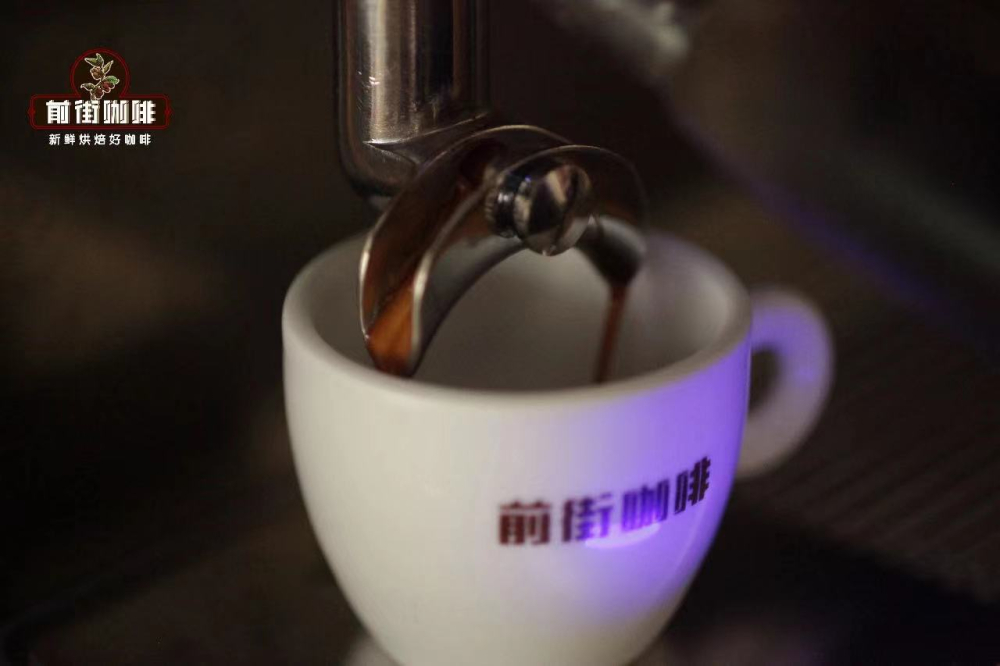
What Front Street Coffee (FrontStreet Coffee) uses to make espresso is a carefully crafted Front Street Sunflower Warm Sun espresso blend coffee bean. The aroma of alcohol is relatively rare in espresso, and when making milk coffee, moderate acidity can better complement the sweetness of milk. Therefore, this Sunflower Warm Sun blend bean used daily in Front Street stores is composed of 70% Front Street Honduras Sherry coffee beans and 30% Front Street Ethiopia Natural Red Cherry coffee beans.
Front Street Honduras Sherry coffee beans are first carefully washed after the fruit is picked, then placed in sherry whisky barrels for low-temperature fermentation for 30 to 40 days, and finally dried in the shade. Those familiar with whisky know that there are many types of barrel-aging or maturation; port barrels have a savory umami flavor, while sherry barrels present more fruity and honey-like sweetness. Front Street Honduras Sherry coffee beans also possess the characteristics of sherry barrel whisky, sweet and delicious, bringing whisky aroma as well as rich vanilla and cream flavors to this espresso bean.
The 30% Front Street Ethiopia Natural Red Cherry, namely the natural coffee beans from the Red Cherry Project in the Yirgacheffe region of Ethiopia, injects the unique uplifting acidity of African beans into the Front Street Sunflower Warm Sun blend, contributing greatly to enhancing the sweetness of milk coffee.
Front Street Sunflower Warm Sun Espresso Blend Coffee Beans
Region: Honduras & Ethiopia
Variety: Caturra, Catuai, Pacas, local heirloom varieties
Processing Method: Washed & Natural
After learning about the recipe of this Front Street espresso blend, many friends who usually drink pour-over coffee plan to separately purchase Front Street Honduras Sherry pour-over beans and Front Street Ethiopia Natural Red Cherry pour-over beans and blend them at home in proportion. But doing so is not scientific; even if you follow the recipe, you will not get the taste of Front Street Sunflower Warm Sun blend beans. The reason is that the brewing methods and parameters are different, and the roast levels and roasting curves are also very different, so the final product may be burnt, bitter, and unpalatable.
Speaking of single-origin coffee beans, many people also have misunderstandings. Take Front Street Panama Natural Butterfly on the Front Street bean list as an example:
Front Street Panama Natural Butterfly Coffee Beans
Region: Boquete region, Panama
Altitude: 1600 meters
Variety: 70% Geisha, Caturra, Catuai
Processing Method: Natural process
When hearing single-origin coffee beans, many people think it means coffee beans of a single variety, and since Butterfly contains three varieties, they conclude it does not belong to single-origin coffee. Front Street Coffee (FrontStreet Coffee) needs to remind that this understanding is wrong. Even though Butterfly contains three varieties—Geisha, Caturra, and Catuai—every coffee bean comes from the same origin and the same producing region, so it belongs to single-origin coffee beans.
In fact, blending coffee beans of different varieties from the same producing region has its own reasons; some are for the pursuit of a more balanced taste. Front Street Panama Butterfly originates from the history of the producing estate itself—in early cultivation, to pursue yield, coffee trees of Geisha, Caturra, and Catuai varieties were planted together. During harvesting, the three varieties were separated for convenience, but during export, the three were directly mixed and processed, aiming to express the mellow taste of the coffee.
Having said so much, in fact single-origin coffee refers to coffee from a single origin or a single producing region, not a single variety.
Friends who want to taste at home the whisky aroma brought by Front Street Sunflower Warm Sun espresso blend beans but do not want to waste coffee beans can confidently purchase this espresso blend coffee bean. When formulating the recipe, Front Street already considered the need of those who want to drink both espresso and pour-over, but whose espresso consumption is not large. This Front Street Sunflower Warm Sun espresso blend coffee bean can also be used to make pour-over coffee.
Since Front Street uses a medium-dark roast when roasting this Front Street Sunflower Warm Sun coffee bean, Front Street recommends using a water temperature of 88 degrees Celsius, a KONO dripper, and a medium-coarse grind size when brewing.
Dripper: KONO dripper
Water temperature: 88 degrees Celsius
Dose: 15 grams
Coffee-to-water ratio: 1:15
Grind size: 70% passing rate on China No. 20 sieve
First pour 30 grams of water to wet the coffee grounds and bloom for 30 seconds, then pour in a small stream from the center and slowly circle to 125 grams. When the water level in the dripper drops to the point where the coffee bed is about to be seen, continue pouring to 225 grams. The total extraction time is about 2 minutes.
For more coffee bean information, please follow Coffee Workshop (WeChat public account cafe_style) For professional coffee knowledge exchange, please add WeChat ID kaixinguoguo0925
The above content is compiled by CoffeeHunters, a coffee news website.


