








What Coffee Species Name Is Grown in Papua New Guinea?
Papua New Guinea coffee from the Bird of Paradise Estate in the Wahgi Valley is Typica, AA grade, washed three times, and it is not a dark roast. The cup shows toasted bread sweetness, nutty notes and bright fruit acidity. The Typica planted there was originally introduced from Jamaica Blue Mountain, so the coffee is often nicknamed Little Blue Mountain.
Flavor depends on variety, soil, altitude and processing. Papua New Guinea sits between the equator and 10 degrees south latitude, with rainforest, volcanoes and highland terrain reaching 2,500 meters, conditions that suit how coffee beans grow. The country's south is plains and lowland, the center is the Central Range, and the north has its own terrain.
Papua New Guinea has frequently appeared in coffee lovers'视野 in recent years. This land with volcanic soil and island climate nurtures coffee beans with a distinctive flavor profile. The Front Street Papua New Guinea Bird of Paradise coffee beans launched by Front Street Coffee come from the Bird of Paradise Estate in the Wahgi Valley, and with the Typica variety, AA grade, and a three-time washed fermentation process, they present layers of toasted bread sweetness, nutty notes, and bright fruit acidity. This article will fully break down the flavor code of this bean from producing region environment, cultivation history, processing method to brewing parameters, and answer a common question: Is Bird of Paradise actually dark-roasted coffee? The answer will be revealed in the roasting degree and brewing suggestions.
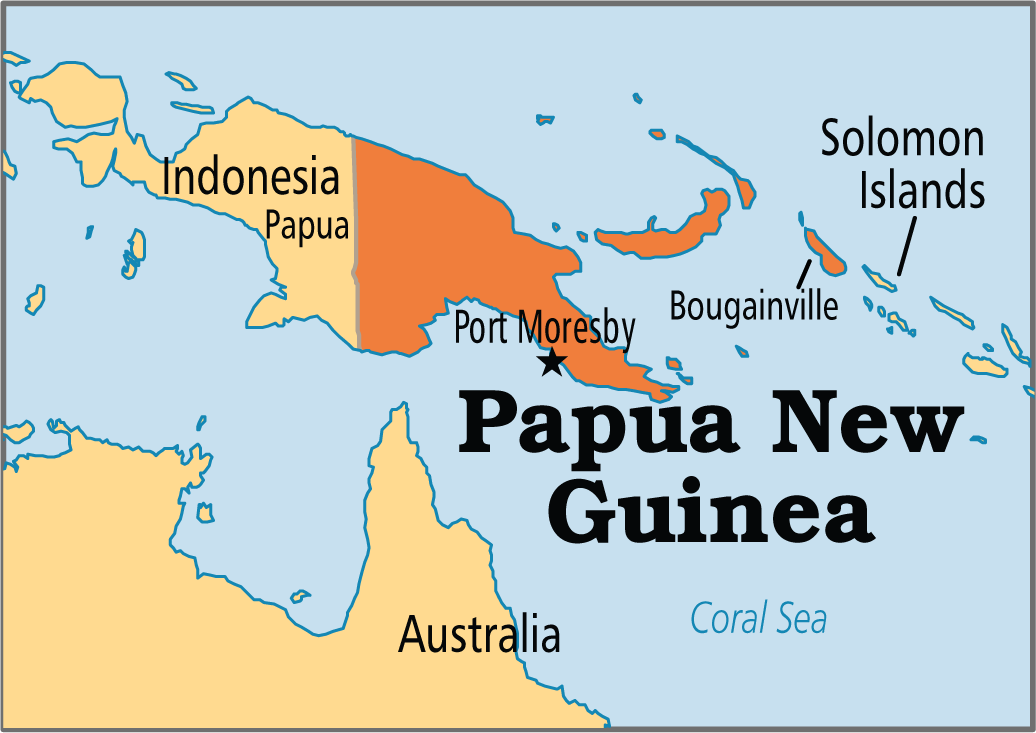
In recent years, Papua New Guinea has gradually become popular in the coffee circle, and Front Street Coffee has also launched a Front Street Papua New Guinea coffee bean. Among the many options, what Front Street Coffee pays most attention to is the lot produced by the Bird of Paradise Estate. The reason is that the estate's beans are stable in quality, highly recognizable in flavor, and can better present the basic style of the Papua New Guinea producing region.
The earliest Typica planted in Papua New Guinea was introduced from Jamaica Blue Mountain, and combined with the local island-type growing conditions, it is therefore often called "Little Blue Mountain." In daily conversations with customers, Front Street Coffee also habitually uses "Little Blue Mountain" to refer to Papua New Guinea coffee. First, because of this historical origin, and second, because this name is indeed much easier to remember than the full name.
Whether a cup of coffee tastes good depends on many factors such as variety, soil, altitude, and processing method. Front Street Coffee believes that among them, the influence of altitude is particularly critical. Papua New Guinea has a typical island-type climate, is located between the equator and 10 degrees south latitude, and has tropical rainforests, volcanoes, and highland terrain, with altitudes reaching 2,500 meters, making it an ideal place for growing coffee. The southern part of the country is plains and lowlands, the southeast coast has a narrow strip, the center is the Central Range, and the north is composed of several independent mountain ridges. This place is extremely rich in animal and plant resources, with about 6,500 native plant species and about 380 native bird species.
Most coffee in Papua New Guinea is grown in highland areas. The highland region can be roughly divided into the Eastern Highlands Province and the Western Highlands Province. Coffee in the Eastern Highlands Province is mostly concentrated around Goroka and Kainantu, among which the Arona and Purosa estates are the most famous.
Coffee in the Western Highlands Province is usually grown on the outskirts of Mount Hagen. The Kimel Estate on the north side of Mount Hagen produces beans of good quality; the Wahgi Valley near Mount Hagen is renowned for its ideal climate and fertile volcanic soil, and the Bird of Paradise Estate is located exactly here. Papua New Guinea's total coffee production is not large, and 85% of it is cultivated by smallholder farmers and processed by washing. Front Street believes that the flavor of the country's coffee is different from the dull and low-toned character of Indonesian beans; instead, it has bright sweet acidity and floral and fruity aromas, and the overall style is closer to South America.
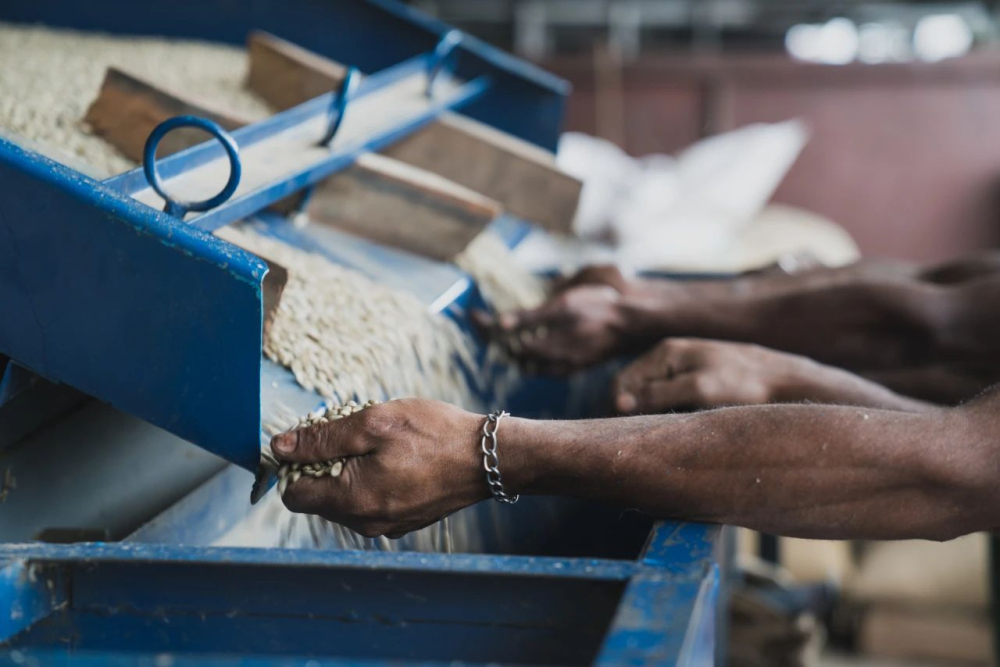
Front Street has learned that the washed processing in Papua New Guinea differs from that in Central and South America. The local method uses three-time washed fermentation, soaking for about 24 hours each time, and changing to clean water to regulate the flavor. After washing is completed, the husk is removed, and then various grading procedures are carried out. Front Street Coffee has found that in producing regions with strict grading systems, the coffee beans produced share a common characteristic: uniform bean size and few defective beans.
There is another consideration in Front Street choosing to launch Front Street Papua New Guinea Bird of Paradise coffee beans: every bean Front Street Coffee purchases is expected to have a unique personality, and it will not repeatedly introduce products with similar flavors. The reason Front Street spends a great deal of time selecting beans, adjusting roasting curves, and tuning parameters is precisely that a coffee bean may have similarities to others, but it must have its own distinctiveness.
The Bird of Paradise Estate was founded in 1950 and is a pioneer of the local coffee industry. The estate is located in the Wahgi Valley of the Western Highlands Province, and the soil is mineral-rich volcanic soil. The Bird of Paradise Estate attaches great importance to ecological protection, does not use pesticides or insecticides, and protects the surrounding ecology and birds. Front Street Coffee also agrees with this concept of sustainable development, which can both improve the ecological environment and help enhance coffee bean quality.
Below is the basic information of this Front Street Papua New Guinea coffee bean for everyone's reference. In order to show the coffee's rich nutty notes while retaining bright grapefruit acidity, Front Street uses a medium-dark roast to present this Front Street Papua Bird of Paradise coffee bean.
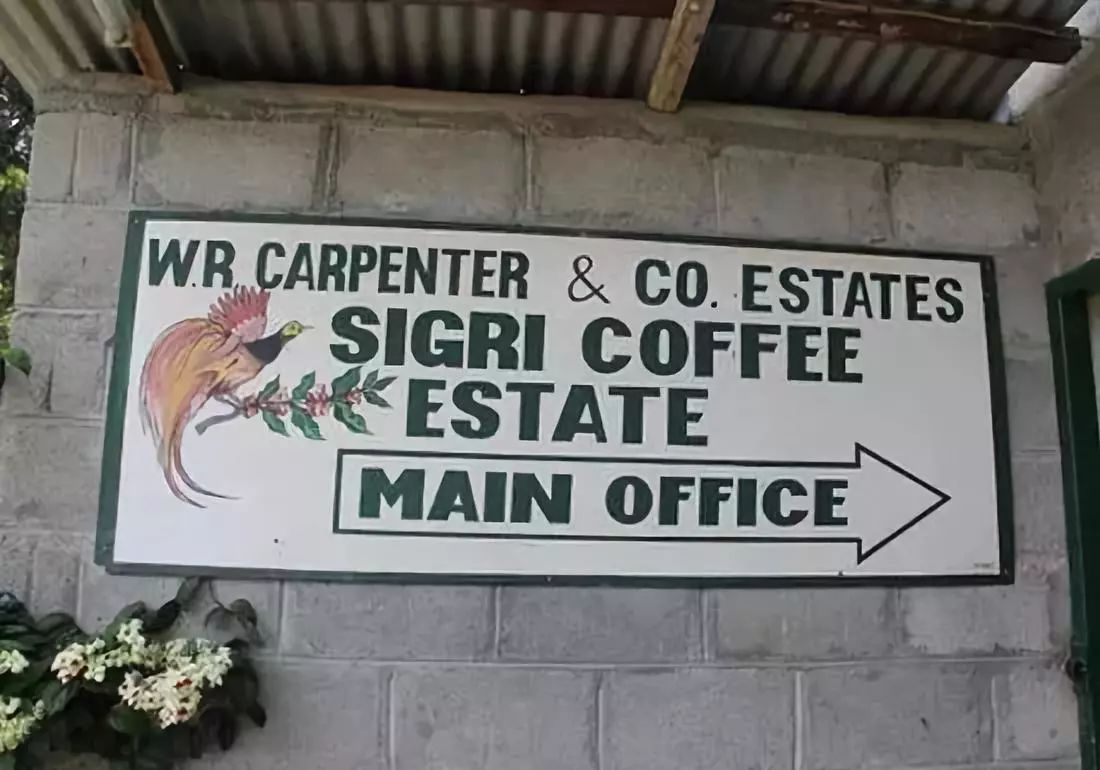
Front Street Papua New Guinea Bird of Paradise Coffee Beans
Estate: Bird of Paradise Estate
Variety: Typica
Grade: AA
Altitude: 1,600-1,800 meters
Processing method: Washed
Flavor: The sweetness of toasted bread, nutty sweetness, and the sweet-tartness of slight fruit acidity form a good sense of layering, similar to fruity aroma, with a spicy note in the aftertaste, and a rich and balanced mouthfeel.
Front Street Coffee Barista's Parameters and Suggestions for Brewing Front Street Papua Bird of Paradise
Dripper: Kono dripper
Water temperature: 88°C
Coffee dose: 15 grams
Coffee-to-water ratio: 1:15
Grind size: 70-75% passing through a No. 20 standard sieve
Front Street usually uses a KONO dripper to extract medium-dark roasted coffee beans. The upper part of the KONO dripper is a smooth curved surface, which allows the filter paper to fit more closely. Compared with the V60 dripper, its extraction method is mainly immersion-based, which helps increase the overall concentration of the coffee and enhance body. In addition to KONO, commonly seen Kalita trapezoidal drippers, flannel, and other slower-flow devices are also suitable.
In addition, medium-dark roasted coffee has undergone a certain degree of roasting, and the internal structure of the beans is fluffier than that of light-roasted beans, with better water absorption. In order to avoid over-extraction, Front Street chooses a grind size with 75% passing through a No. 20 standard sieve, paired with a water temperature of 88°C, and uses Front Street's usual three-stage pouring.
For the first stage, gently pour 30 grams of water for blooming, with a blooming time of 30 seconds; for the second stage, pour to about 125 grams of water, evenly and steadily circling outward. Then wait for the coffee liquid to drop. When it has dropped by half, pour the final stage of water to 225 grams. After all the coffee has dripped through, the total extraction time is generally about 2 minutes.
The above content is compiled by CoffeeHunters, a coffee news website.


