







What makes Acatenango geisha coffee taste different?
Guatemalan geisha coffee from the Acatenango region shows floral aromatics, fruit acidity, and layered honey sweetness. Gesha originated in Ethiopia's forests and rose to fame through Panama's Hacienda La Esmeralda, becoming one of the most expensive coffees sold at auction. Guatemala's subtropical climate and volcanic terrain give its Gesha a distinct cup from the Panamanian original.
Guatemala uses washed processing, which keeps the cup clean and highlights the variety's citrus and stone-fruit notes. Because terroir shifts flavor so much, gesha coffee from Colombia, Costa Rica, and Ethiopia each tastes different. Roasting lighter preserves the aromatics, and brewing with a moderate ratio and medium grind keeps the sweetness balanced.
Gesha coffee has won the hearts of many coffee lovers with its citrus fruit aromas, honeyed sweetness, and richly layered flavors. From Ethiopia's primordial forests to Panama's Hacienda La Esmeralda, Gesha's value has climbed steadily, and today Colombia, Guatemala, Costa Rica, and other producing countries have also introduced it. Because terroir varies greatly from place to place, Gesha from different origins presents distinctly different flavor profiles. This article focuses on Guatemala's Acatenango region, outlining its geography, variety origins, and cultivation history, describing in detail that region's Gesha floral aromas, fruit acidity, and sweet layers, while also introducing Guatemala's washed processing method and sharing Front Street Coffee's roasting approach and brewing parameters—offering readers comprehensive origin knowledge and practical brewing reference.
Professional coffee knowledge exchange. For more coffee bean information, please follow Coffee Workshop (WeChat public account: cafe_style).
Gesha coffee has citrus, fruit sweetness without sourness, honey, and a rich mouthfeel; it is a coffee everyone loves. Compared with Ethiopian coffee, Gesha has more of a juicy quality, like a cup of fruit juice tea—very delicious and endlessly memorable.
Gesha originally grew in the forests of Ethiopia, until it met Panama's Hacienda La Esmeralda and became one of the most expensive coffees in the world, more famous even than Blue Mountain. So producing countries everywhere are now growing Gesha coffee , such as Colombia, Guatemala, Costa Rica, and of course Ethiopia, the birthplace of coffee. Because each region's climate and environment differ, even Gesha tastes different from place to place.
For this very reason, the Gesha coffees Front Street has brought in include not only Panama's Hacienda La Esmeralda but also those from other producing countries, such as Colombia's Flower See Gesha coffee, Costa Rica's Mirazu Gesha blend, and Panama's Butterfly Gesha blend. To let more friends taste Gesha coffee's flavors, Front Street has specially made Boquete Gesha coffee from Panama's Boquete region one of its everyday beans.
Today let's learn about Guatemala's Gesha coffee.
Guatemala is located in the center of North and South America, and this country—occupying an important geographic position in Central America—has a subtropical climate. Its terrain is high-altitude volcanic, and the mild climate and fertile soil create an excellent environment for growing coffee. Coffee is therefore an important cash crop for Guatemala, with green coffee beans accounting for about 40% of the nation's total agricultural exports. It is precisely because of Guatemala's high-altitude volcanic terrain that Guatemalan coffee has a slight smoky note in the finish. So if someone asks you to recommend a coffee with smokiness, you'll know which coffee beans to suggest.
Guatemala's Coffee Regions
Guatemala has eight coffee regions, all located on highland terrain under a subtropical climate, with abundant and stable rainfall and fertile volcanic ash soil, giving every part of Guatemala natural conditions extremely well suited to coffee cultivation. Each coffee region has its own unique flavor. The most famous are the Huehuetenango region and the Antigua region.
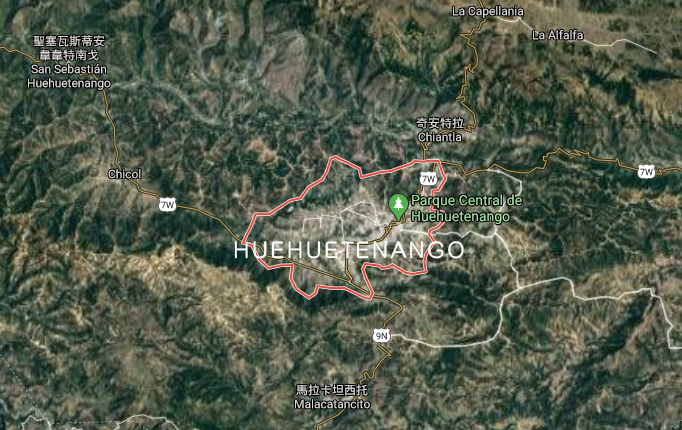
Huehuetenango / Finca El Injerto
Among Guatemala's three non-volcanic coffee regions, Huehuetenango is the highest in altitude and also the driest.
Huehuetenango lies at the foot of the Cuchumatanes, the highest non-volcanic mountain range in Central America. Thanks to the warm, dry air blowing in from Mexico, coffee in this region can be grown at elevations of nearly 2,000 meters without frost occurring easily. The high-altitude growing environment, combined with the region's abundant water resources, gives Huehuetenango coffee excellent quality: the beans are plump, the flavor is clean and smooth, the acidity is bright, and most have aromatic, translucent fruit notes.
Finca El Injerto, a multiple COE champion, is located on the Huehuetenango plateau. The estate began growing coffee in 1900 and is run by the Aguirre family. The estate preserves large tracts of primary rainforest, with abundant shade cover from plants, and an average temperature of around 18 to 22 degrees Celsius. Heavy plant shade cover, high-altitude cultivation, ample sunlight, and pleasant temperatures provide an exceptionally favorable living environment for coffee trees.
As one of the most famous coffee regions, its coffee has notes of berries, lemon peel, and fruit acidity; compared with Ethiopian coffee, the mouthfeel is somewhat fuller. Front Street has also chosen coffee from this region as one of its everyday beans representing Guatemalan coffee.
*Antigua:
Rich volcanic soil, low humidity, strong sunlight, and cool evening breezes are the hallmarks of the Antigua area. Three spectacular active volcanoes—Agua, Acatenango, and Fuego—form a beautiful valley landscape. The active Fuego volcano occasionally adds a hazy dust. Front Street's single-origin Guatemala Flower God coffee comes from this region.
Guatemala Gesha - Acatenango Region (Guatemala Acatenango Gesha).
In 2007, Guatemala added its eighth coffee region, Acatenango Valley(R), which we translate as "Acatenango region."
Acatenango is located in Guatemala's Chimaltenango department; the region's more than 5,000 hectares of coffee farms all have fertile volcanic soil, and are mainly situated along two major volcanic mountain ranges, almost all with forests and shade trees. As the photo above shows, the estates almost all practice shade cultivation, and the main variety is still Bourbon, along with some Catuai and Caturra.
Acatenango's two major volcanoes are Volcan de Fuego and Volcan Acatenango; Acatenango in particular is the third-highest peak among Central American volcanoes, and crossing over Fuego volcano brings you to Lake Atitlan. The region's annual rainfall is 48 to 72 inches, with an average annual temperature of 14–31°C. The large temperature difference makes the beans dense and compact, which greatly helps the flavor. The coffee harvest season is mainly from mid-January to March. The Kaqchiquels people still live in this region and maintain traditional farming methods; there are about 4,000 farming households in this region in total, and coffee cultivation here dates back to 1880.
Guatemala Gesha comes from a small estate in Acatenango and is the same lot as that of the well-known green bean merchant Sweet Maria's. Because of its high quality—classic Gesha flavors such as floral aromas, tropical fruit, and intense sweetness—Sweet Maria's has bought Gesha from this region for several consecutive years. Acatenango is located in southwestern Guatemala, west of the Antigua region, and has a well-known Acatenango volcano. Gesha is an heirloom variety from Ethiopia, a natural mutation of Typica, brought to Costa Rica decades ago through an experimental program; several estates obtained this coffee for small-scale trial planting to assess its merits, and it later spread to Guatemala, Panama, Colombia, and other countries. But it was not until Panama's Hacienda La Esmeralda cupped Gesha as a separate lot that the variety's exceptionally outstanding flavor was understood. Gesha won the 2004 Best of Panama competition, and only then did the world learn of this coffee's utterly distinctive and marvelous flavor; its rich floral and fruit aromas seem to surpass even Yirgacheffe coffee from half a world away.
Acatenango Gesha has an intense floral aroma and can be said to possess the classic Gesha flavor: fresh perfume, honeyed sweetness, and complex layering. The dry aroma of a light roast has a long, elegant floral note (white flowers such as jasmine), herbal and tea notes, and some citrus and stone-fruit sweetness. The wet aroma intensifies the florals, like a big bouquet of orange blossoms held right up to your nose; beyond the florals it is also full of honeyed sweetness, with some rose water and chrysanthemum tea notes. When the coffee is hotter, the drinking flavor is somewhat flat, but at medium and lower temperatures the florals and honeyed sweetness unfold powerfully: fresh jasmine florals bring out lime sweet-and-sour notes, herbal tea aromas, and honeyed sweetness, along with melon, lemon, citrus, and bergamot sweet-and-sour notes. The fruit acidity is bright, combining both citrus and green apple sweet-and-sour notes; besides tropical fruit flavors there is also the fresh coolness of herbs and a black tea aroma!
Guatemalan Coffee Bean Processing Methods
Coffee Processing Methods: Guatemalan coffee beans are mainly processed using the washed method.
After harvesting, the sorted coffee cherries are put into a depulper to initially remove the skin and pulp. Then the green beans with residual pulp and mucilage are placed in water to ferment for about 24 hours. After fermentation, they are washed in a flowing water channel; after washing, the coffee beans are sun-dried or dried with a dryer until the moisture content drops to about 12%, then transferred to a warehouse, and finally the parchment of the green beans is removed, ready for sale. This processing method can express a very clean mouthfeel. At the same time, Front Street believes that washed coffee best showcases a region's basic flavor, so this bean is also very suitable for coffee newcomers, marking the flavor of the Guatemalan origin.
Front Street Roasting Suggestions
Front Street Coffee (FrontStreet Coffee) has two Guatemalan coffees: one is the everyday bean Huehuetenango coffee, whose varieties are Bourbon, Caturra, and Catuai; the other is the single-origin Guatemala Flower God coffee, whose varieties are Caturra and Bourbon. Guatemalan coffee beans inherently carry the nutty, cocoa tonality characteristic of Latin America, with a hint of light floral aroma and soft fruit acidity. Front Street uses a medium-light roast to preserve more floral and fruity aromas, with clean and bright acidity.
Front Street's Brewing Parameters for Guatemalan Coffee:
Guatemalan coffee beans are medium-light roasted, and lightly roasted beans have a lower extraction rate of coffee solids than dark-roasted ones. Front Street recommends a faster-flow V60 dripper, a higher water temperature, and a finer grind.
Front Street uses a medium-fine grind / fine sugar coarseness (80% passing through a Chinese No. 20 standard sieve). Use 15g of coffee powder, then brew with a V60 dripper, 91°C water temperature, a 1:15 coffee-to-water ratio, and a three-stage pouring technique.
Using three-stage extraction, bloom with twice the amount of water as the coffee powder—that is, 30g of water for a 30-second bloom. The reason for the blooming process is to allow the coffee powder to release its internal carbon dioxide gas, thereby making the later stages of extraction more stable. Pour in a small stream in circles until 125g, then pause; continue pouring until 225g and stop. Once the water in the dripper has dripped through, remove the dripper. Timing starts from the beginning of pouring, and the extraction time is 2'00". Next, pick up the whole cup of coffee and swirl it to mix evenly, then pour it into a cup to taste.
Guatemala Huehuetenango coffee flavor characteristics: Citrus and berry acidity, lemon peel, nutty aroma in the middle, tea-like finish.
Guatemala Flower God coffee flavor characteristics : berry acidity, citrus, slight chocolate, rich layering, smooth mouthfeel.
Front Street's Coffee Brewing Suggestions:
When it comes to brewing coffee, Front Street has always believed that the freshness of coffee beans has a great deal to do with coffee's flavor. Therefore, the coffee beans shipped by Front Street Coffee (FrontStreet Coffee) are all within 5 days of the roast date. Front Street's roasting philosophy is "freshly roasted good coffee," so that every customer who places an order receives the freshest coffee. Coffee's resting period is about 4–7 days, so when the customer receives it, it is at its peak flavor.
For friends who need ground coffee, Front Street offers a warm reminder: once coffee beans are ground in advance, they no longer need to be rested, because during transport the pressure from carbon dioxide inside the package can also round out the coffee's flavor, so as soon as you receive the ground coffee you can brew a cup right away. However, ground coffee needs to be brewed promptly, because after contact with air it oxidizes relatively quickly—that is, the coffee's flavor dissipates fairly fast, and the coffee won't taste as good. Therefore, Front Street recommends buying whole beans and grinding fresh for each brew, so you can better taste the coffee's flavor.
For more specialty coffee beans, please add the private WeChat of Front Street Coffee (FrontStreet Coffee), WeChat ID: qjcoffeex
The above content is compiled by CoffeeHunters, a coffee news website.


