







How much does moka pot grind size affect crema and mouthfeel?
Grind size directly shapes the crema and mouthfeel of coffee from a moka pot. The device has three main parts, a lower chamber, a filter basket, and an upper chamber, connected by a central metal tube. It brews intensely flavored coffee at low cost and is easy to operate, which is why roughly nine in ten Italian households use one.
Coffee from a moka pot is not true espresso. An espresso machine forces about 20 grams of finely ground coffee through a packed puck at around 9 bar, yielding a thick, viscous liquid that is usually diluted into Americanos or lattes. The moka pot relies on simpler steam pressure, so grind size, fill level, and cleaning habits determine how the cup turns out.
With its hundred-yuan price tag and simple operation, the moka pot has become the top choice for many coffee lovers making rich coffee at home. But how does coffee brewed in a moka pot differ from espresso? What effect does coffee grind size have on crema and mouthfeel? How do you choose coffee beans suited to a moka pot? Starting from the extraction principle, this article will answer in detail the grind size standards for moka pots, methods of use, coffee bean recommendations, and cleaning precautions, along with professional advice from Front Street Coffee baristas to help you better master this compact device.
For seasoned coffee fans who frequent cafés, the thick layer of crema and the delicate latte art on an espresso shot pulled by an espresso machine are always irresistible—you can't help but want to buy a machine and do it yourself right away. But the reality is that a decent espresso machine costs tens of thousands of yuan, while a moka pot costing just over a hundred yuan seems especially affordable.
Thanks to its low price, the moka pot has won a huge fan base worldwide—in Italy, nearly nine out of every ten households use one. Compared with bulky, high-maintenance espresso machines, the moka pot is not only affordable and easy to operate, but also brews intensely flavored coffee and is even convenient to carry around. Still, when many people are hesitating about whether to get a moka pot, they all throw the same question at Front Street's baristas: does coffee brewed in a moka pot count as espresso?
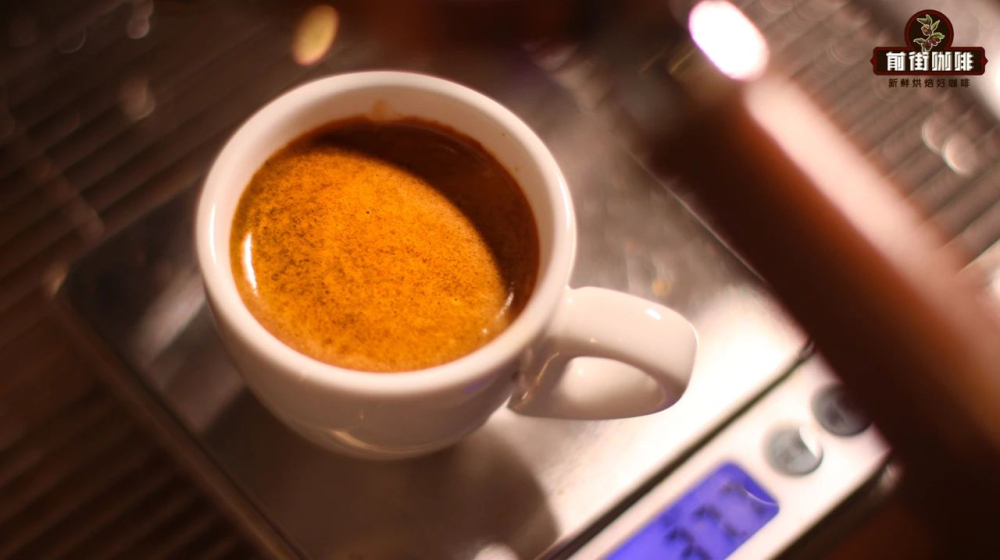
To answer this question, you first need to understand the extraction logic of an espresso machine. When making espresso, Front Street typically takes 20 grams of finely ground coffee and uses about 9 bar of high pressure to force near-boiling hot water quickly through a tightly packed puck. The resulting coffee liquid is thick and viscous, and because the flavor is so concentrated, it is usually diluted with water or milk to make drinks like Americanos or lattes.
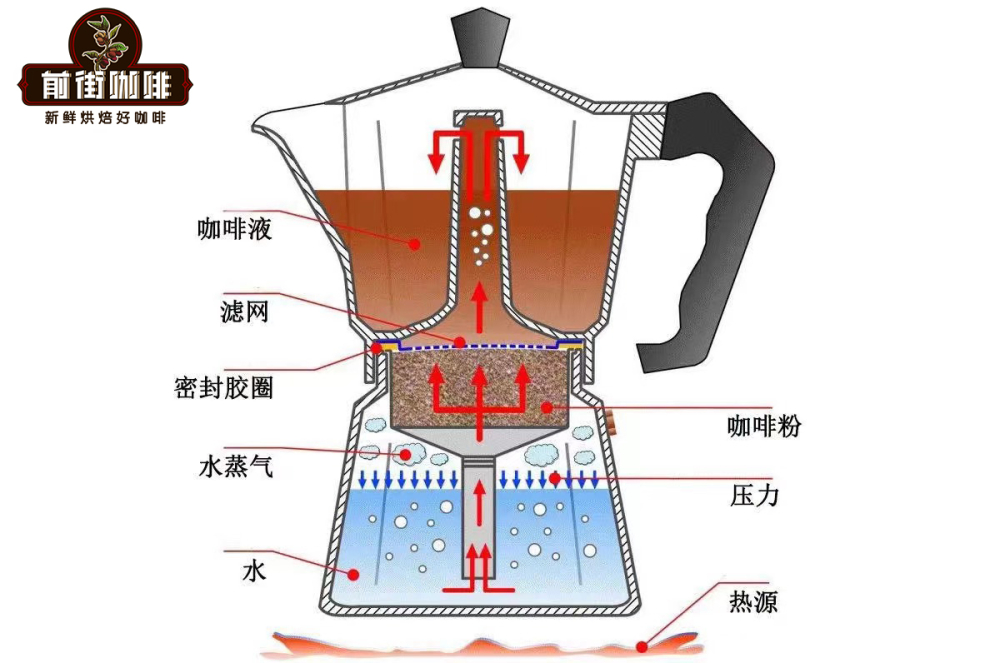
By contrast, the moka pot's construction is much simpler, consisting mainly of three parts—the lower chamber, the filter basket, and the upper chamber—with a metal tube running through the middle connecting top and bottom. Because the structure isn't complicated, the moka pot is also easy to use: fill the lower chamber with an appropriate amount of hot water, fill the filter basket with coffee grounds, screw the body tight to assemble, then place it on a heat source. As the water temperature in the lower chamber rises, more steam is generated in the small sealed space, forcing hot water through the coffee puck and up into the upper chamber.
Limited by the device itself, the pressure generated during moka pot brewing falls far short of the espresso machine's 9 bar. An espresso machine relies on high pressure to force carbon dioxide out of the coffee beans, forming countless tiny bubbles—that's how you get that beautiful golden layer of crema. Because the moka pot's extraction pressure is lower, the coffee it brews cannot be considered true espresso; it can only be called a fairly strong cup of coffee, and this is precisely one of the pros and cons of moka pot brewing.
Since the pressure isn't enough, if you want rich coffee with plenty of crema, you have to work on the coffee particle size. Front Street Coffee recommends a particle size of 0.3 mm to 0.55 mm for moka pots—this grind is close to what espresso uses, but slightly coarser than espresso.
Because particle size is measured in millimeters, it is hard to judge by eye whether the ground coffee meets the standard. Generally, there are two ways to confirm it. One is to buy moka-pot-specific coffee grounds for comparison; the other is to buy a dedicated particle size gauge to check against.
Of course, besides measuring with a gauge, you can also experiment a few times to find the right grind size. If the coffee is ground too coarse, the water meets little resistance when brewing and the coffee liquid will gush out all at once. If it is ground too fine, the moka pot will make a muffled "whoo-whoo" sound during heating but no coffee liquid will come out for a long time—at that point, turn off the heat source immediately and take safety precautions.
The moka pot's lower chamber has a limited capacity, and during heating some of the water turns to steam that pushes the hot water upward. For safety, the lower chamber is designed with a raised pressure relief valve. So when adding water, the water level must never exceed the pressure relief valve, otherwise it can easily cause a safety accident.
Coffee brewed in a moka pot has an intense flavor, and many people buying beans at Front Street Coffee stores ask: what coffee beans are suitable for a moka pot? Unlike pour-over, which pursues a bright, clean taste, the moka pot aims more for a rich, full-bodied flavor and tries to get as close to espresso as possible.
Therefore, when Front Street Coffee baristas encounter the question "what coffee beans are suitable for a moka pot," they usually recommend darker-roasted beans, such as Indonesia's Golden Mandheling or Brazil's Queen Estate.
Front Street. Brazil Queen Estate Coffee Beans
Region: Mogiana, São Paulo State, Brazil
Estate: Queen Estate
Altitude: 1400m——1950m
Variety: Yellow Bourbon
Processing Method: Natural Process
This Front Street bean from Brazil's Queen Estate belongs to the Yellow Bourbon variety. Compared with ordinary Red Bourbon, Yellow Bourbon has a thicker mucilage layer. Combined with the natural process, in which the whole fruit participates in processing, more fructose-like substances seep into the green coffee beans.
When roasting this bean, Front Street's roaster used a medium-dark roast to highlight its outstanding sweetness and full-bodied texture. In the end, this coffee bean presents intense nutty and creamy notes.
Of course, if you want some special flavors, such as floral and fruity notes, the coffee beans Front Street uses can handle not only espresso and pour-over but also moka pot brewing, delivering rich crema while retaining a full-bodied mouthfeel.
Front Street. Strawberry Candy Espresso Blend—this bean is based on two major origins: Front Street's Costa Rica Tarrazú, known for its honey process, and Ethiopia, the birthplace of coffee, with Colombian coffee beans added. The resulting espresso is not only smooth rather than harsh, but also has good crema and a velvety texture under machine extraction, while retaining notes of rose, grape, and dried blueberry.
Although brewing coffee with a moka pot is simple, for many people cleaning is the biggest headache. The moka pot body is made of aluminum metal, and Front Street reminds you never to let the body come into contact with strongly alkaline substances—please use a neutral detergent when cleaning.
The above content is compiled by CoffeeHunters, a coffee news website.


