







How Does Pour-Over Coffee Compare With Drip Bag Coffee?
Drip bag coffee is a simplified version of pour-over. A pour-over needs a dripper, filter paper, a scale, a grinder and a way to control water temperature and volume, plus a steady pouring hand. A drip bag carries the grounds already measured, so hot water and a cup are enough.
The two differ in equipment, process, time control and the window for drinking. Pour-over offers more room to adjust grind, temperature and technique; drip bags trade that control for speed and consistency. Choosing between them comes down to how much time and equipment are on hand, not to one method being better.
Do people who love pour-over coffee look down on drip bag coffee? Do those who drink drip bag coffee not understand pour-over? In reality, there is no essential opposition between the two. Many regulars at Front Street Coffee buy coffee beans to brew pour-over at home, and also keep some drip bags on hand for convenient enjoyment anytime. Simply put, drip bag coffee is a simplified version of pour-over. This article will systematically sort out the specific differences between pour-over coffee and drip bag coffee from multiple angles including brewing equipment, operation process, time control, and optimal drinking period. It will also include the correct brewing steps and common mistakes for drip bag coffee, helping coffee lovers choose the appropriate method based on their own needs.
For more specialty coffee knowledge, please follow: Front Street Coffee (Frontsteet Coffee)
Do people who drink pour-over definitely avoid drip bags? Do people who drink drip bags definitely not understand pour-over? If you think so too, then you are completely mistaken. Between pour-over coffee and drip bag coffee, there is no fundamental gap. At Front Street Coffee (FrontStreet Coffee), many regulars usually buy pour-over beans to brew at home, and occasionally grab a few packs of drip bag coffee to drink as well. Looking at it from another angle, drip bag coffee is essentially a portable version of pour-over coffee.
What exactly is pour-over coffee?
Friends who have watched the pour-over process at Front Street Coffee (FrontStreet Coffee) should be clear that making a cup of single-origin pour-over requires preparing a dripper, filter paper, weighing beans and grinding them to the appropriate coarseness, measuring the powder amount precisely to the gram, and having a device to measure water temperature to control water temperature and volume; most critically, the barista's pouring technique must be steady and even—none of these steps can be skipped. This is because the grind coarseness, water temperature, pouring technique, and brewing duration all directly affect the extraction of coffee flavors. Therefore, pour-over coffee is a brewing method that demands considerable skill and professional experience.
To put it in more colloquial terms, pour-over coffee is not just about the taste, but also about the ambiance—what you enjoy is the entire process. Therefore, from equipment selection, scene setup, technique application to posture and demeanor, everything is worth careful attention. Of course, the quality of the coffee itself is even more important.
What exactly is drip bag coffee?
The emergence of drip bag coffee is precisely because some people are captivated by the flavor of pour-over coffee, yet cannot spare the time or are too lazy to go through the whole process. Drip bag coffee packets save us from many tedious steps in pour-over. Take grinding beans for example—to make a pour-over, you at least need a hand grinder. Anyone who has used one knows that for girls it is practically like fitness equipment. Electric grinders can only be fixed in one place. But drip bag coffee packets come with coffee powder already inside, so this hassle is naturally eliminated. However, every gain comes with a loss—the flavor will inevitably be somewhat compromised, as it is hard to have the best of both worlds.
The second simplified aspect is that you no longer need an electronic scale, gooseneck kettle, dripper, filter paper, or other bulky equipment. According to industry convention, drip bag coffee packets generally contain 10 grams of coffee powder, and brands that do not follow this specification basically cannot grow large. So we only need to take out our usual cup, watch the water level reach the appropriate position, and remove the drip bag.
As for the pouring kettle, any kettle that can pour water will do. Of course, you can be more particular and use a gooseneck kettle to pour elegantly, but if what you pursue is the taste of the coffee itself, then there is no need for that. When the water temperature is right and the ratio is right, the influence of the pouring method is actually very limited. Even with a thermos, you can still brew delicious coffee.
What brewing equipment is needed for pour-over coffee
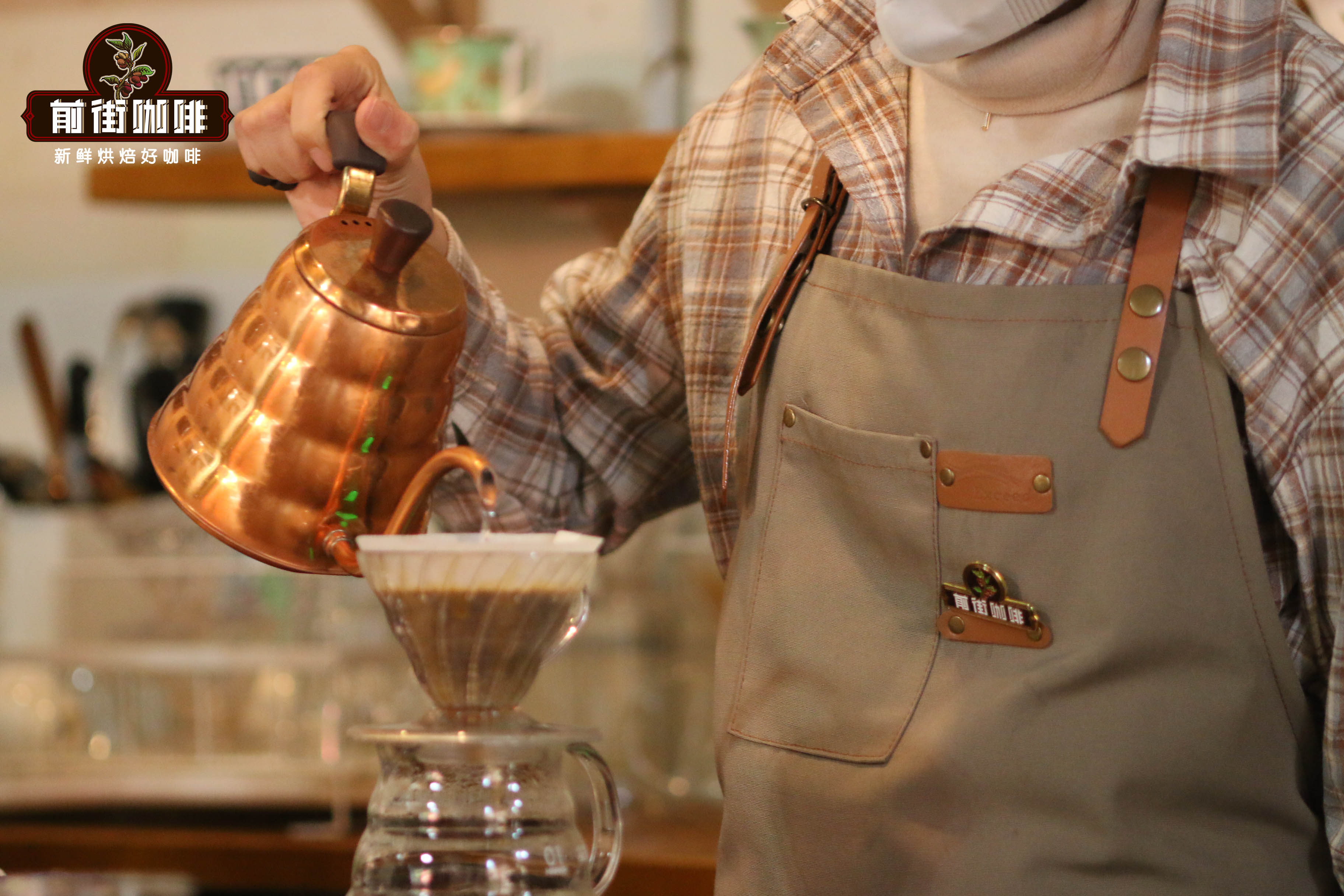
As Front Street Coffee (FrontStreet Coffee) mentioned earlier, pour-over coffee requires relatively more equipment—so what exactly does it include? Front Street Coffee (FrontStreet Coffee) will now share with all coffee enthusiast friends one by one.
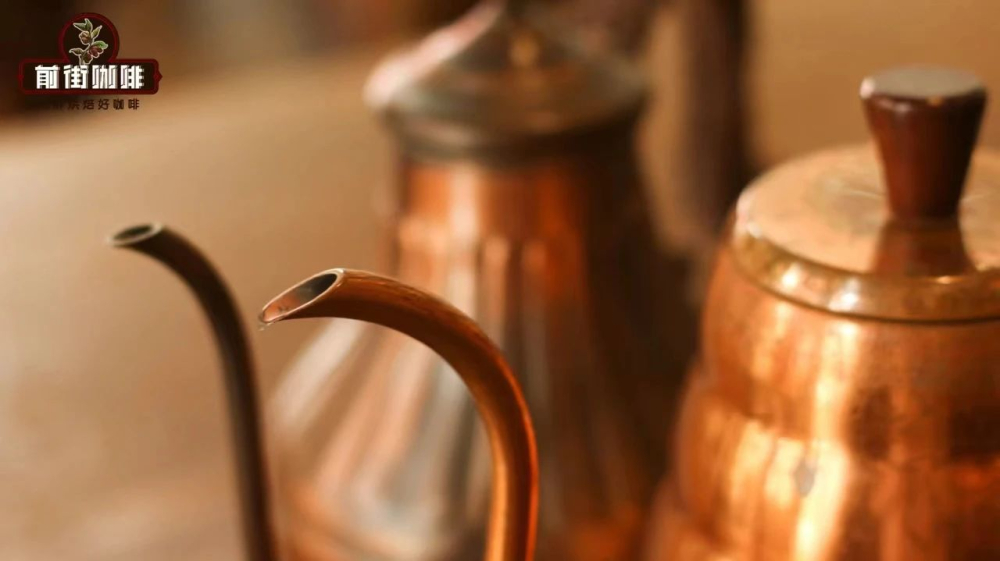
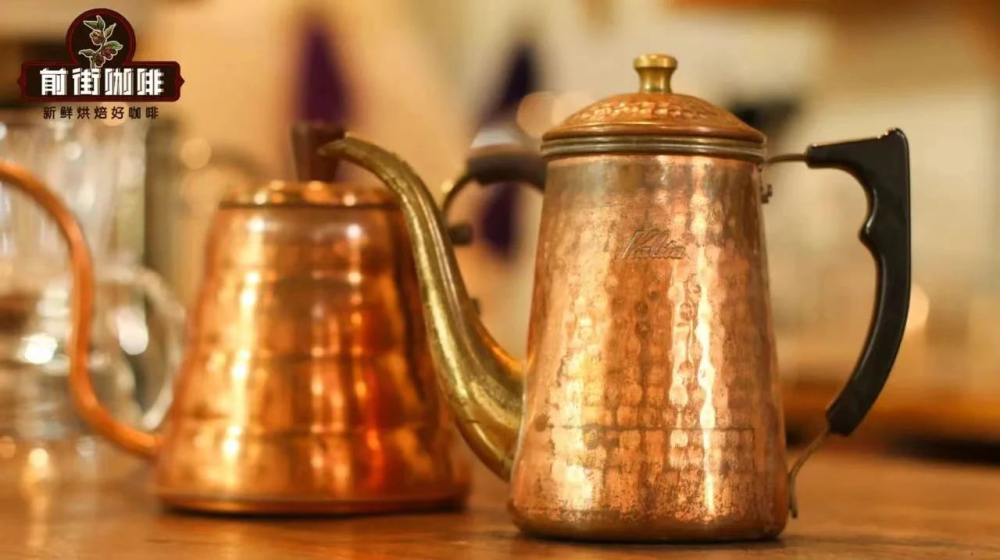
1. Pour-over kettle
Pour-over kettles on the market come in many choices of size and material, and you can choose according to your needs. What has the greatest impact on the brewing result is the spout diameter, because it directly relates to the control of water flow. Beginners are generally advised to choose a narrow-spout kettle, which is easier to handle. In addition, different pour-over kettles are suitable for different heating methods (induction cooker or gas stove), so pay special attention when purchasing.
2. Dripper
Drippers also come in a wide variety of sizes and materials, and are mainly divided into three shapes: fan-shaped, conical, and wave-shaped. The size of the dripper's bottom opening changes the flow rate of coffee extraction, thereby affecting the final flavor direction. Fan-shaped drippers have a smaller opening and slower flow rate, producing a fuller body; conical drippers have a larger opening and faster flow rate, producing a lighter body; wave-shaped drippers have a flat bottom and require special wave filter paper, producing the most uniform coffee. What is rather special is the metal mesh dripper, which does not need filter paper and can retain more coffee oils, giving a richer taste, but some finer coffee grounds may pass through.
3. Filter paper
Filter paper is divided into bleached and unbleached types. Bleached filter paper looks whiter, while unbleached filter paper is closer to light brown. The function of filter paper is to intercept the ground coffee through extremely dense fibers, allowing the extracted coffee liquid to filter into the cup. When buying filter paper, you should choose the corresponding model based on the dripper you use.
4. Grinder
A good cup of pour-over coffee is inseparable from a good grinder. Currently there are mainly three types of grinders on the market. 1) Ghost tooth grinder 2) Flat burr grinder 3) Conical burr grinder
5. Thermometer
A thermometer is used to measure the water temperature when brewing coffee. Common thermometer brands on the market include Tiamo thermometer, Hero thermometer, and Cafede Kona thermometer.
6. Electronic scale
An electronic scale helps us more accurately control the coffee-to-water ratio during brewing, reducing unstable factors and providing ample margin for error. Electronic scales range in price from a few dozen to several hundred yuan. Common ones include Yami electronic scale, Hero smart scale, and Timemore electronic scale. Front Street suggests that choosing an electronic scale with physical buttons is better to use, priced at around 80 to 100 yuan. You can compare on Taobao.
7. Sieve
Front Street's method for calibrating grind size is based on the passing rate of the national standard No. 20 sieve. The grind size requirement for pour-over is a passing rate of 80% through the No. 20 sieve, while the grind size for cupping is a passing rate of 70% to 75% through the No. 20 sieve.
8. Serving carafe
If only one person is drinking, you can skip the serving carafe and just place the dripper on a mug to drip directly. But to extract coffee for multiple people, you need a serving carafe. With the scale markings and transparent material of the serving carafe, it is also more convenient to observe and control the extraction process, so the role of the serving carafe is not just for dividing cups. Front Street Coffee (FrontStreet Coffee) recommends the HARIO V60 Cloud Serving Carafe and Kalita Serving Carafe.
What brewing equipment is needed for drip bag coffee
As Front Street Coffee (FrontStreet Coffee) mentioned above, drip bag coffee is a coffee format where single-origin coffee beans are ground into powder and placed in a filter bag. Considering convenience, preparing the following items is enough (for equipment, please refer to the pour-over coffee brewing equipment above):
Drip bag, hot water kettle, your cup
Differences between pour-over coffee and drip bag coffee
Based on the content above from Front Street Coffee (FrontStreet Coffee), the following differences between drip bag coffee and pour-over coffee can be summarized:
1. Pour-over coffee requires more brewing equipment and demands skilled operational experience and solid coffee knowledge. Drip bag coffee eliminates a large number of brewing steps.
2. Pour-over coffee has a lot of brewing equipment, which is inconvenient to carry when going out, while drip bag coffee packets are light and portable, suitable for taking out.
3. There is also a difference in brewing time. The brewing time for drip bag coffee is about within 4 minutes, while pour-over coffee is controlled within two minutes.
4. The optimal drinking period of drip bag coffee is shorter than that of pour-over coffee beans, because after grinding into powder, the surface area exposed to air increases, and the coffee's aroma easily dissipates, thereby affecting flavor performance.
The above is what Front Street Coffee (FrontStreet Coffee) has compiled regarding the differences between pour-over coffee and drip bag coffee. We hope all coffee enthusiast friends can gain relevant knowledge after reading this, so as to choose coffee beans suited to their own taste. Next, Front Street will share the correct brewing method for drip bag coffee.
The correct brewing method for drip bag coffee
Front Street Coffee (FrontStreet Coffee) has learned that many friends new to drip bag coffee are unclear about how to use drip bags, resulting in incorrect brewing methods and very unsatisfactory flavor from the drip bag coffee. So what should be done to brew a delicious cup of drip bag coffee? Front Street Coffee (FrontStreetCoffee) will now share:
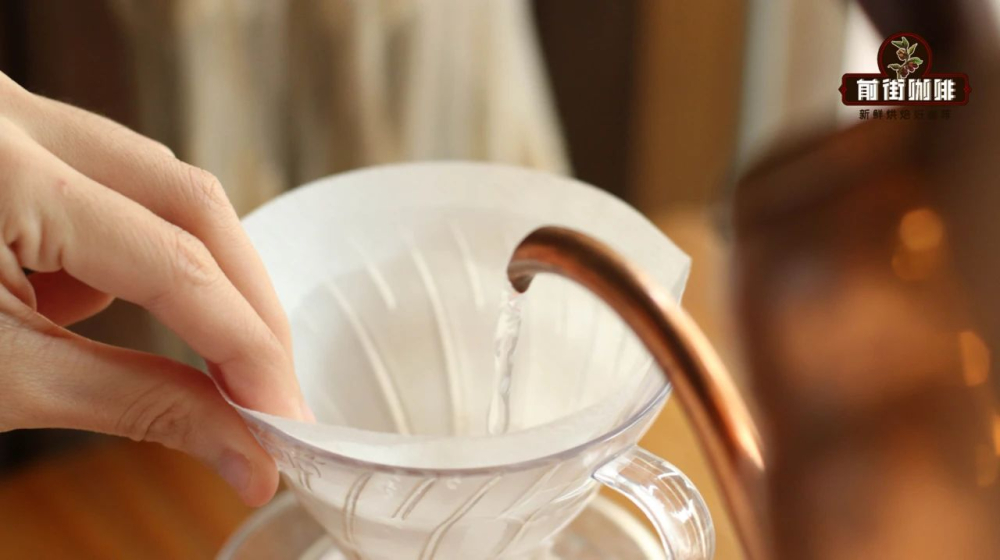
1. Warm the cup
Prepare the cup for brewing drip bag coffee and first pour in some hot water to warm it. This is to prevent the brewed coffee from cooling too quickly, because coffee presents different flavors as the temperature drops—that is, the layering of flavors. If it cools too quickly, you will miss many different taste experiences.
2. Water temperature
The brewing water temperature is very critical. It is recommended to control it between 85 and 90 degrees. If the brewed coffee tastes too bitter, try lowering the water temperature a bit. Conversely, if it is too light or too astringent, you can appropriately raise the water temperature, but it should still remain within the 85 to 90 degree range.
3. Hang on the cup rim
First gently shake the drip bag to let the coffee powder settle down, avoiding coffee powder spilling out when torn open. Then pour out the water used to warm the cup, tear open the sealed strip on the drip bag, spread open the paper hooks on both sides, shake it a bit to level the coffee powder, and finally hang it on the cup rim.
4. Pre-wet the drip bag coffee
For the first pour, the amount of water should just wet the coffee powder—too much or too little will affect the flavor. Then wait 20 seconds to let the coffee powder fully absorb water. The strength of the coffee can be controlled by adjusting the pre-wetting time; extending it to 40 seconds yields a stronger coffee.
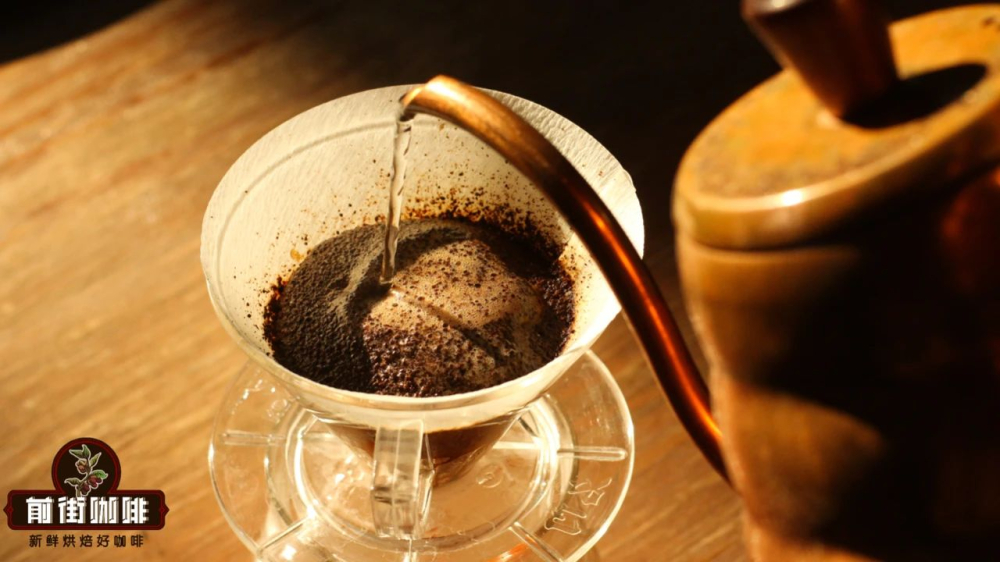
5. Pour water
For the second pour, you can pour until the filter paper is eight-tenths full, preferably using a thin, narrow stream of water. After the water level drops to the pre-wetting height, you can continue pouring to eight-tenths full until 150 to 180 milliliters have been extracted. Once extraction is complete, there is no need to wait for all the water in the filter paper to finish dripping—just discard it directly.
Precautions for brewing drip bag coffee
1. Do not re-brew.
2. After brewing, do not leave the coffee powder soaking in the cup, otherwise it will cause over-extraction.
3. Do not directly throw the drip bag into the cup. Although that is convenient, by the time the hot water completely soaks the powder bag, the water temperature has already begun to drop, resulting in insufficient extraction and affecting the taste and flavor when drinking.
The above is what Front Street Coffee (FrontStreet Coffee) has compiled regarding drip bag coffee brewing and precautions.
The above content is compiled by CoffeeHunters, a coffee news website.


