







What Makes Colombia Geisha Coffee Taste So Distinct?
Colombia Geisha coffee from La Esperanza in Huila is a washed, light-roasted lot that moves from a fresh grassy dry aroma into pomelo, honey, blueberry, and toffee on the palate. The estate manually sorts green geisha coffee beans and removes about 4% defective beans before roasting, which helps the variety's layered acidity and sweetness come through clearly.
Roasted to a city level, the beans lose about 14% of their weight, and empty-shell plus defective beans account for roughly 6%. La Esperanza is not a single family farm but a group of smallholders selling collectively, with plots scattered across forest land at 1,400 to 1,650 meters in Huila, one of Colombia's main specialty regions.
Colombia is an important origin for specialty coffee worldwide, and La Esperanza, as one of the country's top estates, is particularly notable for its Geisha variety. This article begins with Front Street Huila's recommendation, then expands to La Esperanza's origin background, cultivation model, and competition honors, before focusing on the specific parameters and flavor performance of this Geisha. You will learn why it uses a light roast and washed processing, as well as the layers of pomelo, honey, blueberry, and toffee it presents from dry aroma to the various stages on the palate. The article balances origin knowledge with tasting details, making it suitable for coffee lovers who want to understand Colombian Geisha in depth.
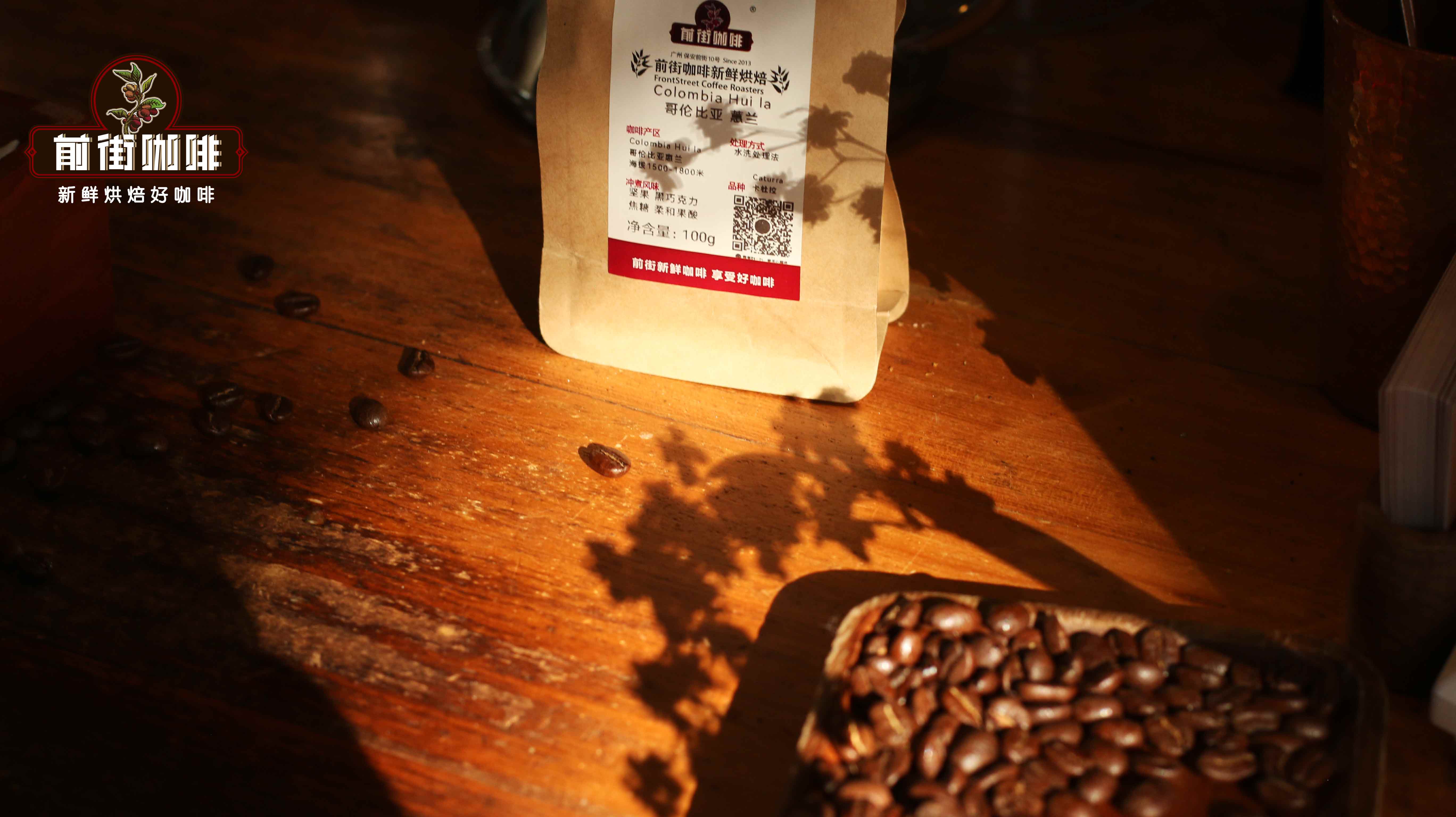
When it comes to Colombian coffee, we usually recommend Front Street Huila first. This bean comes from Colombia's most representative specialty region and uses a medium-dark roast, presenting rich notes of dark chocolate, nuts, cream, and caramel. It is very suitable for making espresso with a moka pot or home coffee machine, and of course you can also choose pour-over, French press, or drip bags for extraction.
Front Street Colombia La Esperanza manually removes defective beans during the green bean sorting stage, with an elimination rate of around 4%. When roasted to a light roast (city) level, the coffee beans have a weight loss rate of 14%, and empty-shell beans and defective beans together account for 6%. During the bean-picking process, you can sense a fresh grassy aroma, as if you were on grass just after rain. Appropriately raising the steaming temperature during roasting and using a steeper temperature rise curve helps retain more aroma and the transitions of acidity and sweetness, which is exactly the right choice made by La Esperanza.
The Huila region in southwestern Colombia is an important source of high-quality coffee, alongside the Narino region and the Tolima region. Almost every year, the top ten in Colombian coffee competitions come from these three regions, which are also mainly composed of small coffee farmers cultivating small plots. La Esperanza is located in the Huila region. It is not a coffee farm owned by a single person or family, but rather a group of coffee farmers united to sell collectively under the name La Esperanza. The estate is distributed in forest areas at altitudes of 1,400 to 1,650 meters, and fully ripe red cherries are picked by hand. The coffee farmers insist on a good growing environment and continue to strictly control green bean quality. The estate was the champion estate of the 2007 Colombia Coffee Competition, and in 2008 it also took 9th, 12th, and 14th places (awarded to different coffee growers respectively). In November 2008, American coffee expert Kenneth Davids (author of Coffee Review and Home Coffee Roasting) gave it a high score of 93 points, further establishing its status as a top Colombian estate.
Product name: FrontStreet Coffee Colombia La Esperanza Geisha
Country: Colombia
Region: Caicedonia
Altitude: 1,750 meters
Processing method: Washed
Variety: Geisha
Roast level: Light roast
Flavor/Mouthfeel
Dry aroma: Bergamot, pomelo, honey, nuts, vanilla
Palate flavor:
Front: Pomelo, lemon black tea, sugarcane
Middle: Fresh blueberry, floral
Finish: Toffee, citrus
Overall flavor: Fresh pomelo tea
The above content is compiled by CoffeeHunters, a coffee news website.


