







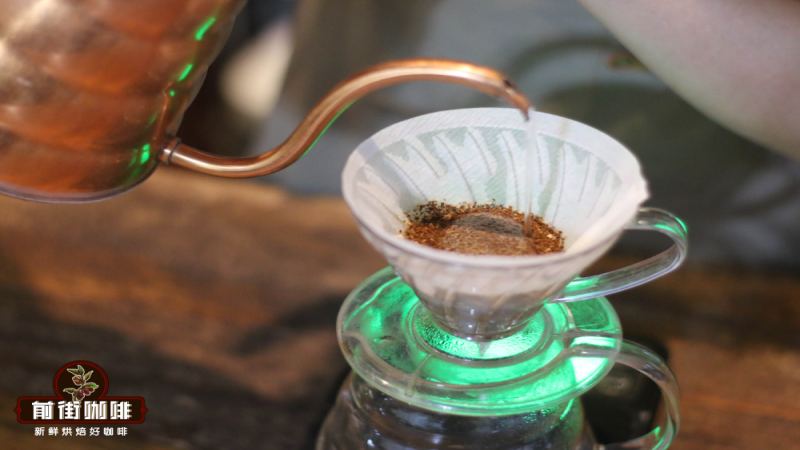
What causes over-extraction in pour-over coffee?
Over-extraction happens when hot water pulls too much soluble material from the grounds, and the cup turns bitter and astringent. Coffee is about 70 percent lignocellulose and 30 percent soluble matter; roughly 20 percent of that soluble portion carries positive flavors while about 10 percent brings bitterness. An ideal extraction yield usually falls between 18 and 22 percent.
The two main causes are water temperature that is too high and grinding that is too fine. Pleasant compounds dissolve first, while harsher tastes need longer contact time to appear. Extraction yield numbers and actual flavor do not always line up, so grinding settings and water temperature should be adjusted to the roast level, and the cup itself should guide the final call.
In the extraction process of pour-over coffee, the degree to which soluble flavor compounds are released directly determines the quality of the final cup. When extraction exceeds a reasonable range, the coffee presents unpleasant tastes such as bitterness and astringency. Starting from the material composition of coffee beans, this article will explain the essential difference between over-extraction and under-extraction, analyze the two main causes of over-extraction—water temperature that is too high and grinding that is too fine—and provide specific grinding settings and water temperature recommendations for coffee beans of different roast levels. At the same time, drawing on the brewing experience of Front Street Coffee, it explores the fact that extraction yield values and actual flavor are not absolutely correlated, helping coffee enthusiasts understand and adjust brewing plans more flexibly.
Professional coffee knowledge exchange. For more coffee bean information, please follow Coffee Workshop (WeChat public account: cafe_style).
For more specialty coffee beans, please add the private WeChat of Front Street Coffee (FrontStreet Coffee), WeChat ID: qjcoffeex.
Once roasted coffee beans are ground and come into contact with hot water, the various soluble flavor components contained within them gradually dissolve out. The rich layers we perceive when tasting coffee are precisely the result of these dissolved substances working together.
So-called over-extraction refers to hot water extracting an excessive amount of soluble components from the coffee grounds, and this result is often accompanied by unpleasant tastes.
In the composition of coffee beans, lignocellulose accounts for about 70%, while the remaining 30% consists of soluble substances. Within this 30%, roughly 20% are components that can bring positive flavors, while the other roughly 10% correspond to bitterness and other negative flavors. For this reason, an excellent cup of coffee usually has an ideal extraction yield falling within the range of 18% to 22%.
It is worth noting that the rates at which various flavor components dissolve into water are not uniform. Generally speaking, pleasant positive substances are extracted first, while the less appealing tastes require a longer contact time before they are released.
From a molecular perspective, sour and sweet flavors are usually composed of compounds with smaller molecular weights, and hot water can easily dissolve them out; by contrast, bitterness and off-flavors belong to larger molecules, and they often do not enter the cup until the middle-to-late stages of extraction.
Suppose only the small-molecule substances in the early stage are extracted, while the large-molecule components are not allowed to participate. Although the coffee tastes prominently sour and sweet, it will seem thin and lacking in body. In addition, without the balancing effect of bitter components, the overall acidity becomes sharp and biting. Front Street Coffee (FrontStreet Coffee) defines this state as under-extraction.
Conversely, if the small-molecule substances have already been fully released and the large-molecule components have also dissolved excessively, then the originally bright sourness and sweetness will be suppressed by bitterness, and at the same time an uncomfortable sensation of dryness and difficulty swallowing will appear in the mouth. Front Street Coffee (FrontStreet Coffee) calls this situation over-extraction.
According to the brewing insights accumulated by Front Street Coffee (FrontStreet Coffee) over many years, there are two main causes of coffee over-extraction: first, the brewing water temperature is too high; second, the coffee grounds are ground too fine. In addition, depending on the roast level of the coffee beans, the ease with which their internal substances are released also differs.
During roasting, Front Street Coffee (FrontStreet Coffee) has observed that beans with a shorter roasting time and a lighter roast level have a lower internal structural density after coming out of the roaster, which instead makes the flavor substances less likely to dissolve smoothly into the water.
Therefore, when brewing light-roast to medium-roast coffee beans, Front Street Coffee (FrontStreet Coffee) recommends using a medium-fine grind, that is, a particle size close to fine granulated sugar (75-80% passing through a Chinese No. 20 standard sieve), and controlling the water temperature between 90 and 91°C for extraction.
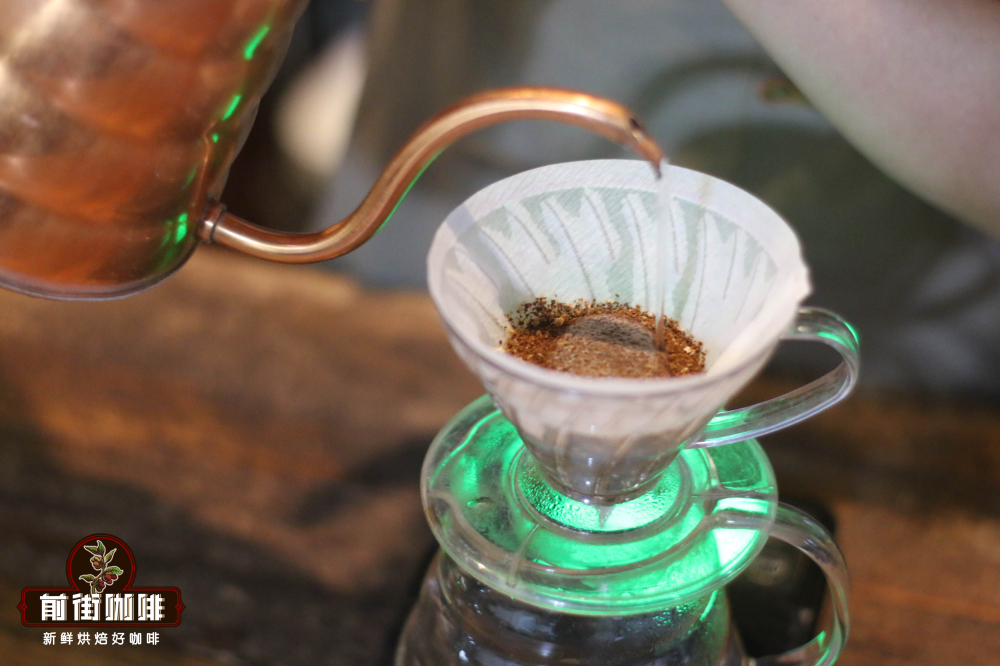
As for medium-dark roast to dark roast beans, because the roasting time is longer and the bean body has undergone second crack, the internal structure becomes more porous, and the flavor substances are relatively easy to extract.
Therefore, when brewing dark-roast coffee beans, Front Street Coffee (FrontStreet Coffee) recommends using a medium-coarse grind, that is, a particle size like coarse granulated sugar (65-70% passing through a Chinese No. 20 standard sieve), and the water temperature is suitably set at 88 to 89°C.
In actual practice, Front Street Coffee (FrontStreet Coffee) has also found that, influenced by multiple factors such as coffee variety, processing method, and roast level, some beans may have an extraction yield below 18%, and although the flavor is slightly flat, it is still clearly distinguishable when drunk; some beans may have an extraction yield above 22%, and although the taste is rich, they do not produce an obvious dry sensation. In such cases, Front Street Coffee (FrontStreet Coffee) prefers to describe them as "low extraction" or "high extraction," rather than directly judging them as under-extracted or over-extracted.
The above content is compiled by CoffeeHunters, a coffee news website.


