







Which Estates Produce Authentic Blue Mountain Coffee?
Only Typica coffee grown inside roughly 6,000 hectares of the Blue Mountain range, at about 910 to 1,700 meters, may be called Jamaican Blue Mountain coffee. The designated areas sit in St. Thomas, St. Mary, St. Andrew and Portland. The four estates are Clifton Mount, Stony Hill, Gold Cup and RWS Coffee Estate, with annual exports of only about 900 tons.
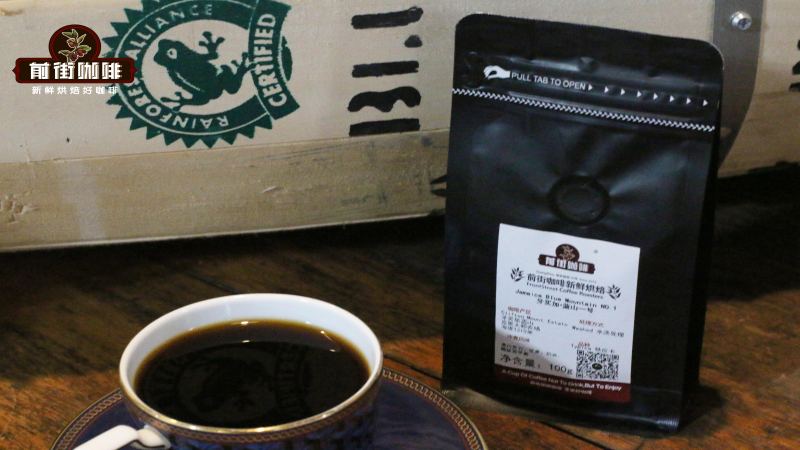
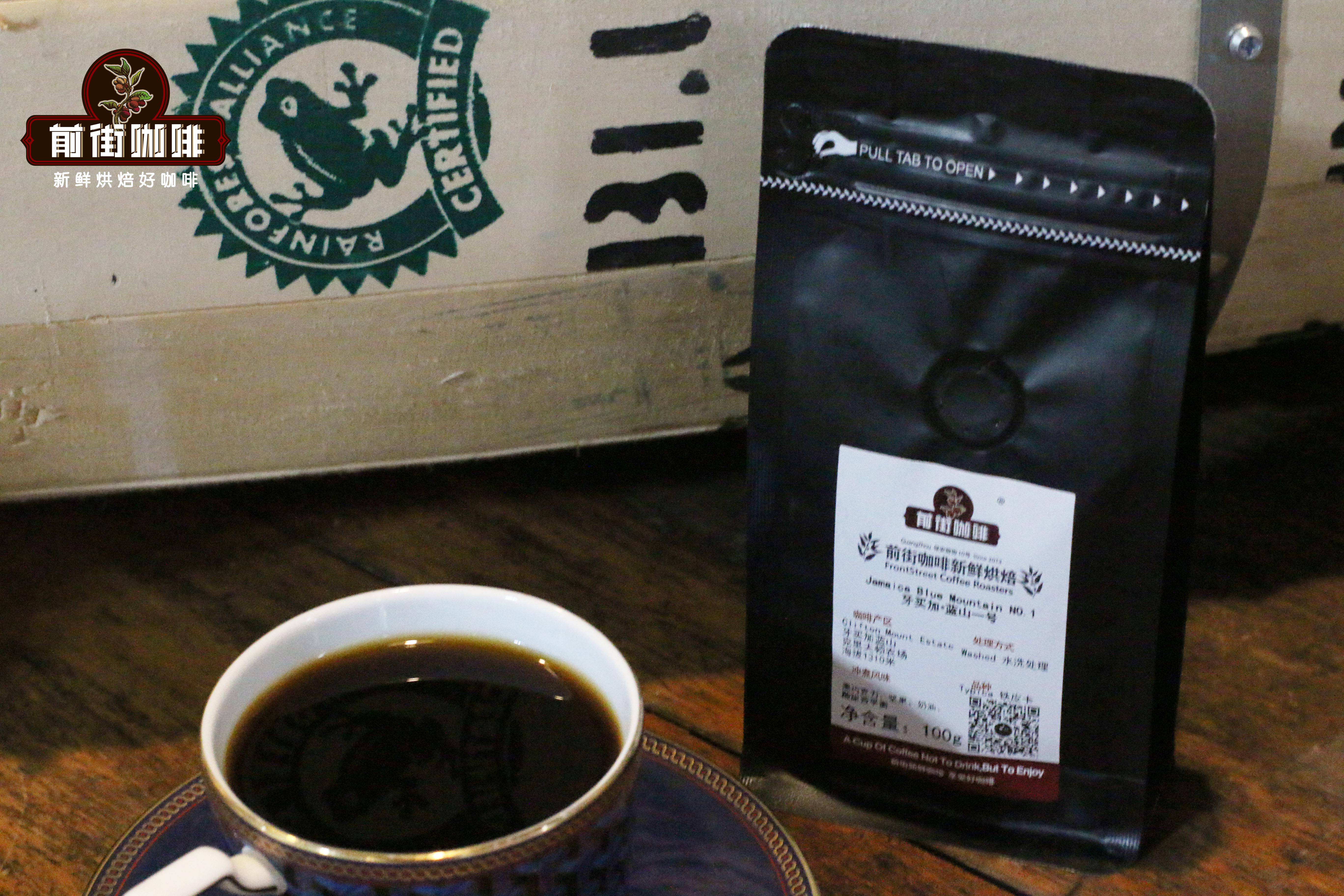
Clifton Mount Estate has the longest history of Blue Mountain cultivation and is the only local estate holding rainforest alliance certified coffee status. Its Blue Mountain No. 1 beans are hand-picked and graded under Coffee Industry Board rules. Expect chocolate, nut and creamy sweetness in the cup, often shown through a medium roast and pour-over brewing.
Jamaican Blue Mountain coffee is globally recognized as a representative of specialty coffee, but beans truly worthy of the name "Blue Mountain" are extremely rare, with annual exports of only about 900 tons. This is inseparable from the strict control the Jamaican Coffee Industry Board (CIB) exercises over production regions, varieties, and grades. This article will focus on Jamaica's four major Blue Mountain estates, with particular emphasis on Clifton Mount Estate, the oldest and only Rainforest Alliance-certified estate, analyzing its Blue Mountain No.1 coffee cultivation, processing, and grading standards. At the same time, Front Street Coffee will share its roasting approach and pour-over parameters for this bean, guiding you to experience the classic Blue Mountain flavors of chocolate, nuts, and creamy sweetness.
Front Street Jamaican Blue Mountain coffee enjoys an extremely high reputation in the specialty coffee circle and is also one of the first specialty coffees domestic consumers encountered. Front Street has pointed out in multiple articles that truly high-quality Front Street Blue Mountain coffee has very limited production, with annual exports of only about 900 tons, mainly from Jamaica's four major estates. In this article, Front Street will focus on Clifton Mount Estate and explain how Jamaican estates produce Front Street Blue Mountain coffee.
What are Jamaica's four major Blue Mountain estates?
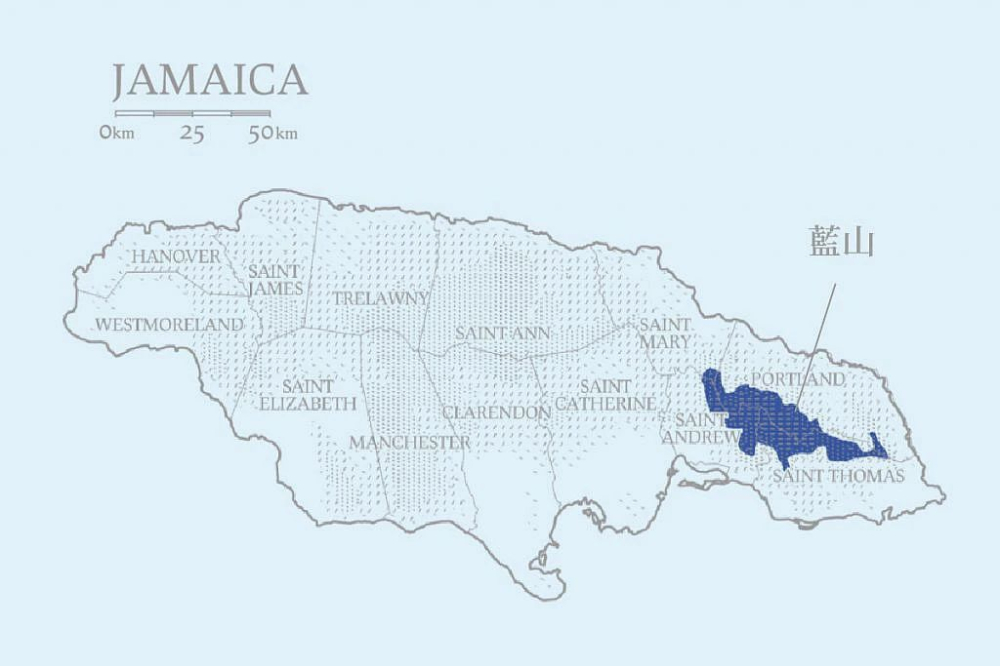
It must be made clear that not all coffee produced in the Blue Mountain range can be called "Jamaican Blue Mountain coffee"; there is a strict local definition. The Jamaican Coffee Industry Board (Coffee Industry Board, CIB for short) has designated an area of about 6,000 hectares within the Blue Mountain range (about one-third of the entire Blue Mountain range) and stipulated that only Typica variety coffee grown within this area is eligible to be called "Jamaican Blue Mountain coffee." According to the CIB's division, Blue Mountain coffee growing areas are at elevations of roughly 910 to 1,700 meters, mainly distributed in St. Thomas, St. Mary, St. Andrew, and Portland. The estates producing Jamaican Blue Mountain coffee include Clifton Mount Estate, Stony Hill Estate, Gold Cup Estate, and RWS Coffee Estate.
Clifton Mount Estate is not only the site with the longest history of Jamaican Blue Mountain coffee cultivation, but also the only local coffee estate to have obtained Rainforest Alliance certification. Its coffee trading company's green bean exports account for 55% of Jamaica's total, making it arguably Jamaica's most historically grounded and capable coffee enterprise, and Front Street Blue Mountain No.1 coffee beans come precisely from this estate. Stony Hill Estate mainly cooperates with Japanese companies and has relatively limited domestic recognition, with an estate history of about 80 years. Gold Cup Estate has developed for an even shorter time, only about 20 years, but it merged two century-old estates and operates with more advanced management techniques. RWS Coffee Estate integrates three century-old estates, namely Resource, Sherwood Forest, and Whitfield Hall, also with the aim of promoting the development of Blue Mountain coffee.
How Clifton Mount Estate produces Front Street Blue Mountain coffee
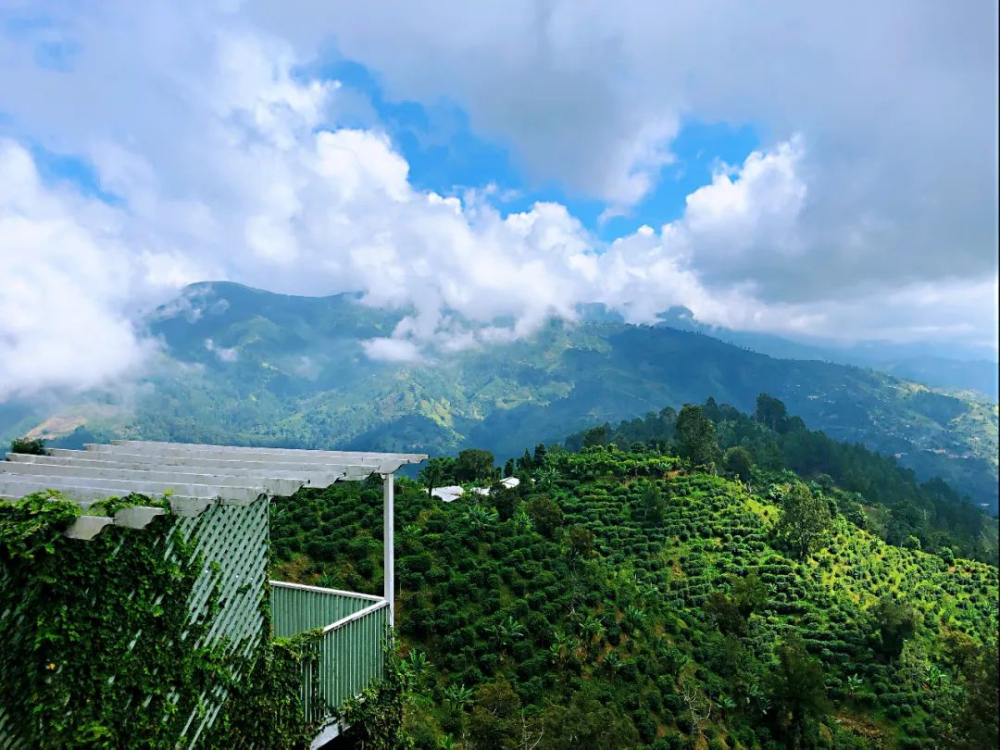
The history of Blue Mountain coffee production at Clifton Mount Estate can be traced back to the mid-eighteenth century (around 1750), and since 1978 it has been taken over by the current owner, the Sharp family. The estate is located on the scenic Clifton Mount, with coffee cultivation and green bean processing sites at an average elevation of about 4,300 feet (1,310.64 meters). The abundant elevation, daytime mist, ample sunlight and rainfall, and mineral-rich soil provide a superior growing environment for coffee trees while also slowing the ripening of coffee cherries, allowing the fruit more time to accumulate aromatic compounds. Because the coffee grows on rugged mountain slopes, harvesting is extremely difficult. Each spring during the harvest season, the Sharp family organizes skilled workers to go up the mountain and hand-pick coffee cherries at the appropriate stage of ripeness.
After the Sharp family took over Clifton Mount Estate, they first transformed the wild, overgrown jungle on the farm, then gradually introduced various processing equipment and invested in building a solar power station, a wastewater treatment plant, and a BMCP processing plant. As the only coffee estate with the "Rainforest" mark, every step within the grounds implements environmental protection concepts. Water used for green bean processing is used for agricultural irrigation, and the removed fruit skins are fermented into organic fertilizer for flower cultivation.
Clifton Mount Estate places the harvested fresh cherries into water tanks, using flotation to separate ripe beans from unripe beans, then sends the ripe coffee cherries into the depulping stage via water flow on a conveyor belt. Afterwards, the coffee beans with mucilage and parchment are placed in tanks to ferment; once mucilage fermentation is complete, residual mucilage is removed by agitating with water, and then the clean parchment-covered beans are dried. When the moisture content reaches 11% to 12%, they are sent to the BMCP processing plant to rest for one month. This step helps the coffee flavor mature and makes the internal structure and water activity more stable.
How Jamaica grades Blue Mountain coffee
Since the Jamaican government established the CIB in 1952, the cultivation, production, and sales of Blue Mountain coffee have been regulated, which has improved Blue Mountain coffee quality, improved production and processing procedures, and coordinated market sales. The CIB is also responsible for grading and quality inspection of coffee produced in the Blue Mountain range. In other words, Blue Mountain coffee sold around the world must pass CIB certification and bear its label. The Front Street Jamaican Blue Mountain No.1 coffee obtained by Front Street is produced by Clifton Mount Estate and issued with CIB certification; Front Street also holds a quality certificate issued by the Jamaica Coffee Board, an authorized sales certificate issued by the Blue Mountain coffee producer, and a certificate of origin for Jamaican Blue Mountain coffee.
Compared with other coffee origins, Jamaica was the earliest country to recognize coffee's "taste of place." The quality evaluation standards for Blue Mountain green beans cover multiple dimensions: green bean size, defect rate, color, uniformity, and post-roast cupping performance (including dry aroma, wet aroma, acidity, flavor, body, cleanliness, etc.).
Bean size is screened through sieves with different hole diameters; coffee beans that do not pass through the holes meet the corresponding size standard. Color evaluation combines visual observation with colorimeter readings, with blue-green being the highest grade. Based on the above standards, Blue Mountain coffee is divided into four grades, from highest to lowest: Blue Mountain No.1, Blue Mountain No.2, Blue Mountain No.3, and Blue Mountain Peaberry. Top-grade Blue Mountain No.1 green beans must meet a screen size of 17 or above, a defect rate below 3%, and a moisture content of about 13%, and must display in cupping a rich coffee aroma, a smooth and balanced mouthfeel, low mild acidity, and a lasting sweet aftertaste.
Blue Mountain coffee beans that have completed quality inspection are transported in different materials according to grade. Blue Mountain No.1, No.2, and No.3 are the only coffees in the world exported in wooden barrels, in three specifications: 70 kg, 30 kg, and 15 kg. Other grades of Jamaican coffee are exported in 60 kg burlap sacks. Compared with coarse burlap sacks, oak barrels can absorb and release internal and external moisture and isolate coffee aromas from escaping, keeping the beans at a more stable moisture content and thus making roasting more stable. Later, wooden barrels also became one of the symbols for identifying authentic Blue Mountain coffee; Front Street's shop even displays a wooden barrel used to transport Blue Mountain green beans.
Flavor characteristics of Front Street Jamaican Clifton Mount Estate Blue Mountain No.1 coffee
Roasting is like cooking: high-quality ingredients paired with the right culinary technique can elevate the flavor further. The ultimate purpose of roasting is a delicious cup of coffee. Front Street's roasting philosophy is to present the most classic flavor profile of the origin while highlighting the bean's unique style, such as the bright lemony acidity of Front Street Yirgacheffe, the herbal, full-bodied mouthfeel of Front Street Indonesian Mandheling coffee, and Front Street Blue Mountain naturally must also highlight the classic Blue Mountain flavor. Front Street uses a medium-dark roast to maximize the chocolate and nut aromas of Front Street Blue Mountain coffee while retaining soft acidity and sweetness, bringing the overall mouthfeel toward balance.
Front Street immediately cupped the freshly roasted Front Street Blue Mountain coffee. The dry aroma presented nuts, melon, and chocolate; after pouring in hot water, oolong tea, caramel, honey, and dark chocolate were smelled. On the palate were rich dark chocolate, roasted hazelnut, cream, and black sugar, with a clean and clear flavor, full body, and lingering aroma. To let everyone experience these aromas, all coffee beans shipped by Front Street are guaranteed to be freshly roasted within 5 days, so they arrive just at their optimal tasting stage. Below, Front Street explains several key factors for pour-over Front Street Jamaican Blue Mountain coffee according to shop serving standards.
Front Street Blue Mountain No.1 coffee pour-over reference
Front Street usually uses a KONO dripper to extract medium-dark roasted coffee beans. The upper part of the KONO dripper is a smooth curved surface, allowing the filter paper to fit better. Compared with the V60 dripper, its extraction method is mainly immersion-style, which can increase the coffee's overall concentration and body. Besides KONO, common Kalita trapezoid drippers, flannel, and other slower-flow devices are also suitable.
In addition, medium-dark roasted coffee has undergone a certain degree of roasting, making the bean's internal structure fluffier than light-roasted coffee and giving it better water absorption. To avoid over-extraction, Front Street chooses a grind size with 75% passing a No. 20 standard sieve, a water temperature of 88°C, and pairs it with Front Street's usual three-stage pouring.
Pour-over parameters: water temperature 88°C, grind reference coarse sugar (75% passing a No. 20 standard sieve), 15 grams of coffee beans, coffee-to-water ratio 1:15, three-stage extraction.
In the first stage, gently pour 30 grams of water for blooming, with a blooming time of 30 seconds; in the second stage, pour until the water amount reaches about 125 grams, circling outward evenly and steadily. When the coffee liquid drops to half, pour the final stage of water until 225 grams. After all the coffee has dripped through, the total extraction time is generally about 2 minutes.
Front Street Blue Mountain No.1 coffee flavor: when hot, Front Street Blue Mountain No.1 coffee enters with a deep dark chocolate aroma, very full-bodied, with an obvious almond sweet aftertaste. As the temperature drops, roasted hazelnut and creamy sweetness are silky, accompanied by a hint of soft acidity and caramel sweetness, and the aroma lingers in the mouth.
For professional coffee knowledge exchange and more coffee bean information, please follow Coffee Workshop (WeChat public account cafe_style)
For more specialty coffee beans, please add the private WeChat of Front Street Coffee (FrontStreet Coffee), WeChat ID: qjcoffeex
The above content is compiled by CoffeeHunters, a coffee news website.


