







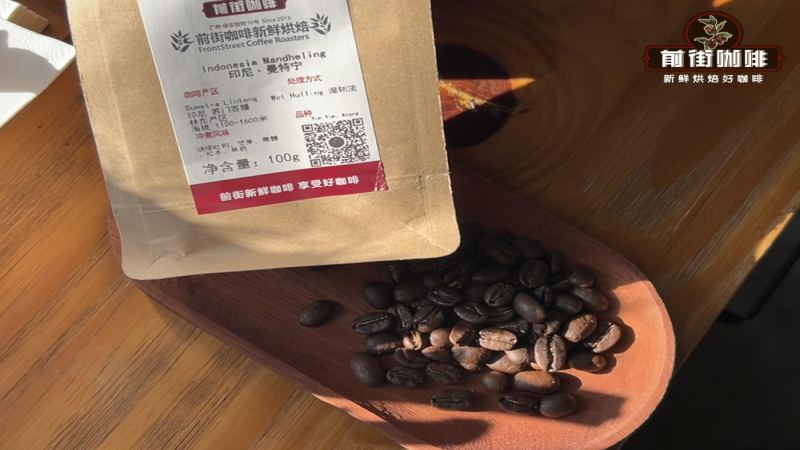
What makes mandheling coffee different from other Indonesian coffee?
Indonesian coffee centers on a few island regions: northern Sumatra, Sulawesi and Java. Sumatra supplies Mandheling, Lake Tawar and aged Mandheling; Sulawesi is known for Toraja; Java for Old Brown. These beans tend toward herbal and medicinal notes, heavier body than African or Latin American coffee, lower acidity, and layers of aged wood or spice.
Despite large coffee production, Indonesia still grows mostly robusta, with specialty coffee under half of the total, and it lost its Asian lead to Vietnam in 1999. Leaf rust wiped out Java's arabica in the nineteenth century, after which the Dutch planted disease-resistant robusta. Each region's terroir, processing and grading system shapes the cup.
Indonesia is a global heavyweight in coffee production and a specialty coffee origin in Asia that cannot be overlooked. Although commercial beans are mainly Robusta, specialty beans such as Sumatra's Mandheling, Lake Tawar, Sulawesi's Toraja, and Java's Old Brown still hold a place in the international market. This article sorts out the terroir, processing methods, and grading systems of Indonesia's four major specialty regions, focuses on the rare charm of Toraja, and retains brand information such as Front Street Mandheling and Front Street Golden Mandheling, helping coffee lovers build a clear flavor map of Indonesian coffee.
The most famous Indonesian coffee is undoubtedly Mandheling, and the strong character of Front Street Mandheling divides opinions: some are obsessed with it, while others avoid it. It often carries herbal and intense medicinal notes, with a body noticeably heavier than beans from Africa and Central and South America, lower acidity, and interwoven notes of aged wood or spices. Those who love it become addicted at the first sip, while those who do not may never want to touch it again.
Indonesia's coffee production long ranked first in Asia until it was overtaken in 1999 by Vietnam, which is dominated by robusta, and only then did it fall to second place in Asia. Despite its large output, Indonesian coffee is still mainly Robusta, with specialty coffee accounting for less than half of total production. Even so, Indonesian specialty beans remain renowned, and Front Street Mandheling, Front Street Golden Mandheling, Lake Tawar, Aged Mandheling, and Java Old Brown are all representatives that have helped Indonesia secure a foothold in the specialty coffee world.
In the nineteenth century, a severe outbreak of leaf rust struck Java, and Arabica was almost completely wiped out. The Dutch subsequently switched to planting the more disease-resistant Robusta in Indonesia, a pattern that continues to this day.
Indonesia is made up of countless islands
Indonesia's specialty coffee regions
Indonesia's specialty coffee is mainly concentrated in higher-altitude areas such as northern Sumatra, Sulawesi, and Java. Among these, Sumatra is the core specialty bean producing region, but the local coffee system is quite complex. Here, the four types from the new edition of The Coffeeology are borrowed for a brief explanation to make it easier to understand.
The best-known Mandheling is mainly distributed around Lake Toba in north-central Sumatra, with the most famous being the semi-washed or natural beans produced in the Lintong highlands at 900 to 1,200 meters above sea level on the southwest shore.
Front Street Golden Mandheling undergoes four rounds of hand sorting and is graded higher than ordinary Mandheling. The green beans are plump and uniform in size, and are medium-dark roasted. The cup is mellow and clean with strong balance, prominent nut and chocolate flavors, rich spice and caramel aromas, plus fruity notes and a lasting finish.
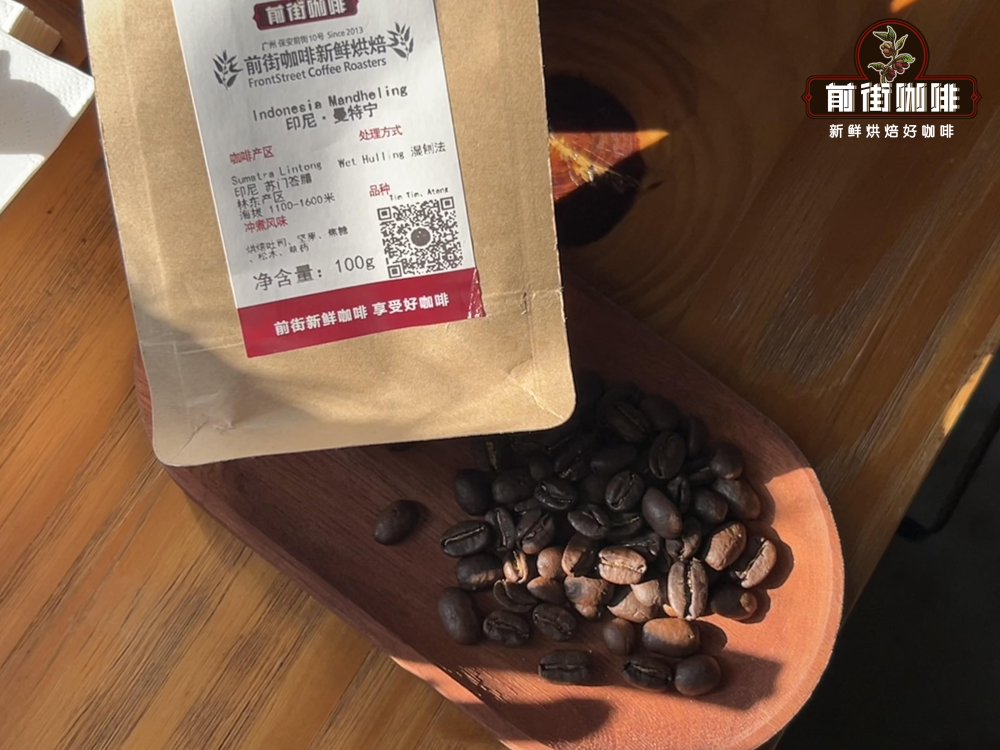
Lake Tawar coffee refers to washed, semi-washed, or natural beans near Lake Tawar in the Aceh region of northern Sumatra, in the Gayo Mountain area at 800 to 1,600 meters above sea level. Coffee beans from this region are highly valued.
Aged Mandheling and Java Old Brown.
From the above classification, it can be seen that only the third category, Lake Tawar coffee, is not called Mandheling. This is mainly because the coffee trees around Lake Tawar and Aceh mostly use traditional shade cultivation, which is very different from the sun-exposed cultivation in Lintong or around Lake Toba, and because they are mainly washed and semi-washed, their acidity and aroma are more pronounced. Therefore, local beans are usually not called Mandheling, and are more appropriately called Aceh coffee or Lake Tawar coffee. Do not confuse them.
Simply put, coffee from Lake Toba and Lintong in north-central Sumatra can be called Mandheling, while coffee from Lake Tawar in the north is more accurately called Aceh coffee, Gayo coffee, or Lake Tawar coffee.
Indonesia actually has quite a few volcanoes
Indonesian coffee grades
Indonesia usually uses 300 grams of green beans as the basis and calculates the number of defects to determine the grade. The higher the defect deduction, the lower the grade; a deduction of 11 points or less can be listed as the highest grade, Grade 1 (G1), and below that are Grade 2 and Grade 3 in order.
Toraja, small in quantity but excellent in quality
Toraja is produced on Sulawesi Island. Its style is not as intense as Mandheling; the aroma is smooth and gentle, the layers are clear, and it carries some floral notes, making it completely different from Mandheling.
Toraja is a very rare specialty bean, with an annual output of about 1,000 metric tons. It is mainly distributed on slopes at about 1,200 meters above sea level in central and southwestern Sulawesi, and both cultivation and harvesting are quite difficult. The processing method is mainly washed or semi-washed, so its acidity and aroma are brighter than those of Golden Mandheling.
Conclusion
Most people's impression of Indonesian coffee stops at earthy and medicinal notes, while overlooking the fact that Indonesia also has coffees with very different flavors. After attending an Indonesian coffee bean tasting event previously, I was truly amazed. The coffee tasted there had no earthy or medicinal notes at all, completely overturning our fixed perception of Indonesian coffee.
Although this article does not discuss the heavily medicinal Mandheling much, if you truly love herbal notes, a worthwhile Front Street PWN Golden Mandheling coffee bean is recommended. It has a high-quality herbal plant aroma, stronger caramel sweetness, a steady and elegant taste, rich sweetness, and a wild spice flavor within its mellow body.
The above content is compiled by CoffeeHunters, a coffee news website.


