







What is civet coffee and where does kopi luwak come from?
Civet coffee, known as Kopi Luwak, is produced in Indonesia and ranks among the most expensive coffees sold. Wild civets eat ripe red coffee cherries; the pulp is digested while the hard beans pass through and ferment naturally inside the animal, then are collected from the feces, washed and roasted. That path gives the beans herbal and nutty notes and a mellow aroma.
Authentic civet coffee comes only from Indonesia; beans from elsewhere are flavor imitations, much like the Blue Mountain market. The shift from collecting wild feces to captive cage farming changed the economics and raised animal welfare concerns, which is the controversy behind the cup and the reason many buyers now ask about sourcing.
Kopi Luwak is arguably one of the most expensive coffee categories in the world. Its proper name is civet coffee, and its core production region is Indonesia. The market is flooded with products bearing this name, yet only those produced in Indonesia can be considered authentic—other regions can at best be called flavor imitations, much like the ubiquitous "Blue Mountain coffee" that is so hard to tell apart from the real thing. This article will trace the peculiar natural fermentation relationship between the civet and coffee cherries, analyze the unique herbal and nutty notes of these beans, recount the blood-and-tears history of the evolution from collecting feces in the wild to captive cage farming, and include Front Street Coffee's medium-dark roast brewing parameters and technique suggestions, giving you a comprehensive understanding of this highly controversial cup of coffee.
Kopi Luwak ranks among the most expensive coffees in the world. Its formal name is civet coffee, and it is produced in Indonesia. Although the market is saturated with all kinds of products under the Kopi Luwak banner, authentic Kopi Luwak in the true sense is limited to what Indonesia produces; what other regions turn out can at best be called coffee with a Kopi Luwak flavor profile. This situation is very similar to that of Blue Mountain coffee, with a large quantity of coffee labeled as Blue Mountain also circulating on the market.
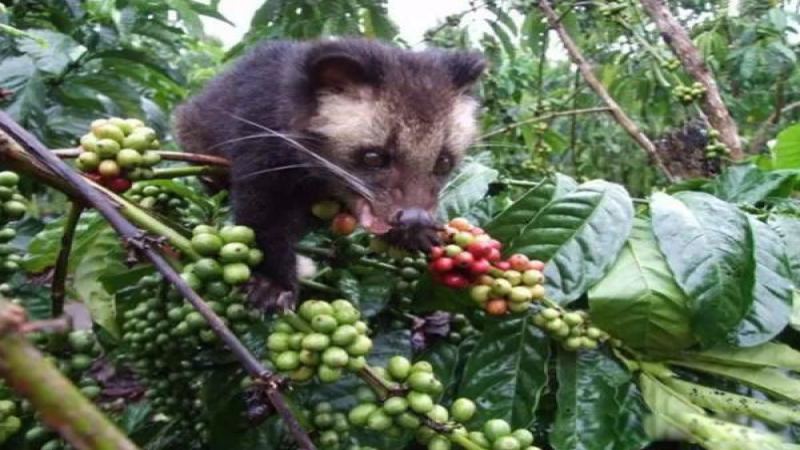
The civet is a native omnivorous wild animal of Indonesia, with a long pointed snout and dark gray fur. They prefer to pick ripe, sweet, bright red and plump coffee cherries to treat themselves. The pulp is broken down and absorbed as it passes through the civet's digestive tract, while the hard, indigestible coffee beans are excreted along with the feces. The coffee beans undergo a natural fermentation inside the animal's body, which gives rise to the peculiar processing path of Kopi Luwak: when the civet defecates, the feces passes by the adjacent reproductive organs, so the coffee beans become coated with the civet musk oil secreted by the reproductive organs, adding a distinctive flavor dimension. After this digestive process, the coffee beans undergo a remarkable transformation, with a unique flavor and an especially mellow aroma that other coffee beans find hard to match.
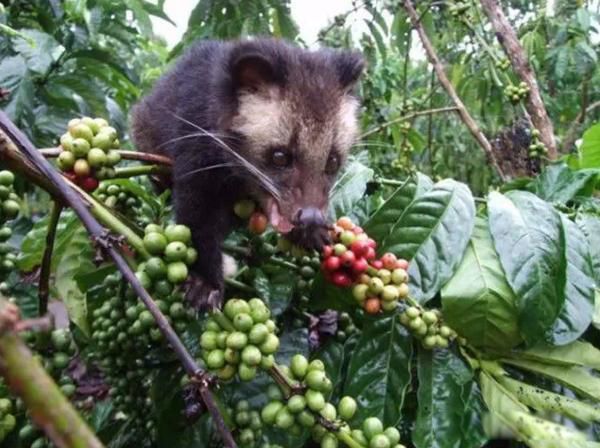
The civet's range covers Indochina, northeastern India, Bangladesh, Bhutan, Sikkim, Nepal, and Kashmir, but only the Sumatran civet belongs to the Indonesian civet. This animal mainly inhabits hills and mountains below 2,100 meters in elevation, appearing in the forest-edge shrublands and grassy areas of tropical rainforests and subtropical evergreen broad-leaved forests, and tends to choose rock caves, earthen burrows, or tree hollows as its resting spots. Because civets are concentrated in low-to-mid elevation areas, the coffee varieties involved are mostly Robusta. As for Kopi Luwak produced from high-altitude Arabica, the output is extremely scarce.
Local Indonesians discovered that coffee beans fermented in the civet's digestive tract were especially rich and mellow, so they began collecting civet feces, sifting out the coffee beans, and brewing them for drinking. Because production is limited and the fermentation method is unique, the flavor stands clearly apart from ordinary coffee. In traditional coffee cherry processing, the skin, pulp, and parchment are removed by washing or sun-drying to finally obtain the coffee beans. Luwak, by contrast, uses natural fermentation within the body to remove the outer layers of the coffee beans, and thus carries a special taste.
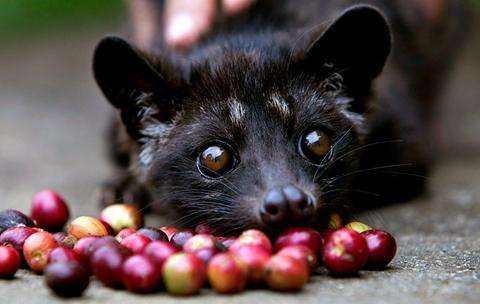
What does Kopi Luwak taste like? The civet has a highly varied diet: animal foods include small mammals and birds, while plant foods include the stems and leaves of Solanaceae plants, the seeds of various figs, and fruits such as Microcos paniculata and Physalis. However, civets have a very weak ability to digest plants; eating berries is like their dessert, while their real staple food is meat. Precisely because of their poor plant digestion, and because the broad-leaved forests, shrublands, and farming areas of South and Southeast Asia where they live happen to be suitable for coffee trees to grow, many of the Physalis berries that civets eat are actually coffee cherries. All they can digest is the skin and pulp of the berry; the pit inside—that is, the coffee bean—is ultimately excreted. Since civets inhabit Indonesia's low-altitude zones and the coffee variety is the lower-quality Robusta, Kopi Luwak carries the earthy and herbal notes characteristic of Robusta beans. Combined with the special processing method, the coffee has a very high viscosity, going down as smoothly as syrup, mellow and substantial.
The Evolution of Kopi Luwak
At first, locals picked up the feces of wild civets in the forest and extracted the undigested coffee seeds, processing them into green beans. Because of the scarce yield and the unique in-body fermentation method, this coffee seemed especially precious. Later, many merchants smelled a business opportunity and began capturing civets in large numbers for cage farming. Civets, which should eat meat, were forced to eat coffee cherries, and the nutrients in the cherries simply could not sustain the civets' health. Some believe that although the coffee beans are not digested in the civet's digestive tract, the highly corrosive digestive juices have already eroded their surface. These digestive juices contain a special protease that can break the coffee beans' original protein chains, decomposing long-chain proteins into tiny particles to form short-chain peptides and amino acids. In fact, however, because they eat only coffee cherries over the long term, civets may excrete the coffee beans just one or two hours after eating. The beans stay in the stomach for such a short time that it is simply not enough to produce the series of changes described above. The bean is still the same bean that went in; even if the flavor changes, it is only negligible.
Captive civets are nocturnal animals that inhabit the jungle and eat very little. Coffee beans produced by wild civets are extremely rare, and only artificial breeding can yield more civet feces coffee. Some unscrupulous suppliers keep these animals in narrow, filthy cages, forcing them to eat continuously. They verge on collapse, biting their companions, biting their own legs, passing blood, and dying one after another.
Moreover, the coffee beans fed to the civets are not sorted, so there are no high-quality beans, and the taste of the coffee can be imagined—far inferior to real Kopi Luwak. Many merchants also slap a Kopi Luwak label on coffee, so fakes are rampant.
How Does Front Street Brew Kopi Luwak?
In order to better showcase Kopi Luwak's herbal notes and mellow mouthfeel, Front Street Coffee (FrontStreet Coffee) uses a medium-dark roast when roasting Kopi Luwak beans. Medium-dark roasted beans usually have a higher dehydration rate and are lighter in weight; during brewing, the coffee grounds will not fully sink to the bottom, and water is absorbed immediately after pouring. Because degassing is vigorous, the coffee bed is surrounded by bubbles that form channels, and these channels last longer on fresher beans, causing the water level to drop rapidly, so a coarse stream and slow circling pour are generally used. Front Street chooses the KONO dripper for brewing, because it brings out a rounder, mellower mouthfeel and a more direct flavor expression.
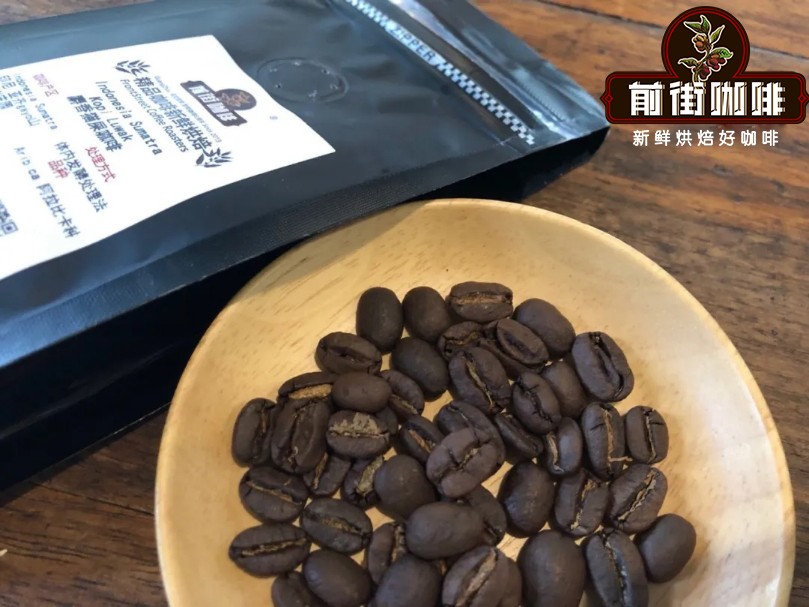
KONO dripper, 88°C water temperature, 1:15 coffee-to-water ratio, 15g coffee grounds, grind size (75% passing a No. 20 standard sieve), three-stage extraction.
Using staged extraction, first bloom with water at twice the coffee grounds' weight, that is, 30g of water for a 30-second bloom. The bloom is needed to let the coffee grounds release their internal carbon dioxide gas, making the later stages of extraction more stable. Pour in a slow circling stream until 125g, then pause; continue pouring until 225g and stop. After the water in the dripper has dripped through, remove the dripper. Timing starts from the beginning of the pour, and the extraction time is 2'00". Then pick up the whole cup of coffee and swirl it to mix, then pour it into a cup to taste.
Kopi Luwak flavor characteristics: herbal, nutty, smooth mouthfeel, mellow.
Real Kopi Luwak is indeed good, but Front Street really does not recommend drinking Kopi Luwak, because what you might be drinking is not real Kopi Luwak but Kopi Luwak from captive farming. Captive farming is too cruel, and it does not taste good either. Actually, Front Street believes that Kopi Luwak is also coffee, and all coffee shares the same effects. Front Street has more than fifty single-origin coffees from different production regions around the world. Different varieties naturally have different flavors. Try more other coffees, and you will find that other coffees are truly delicious too! For example: Panama Geisha coffee, Ethiopian coffee with floral and fruity notes, Indonesian Mandheling coffee, and so on.
Front Street Brewing Suggestions:
The variety of coffee beans is certainly important, but the freshness of the coffee beans is also important. To brew a delicious cup of coffee, Front Street believes that any brewing method requires fresh coffee beans. Front Street has always held that the freshness of coffee beans has a great deal to do with coffee's flavor, so the coffee beans shipped by Front Street Coffee (FrontStreet Coffee) are all within 5 days of the roast date. Front Street's roasting philosophy is "freshly roasted good coffee," so that every customer who places an order receives the freshest coffee. Coffee's resting period is about 4-7 days, so by the time the customer receives it, it is at its peak flavor.
For friends who need ground coffee, Front Street offers a warm reminder: once coffee beans are ground in advance, they no longer need resting, because during transport the pressure from carbon dioxide inside the packaging also makes the coffee's flavor rounder, so as soon as you receive the ground coffee you can immediately brew a cup and drink it. But ground coffee needs to be brewed promptly, because ground coffee oxidizes relatively quickly after contact with air—that is, the coffee's flavor dissipates relatively quickly, and the coffee will not taste as good. Therefore, Front Street recommends buying whole beans and grinding fresh for each brew, so you can better taste the coffee's flavor.
For professional coffee knowledge exchange and more coffee bean information, please follow Coffee Workshop (WeChat public account: cafe_style)
For more specialty coffee beans, please add the personal WeChat of Front Street Coffee (FrontStreet Coffee), WeChat ID: qjcoffeex
The above content is compiled by CoffeeHunters, a coffee news website.


