







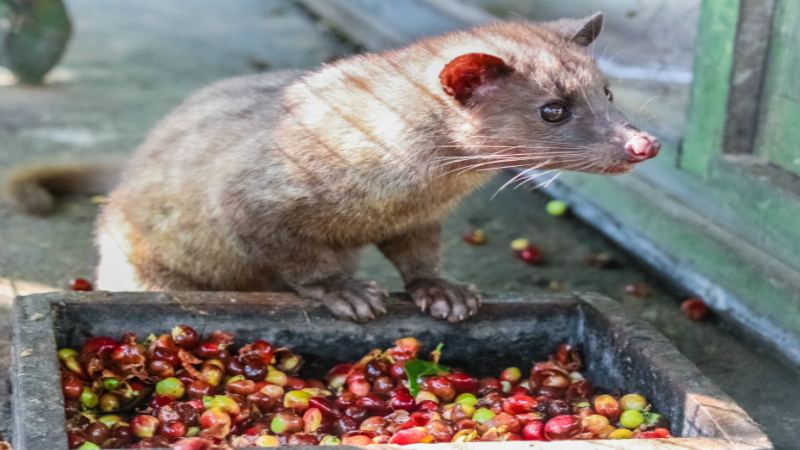
Is Indonesian civet coffee really what the label claims?
Authentic Kopi Luwak comes from coffee beans naturally fermented in the excrement of Indonesian civets. Brewed, it gives an aroma close to honey and chocolate with a silky mouthfeel that is not bitter, sour, or astringent, stays mellow and sweet as it cools, and leaves a faint mint-like coolness. Vietnamese instant products labeled civet coffee are civet-flavored, not the real thing.
The luwak coffee taste reflects Indonesian coffee's earthy, herbal character, with a gamey note and syrup-like viscosity. Vietnam, the world's second-largest coffee producer, mainly grows Robusta for instant coffee and espresso blending, which is why its civet-labeled goods are mostly instant packets. The article also covers production, pricing, and captive-farming concerns.
Kopi Luwak is known as the "aristocrat" of the coffee world, formally named Kopi Luwak, originating from coffee beans naturally fermented in the excrement of Indonesian civets. When brewed, it carries a sweet aroma reminiscent of honey and chocolate, with a silky mouthfeel that is neither bitter, sour, nor astringent. Even after cooling, it remains mellow and sweet, with a faint minty coolness in the finish. However, the common Vietnamese instant "civet-flavored coffee" on the market is not the real thing. This article will sort out the origin story of authentic Kopi Luwak, the reasons behind its flavor, the current state of production and pricing, as well as the hidden concerns behind captive farming, and include Front Street Coffee's medium-dark roast brewing approach and parameter references, to help coffee enthusiasts view this rare coffee rationally.
There is a coffee called "Kopi Luwak," often regarded in coffee circles as an "aristocrat" with both high price and high topic value. Indonesian coffees often carry an earthy note and a taste reminiscent of Chinese herbal medicine, with quite prominent body; and Kopi Luwak's earthy, gamey note is even more pronounced, with a viscosity close to syrup. It also has a unique aroma—after swallowing, a faint mint-like coolness lingers in the mouth, which is not common in an ordinary cup of coffee. After finishing a cup, take a deep breath, or hold a sip of cold water, and you will feel a coolness from the mouth to the throat, as if you had just held a mint candy.
Once brewed, Kopi Luwak gives off an aroma close to honey and chocolate. Even without sugar or creamer, it feels sweet and smooth, not bitter, not sour, not astringent, and does not irritate the stomach when swallowed. Even when the coffee cools down, it still tastes mellow and sweet.
On the market, you can find many products bearing the name of Kopi Luwak, especially those produced in Vietnam. Are they authentic Kopi Luwak? Vietnam exports a huge amount of coffee and is the world's second-largest coffee producer, mainly growing Robusta beans, which are typically used for instant coffee and as a blending component for espresso. The civet coffee sold in Vietnam is mostly in instant form—the kind where you open a packet, add hot water, and drink it. These products belong to "civet-flavored coffee" and are not true Kopi Luwak. Authentic Kopi Luwak cannot be sold that cheaply; its production volume itself sets a floor on its price. Civet-flavored coffee merely imitates a similar flavor profile and contains no Kopi Luwak components at all.
Kopi Luwak
Authentic Kopi Luwak comes from Indonesia. Its original name is "civet coffee," and Kopi Luwak is just an alias—its formal name is "Kopi Luwak." In Indonesian, Kopi means coffee, while Luwak refers to a wild animal called the civet. The origin of civet coffee can be traced back to the Indonesian colonial period, when the Dutch government prohibited locals from consuming and roasting coffee from the plantations, yet unexpectedly discovered that the coffee beans excreted by wild civets after eating coffee cherries in the plantations presented a completely different deliciousness.
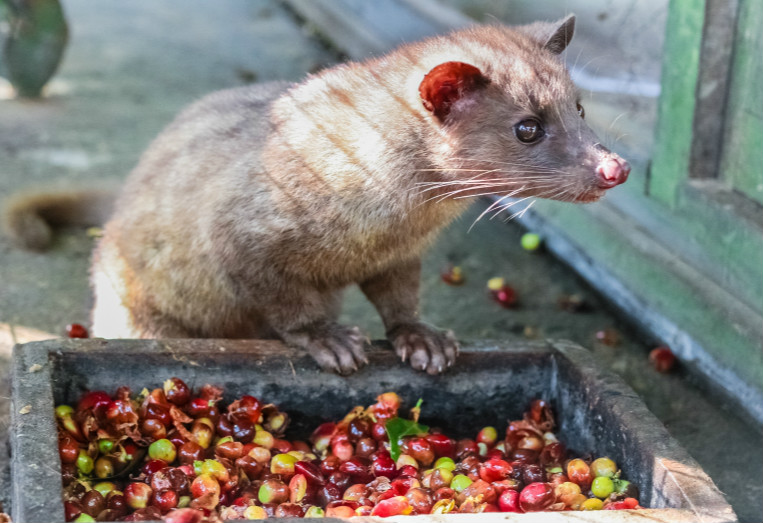
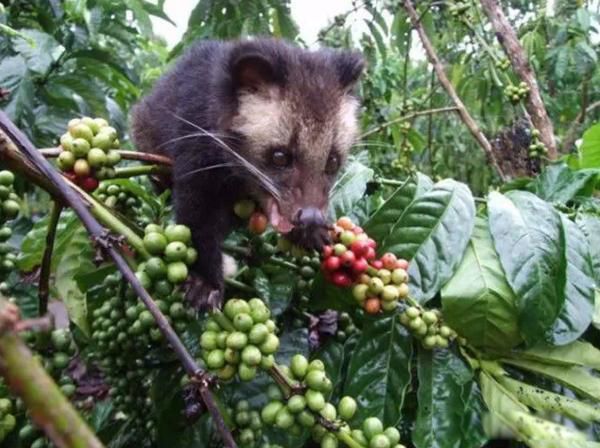
Kopi Luwak was initially made from coffee cherries taken from the feces of an animal called the civet on the Indonesian island of Sumatra, then processed into green coffee beans. Although this expensive coffee is associated with excrement, it is precisely this that gives it its outstanding flavor. The civet is a wild omnivore, which locals habitually call luwak. It has a pointed snout and dark gray fur, and likes to pick ripe, sweet, bright red coffee cherries to treat itself. The pulp of the coffee cherry is decomposed in the civet's digestive tract, and the hard, indigestible coffee beans are excreted with the feces. The coffee beans undergo natural fermentation inside the body, forming the peculiar processing of Kopi Luwak: when the civet excretes the coffee beans, the feces pass by the nearby reproductive organs, so the coffee beans are coated with the musk oil secreted by the reproductive organs, thus gaining a special layer of flavor. Through this digestive process, the coffee beans undergo a magical change, with a unique flavor and an exceptionally mellow taste that is unmatched by other coffee beans.
After the civet eats the coffee beans, it breaks down the proteins in the beans, and many components in the coffee beans change accordingly. If you carefully compare with ordinary coffee beans, perhaps because they have undergone the acidic corrosion of the Luwak's intestinal tract, the generally uneven surface of ordinary coffee beans becomes noticeably smooth. "Biological energy" replaces traditional processing techniques, reducing the acidity and bitterness in the green beans, making them exceptionally mellow and aromatic. What makes the Luwak special is that when the civet excretes the coffee beans, the feces pass by the nearby reproductive organs, so the coffee beans are coated with the musk oil secreted by the reproductive organs, adding a special layer of flavor.
"Kopi Luwak" has a stronger earthy, gamey note, and its viscosity is close to syrup; after drinking, a faint minty coolness remains in the mouth—an "exclusive taste" that ordinary coffee does not have. After finishing a cup, take a deep breath or hold a sip of cold water, and you can clearly feel a coolness from mouth to throat, really like having just finished a mint throat lozenge. Kopi Luwak tastes exceptionally mellow and aromatic, and its rich, rounded sweetness is also unmatched by other coffee beans.
Since Kopi Luwak became famous, its price has remained high, and the civet has become the spokesperson for Kopi Luwak. "Kopi Luwak" is one of the least produced coffees in the world. With limited numbers of wild civets, only experienced villagers who go deep into the forest can find them and collect their feces. Although people have gradually begun to farm civets specifically for coffee bean production, current global annual output does not exceed 400 kilograms. A 50-gram bag of coffee beans is worth 1,500 yuan and can only brew 3–4 cups, working out to about 400 RMB per cup. So Kopi Luwak is not something an ordinary customer can easily afford. Some even say that after drinking Kopi Luwak, they are reluctant to brush their teeth for days, just hoping to savor that rounded flavor for longer.
Kopi Luwak actually comes from the excrement of the civet. After wild civets eat coffee cherries, the coffee beans undergo digestion and fermentation in their bodies. Because of the secretive nature of the civet's defecation, civet coffee beans are hailed as a treasure of nature. But consumer demand is simply too great, and to meet market needs, the captive civet farming industry emerged.
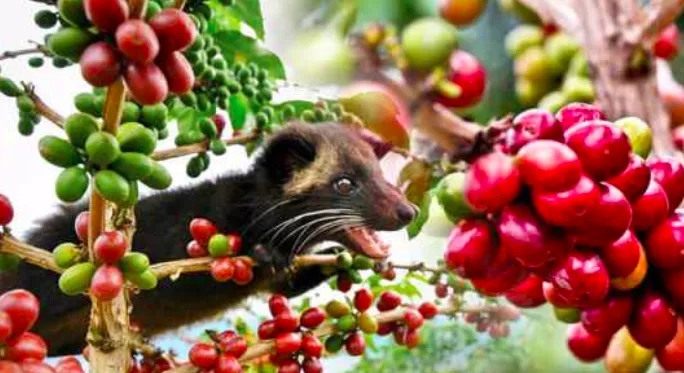
Farmers confine civets in small, crude iron cages and feed them coffee cherries every day. The civets no longer choose coffee cherries to satisfy hunger; instead, they are locked in narrow cages and forced to eat large amounts of coffee cherries and constantly defecate. Day after day, they come to the brink of collapse, biting each other, biting their own legs, passing blood, and dying one after another, greatly reducing the civet population.
Today's civets are mostly farmed, and the coffee's flavor still depends on the quality of the coffee cherries used for feeding. Although coffee cherry quality generally varies in character, the Arabica variety is usually better than the Robusta variety. Of course, the prices of these coffees also differ; generally speaking, specialty-grade coffee is of the Arabica variety, while Robusta is mostly used for instant coffee.
Kopi Luwak green beans are hard to come by, so its brewing method is all the more particular. If you want to enjoy the true taste of Kopi Luwak, it is recommended not to add sugar or milk to the coffee.
How Front Street Brews Kopi Luwak
Because we want to better express the herbal flavors and rich body of Kopi Luwak, FrontStreet Coffee roasts Kopi Luwak beans with a medium-dark roast. Medium-dark roasted beans generally have a higher dehydration rate, so they are relatively light in weight. During brewing, the grounds do not fully sink to the bottom, and as soon as water is poured in, it is immediately absorbed; because of vigorous degassing, bubbles surround the grounds, creating channels, and the fresher the beans, the longer these channels last, causing the water level to drop rapidly. I generally use a coarse stream of water and slowly go in circles. Front Street uses a KONO dripper for brewing, because it can bring out a rounder, mellower mouthfeel and a more direct flavor expression.
FrontStreet Coffee's Indonesian Kopi Luwak beans use a medium-dark roast, and the brewed coffee has a smooth mouthfeel. To bring out the herbal and nutty flavors of Kopi Luwak beans, Front Street used a KONO dripper in the subsequent brewing steps. The KONO dripper can bring out a rounder, mellower mouthfeel and a more direct flavor expression. However, the KONO dripper has relatively poor degassing performance, because its ribs are straight and extend only a quarter of the way up the dripper; apart from the top quarter, the rest fits tightly against the wall to form a sealed state. The reason Front Street chooses the KONO dripper for brewing medium-dark roasted Kopi Luwak beans is that the only degassing area of the KONO dripper is that quarter-height rib section. When the water level rises past the ribs, the water volume in the dripper keeps increasing, increasing pressure through the weight of the water. Since the outlet is relatively small, it can extend the contact time between coffee particles and water. Driven by the water flow, this can more effectively extract soluble substances and achieve our desired high-body effect.
Front Street's Kopi Luwak brewing parameters:
Kopi Luwak green beans are hard to come by, so its brewing method places even more emphasis on particularity. If you want to enjoy the true taste of Kopi Luwak, it is recommended not to add sugar or milk to the coffee. FrontStreet Coffee hopes to better express the herbal flavors and rich body of Indonesian Kopi Luwak beans, so during roasting, Front Street roasts this Indonesian Kopi Luwak bean to a medium-dark roast level.
Medium-dark roasted coffee beans generally have a higher weight-loss ratio, and the beans are relatively light. During brewing, the coffee grounds will not fully sink to the bottom, so as soon as water is poured in, it is immediately absorbed; due to vigorous degassing, bubbles surround the coffee grounds, thus creating channels; and the fresher the beans, the longer these channels last, causing the water level to drop even faster; so Front Street generally uses a coarse stream of water and slowly goes in circles to brew medium-dark roasted Indonesian Kopi Luwak beans.
Using a Kono dripper: water temperature: 88°C; dose: 15 g; coffee-to-water ratio: 1:15; grind size: medium-fine (75% passing a Chinese standard No. 20 sieve).
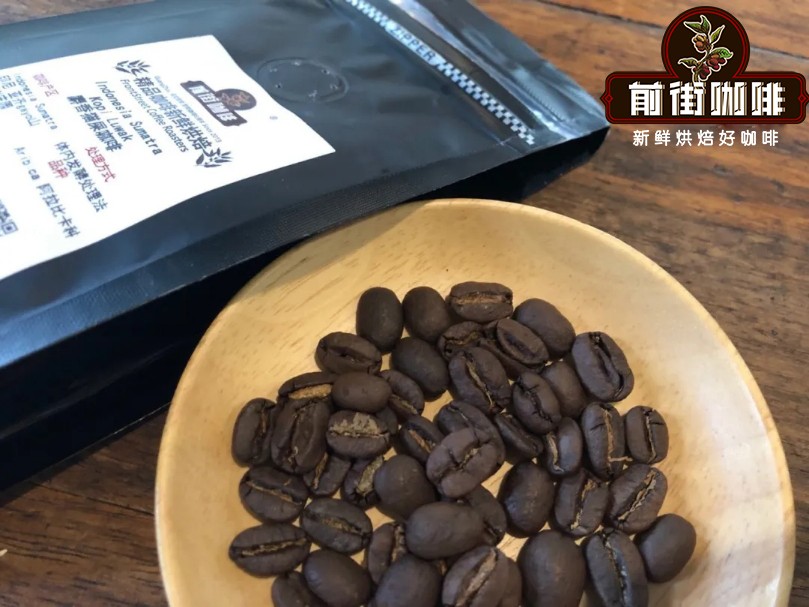
Kopi Luwak flavor description: herbal, nutty, dark chocolate, fermented notes.
Front Street brewing suggestions:
Regarding coffee brewing, Front Street has always believed that the freshness of coffee beans has a great bearing on the coffee's flavor. Therefore, the coffee beans shipped by FrontStreet Coffee are all within 5 days of the roast date. Front Street's roasting philosophy is "freshly roasted good coffee," so that every customer who places an order receives the freshest coffee. The resting period for coffee is about 4–7 days, so by the time the customer receives it, it is at its best flavor.
For friends who need ground coffee, Front Street kindly reminds you: once coffee beans have been ground in advance, they no longer need resting, because during transport, the pressure generated by carbon dioxide inside the packaging can also make the coffee flavor rounder, so once you receive the ground coffee, you can immediately brew a cup and drink it. However, ground coffee needs to be brewed promptly, because after contact with air, ground coffee oxidizes relatively quickly—that is, the coffee's flavor dissipates faster, and the coffee will not taste as good. Therefore, Front Street recommends buying whole beans and grinding fresh right before brewing, so you can better taste the coffee's flavor.
Therefore, Front Street does not recommend everyone to drink Kopi Luwak. Although real Kopi Luwak has a very good flavor, coffees from other producing countries are also excellent. For those who like floral flavors, we recommend Front Street Panama Geisha coffee, one of the most expensive coffees in the world; for those who like fresh, slightly acidic coffee, we recommend Front Street Ethiopia Huakui coffee beans, with notes like black tea and berries; for those who like a balanced nutty-caramel taste, that is, coffee that is neither sour nor bitter, we recommend Front Street Brazil coffee beans; and if you still love the solid, full-bodied mouthfeel of Indonesian coffee, we suggest buying the highest-grade Front Street Golden Mandheling coffee. After multiple rounds of hand sorting, the defect rate of the coffee beans can be reduced to a minimum, thereby making the coffee aroma clearer and the aftertaste sweeter. All the above coffee beans can be purchased and ordered at Front Street stores and the Front Street Tmall flagship store.
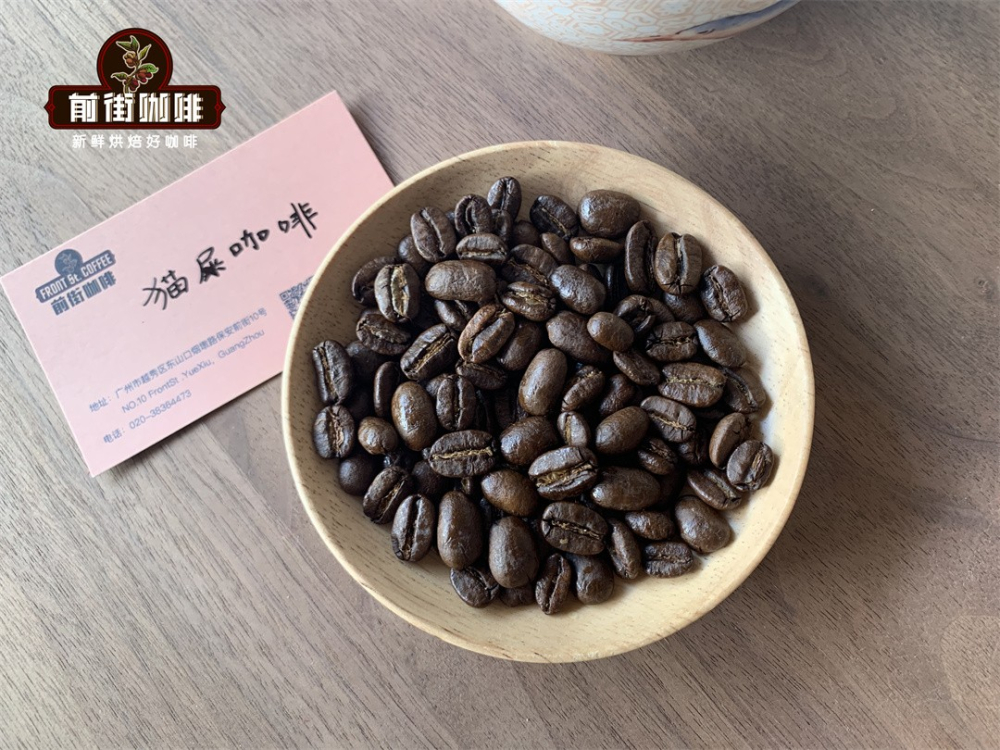
With so much coffee in the world, it is also a happy thing to experience coffees from different regions more and to feel different coffee flavors more!
The above content is compiled by CoffeeHunters, a coffee news website.


