







How Did a WBC Champion Coffee Career Lead to Luckin?
Hidenori Izaki, born in Fukuoka, Japan, started making coffee at 16 in his family's roastery shop, then joined Maruyama Coffee in Tokyo. He won the Japan Barista Championship at 22 and 23 and became Asia's first WBC champion at 24. He now works closely with the Chinese brand Luckin Coffee.
His own view is simple: a good cup should resonate with the drinker and does not need origin or altitude explained to be enjoyed. The wbc coffee championship title gave him reach, and that reach now supports Luckin's effort to build a homegrown Chinese coffee brand as coffee moves from a bitter black drink to a daily pleasure.
From Nestlé and Starbucks to Luckin, coffee's image in the minds of Chinese consumers has evolved from a "bitter black drink" into a daily beverage worth savoring slowly, and the profession of barista has accordingly drawn considerable attention. Among them, Japanese coffee master Hidenori Izaki is a legendary figure whom many Chinese people came to know through Luckin. He began making coffee at 16, became Asia's first champion at the WBC World Barista Championship at 24, and now works deeply with the Chinese brand Luckin, committed to creating a national coffee brand of their own for Chinese consumers. This article will review his coffee life, the journey of how he became connected with Luckin, and the changes he has witnessed in China's coffee market.
From Nestlé to Starbucks, and now to today's Luckin, it is an indisputable fact that coffee has been accepted by more and more people in China. The public's understanding of "coffee" no longer stops at "a cup of dark, bitter drink," but is moving in a more refined direction. At the same time, the profession of "barista" has gained unprecedented attention.
Many domestic consumers came to know a coffee master from Japan precisely through Luckin Coffee. This post-90s barista, who once won the title of world coffee champion, has always firmly believed that a good cup of coffee can resonate with a person's inner self—it does not need to astonish people the moment it is served, nor does it require the drinker to know its origin, altitude, or other background. As long as you genuinely find it delicious, that is enough.
He is Hidenori Izaki.
Starting his coffee journey at 16, becoming "Asia's number one" at 24
Hidenori Izaki was born in Fukuoka, Japan, and his coffee career is quite legendary. His family ran a coffee shop that roasted its own beans, and having grown up surrounded by the aroma of coffee, he chose to drop out of high school at 16 and stay home to start making coffee. Three years later, he went alone to Tokyo and joined the highly respected Maruyama Coffee in Japan.
While working at Maruyama Coffee, Hidenori Izaki worked while completing his studies, and at the same time actively threw himself into various coffee competitions. At 22 and 23, he won the JBC Japan Barista Championship for two consecutive years. Yet for Hidenori Izaki, the Japanese championship was never the end—"It is just a ticket for me to the world finals. I want to prove that Asian baristas can likewise stand firm in the field of specialty coffee."
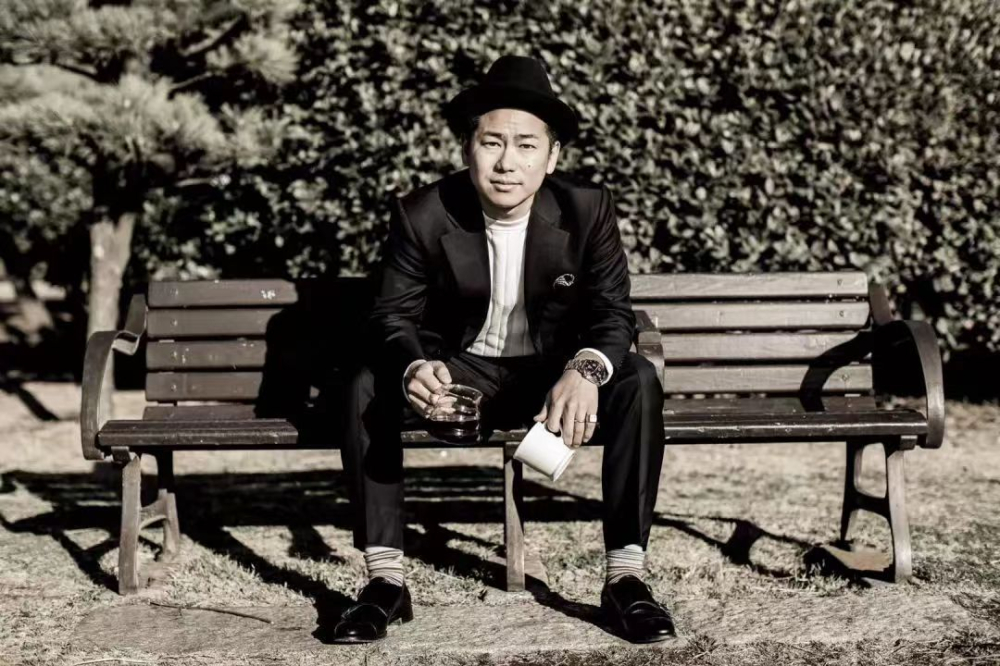
Being able to win championships repeatedly at such a young age is inseparable from the artisan spirit in Hidenori Izaki. He has an almost stubborn persistence regarding coffee beans and extremely strict standards for selecting them, believing that beans from different producing regions carry their own terroir and personality. To make good coffee, one must fully understand the characteristics of each bean and release its flavor to the greatest extent possible. To this end, he has traveled personally to coffee-producing regions many times to seek high-quality green beans, built deep connections with local growers, and even regards Costa Rica as his second hometown.
Later, at the age of 24, Hidenori Izaki represented Japan in the WBC World Barista Championship and won the championship in one fell swoop, becoming the first Asian to receive this honor.
Joining hands with Luckin: Chinese consumers should also have their own coffee brand
After winning the world championship, Hidenori Izaki carried out global lecture tours and teaching under his personal brand, using this to convey the value of coffee and promote the development of Asia's coffee industry. In 2017, he began to shift his focus to cooperation with Luckin Coffee. In the now-familiar Luckin Coffee master team, besides him, there are also WBC Italian champion Andrea Lattuada and WBC China champion Pan Zhimin.
It is said that Hidenori Izaki had previously had many interactions with China's coffee industry as well. When asked why he chose to cooperate with Luckin, he said that Luckin has strict requirements for coffee quality and also attaches great importance to research, development, and innovation. This serious attitude toward coffee is highly consistent with his own philosophy.
In addition, what truly moved Hidenori Izaki was Luckin's vision of making a good cup of coffee for consumers and building a local coffee brand. He believes that "Luckin's idea is very good. China is a major economy, and Chinese consumers also need to have their own coffee brand." Therefore, he is willing to stand shoulder to shoulder with Luckin to realize this goal and meet this challenge.
The cooperation between Hidenori Izaki and Luckin is by no means nominal. Every quarter he flies to Beijing to jointly develop new products with Luckin's product R&D team. Hidenori Izaki points out that the taste preferences of Chinese consumers change extremely quickly, which requires him and the Luckin team to continuously track trends and keep introducing new products.
More and more Chinese consumers are falling in love with coffee itself
Five years ago, when Hidenori Izaki first came to China, what left a deep impression on him were consumers who liked the atmosphere of coffee shops rather than coffee itself. He found that people went to coffee shops because they enjoyed the environment there, and some would even sit for an entire afternoon, or even a whole day, after ordering a cup of coffee.
Although Hidenori Izaki comes from Japan, where both consumption habits and the internet development environment are very different from China's, he believes that the direction of China's coffee market has something in common with Japan and many other countries: people begin to fall in love with drinking coffee, and consumption rises rapidly along with it.
Today, we ourselves can also clearly feel this change—more and more coffee consumers in China no longer simply seek the space and setting provided by coffee shops, but genuinely need that cup of coffee in their lives. For example, people can be seen everywhere ordering online through mobile apps, or buying coffee to take away on their way to work. Regarding this, Hidenori Izaki believes that this shift is a kind of progress, showing that consumers' love for coffee has already been built on the experience of drinking coffee itself. Perhaps not all cities have reached this point yet, but in major large cities, such an environment and atmosphere have already taken shape.
Just as this coffee master believes, domestic consumers' love for coffee already stems from coffee itself, rather than caring more about the surrounding environment while drinking coffee.
The above content is compiled by CoffeeHunters, a coffee news website.


