







How do Colombian and Brazilian coffee beans differ in the cup?
Colombia and Brazil are South America's two most representative coffee origins. Both are commonly used as espresso blend bases, and after a medium-dark roast they show low acidity, a rich body, strong nutty notes, and caramel sweetness. Brazil has flat terrain and the largest output in the world, dominated by Bourbon, while Colombia grows washed Arabica on the Andes with volcanic ash soil.
Flavor and history are the two useful ways to compare them. Traditional Brazilian and Colombian coffees are mostly roasted around medium, and a slightly darker roast suits their low acidity and heavy body; Front Street's specialty blend pairs Brazil with Colombia at a medium-dark roast and performs well with milk. Colombian single-origin lots are often roasted medium-light instead. Shoppers searching coffee beans from spain are usually looking for Spanish roasting styles rather than these two origins.
Colombia and Brazil are both major coffee-producing countries in South America, and the Central and South American coffees on Front Street Coffee's bean list mainly come from these two regions. Both are often used as bases for espresso blends, and after medium-dark roasting they present low acidity, rich body, pronounced nutty notes, caramel sweetness, and high thickness. But they also differ significantly in growing environment, flavor direction, historical origins, and production scale: Brazil has flat terrain and the world's largest output, dominated by the Bourbon variety; Colombia sits on the Andes Mountains and volcanic ash soil, and is known for washed Arabica. This article sorts out the similarities and differences from Front Street's perspective, and presents the taste performance of the two countries' coffees through brewing comparisons.
On Front Street Coffee's bean list, Central and South American coffees mainly come from Colombia and Brazil, along with well-known producing regions such as Peru, Ecuador, and Bolivia. However, Front Street believes that if you want to experience traditional South American coffee flavors, Brazil and Colombia are the two most representative producing countries. Friends who want to explore other South American beans can watch for Front Street's continued updates.
When talking about the similarities between Brazilian coffee beans and Colombian coffee, Front Street thinks it is appropriate to approach it from two dimensions: flavor and history. In terms of flavor, coffees from these two countries are often used in espresso blends domestically, and even for single-origin routes, the roast level of traditional Brazilian and Colombian coffees mostly falls around medium. The reason lies in their own flavor characteristics: low acidity, rich mouthfeel, prominent nutty notes, high body, and caramel-like sweetness. A slightly darker roast can better bring out the characteristics of the coffees from both countries.
Front Street Coffee's specialty blend uses Brazil blended with Colombia, adopting a medium-dark roast. Overall it is not too harsh, with rich nutty aroma, and it performs very well after adding milk, smooth and full-bodied. Of course, for single-origin coffee, most Colombian coffees Front Street purchases use a medium-light roast, because each bean has different characteristics. For example, Colombia's San Jose, in order to highlight the rum-barrel fermentation's wine aroma, a medium-light roast can better release the aromatic substances and make this bean more distinctive.
From the perspective of coffee's origin, the development paths of coffee in Brazil and Colombia are largely consistent. First, the transmission route: coffee seeds spread from France to Spain, and after crossing the Atlantic they arrived in Brazil and Colombia respectively. Brazil's coffee seeds landed from what was then a French colony, today's French Guiana, and then continuously expanded southward. According to the records of specialty coffee studies, the starting point of Brazil's coffee industry is also related to King Louis XV of France loving coffee. In order to expand the coffee industry, the royal family sent people abroad to cultivate coffee. The book states that in order to get coffee smoothly to the French colony, the patriotic officer de Clieu stole the coffee mother tree from the Paris Royal Botanical Garden, and even used a "beauty trap," having a curvaceous woman seduce the steward guarding the coffee tree. Eventually the coffee tree arrived in 1723 at the French island of Martinique in the Caribbean.
Of course, whether this story is completely historically accurate can no longer be verified. Some scholars also believe that in 1727 Major Francisco de Melo Palheta was sent to mediate a land dispute between French Guiana and Dutch Guiana. The purpose of his arrival in Cayenne was actually to smuggle those closely guarded, coveted coffee trees. He set his sights on the wife of the governor of Cayenne, Madame d'Orvilliers, and made a plan; at the closing banquet before his departure, his charm paid off—she handed him a bouquet containing seedlings that would become the ancestor, and Brazil's coffee industry thus began.
Compared with Brazil, Colombia's coffee growing environment is more favorable. Colombia has uniquely advantaged natural conditions, good mountains and good water, rich landforms, and clusters of volcanoes. It is said that Colombian coffee was brought in the early 1700s by Jesuit priests who arrived together with Spanish settlers, and the first shipment landed in the country's northeast. Soon, coffee was grown by small family farms across the country and became a local cash crop. Coffee's first commercial export did not appear until the first decade of the 1800s. The first 100 bags of crude green coffee (about 60 kg per bag) were the earliest goods to become a major industry.
In the mid-1800s, as coffee consumption in the United States, Germany, and France grew rapidly, Colombia's coffee production also climbed rapidly.
In the late 1800s, as the country broke out in civil war (known as the Thousand Days' War), the growing industry experienced a brief decline. The war and low international coffee prices forced many plantation owners to divide farmland among workers, giving locals ownership and autonomy over their own farms. It was not until 1927 that Colombian coffee growers came together to create the National Federation of Coffee Growers (FNC), after which almost all Colombian coffee was exported by this organization. The organization is also considered one of the largest rural non-governmental organizations in the world.
So what are the differences between Brazilian and Colombian coffee beans? Front Street summarizes them for everyone as follows: coffee growing environment, flavor, and production.
Since the 1840s, Brazil has been the largest participant in the international coffee trade. Today, the country produces 40 million to 60 million bags each year, and is also the world's largest exporter of instant coffee. As the world's largest coffee-producing country, Brazil ranks first in total output, accounting for about one-third of global production, with major producing areas concentrated in the central and southern provinces. Brazil produces about 25% of the world's coffee supply.
In 2020 Brazil exported 36.8 million bags of green coffee, exceeding the previous year's record of 35.49 million bags. But this year, according to Brazil's coffee exporters' association Cecafe, due to the double blow of drought and frost in Brazil, the 2021 harvest is expected to be bleak. Front Street said at the beginning of the article that Colombian coffee is mainly exported by the National Federation of Coffee Growers of Colombia. Colombia's coffee exports are significantly smaller than Brazil's. It ranks third in the world after Brazil and Vietnam. Its output accounts for about 15% of world coffee production. But due to excellent natural conditions, its Arabica coffee output is the highest. But this year, Colombian coffee, like Brazilian coffee, has frequently suffered natural disasters. According to Front Street, on September 22, Colombia's national disaster risk management department reported that due to heavy rainfall, coffee production dropped significantly.
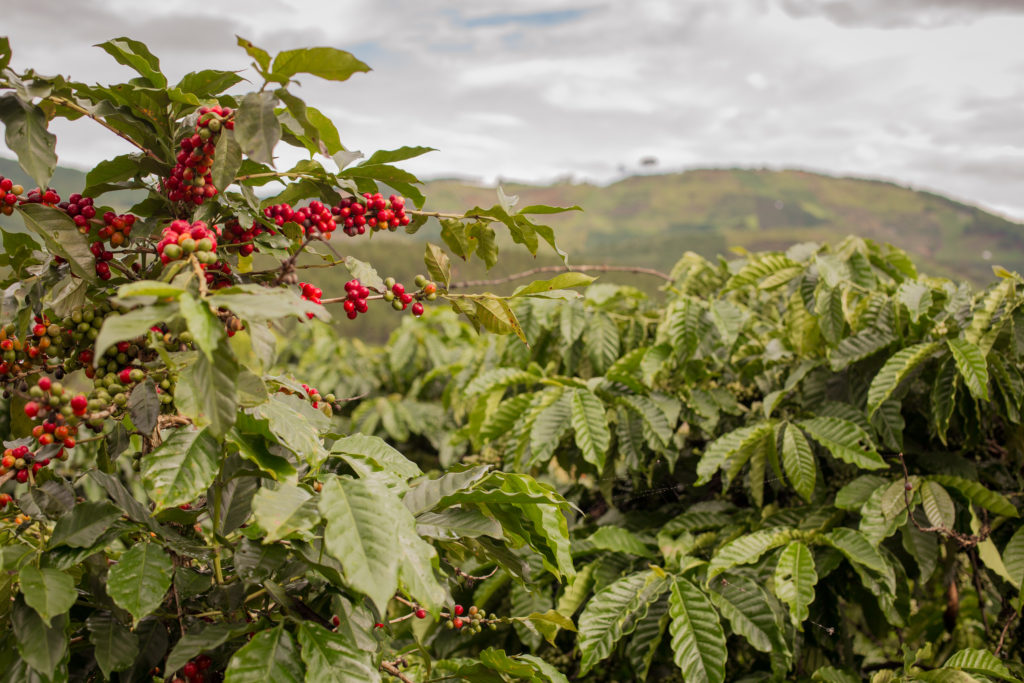
Now let's look at the growing environment of Brazilian and Colombian coffee. Colombian coffee has a very obvious coffee-growing axis, also known as the Coffee Triangle. From the map, it can be found that surrounding the coffee-producing areas are obvious mountainous plateau regions. This area has also been divided into specific zones by Colombia's Coffee Cultural Landscape (PCC), with a total of 47 municipalities and 411 villages, formed around the Andes Mountains in the central and western provinces of Caldas, Quindio, Risaralda, and Valle del Cauca. The Cherry Blossom on Front Street's bean list comes from Colombia's Cauca Province, and its altitude of 2,050 meters destined this coffee to be of excellent quality. The double anaerobic washed processing method also makes the whole bean very clean, with prominent berry flavors and a texture like strawberry jam.
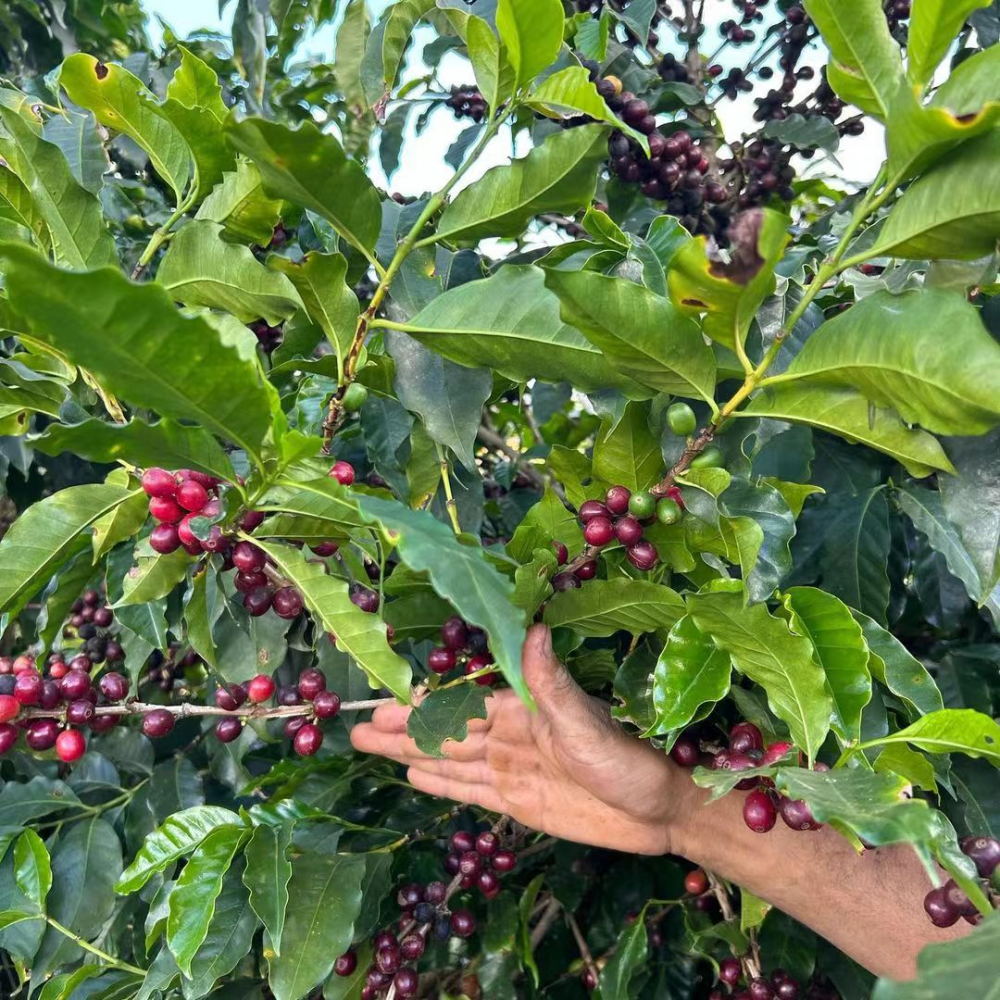
Colombia's main coffee-producing areas are distributed across three Cordillera mountain ranges arranged like the character for "river," running north-south, and coffee is grown along the highlands of these ranges. The unique microclimate, combined with high altitude and the essence of volcanic ash soil, makes such innate conditions very suitable for growing high-quality Arabica coffee here. At present, there are 24,000 small coffee plantations in this region. In comparison, Brazil's growing environment is not as advantageous. In specialty coffee studies, Brazil's coffee-growing environment is described as monotonous in landform, dry in climate, poor in soil, and low in altitude. Everything in the coffee depends on soil quality, variety improvement, and the use of high technology.
But from Front Street's view, although Brazil's coffee-growing areas are relatively flat and most coffee farms are below 1,200 meters in altitude, such a growing environment reduces the acidity of Brazilian coffee and makes it very suitable for blending with other types of coffee beans into composite coffee. It is generally regarded as an indispensable coffee bean in blending.
Brazilian coffee is mostly of the Bourbon variety, which is related to the history of coffee's introduction. Of course, Brazil also has Typica coffee varieties. It is said that this is because the coffee beans stolen by de Clieu at the time were of the Typica variety, which was later widely planted in Brazil. Front Street's Brazilian coffees are mostly Bourbon varieties, namely: Queen Farm's Yellow Bourbon and Cerrado's Red Bourbon coffee.
Red Bourbon is the second coffee variety after Typica to flourish throughout Central and South America. According to Front Street, Bourbon is also derived from the old variety Typica. The bean shape is round, and it was introduced to Brazil in 1927 and then spread to various countries in Central and South America. Although its yield is not high, compared with the frail Typica variety, Bourbon has better resistance to leaf rust. Bourbon coffee grown at high altitudes has a rich and delicate flavor, a strong aroma, and soft, smooth acidity. The Bourbon fruit we usually see turns from green to slightly yellow, orange-yellow, red, and finally to fully ripe dark red, which is what we call Red Bourbon.
Next, Front Street will brew Brazilian and Colombian coffee beans separately and conduct a set of experiments to compare the differences in flavor and mouthfeel between the two. Taking Brazil's Queen Farm Yellow Bourbon and Colombia's Cauca Province Castillo as examples, under the same brewing parameters and technique, how much difference will the two produce?
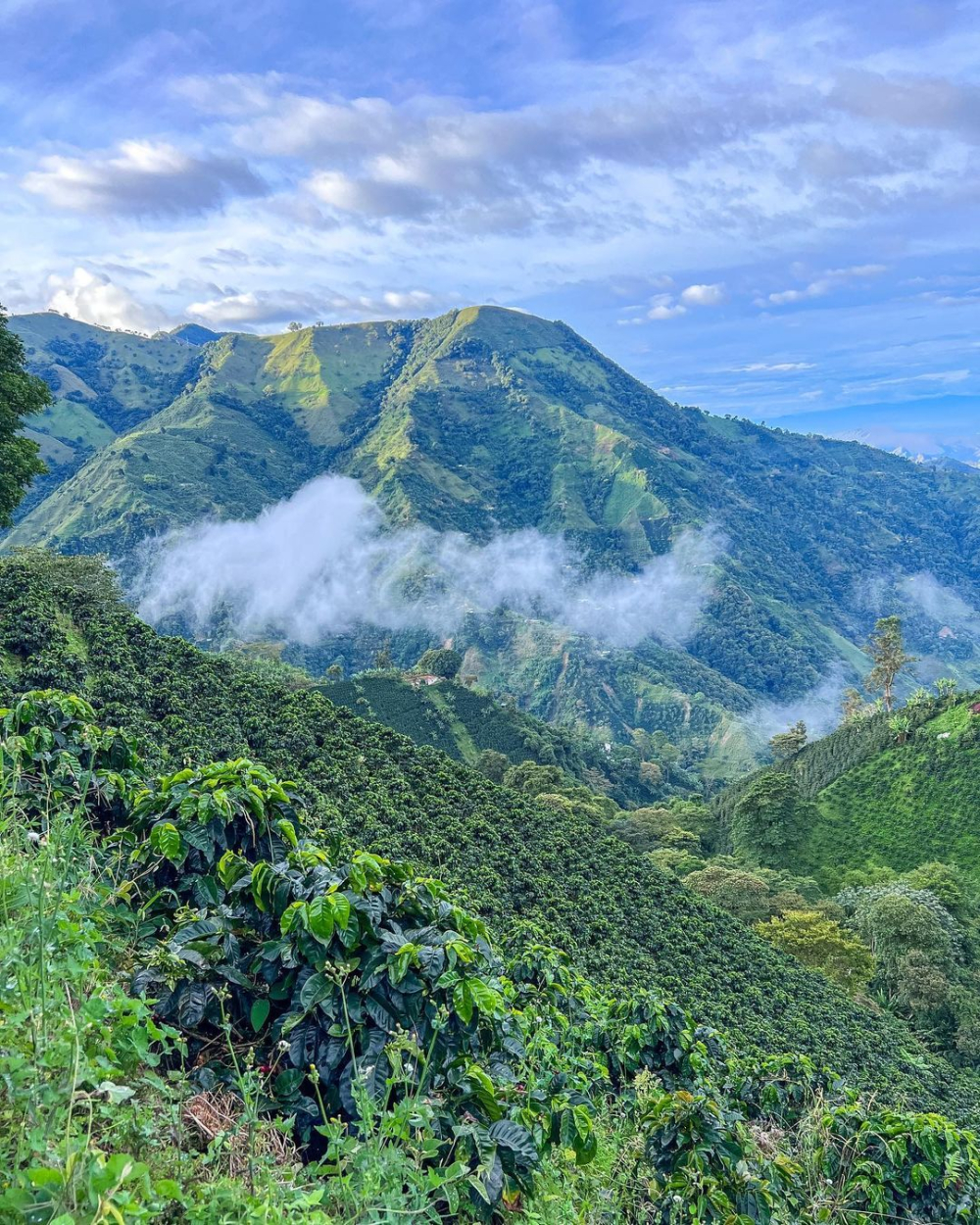
Front Street brewing parameters:
Dripper: V60
Water temperature: 91℃
Water-to-coffee ratio: 1:15
Coffee dose: 15g
Grind size: fine granulated sugar (80% passing rate on China's No. 20 standard sieve)
Front Street brewing method: use 30 grams of water for a 30-second bloom, pour in a small stream in circles until 125 grams for a staged pour, and when the water level drops and is about to expose the coffee bed, continue pouring until 225 grams and stop pouring. When the water level drops and is about to expose the coffee bed, remove the dripper. (Timing starts at the beginning of the bloom.) The extraction time is 2'00".
Brazil flavor and mouthfeel description: obvious nutty flavor, leaning toward peanut, high body, long-lasting dark chocolate finish. At low temperature there will be a slight fruity acidity. Colombia flavor and mouthfeel description: Cherry Blossom has the aroma of herbs such as mugwort in the dry fragrance, prominent berry flavors, and a slight fermented feel.
Overall, Front Street's Brazilian Bourbon coffee has a slightly sweet flavor and mouthfeel, with very excellent caramel flavor, and a slight acidity at low temperature. In comparison, Colombian coffee performs better. The coffee beans are of excellent quality, with a rich and unique aroma, acidity with sweetness, and moderate bitterness, suitable for both drinking alone and blending. After roasting, the coffee beans release a sweet fragrance. After grinding, the brewed coffee is acidity with sweetness and bitterness with sweetness. As long as the brewed Colombian coffee has an appropriate concentration, it can give off a rich and elegant aroma. Colombian coffee's mouthfeel and flavor are not as intense as Brazilian coffee, nor as sour as African coffee; it has a low-key, light fragrance that other coffees do not possess.
Colombian beans and Brazilian beans are both among the best choices for basic beans in blended coffee, but their flavor is more mellow and sweet than Brazilian beans, and their aroma is also stronger. Besides being used for single-origin coffee, they are also often used in blended coffee to increase the coffee's sweetness and balance the bitterness of other coffees. For example, one of Front Street's "Specialty Espresso Blend Coffee Beans" uses a formula of washed Colombian coffee beans (30%) + semi-washed Brazilian coffee beans (70%), allowing the espresso to present dark chocolate flavor, caramel sweetness, and a full roasted aroma.
Professional coffee knowledge exchange. For more coffee bean information, please follow Coffee Workshop (WeChat public account: cafe_style)
For more specialty coffee beans, please add the private WeChat of Front Street Coffee, WeChat ID: kaixinguoguo0925
The above content is compiled by CoffeeHunters, a coffee news website.


