







How Does Coffee Brewing Differ in Ice Drip, Cold Brew and Iced Pour-Over?
All three drinks are served cold, but the extraction differs. Ice drip passes ice water slowly through the grounds for hours, giving a clean cup with fermented aromas. Cold brew steeps grounds in cold water, producing a balanced, mellow result. Iced pour-over brews hot over ice, so it keeps a bright, crisp acidity and more aroma.
Extraction depends on temperature and time. Higher temperatures pull bitter compounds forward faster, while low temperatures slow the process and need longer contact. Choosing among the three comes down to the flavor wanted: clarity, roundness or brightness. Bean choice, grind size and ratios shift each method further, and caffeine levels vary with the recipe used.
As the scorching summer approaches, a cup of icy coffee always gives you a refreshing boost. But when you walk into a café to place an order, can you really tell the difference between ice drip, cold brew, and iced pour-over? Although all three low-temperature coffees are cooling and refreshing, they each have their own characteristics in terms of extraction principles, flavor profiles, and brewing details. Ice drip coffee uses ice water for long, slow dripping, resulting in a clean taste with fermented aromas; cold brew coffee relies on low-temperature immersion, giving a balanced and mellow flavor; iced pour-over is based on hot extraction with added ice for cooling, highlighting a crisp and bright character. This article will start with the concept of extraction, break down the brewing methods, suitable bean types, and flavor differences of these three iced coffees one by one, answer common questions about caffeine content, and share practical recipes from Front Street Coffee.
Entering May, summer quietly arrives. Even after rain, Guangzhou's weather remains muggy and unbearable—it's hard to get through the day without an iced drink. As a result, recently more customers have been visiting Front Street Coffee's stores to buy beans suitable for iced coffee, and many of them simply say they want "iced coffee," which raises a question: do you actually want ice drip, cold brew, or iced pour-over?
Following that, another question arises: what exactly are the differences between these three? Below, Front Street Coffee will sort out the distinctions among these three types of coffee.
First, it must be made clear that what these three coffees have in common is that they are all very low in temperature. Coffee making is essentially an extraction process, extracting some of the soluble substances from the coffee. If the extraction is insufficient, it is called "under-extraction"; if it is over-extracted and unwanted substances are also brought out, it is called "over-extraction." As is well known, extraction results are closely related to temperature and time. When the water temperature is high, the movement of various components speeds up: acidic substances move fastest, while bitter substances move slowest, but high temperatures cause more bitter components to reach the surface. Conversely, the lower the water temperature, the longer it takes to achieve the same amount of extraction.
Ice Drip Coffee
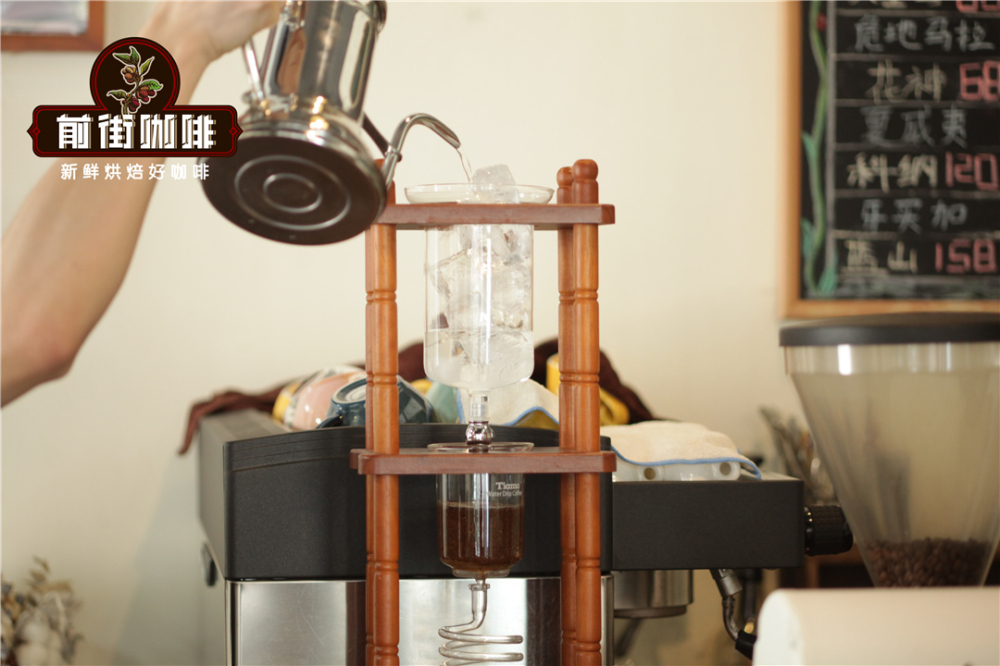
Ice drip coffee, as the name suggests, uses a special container filled with ice, allowing the ice to naturally melt into water and drip drop by drop onto the coffee grounds. Making a batch of ice drip coffee takes a very long time. At Front Street Coffee (FrontStreet Coffee) stores, ice drip usually requires 6 to 8 hours to complete extraction. After extraction is finished, the coffee liquid must also be refrigerated for 12 hours to ferment in a low-temperature environment.
The biggest advantage of ice drip is that it highlights the coffee's pure mouthfeel and fermented aroma, making it very suitable for making with naturally processed or honey-processed medium-roast single-origin beans. Recommended first choices are Front Street Blackberry, Front Street Mozart, and Front Street Sidra; the ice drip coffee made with them will present sweet flavors of fruit wine, raisins, and peaches.
[Front Street Ice Drip Coffee Brewing Method]
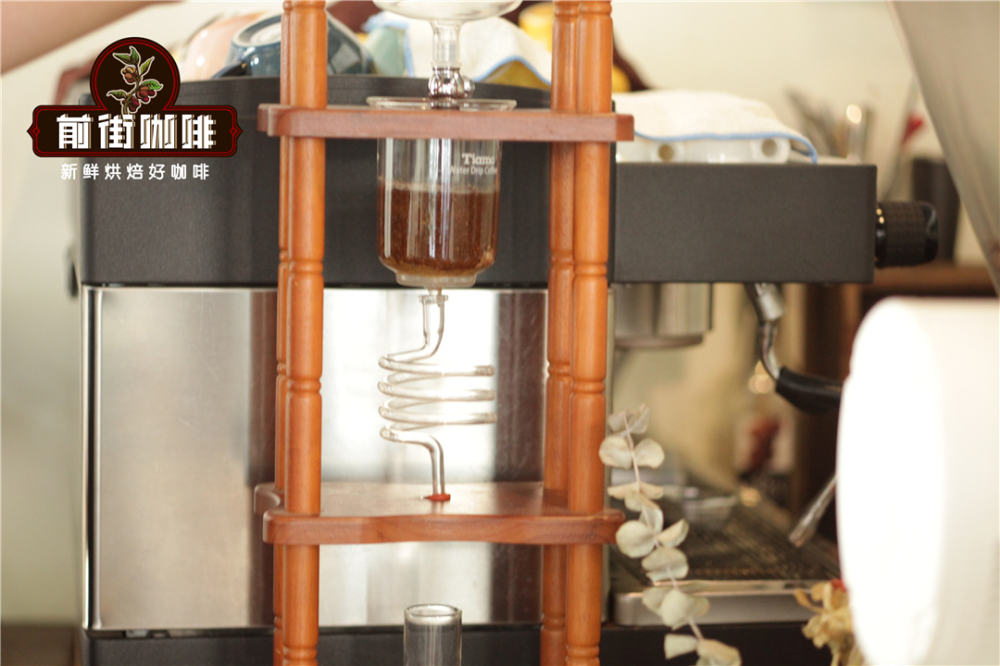
Put 60 grams of coffee grounds into the coffee powder cup, and finally extract 600 milliliters of coffee liquid, with a coffee-to-water ratio of 1:10. As for grind size, because the water temperature in contact with the coffee grounds is lower, you should choose a slightly finer setting than for pour-over coffee; judged by a No. 20 sieve, the passing rate is about 85%. The ice-to-water mixing ratio is roughly 1:1, and the flow rate of the regulating valve is controlled at 7 drops every 10 seconds. A moistened filter paper needs to be placed on the coffee bed to ensure more even extraction. The entire extraction process lasts about 6 to 8 hours. After completion, bottle the coffee liquid and refrigerate it for 12 hours before drinking.
Cold Brew Coffee
Making cold brew coffee is very simple and convenient. Simply put, it means soaking coffee grounds in clean water, extracting over a long period at low temperature under refrigeration, then filtering the mixture of coffee grounds and coffee liquid cleanly with filter paper to finally obtain a clear coffee liquid.
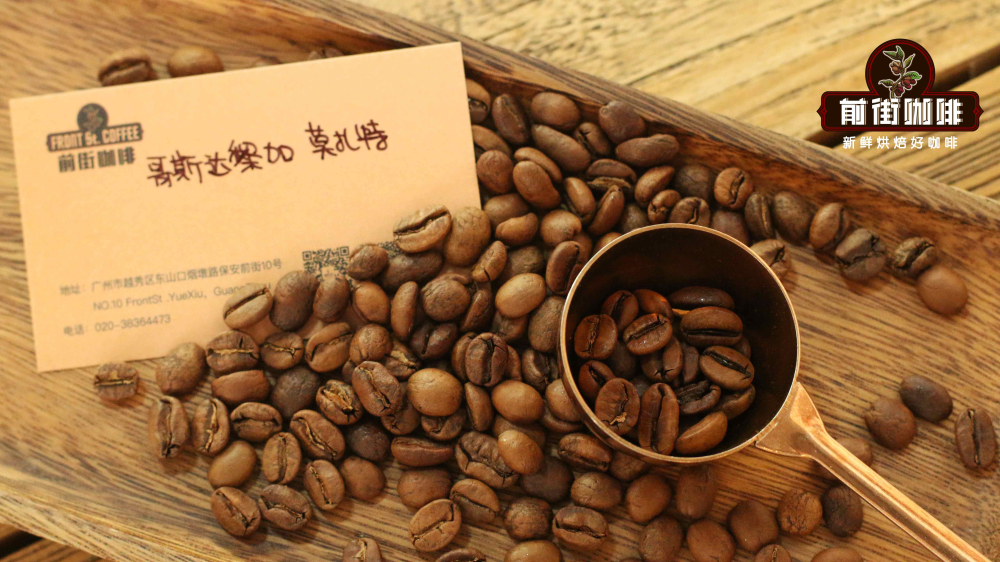
To make cold brew coffee, it is best to choose refreshing medium-light roast coffee beans such as Front Street Guodingding, Front Street Flower Butterfly, and Front Street Huakui. They have short roasting times, low bitterness, and bright acidity, and the cold brew made from them carries aromas of tea, white flowers, and honey.
[Front Street Cold Brew Coffee Brewing Method]
Using 50 grams of coffee grounds as the baseline, choose a slightly finer grind setting than for pour-over, that is, an 85% passing rate through a standard No. 20 sieve. Put the coffee grounds into a glass bottle, add 400 milliliters of room-temperature water and 200 grams of hard ice cubes (600 grams total of ice-water mixture), for a coffee-to-water ratio of 1:12. Then stir the coffee grounds and water evenly with a stirring rod, seal, and place in the refrigerator.
After leaving it in the refrigerator for 8 to 24 hours, filter out the coffee grounds with filter paper to obtain a clean coffee liquid, then pour it into a clean sealed bottle and refrigerate for about 4 hours before drinking.
Iced Pour-Over Coffee
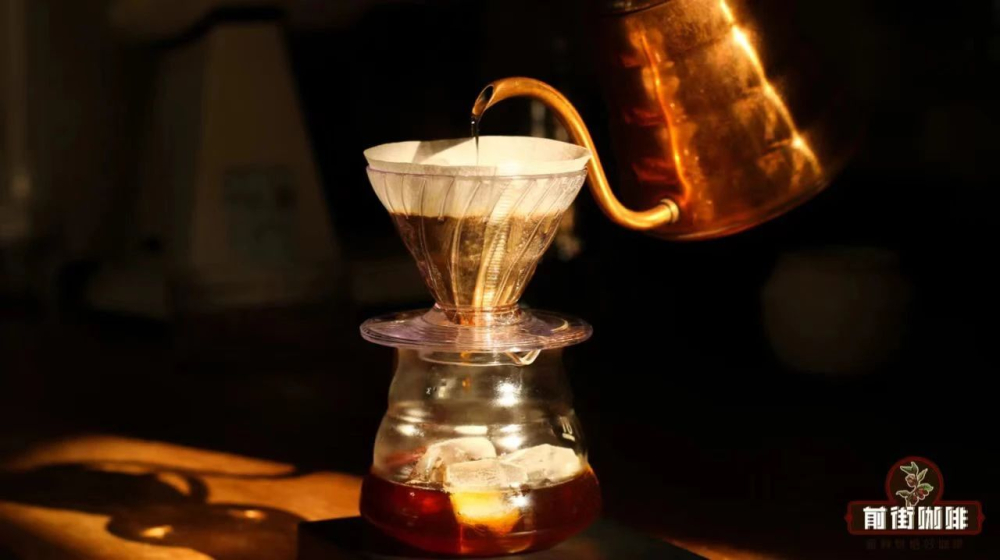
Iced pour-over coffee is also called Japanese-style iced pour-over. It can be simply understood as normally brewed coffee being diluted and cooled with added ice. To avoid excessive dilution of the coffee's flavor by the ice, iced pour-over uses a lower coffee-to-water ratio during brewing, extracting a higher-concentration coffee liquid with less water, and then adding ice cubes to cool it.
If you want to make a delicious iced pour-over at home, you can buy Front Street Strawberry Candy, Front Street Little Tomato, Front Street Big Belly Button, and Front Street Granja Geisha. These beans contain abundant floral precursor substances, and after roasting they not only have a fragrant character but also a unique sweet-and-sour aroma.
[Front Street Iced Pour-Over Coffee Brewing Method]
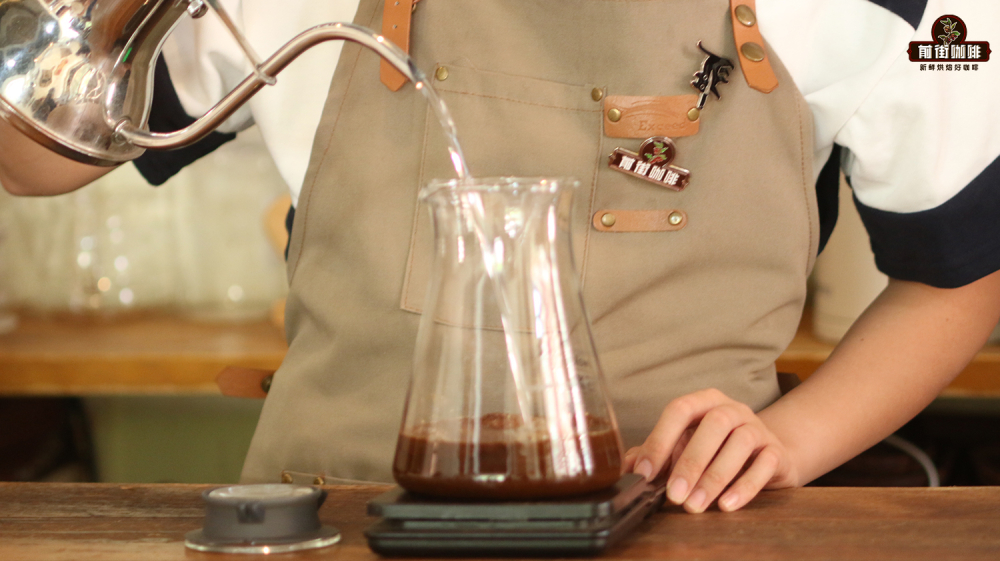
Taking 15 grams of coffee grounds as an example, the grind size should be finer than for hot pour-over; for example, light-roast coffee should have an 85% passing rate through a No. 20 sieve. The ratio of coffee grounds, water, and ice is 1:10:5. The water temperature is the same as for regular hot pour-over: 90°C to 93°C for light-roast coffee, and 87°C to 89°C for medium-roast coffee. The pouring technique for iced pour-over is the same as for hot pour-over, using three-stage extraction. After brewing is complete, shake or stir the dripper so the ice cubes fully contact the coffee liquid, rapidly cooling it while keeping the concentration consistent.
Differences Between Ice Drip Coffee, Cold Brew Coffee, and Iced Pour-Over Coffee
Iced pour-over coffee essentially extracts the coffee's early and middle-stage substances, then cools and dilutes them with an equal proportion of ice to a suitable temperature and concentration, so the mouthfeel is clean and refreshing, and it easily highlights the coffee's main flavors.
Because ice drip coffee uses ice water for long extraction, more small-molecule substances (such as floral aromas and acidity) are extracted, while large-molecule substances (such as the bitter astringency of tannic acid) are harder to extract. In addition, after production it is bottled and fermented at low temperature for 12 hours, so the flavor has an obvious fermented quality and the coffee beans' own sweet aroma, with a refreshing and delicious mouthfeel.
The liquid of cold brew coffee is not as clear as that of ice drip coffee; a thin layer of oil floats on the surface, and its flavor and mouthfeel appear slightly heavier and more balanced than ice drip coffee. Compared with hot extraction, sweetness and bitterness are less easily perceived, but acidity is more easily noticed. Because of the low temperature, the flavor is retained longer.
Are Cold Brew Coffee and Ice Drip Coffee High in Caffeine?
Recently a friend asked Front Street about caffeine: Are cold brew coffee and ice drip coffee high in caffeine? What about the caffeine content of espresso and instant coffee? How much coffee can you drink each day without endangering your health?
Many people think that ice drip coffee is low in caffeine because the lower the water temperature, the harder it is for caffeine to dissolve (the minimum temperature for caffeine dissolution is above 80°C). But the small amount of caffeine extracted by cold water can add up to something significant over a long extraction time. Depending on the coffee beans used, the interval between water drops, and the total extraction time, the caffeine content also varies greatly. For some packaged instant coffees on the market, the content can be found in the labeling on the package. As for how much is needed to endanger health, an authoritative institution states that the safe daily caffeine intake for adults should be 400 milligrams. On this basis, personal sensitivity to caffeine also needs to be considered.
The above content is compiled by CoffeeHunters, a coffee news website.


