







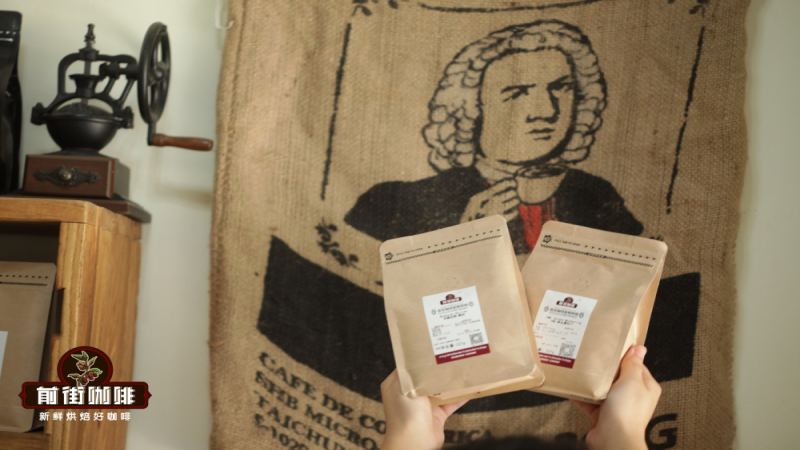
How did the Costa coffee origin shape the Musician series?
Costa Rica's Tarrazu region is the source of the Musician series, sold under names like Mozart, Bach, Beethoven, and Chopin, each tied to a classical composer's temperament. The beans come from Canet Estate and are processed as raisin honey or washed lots, giving preserved-fruit sweetness, berry notes, and floral aromas in the cup.
Costa Rica's coffee history reaches back to the late 18th century, when Arabica saplings arrived in the Central Valley and spread quickly, making it the first country in Central America with a coffee-producing region. By 1829 coffee was a leading cash crop, and the government later restricted planting to Arabica varieties only, listing Robusta as contraband.
The Musician series coffee beans from Costa Rica's Tarrazu region have attracted much attention in the coffee community thanks to their unique flavor expression and romantic naming style. Front Street Coffee brings you Mozart, Bach, Beethoven, and other coffee beans, each corresponding to the personality and temperament of a classical music master. These coffee beans come from Canet Estate and use raisin honey processing or washed processing, presenting complex flavors where preserved-fruit-like sweetness, berry notes, and floral aromas intertwine. This article will introduce in detail the regional background, origin of the names, flavor characteristics, and brewing suggestions of the Musician series coffee beans, taking you into this wonderful dialogue between taste and hearing.
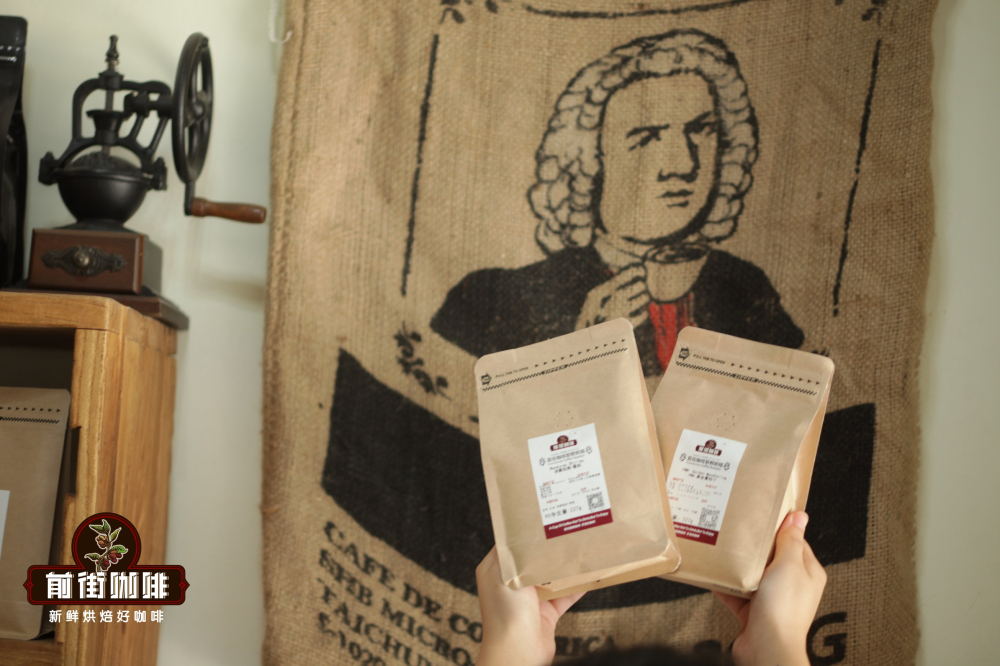
There is a coffee bean series that always sparks curiosity: after tasting Front Street Mozart coffee, can you become the next Mozart? A barista at Front Street Coffee once responded to a friend: whether you can become the next Mozart is hard to say, but Mozart's kind of sweetness will probably make you unable to stop.
Everyone knows that Costa Rican coffee beans are famous for being "sweet as honey," and Front Street Coffee's Front Street Mozart coffee beans from Costa Rica's Tarrazu region use raisin honey processing, making their sweetness even more stunning. Below, Front Street Coffee will explain this Front Street Musician coffee bean, sweet like preserved fruit, in detail for everyone.
Costa Rica's coffee planting history can be traced back to the late 18th century, when Arabica coffee saplings were introduced to the Central Valley area and then rapidly spread to multiple regions, making Costa Rica the first country in Central America to have a coffee-producing region. By 1829, coffee had risen to become one of Costa Rica's most important cash crops and also a major source of foreign exchange earnings for the country. Because coffee occupied such a key position, the Costa Rican government even revised regulations to allow only Arabica varieties to be planted, listing Robusta as contraband.
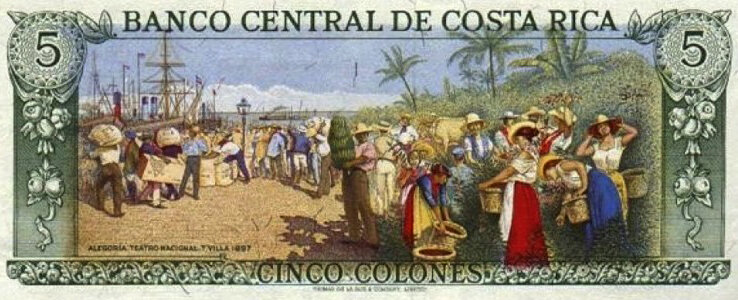
Costa Rica's coffee industry even nurtured a generation of elite classes, penetrating into every level of government circles in the second half of the 19th century. Coffee growers enjoyed lofty status in Costa Rica and brought stable development to the country. In 1897, citizens of San Jose, the capital of Costa Rica, witnessed the completion of a national theater, and this theater was donated by a coffee grower.
Coffee produced in Costa Rica is mild and smooth, with fruity acidity and chocolate bitterness blending together in overall balance. The country's seven major coffee-producing regions each have their own characteristics on this basis, and the Tarrazu region frequently appears on the award lists of green bean competitions, attracting the attention of many veteran coffee enthusiasts.
The Tarrazu region is not only one of the highest-altitude coffee-growing regions in Costa Rica, but also one of the country's most legendary coffee-producing regions and a world-renowned coffee origin. Tarrazu's extremely high growing altitude provides ideal conditions for producing the highest-grade SHB coffee beans. In addition, the significant temperature difference between day and night here slows the ripening speed of coffee cherries, allowing them to absorb more nutrients. The green beans are dense and hard, creating Tarrazu coffee's sweet-and-tart taste, prominent juicy feel, and overall balance, earning a reputation for Costa Rican coffee beans.
Front Street Mozart coffee beans are one of the Musician series launched by Canet Estate in Costa Rica's Tarrazu region. As the Musician series coffee beans have become increasingly popular in China, many friends have probably heard the name Canet, but perhaps everyone does not know that Canet is actually a coffee processing plant under the Black Gold coffee brand.
Black Gold, as a green coffee bean trader from Taiwan, China, has its own coffee processing plant in Costa Rica and will use different processing techniques on green coffee beans in small batches according to the terroir characteristics of each coffee-producing region.
Canet is located in the highest-altitude area of coffee cultivation in Costa Rica's Tarrazu, which is also the most densely fruit-planted zone in Costa Rica, mainly with fruits such as passion fruit, while the amount of coffee planted is quite limited. Coffee is grown only in specific areas, and these coffees are given special care, with only ripe red coffee cherries selected during picking.
Canet was originally a processing station responsible for collecting coffee cherries in its area. When the coffee harvest season arrives, coffee farmers gather from all over the country and sell the red coffee cherries they have picked, bucket after bucket, to the processing station, thus bidding farewell to the fruits of their labor. After the harvest season ends, they disperse again and go to various places to do odd jobs to supplement their meager income and support their families.
Some friends who are curious about the naming of coffee beans ask: why are Mozart coffee beans called Mozart coffee beans?
In fact, the naming of Front Street Costa Rica Musician series coffee beans is related to the person in charge of Canet himself. He is a classical music lover, and when tasting a coffee, he associates it with a certain musician based on the coffee's flavor characteristics. This Front Street Costa Rica Mozart coffee has unrestrained yet elegant white floral aromas, prominent berry notes, and honey sweetness emerging in the aftertaste. Such a gorgeous expression fits the characteristics of Mozart's music very well, hence the name Mozart.
Front Street Coffee Costa Rica Musician Series Mozart Coffee Beans
Region: Tarrazu, Costa Rica
Estate: Canet
Altitude: 1,980 meters
Variety: Caturra, Catuai
Grade: SHB
Processing Method: Raisin Honey Processing
Front Street Coffee Costa Rica Bach Coffee Beans
Country: Costa Rica Region: Tarrazu Altitude: 1950m Variety: Caturra Processing Method: Raisin Honey Processing Flavor: Fermented wine aroma, berries, fruity tea notes
Bach's music is refined, richly layered, and at the same time clear and well-organized. The dry aroma of this Front Street Bach coffee bean carries fruity aromas such as strawberry, blackberry, and raisin, and bursts of fruity fragrance also drift out during brewing. When Front Street has just brewed it, obvious floral and fruity aromas emerge, and after entering the mouth, rich fruity aroma and sweet-and-tart notes can also be felt, with a slight wine aroma in the middle and finish, like red wine. After cooling, it has a preserved-fruit sweet fragrance, and the wine aroma becomes even more obvious, with even plum wine flavors perceptible. Such a refined taste experience is indeed like Bach's music, and Front Street believes that every sip of Front Street Bach coffee feels like being immersed in the splendor and rigor of Baroque aesthetics.
Front Street Costa Rica Beethoven Coffee Beans
Country: Costa Rica Region: Tarrazu Altitude: 1800-1950 m Variety: Caturra, Catuai Processing Method: Washed Processing Flavor: Citrus, berries, floral aromas, light fermented wine aroma
The most famous Romantic classical music composer is undoubtedly Beethoven, and the coffee beans that make people think of Beethoven's music when drinking naturally have outstanding flavor. The dry aroma has obvious red berries, among which strawberry is the most prominent, and it also gives off floral aromas. During brewing, floral notes, nectar-like sweetness, and green grapes can be felt. When Front Street brews this Front Street Beethoven coffee, after entering the mouth there is the sweet-and-tart feel of green grapes and red berries, and the overall cup is clean and smooth. After cooling, the red berries become even more obvious. Some coffee fans who have tasted it in Front Street stores even say that this is a coffee with a romantic summer sentiment.
Front Street also mentions in passing that, unlike the raisin honey processing of the other Musician series, Front Street Beethoven uses a washed method to process the coffee beans in order to achieve a clean and refreshing summer taste. Therefore, Front Street highly recommends that coffee fans drink this Front Street Costa Rica Beethoven coffee in summer, and it will also produce a different taste experience.
Some friends, after tasting Mozart coffee, raise this question: since they are all honey processed, why is Mozart's sweetness so prominent? This is because Mozart coffee beans use raisin honey processing. Unlike ordinary honey processing, raisin honey processing can be considered a honey processing method achieved through double fermentation. Fully ripe coffee cherries are placed whole on raised beds for sun drying. After the coffee cherries take on a shriveled, raisin-like state, the work of removing the peel and pulp is carried out, retaining as much pectin as possible, followed by sun drying.
Compared with ordinary honey processing, raisin honey processing retains more pectin substances and can greatly enhance the coffee's sweetness. After raisin honey processing, Front Street Mozart coffee even has a white wine-like mouthfeel and balanced sweetness and acidity, and the fermentation character is also very rich.
Considering the rich aroma of this Front Street Costa Rica coffee bean, Front Street Coffee uses a medium roast level for it. When brewing, Front Street recommends using a Hario V60 dripper, a higher water temperature, and a finer grind size.
Dripper: Hario V60
Water Temperature: 90°C
Coffee Dose: 15 grams
Coffee-to-Water Ratio: 1:15
Grind Size: 80% passing through China standard No. 20 sieve
First pour 30 grams of hot water and bloom for 30 seconds, then pour from the center with a thin stream in slow circles to 125 grams, wait until the water level in the dripper drops to just before exposing the coffee bed, then continue pouring in circles to 225 grams. The total extraction time is about 2 minutes.
Friends who often read Front Street articles can see that whenever Front Street brews any coffee bean by hand, it performs a 30-second bloom. Although what Front Street ships is coffee beans freshly roasted within 5 days, by the time they arrive the 4-to-7-day resting period has already passed, and the brewing bloom allows carbon dioxide in the coffee grounds to escape, stabilizing the later flavor extraction.
Front Street also provides grinding service for friends who do not have grinding equipment at home, but Front Street reminds everyone that after coffee beans are ground, the contact area between particles and air increases, degassing activity intensifies, and flavor substances dissipate accordingly. Friends who have grinding equipment at home, in order to taste the best flavor, had better buy whole beans and grind fresh for each brew.
The above content is compiled by CoffeeHunters, a coffee news website.


