







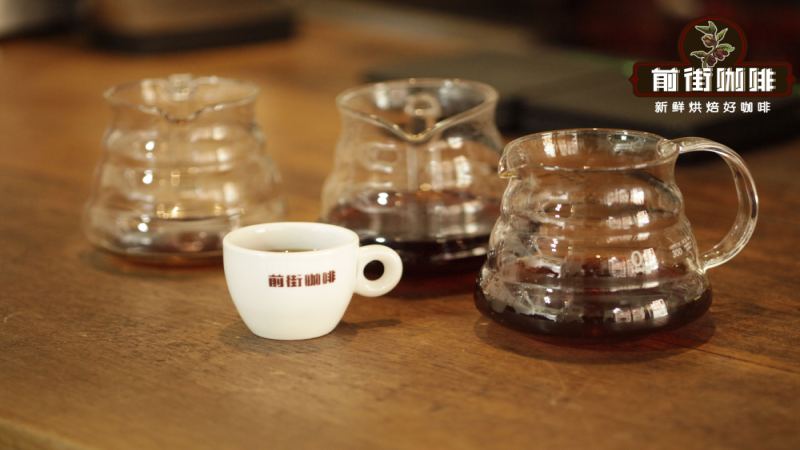
Can coffee from Finca Canet really taste of raisins and red wine?
Coffee from Finca Canet in Costa Rica's Tarrazu region can carry clear raisin sweetness and a red-wine fermentation note. The estate grows Caturra and Catuai on its highest plots, picks only ripe red cherries by hand, and sorts again after picking. The Musician Series Mozart lot uses raisin honey processing, which is what drives the dried-fruit and wine-like character in the cup.
Tarrazu sits high in Costa Rica's coffee landscape, and Canet occupies one of the highest zones there, an area also planted heavily with fruit. Because coffee covers only limited plots, every cherry receives close attention. That coffee beans process, from flotation through controlled fermentation to drying, decides how much fruit sweetness survives into the roasted bean and the final brew.
Finca Canet's Musician Series was one of the first batches of beans in China to astonish the coffee world with special processing methods. Among them, Mozart, with its raisin honey processing bringing dried-fruit sweetness and red-wine fermentation character, remains one of Front Street Coffee's signature offerings to this day. This article will start from the regional background of Finca Canet and the characteristics of the Caturra and Catuai varieties, break down the specific steps of raisin honey processing in detail, and include Front Street Coffee's actual roasting curve and pour-over parameter recommendations, taking you through the complete flavor logic of this bean from origin to cup.
The Musician Series launched by Finca Canet can be considered one of the earliest specialty-processed coffee beans to enter the public eye in China. Back then, its highly distinctive flavor shocked many first-time tasters, and also drew skepticism from some industry insiders who believed such exaggerated aromatic expression might be the result of artificial flavoring. To this day, Front Street Coffee's Costa Rica Musician Series still enjoys a stable following, and the key to its ability to present such a unique flavor lies in its distinctive green bean processing method.
Finca Canet is located in the Tarrazu region of Costa Rica. Tarrazu occupies an important position in Costa Rica's coffee landscape; historically, coffee produced here has won the favor of the British royal family and praise from the Pope. Front Street Coffee's Costa Rica everyday-drinking series uses coffee beans sourced precisely from the Tarrazu region.
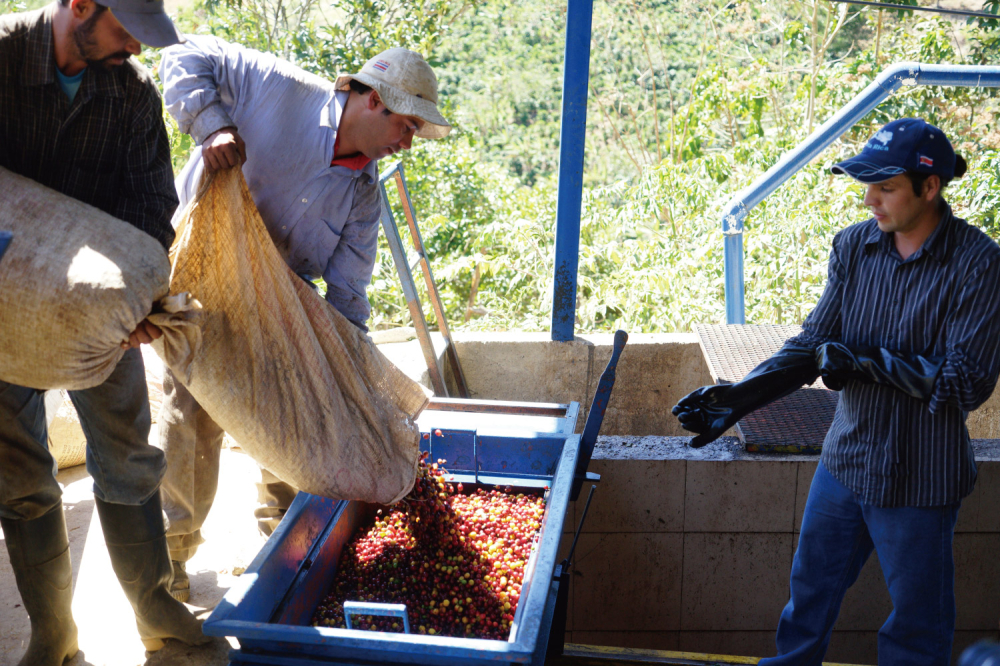
Finca Canet is situated in the highest-altitude zone of the Tarrazu region, an area that is also the most concentrated fruit-growing area in Costa Rica. The estate's main crop is passion fruit, and its coffee planting area is quite limited, with coffee trees grown only on specific plots and given meticulous management. All coffee cherries are hand-picked, selecting only ripe red fruit, and after picking is completed they undergo a further sorting step to remove again any underripe or overripe fruit.
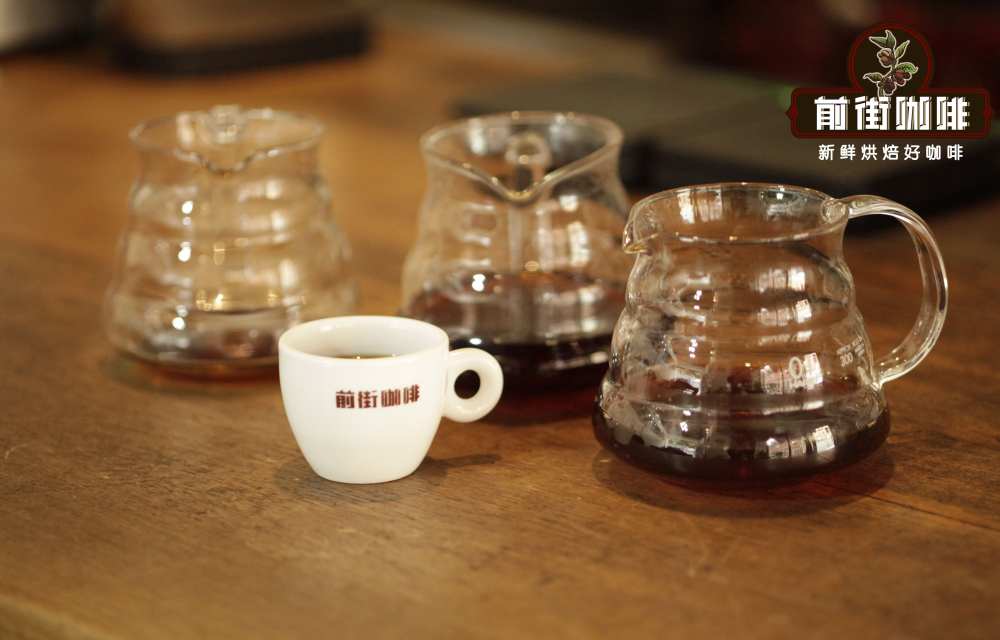
The coffee varieties grown on the estate are mainly Caturra and Catuai. These two varieties are very common in Central and South American coffee-producing regions — Caturra is a natural mutation of Bourbon, while Catuai is a cross between Caturra and Mundo Novo, and both have good potential in flavor expression.
Finca Canet's Musician Series is a project planned by Taiwan's Black Gold Company, and the series includes four beans in total: Front Street Coffee Bach, Front Street Coffee Mozart, Front Street Coffee Chopin, and Front Street Coffee Beethoven. Among them, only Front Street Coffee Beethoven uses washed processing, while the other three all use raisin honey processing.
Raisin honey processing is a special variant of honey processing. Specifically, the whole coffee fruit is first sun-dried for 72 hours; after sun-drying, part of the moisture inside the fruit evaporates, and the appearance becomes shriveled, taking on a raisin-like state. Then the skin is removed while retaining 100% of the mucilage layer, and it is sun-dried again. From the process, it is easy to see that this is in fact a 72-hour sun-drying preparatory step added before black honey processing. Front Street Coffee Mozart coffee beans processed in this way present aromas and sweetness reminiscent of raisins or dried fruit, accompanied by a red-wine-like fermented note, with a concrete and unique flavor.
Front Street Coffee used a Yangjia 800N semi-direct-fire roaster for roasting curve testing, with a charge weight of 300 grams of green beans.
When the drum temperature was preheated to 200°C, the beans were charged, the gas setting was 160, and the airflow was adjusted to 3. The turning point appeared at 1 minute 36 seconds, at which point the gas was kept unchanged; when the temperature reached 140°C, the gas was adjusted to 160 and the airflow opened to 4. At 5 minutes 20 seconds, the beans turned yellow, the grassy smell dissipated, and the dehydration stage began; at 166°C the gas was lowered to 130, with airflow kept at 4. At 176°C the gas was further reduced to 100, with airflow unchanged.
At 8 minutes 05 seconds, dehydration was complete, the bean surface began to show wrinkles and dark mottling, and the toast-like smell gradually turned into coffee aroma, meaning first crack was imminent; at this point one must listen carefully for the cracking sound. At 8 minutes 55 seconds, first crack began, the airflow was fully opened to 5, and the gas was kept unchanged. The development time after first crack was controlled at 1 minute 30 seconds, and the beans were discharged when the temperature reached 193.2°C.
Front Street Coffee pour-over parameter recommendations
Dose: 15 grams
Coffee-to-water ratio: 1:15
Grind size: 80% passing a No. 20 sieve
Water temperature: 90°C
Dripper: V60
Front Street Coffee recommends a three-pour method.
For the first pour, add 30 milliliters of water for blooming, lasting 30 seconds.
For the second pour, pour in circles from the center outward, pausing the pour when reaching 150 milliliters.
For the third pour, after the water level drops by half, continue pouring in circles from the center outward until reaching 225 milliliters.
The total extraction time should be controlled between 1 minute 40 seconds and 2 minutes.
The pour-over flavor profile of Front Street Coffee Costa Rica Mozart coffee is: a layered entry of floral aromas and fermented savory notes, with obvious raisin and dried-fruit sweetness; in the acidity one can catch notes of star fruit and berries, and the finish leaves a sugarcane-like sweetness.
For professional coffee knowledge exchange and more coffee bean information, please follow Coffee Workshop (WeChat public account: cafe_style). For more specialty coffee beans, please add the private WeChat of Front Street Coffee (FrontStreet Coffee), WeChat ID: qjcoffeex
The above content is compiled by CoffeeHunters, a coffee news website.


