







How do the SCA and CoE systems score coffee quality?
Cupping is the first check on coffee quality after roasting. Grind size, coffee-to-water ratio, water temperature, and steep time are fixed, then a cupping spoon is used to judge aroma and flavor. Green coffee beans are usually cupped at origin before shipping, so the farmers' association or processing plant can confirm flavor direction, quality level, and classification.
The CoE form scores eight categories, and its weighting differs from the SCA system, so the same coffee can receive slightly different totals depending on which form is used. Tasters describe what they find with coffee describing words drawn from the flavor wheel, such as floral, citrus, or nutty, which keeps notes comparable between sessions and between different evaluators.
Cupping is the first step in verifying coffee quality after roasting. By standardizing grind size, coffee-to-water ratio, water temperature, and steep time, it objectively reveals a bean's truest flavors. This article systematically outlines the purpose of cupping, the required equipment, and standard parameters, breaks down the complete process of pouring, smelling, breaking the crust, and slurping step by step, and takes a deep dive into the eight scoring categories on the CoE cupping form and how they differ from the SCA scoring system. It also compiles common descriptive terms from the flavor wheel and includes a high-resolution 2023 flavor wheel wallpaper resource, making it a handy reference for coffee enthusiasts and professionals alike.
Professional coffee knowledge exchange. For more coffee bean information, please follow Coffee Workshop (WeChat public account: cafe_style).
For more specialty coffee beans, please add the personal WeChat of Front Street Coffee (FrontStreet Coffee), WeChat ID: qjcoffeex.
For every specialty coffee shop owner who insists on roasting their own beans, cupping is the first step that cannot be skipped after each batch is roasted. But what exactly does cupping mean? And what information about coffee can it help us obtain?
From an operational standpoint, cupping is a method in which grind size, coffee-to-water ratio, water temperature, and steep time are fixed, and a specialized cupping spoon is then used to perceive and judge the strengths and weaknesses of coffee flavor. To define it more rigorously, true cupping also sets standardized requirements for the roasting stage and the evaluation process. In other words, the core aim of cupping is to keep all variables consistent so as to capture a coffee bean's most original flavor profile.
What is the purpose of coffee cupping?
Before green coffee beans are shipped around the world, they are usually first cupped by the coffee farmers' association or processing plant in the place of origin—that is, tasted to confirm the beans' aroma and flavor, to judge their flavor direction and quality level, and to complete a further classification. Only after passing does shipping proceed. This is a fairly scientific method.
Before green coffee beans are sent around the world, they are first cupped by the coffee farmers' association or refining plant in the place of origin—that is, tasted to confirm the beans' aroma and flavor, and then classified again. Shipping only happens after cupping is completed.
What is needed for cupping?
The tools used for cupping are not complicated: a grinder, a scale, a thermometer, cups, and spoons will do. The ratio of coffee beans to water during cupping is also clearly specified:
Water ratio: 8.25 grams of coffee beans with 150 ml of water; the water temperature should be 92.2–94.4°C;
Cupping cups: tempered glass or ceramic materials should be used,
Cupping capacity: between 207 ml and 266 ml,
Cup height: 3 to 3.5 inches
Cup rim diameter: 76–89 mm. All cups should be made with the same volume, size, and material, and have lids.
Spoons used for cupping: use an anti-static metal material (mostly stainless steel), with each spoon holding 4–5 ml.
Coffee cupping steps
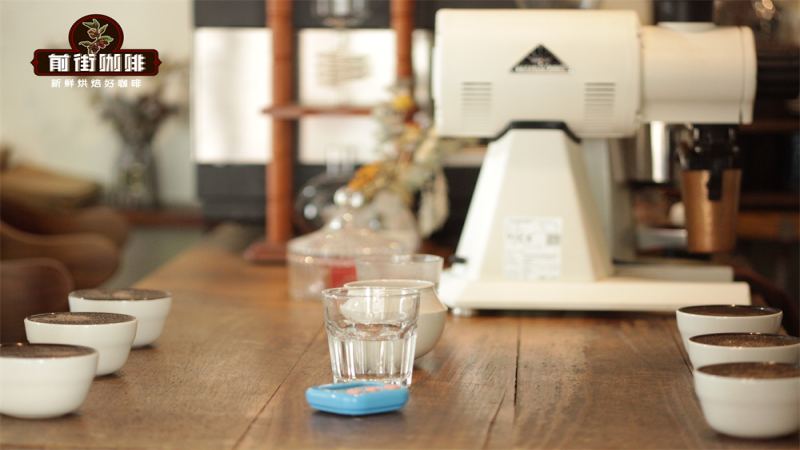
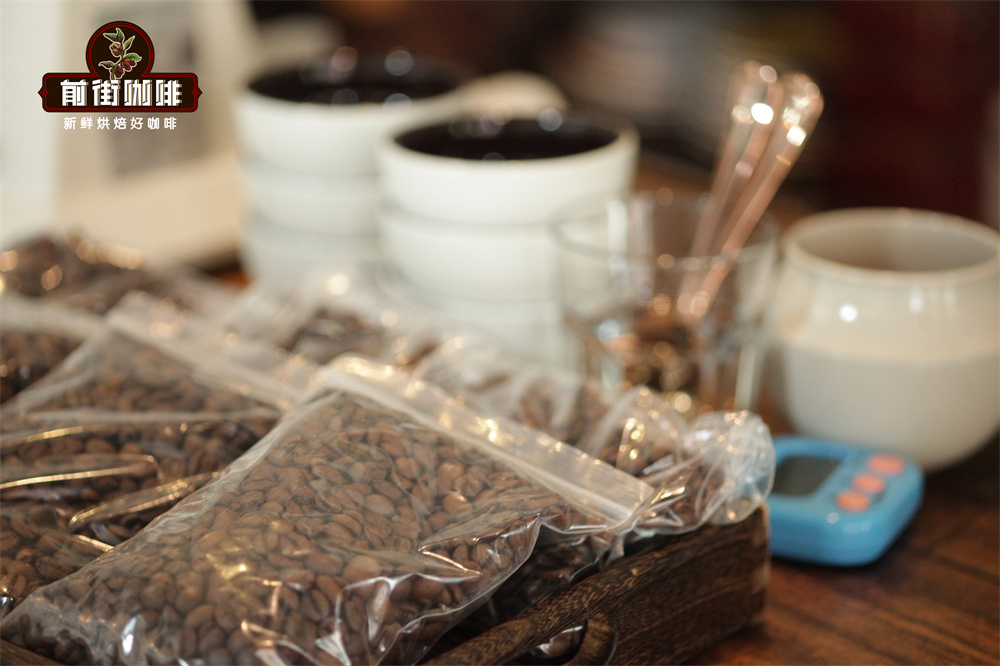
Step one—pour water and steep: brew and grind each coffee bean (preferably within 24 hours of roasting), grind the coffee to a coarser powder, place the ground coffee (particles) into the cup, shake the coffee grounds in the cup, and smell the coffee's dry aroma. Following a ratio of 8.2–8.3 grams of grounds to 150 ml of 94°C hot water, add it to the cup and let the coffee steep for 3–4 minutes until a crust of coffee grounds forms;
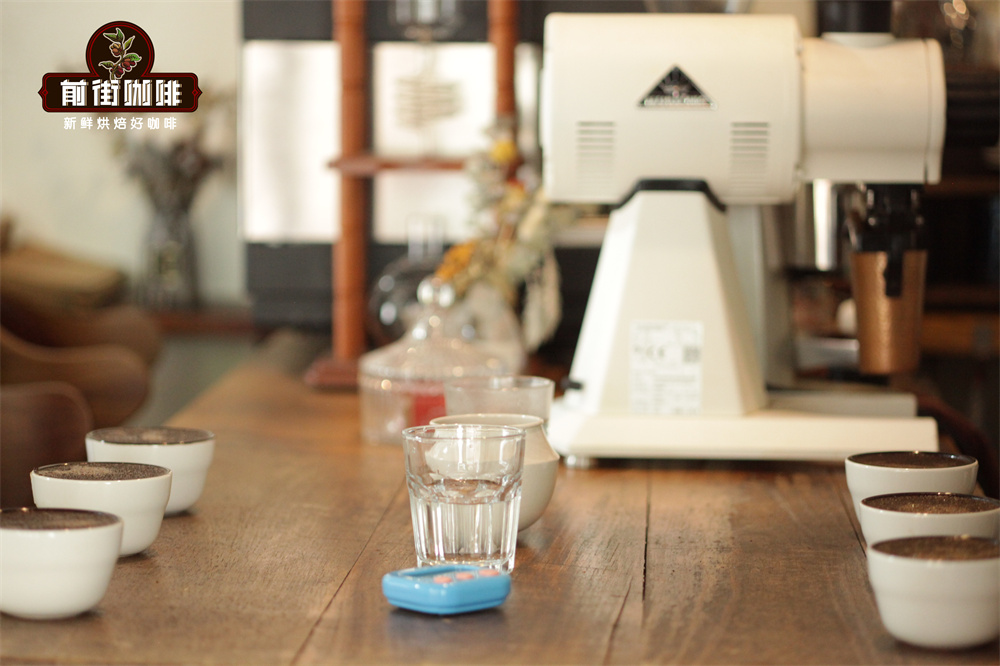
Step two—smell the wet aroma after 2 minutes: wet aroma (Aroma) refers to the intensity of the scent when coffee is brewed. Some subtle, delicate differences—such as "floral" or "winey" characteristics—come from the wet aroma of brewed coffee;
Step three—break the crust: use a spoon to stir three times on the surface of the cup, skim off the foam and crust, and then you can begin scooping the coffee with a spoon to taste it;
Step four—taste: use a cupping spoon to remove the coffee grounds and foam, slurp the coffee into your mouth, feel it in your mouth, then spit out the coffee liquid, record your impressions on the cupping form, score according to the requirements of the cupping form, rinse your mouth, rinse the cupping spoon, and then taste the next coffee;
How does the CoE cupping form score?
Explanation of the evaluation categories and recording priorities of the CoE cupping form. This explanation can give you a basic basis when performing cupping, and can also serve as an auxiliary reference when evaluating a single category:
Aroma – This is the first category evaluated at the very beginning of cupping. There are a total of 3 aroma evaluation stages. The first stage is the dry aroma of the dry grounds in the cup smelled right at the start of cupping; the second is the wet aroma smelled on the surface after pouring water; the third aroma is the crust-breaking aroma smelled while breaking the crust. Aroma is an attractive element of coffee. Coffee aromas have many sources, including floral, berry, caramel, nutty, chocolate, spice, and so on.
The aroma on the CoE cupping form is only for reference and is not included in the total score, but in the Flavor category, aroma is included in the scoring.
The first scoring category: Clean cup
Cleanliness is a very important and essential condition for specialty coffee. So-called clean means complete freedom from taints or faults. If coffee has bad tastes and tactile sensations such as rottenness, earthiness, medicinal iodine flavor, fermented acidity, rubber, onion, astringency, and so on, it indicates it is not clean enough.
The second scoring category: Sweetness
Sweetness not only indicates that the coffee cherries were all harvested at optimal ripeness without mixing in unripe beans, but also represents excellent coffee quality. Only by selecting just-ripened coffee cherries for processing into green beans can better sweetness be obtained. There are also many types of sweetness, such as sugarcane sweetness, caramel sweetness, and so on, all of which can be noted during evaluation. If the sweetness comes with astringency, or if the sweetness stays in the mouth for only a very short time, then the sweetness score will not exceed 6 points.
The third scoring category: Acidity
Acidity: good acidity does not taste like vinegar. Even if bright and lively, it can still reveal many kinds of acidity such as citrus, berry, or sweet lemon, as well as melon-like sweet acidity or the crisp fruit acidity of just-ripened apples. All of these acidity types are high quality; bad acidity is like unripe fruit or acetic acid. Some undesirable acidity is like overripe fruit or is rotten, in which case fermented acidity or rotten-fruit acidity can be detected.
The fourth scoring category: Mouth feel
Mouthfeel is not a category for measuring taste; it belongs to the substances and tactile sensations felt in the mouth. Oiliness, viscosity, body, and so on all constitute mouth-feel. For example, compare milk and water: the former has a much higher tactile sensation. Compare thick soup and clear soup: the former's thickness and tactile sensation are far higher than the latter's.
The fifth category is the very important slurping item: Flavor
– Slurping flavor includes various tastes and olfactory sensations, and even aromas felt in the nasal cavity and mouthfeel all belong to this category. During CoE cupping, because 8 samples are often tested at once, the AROMA category cannot be evaluated in real time. Therefore, at the beginning, aroma is only marked as pleasant or unpleasant. But when it comes to the slurping flavor category, the cupper can include the aromas they perceive in the evaluation, including the various tastes detected or drunk. It can be said that slurping flavor is an extremely important category, and also a basis for describing the characteristics of the cupped coffee sample.
The sixth category: Aftertaste
After slurping, the various tastes, aromas, or mouthfeel that still remain in the oral cavity. Good flavors linger for a long time. For example, if sweetness, after slurping and spitting out the coffee, still clearly remains in the mouth or even spreads, then this category will score high. Conversely, if there is no aftertaste, or it is very short, then the score will be low.
The seventh category: Balance
This refers to whether the various evaluation categories of the coffee are balanced. For example, although the acidity is bright, does it still turn sweet? Although the mouthfeel is viscous, is it not astringent?
If the coffee's various flavors are harmonious, then this category will score high.
The eighth category: Overall
Is the coffee excellent overall and attractive to you? Or is it just average, or do you simply not like it?
This category is the cupper's overall assessment, and it can also reflect their personal preference.
The meaning represented by the total score after cupping evaluation, and the standards represented by individual category scores:
1) The CoE scoring form has eight major categories. Each category has a maximum score of 8 points and a minimum score of 0 points, with a weighting of 36 points, so the total score is 100 points.
2) A score of 6 means this category reaches the standard of CoE competition level and belongs to good quality (fine). If it is completely unacceptable, give 0 points (unacceptable). If the quality is ordinary, give 4 points (Poor). If it is very excellent, even perfect, give 8 points (great).
What are the CoE standard judgments?
A total score of 69 points or below belongs to slightly inferior commercial beans or industrial-use beans.
A total score between 70 and 74 points belongs to ordinary commercial beans.
A total score between 75 and 79 points belongs to relatively superior commercial beans, generally called high-end commercial beans.
A total score between 80 and 84 points belongs to specialty coffee.
A total score of 85 points or above belongs to the CoE competition level, and is also the winning coffee of the Cup of Excellence. It is currently recognized by the international coffee community as the highest-level category.
What are the SCA coffee cupping judgments?
SCA coffee cupping has ten scoring items, of which the following 2 are not found in CoE:
Fragrance/Aroma: Aroma includes two parts, dry aroma and wet aroma. The first impression after the beans are ground and the first category that needs to be scored is the dry aroma. Coffee flower fragrance, roasted hazelnut, and roasted almond are all pleasant aromas. After pouring water and breaking the crust, the wet aroma rushing toward you gives more fantasies—honey, lemon, and apricot fruit make one's mouth water.
Uniformity: This scoring item is relatively simple. Do the 5 cups of samples have different flavors? Which cup has defects?
The SCA coffee cupping form starts marking from 6 points and is divided into four levels in total:
6 points is "Good";
7 points is "Very Good";
8 points is "Excellent";
9 points is "Outstanding".
In addition, each level is further divided into four scoring grades, with a scoring unit of 0.25 points, so the four levels together have 16 scoring points.
Coffee flavor vocabulary
Below are some of the most common coffee flavor terms extracted from the flavor wheel. Please engage all your senses and memory, feel attentively, and let them help you blurt them out during cupping to give a precise description of the coffee before you.
Floral | Similar to floral scents such as jasmine, rose, and daisy
Fruity | Fruit flavors similar to citrus, lemon, apple, blackberry, and so on
Caramel | The taste of candy and syrup
Chocolate | Flavor or aroma similar to chocolate
Grassy | Reminds you of freshly cut grass
Earthy | The aroma of damp soil
Malty | Similar to the aroma of freshly baked bread
Nutty | An aroma similar to fresh nuts
Red wine | An aroma or flavor similar to wine
Spicy | A taste similar to clove, cinnamon, or other spices
Leather | A taste similar to leather, belonging to defective flavors
Sour | An unpleasant taste
Ashy | A smell reminiscent of an ashtray or fireplace
Burlap | Coffee stored too long, or coffee that has already become moldy
Salty | A slightly salty taste in coffee, caused by prolonged heating
The above content is compiled by CoffeeHunters, a coffee news website.


