







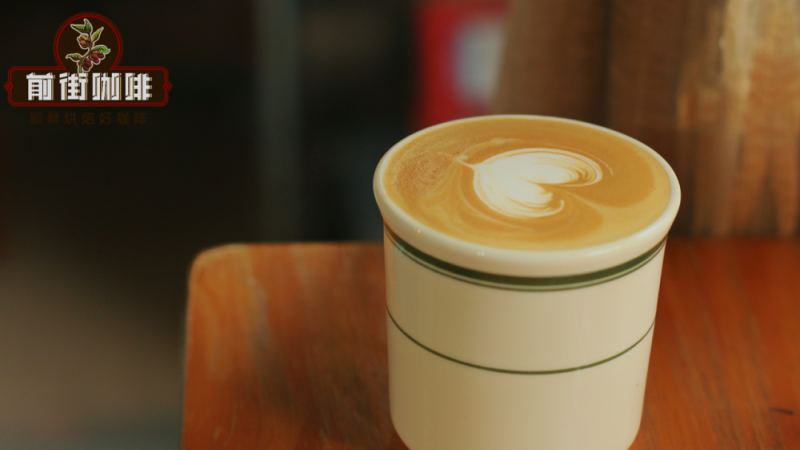
Dirty coffee vs iced latte: how do the milk coffees differ?
A latte is mostly milk with a thin cap of foam, so the milky flavor often covers the coffee. A flat white uses less milk and a thinner foam layer, giving a more prominent coffee taste, and it is usually served hot. A dirty coffee is a separate build with its own espresso-to-milk ratio and drinking method.
The espresso base also shifts between styles: New Zealand baristas tend to pour a double ristretto for a flat white, while Australian shops often use a single espresso. Milk volume, foam thickness, steaming temperature, and pouring distance all change the final cup, so the same beans can taste quite different depending on the drink.
Walking into a specialty coffee shop, the Flat White, Latte, and Dirty on the menu often make it hard to choose. They are all milk coffees, yet each has its own approach to the espresso base, milk volume, foam thickness, and drinking method. From Front Street's perspective, this article first clarifies the definitions and origins of the three, then uses a concentration and content ranking chart for an intuitive comparison, and then breaks down the production process and key details of the Latte, Flat White, and Dirty one by one, including milk steaming, pouring technique, milk temperature, and pouring distance, to help you find the cup that best suits your taste.
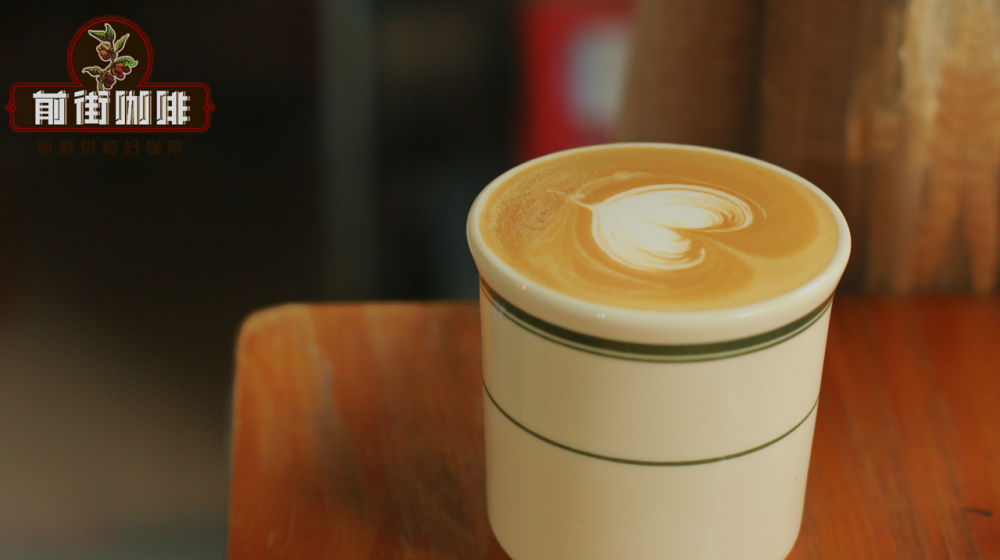
Nowadays, when browsing the espresso menu in a specialty coffee shop, milk coffees such as Flat White, Latte, and Cappuccino are almost never absent, and some shops also serve Dirty, or even the more obscure Piccolo. Faced with these options, many coffee lovers often hesitate between Flat White and Latte, or between Flat White and Dirty. In this article, Front Street will explain Flat White, Latte, and Dirty one by one, and clarify exactly how they differ.
What is a Latte?
The word "latte" comes from the Italian "latte," which literally means milk, so a Latte, taken literally, can be seen as a combination of milk and coffee. Because milk makes up a relatively high proportion of the recipe, the finished drink's milky flavor often overshadows the coffee flavor, and with only a thin layer of milk foam on top, it feels delicate and smooth on the palate.
The appropriately thick layer of milk foam on a hot Latte adds a silky texture to the entire drink; and moreover! you can also enjoy the barista's skilled latte art, making it a double delight for both taste and sight.
What is a Flat White?
Flat White is generally believed to have originated in Australia, though some insist its birthplace was actually New Zealand. Beyond the dispute over its origin, the way Flat White is made also varies from place to place. Overall, Flat White is a milk coffee with a more prominent coffee flavor, less milk, and a thinner layer of milk foam. As for the espresso base, New Zealand baristas prefer to use a Double Ristretto, while their Australian counterparts are more accustomed to using a Single Espresso.
In Australia, Flat White is usually only made hot; once you add ice cubes, the Flat White loses its soul—the ice dilutes the overall concentration. Put another way, a cold Flat White is roughly equivalent to a Latte.
What is a Dirty Coffee?
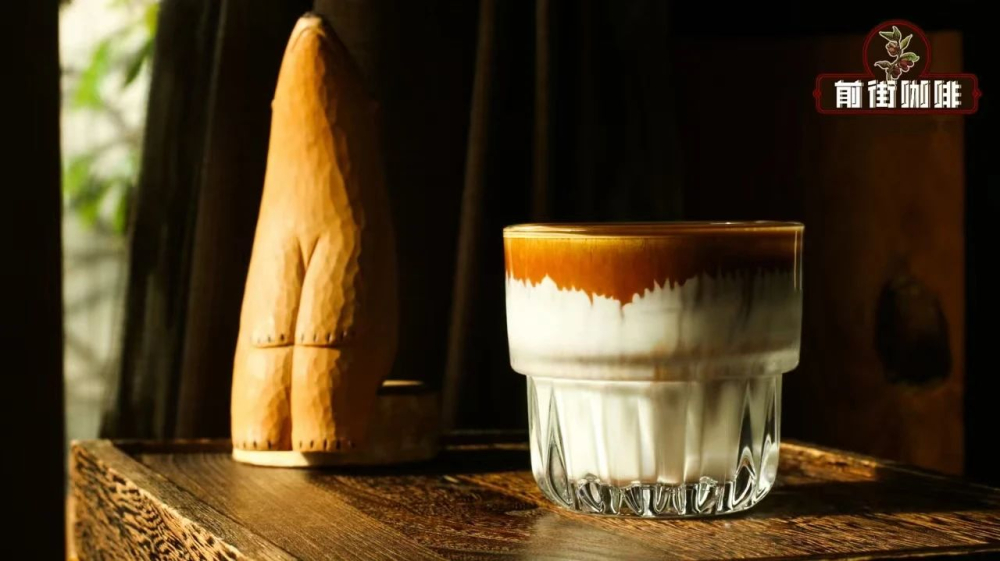
Dirty Coffee is usually served in a glass that can show the layers of liquid, and no ice cubes are added to the glass. What matters is that the espresso slowly pours into the white milk, gradually penetrating and slowly blending to form a beautiful layered effect. As time passes, the white milk is gradually "stained" by the rich Espresso, and when viewed through the glass, the entire drink looks dirty.
Dirty Coffee can only be made iced, because its biggest selling point is the tasting experience of ice and fire!
Based on the brief explanations above about Latte, Flat White, and Dirty, Front Street has roughly ranked the three by milk content, coffee content, and overall richness:
Milk content: Latte > Flat White > Dirty Coffee content: Dirty > Flat White > Latte
Overall richness: Dirty > Flat White > Latte
After reading this ranking, I believe everyone has a preliminary impression of these three coffees. So what are the differences when it comes to actually making them? Next, Front Street will teach you step by step how to make a Latte, Flat White, and Dirty.
How to make a Latte?
To make a proper Latte, the first step is to extract a proper espresso, with normal flow rate and no flaws in flavor. In the extraction stage, the number of espresso shots used varies from cafe to cafe; most shops use a double shot to make a Latte, while some use a single shot. For example, FrontStreet Coffee uses a single shot when making a Latte.
Next is steaming the milk. Whether you can steam the milk to an ideal state is one of the standards for judging whether a barista's skill is up to par. A Latte's milk foam is relatively thin and smooth and delicate on the palate, so it should not be steamed too thick. After completion, the surface of the milk should be glossy, with no obvious large or small bubbles visible, and should be fine and beautiful overall. Once the espresso is extracted and the milk is steamed properly, you can proceed to pour and finish the drink.
Pouring is also a key step in making a Latte. Only with proper pouring will it taste smooth and comfortable, without off-flavors. Only when the milk foam thickness is moderate and the coffee and milk are fully combined can you pour a clean and pleasant latte art pattern.
How to make a Flat White?
First, the Flat White. From Front Street's earlier introduction, we know that Flat White is a drink that emphasizes coffee flavor, while Latte is a coffee beverage with a large amount of milk added. The biggest feature of Flat White is that when the milk is poured into the coffee, it is not poured in a swirling, integrating manner, but instead poured from the center in a thin stream, ensuring that the crema on the surface of the espresso is not broken up, thus leaving a white circle in the middle.
The amount of espresso used in a Flat White is greater than in a Latte. When Front Street makes a Flat White, it also uses a double shot, but pours 100 ml less milk than in a Latte. The milk foam should also be thinner than in a Latte—so thin that the first sip takes in both the milk foam and the undisturbed espresso crema.
How to make a Dirty Coffee?
The milk chosen for Dirty Coffee is best whole fresh milk, which ensures both full flavor and sufficient protein to "hold up" the espresso poured in afterward. Second, the milk temperature must be low, because no ice is added in order to avoid diluting the concentration, so the milk must remain at a low temperature; otherwise, it loses the soulful mouthfeel of ice and fire.

The ratio Front Street uses to make a Dirty is 150 g milk with 40 g espresso. First take out a pre-chilled glass and confirm there is no water in it, then pour in the iced milk. Then lock on the tamped portafilter and place the glass containing the iced milk under the spout (if using a bottomless portafilter, place it directly under the outlet). The outlet should not be too far from the liquid surface; if it is too far, the coffee's own gravity will create stronger penetration and easily "blend" in. It is recommended to keep it at about 1 cm. A proper espresso has an even flow rate and will slowly flow onto the surface of the milk and "float" on the surface, then slowly sink, creating the dirty effect.
Advice for drinking Dirty: Front Street recommends downing it in one go!
The finished Dirty needs no stirring—just down it in one go, and you will find that the upper layer of hot espresso has not yet been cooled by the ice, and the lower layer of milk has not yet been "polluted." That process of changing from a rich, chocolatey hot coffee into a milky, iced, light coffee is truly wonderful beyond words.
After reading Front Street's explanation of the differences between Latte, Flat White, and Dirty, have you learned how to choose the milk coffee you want to drink?
For professional coffee knowledge exchange and more coffee bean information, please follow Coffee Workshop (WeChat public account: cafe_style)
For more specialty coffee beans, please add the private WeChat of FrontStreet Coffee, WeChat ID: kaixinguoguo0925
The above content is compiled by CoffeeHunters, a coffee news website.


