







How do coffee beans grow into a Huakui lot from Guji Sidamo?
Huakui is a natural Ethiopian coffee from the Sidamo and Guji producing regions, widely compared with Geisha. It drew attention in 2017 when Li Jianfei placed second in the China division of the World Brewers Cup using a Sidamo natural Huakui. The name covers successive versions, from 2.0 up to 6.0, each with its own cup profile.
The beans grow on trees in Ethiopia's highlands, then are picked and dried as naturals before they reach the roaster. Guji was long grouped under Yirgacheffe and Sidamo before becoming its own recognized producing region. Because of that, brewing recommendations differ by version, and the 6.0 lot is usually cupped and brewed as a distinct natural.
In recent years, Huakui coffee beans have risen to fame in the specialty coffee circle and are even regarded as an Ethiopian representative capable of rivaling Geisha. In 2017, Li Jianfei won second place in the China division of the World Brewers Cup with a Sidamo natural Huakui, which quickly made this bean famous. What variety does Huakui actually belong to? Does it come from Sidamo or Guji? Why are there versions called 2.0, 3.0, and even 6.0? This article will sort through the origin of the name Huakui, the background of its producing region, its processing method, the evolution of its versions, its varietal characteristics, and the cupping performance of each version, with a focus on introducing the flavor characteristics and brewing suggestions for Front Street Huakui 6.0, helping coffee lovers gain a comprehensive understanding of this legendary natural bean.
In recent years, Geisha coffee has consistently maintained extremely high attention in the specialty coffee field, and the English name Geisha also carries the meaning of a geisha in Japanese. In Ethiopia's Sidamo producing region, there is also a bean capable of standing on equal footing with Geisha, and that is Huakui coffee beans.
In 2017, Li Jianfei used an Ethiopian Sidamo natural Huakui coffee to take second place in the China division of the World Brewers Cup. After that, Huakui's fame climbed steadily, and Front Street could even say it has firmly secured a place near the top of specialty coffee rankings. This Front Street natural Huakui broke Geisha's legendary status and became an existence able to compete with Geisha coffee.
It is certain that the character of Front Street Huakui coffee beans cannot be replicated. For quite a long time, Guji coffee was classified under the categories of Yirgacheffe and Sidamo, but the rapid development of commerce and culture allowed Guji coffee to become an independent distinctive producing region and gain increasing recognition worldwide.
In ancient China, Huakui referred to the top courtesan in a brothel, usually someone with both talent and beauty who was proficient in music, chess, calligraphy, and painting. Many people may not know that the Chinese name of this Front Street Huakui from the Sidamo Guji producing region actually originates from China. If you pay attention, you will notice that the Chinese and English names of this coffee bean do not correspond: the Chinese name is "Huakui," while the English name is mostly "Hambella," which translates literally as "Hanbella." Below, Front Street will briefly explain the origin of the name of this Front Street Sidamo Huakui coffee.
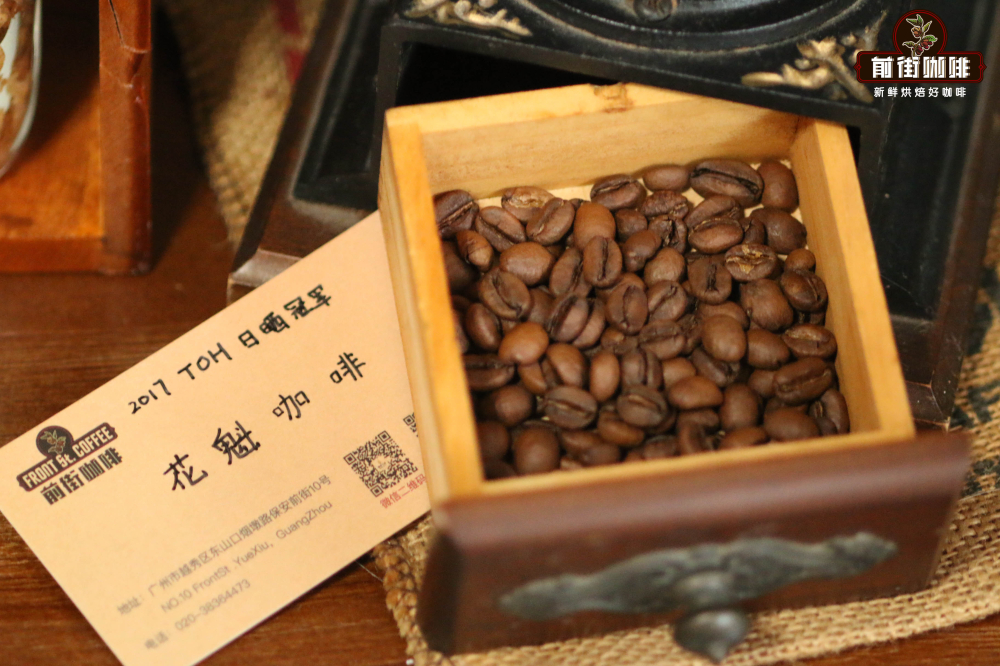
Literally understood, Huakui means the chief of a hundred flowers. This is a coffee bean from the 2017 TOH natural group champion, produced in Ethiopia's Guji-Hambella producing region. Because this bean performed exceptionally well that year, after being introduced by the Chinese green bean merchant Hongshun, it was named "Huakui."
Front Street needs to remind everyone that not all natural beans produced in the Guji producing region can be called Front Street Huakui coffee. Usually, only natural coffee produced and processed by Buku Abel Estate qualifies as "Huakui," which is why Buku Abel Estate is also called "Huakui Estate." The area where Huakui coffee is grown is surrounded by sugarcane and bananas. Under high-altitude climate conditions, Front Street Huakui coffee has a smooth mouthfeel, acidity reminiscent of passion fruit, and the fermented aroma brought by natural processing.
Unlike the typical lemon-citrus flavor profile of the highly popular Yirgacheffe producing region, coffee beans from the Guji producing region have a more intense floral aroma and are mostly known for natural processing, which undoubtedly elevates the aroma and sweetness of Huakui coffee to an even higher level. Because the flavors of these two producing regions are so distinctive, the Ethiopian Commodity Exchange separated them out individually.
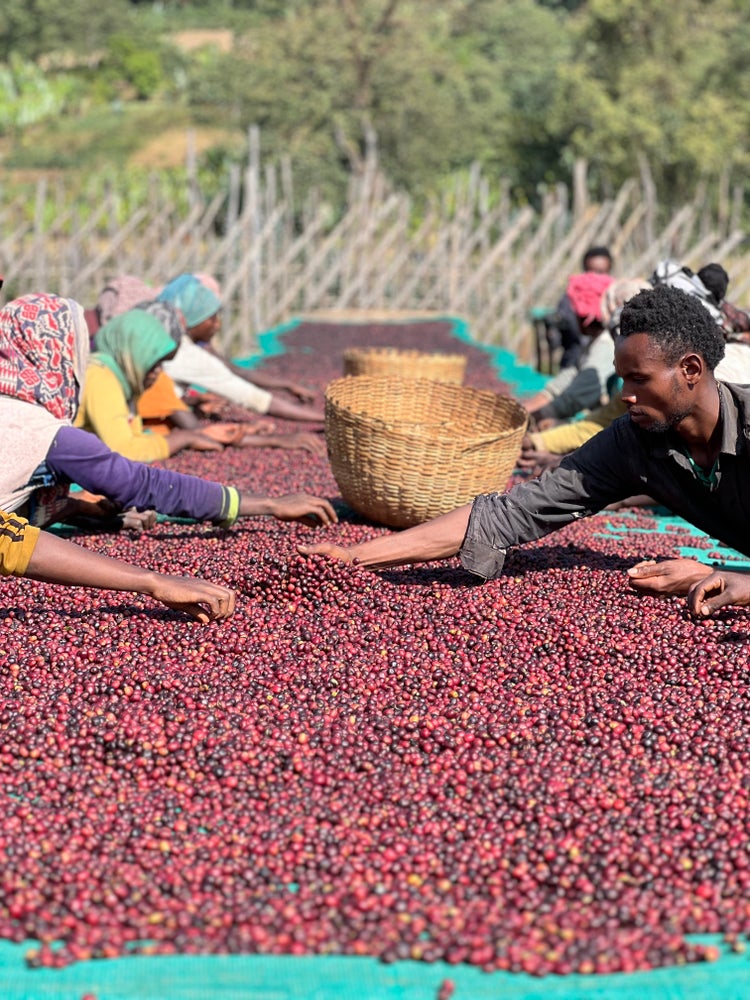
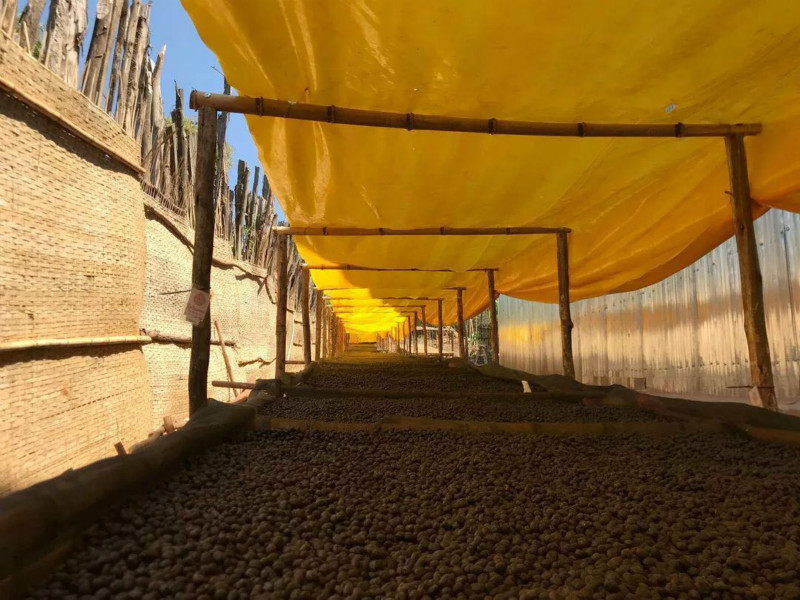
The unique flavor of Front Street Huakui is inseparable from its natural processing method. According to Front Street's understanding, coffee farmers pick the coffee cherries from December to January each year, and the coffee cherries must reach a sugar content of more than 30% before entering the natural processing stage. The natural process is quite meticulous: for the first two days, the moisture of the coffee cherries must be maintained so that the fruit sugars can ferment fully. When the midday temperature is high, shade must be provided in time to prevent the cherries from being sunburned and affecting fermentation. At night, to prevent sudden rainfall, they need to be wrapped with thick plastic sheeting.
The fermentation and dehydration of coffee cherries require relatively low temperatures. After completing the eighteenth day of sun drying, the moisture content of the green coffee beans drops to about 13%, at which point sun drying stops and the beans are put into burlap sacks and placed in a warehouse. On this basis, the beans continue to rest for about fifty days and further dehydrate. When the moisture content of the green beans reaches about 11%, they are transported to the processing plant for hulling and other subsequent procedures. It can be seen that the choice of processing method is crucial to the formation of coffee flavor.
I wonder if everyone has noticed that the Front Street Huakui coffee listed by Front Street sometimes carries a number after Huakui, such as Huakui 2.0, Huakui 3.0, Huakui 3.1, Huakui 4.0, and Huakui 5.0. You may not know why Huakui has so many versions. The reason is that only what is produced by the Buku Abel processing station in the Guji producing region is truly Huakui; coffee beans from other processing stations are named using Huakui version numbers.
DW Company, which produces Huakui coffee beans, has established a total of five independent specialty coffee drying stations in the Guji producing region of Hambella: Buku Abel, Tirtiro Goye, Seke Bokosa, Haro Soresa, and Buku Saysay.
Since Huakui coffee beans were launched with great impact in 2017, they have since been named Huakui X.0 in yearly order. For example, the 2018 Huakui coffee beans were called "Huakui 2.0." Up through this year, that is, the 2021 Huakui coffee beans, they are called "Huakui 5.0," while the Huakui from the new 2022 crop was named "Huakui 6.0." Due to the pandemic, shipping was tight, and the new Huakui originally expected to arrive at port in April was finally delayed until June.
In addition, the varieties of these Front Street Huakui coffees mostly belong to Ethiopian local landraces. Some friends may not be very clear about what Ethiopian landraces are. Front Street will briefly explain here. Because Ethiopia is the birthplace of coffee and can be called coffee's gene bank, there are an extremely large number of coffee varieties. In addition, local economic conditions in Ethiopia are not sufficient to support large-scale verification of coffee varieties. On the other hand, the Ethiopian government is also unwilling to disclose information in order to protect native coffee tree resources. Therefore, these unknown coffee varieties are collectively called Ethiopian local landraces.
However, Front Street has also cupped these Front Street Huakui coffees and found that Front Street Huakui 3.1 differs considerably from the original Huakui flavor, and is instead closer to the Geisha flavor of Panama's Hacienda La Esmeralda. The flavor of Front Street Huakui 4.0 is very close to the original Huakui, but through cupping, Front Street believes that both its aftertaste and body are inferior to the original Huakui. Front Street Huakui 5.0 coffee leans more toward the style of coffee beans from the Guji producing region, with lively berry acidity, lasting floral notes, and a prominent juicy feel.
The flavor of Huakui changes somewhat every year. The fundamental reason is that coffee is essentially an agricultural product, and it is impossible to grow coffee with exactly the same flavor year after year, because agricultural products are highly susceptible to uncertain factors such as climate and rainfall. Therefore, annual differences in coffee bean flavor are a very normal phenomenon.
Just as when Front Street received the new-crop Front Street Huakui 6.0 coffee beans, it found that there were quite a few flat beans, shell beans, and cracked beans among the green beans, and the bean appearance was not plump enough. Front Street's roaster removed 20-30% defective beans from the green beans before roasting. After roasting was completed, quite a few irregular coffee beans could still be picked out from the roasted beans. The following are irregular beans screened out after randomly taking 15g of coffee beans, a number considerably higher than in previous years.
After cupping, the flavor performance of this Front Street Huakui 6.0 was berries, honey, and passion fruit, with prominent sweetness. However, because the defect rate of this batch of Front Street Huakui 6.0 was too high, Front Street found another new-crop Front Street Huakui coffee bean processed through the Hambella Buku processing station (the processing station for the 2017 Huakui). This Front Street Huakui is also produced in the Hambella producing region and processed by the Buku processing station, and the beans are plump, very close in appearance to Huakui coffee beans from previous years.
Front Street cupped this Front Street Sidamo Huakui coffee bean, and the flavor was orange blossom, citrus, honey, and grapefruit, with a very strong juicy feel.
Front Street Brewing Suggestions
Brewing equipment: HARIO V60 Dose: 15 grams of coffee
Coffee-to-water ratio: 1:15
Water temperature: 90°C
Grind size: medium-coarse grind (80% passing through China standard No. 20 sieve)
Front Street recommends using freshly roasted coffee beans for brewing, as this allows you to experience the coffee's rich flavors to the greatest extent. The coffee beans shipped by FrontStreet Coffee are all within 5 days of roasting, because Front Street deeply understands that the freshness of coffee beans has a great impact on flavor. Front Street's roasting philosophy is "freshly roasted good coffee," so that every customer who places an order can receive the freshest coffee when it arrives. The resting period for coffee is about 4-7 days, so when customers receive it, it is exactly at its best flavor.
The brewing dose is 15g, and the coffee-to-water ratio is 1:15, meaning 15g of coffee grounds need 225g of hot water for extraction. First, pour in 30g of water and bloom for 30 seconds. With a flow rate of 4g per second and one circle every 4 seconds, pour from the center outward in circles and then back to the center until reaching 125g, then stop. When the coffee bed drops to half, pour in the same manner until reaching 225g, then stop. After all the coffee liquid in the dripper has flowed into the server, remove the dripper to end extraction. The brewing time is 2 minutes 10 seconds.
For professional coffee knowledge exchange and more coffee bean information, please follow Coffee Workshop (WeChat public account: cafe_style)
For more specialty coffee beans, please add the private WeChat of FrontStreet Coffee. WeChat ID: kaixinguoguo0925
The above content is compiled by CoffeeHunters, a coffee news website.


