







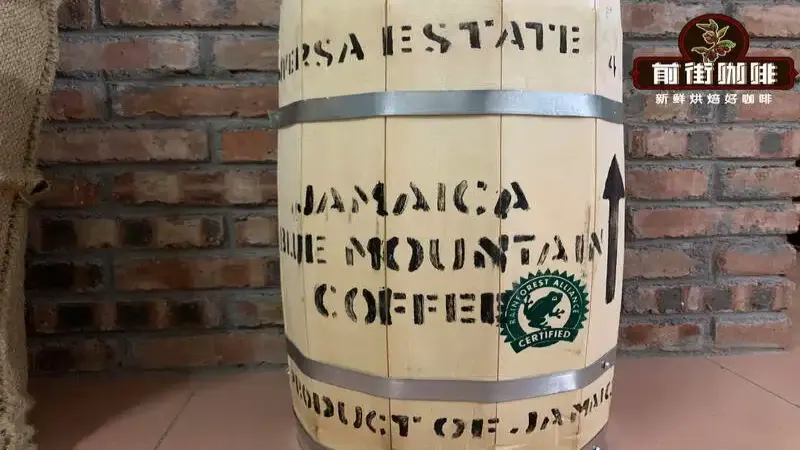
How do these two classic coffees differ in origin and cup?
Jamaica Blue Mountain and Indonesian Golden Mandheling are both chosen for full-bodied taste, but they come from different terroir and varieties. Blue Mountain grows in Jamaica's Blue Mountain range below 1,700 meters on volcanic soil, while Mandheling comes from Indonesia. The comparison covers origin, variety, green bean grading, processing, cupping flavors, and brewing performance.
Specific brewing parameters for both beans sold by Front Street Coffee are included, so enthusiasts can compare them side by side. These two classic coffees differ in processing method and cup profile, and the contrast in acidity, body, and aroma shows why golden mandheling and Blue Mountain appeal to different drinkers looking for depth rather than a light, fruity cup.
When people want to find coffee with a rich, full-bodied taste, Blue Mountain and Mandheling are often the first two names that come to mind. These two beans come from Jamaica and Indonesia respectively, each with a distinct character. Front Street Coffee conducted a complete comparison of Blue Mountain No. 1 and PWN Golden Mandheling, covering origin terroir, variety characteristics, green bean grading, processing methods, cupping flavors, and brewing performance. The article not only sorts out the geographical backgrounds and processing differences between the two places, but also includes the specific parameters and brewing suggestions for products currently sold by Front Street Coffee, making it suitable for enthusiasts who want to gain a deeper understanding of these two classic coffees.
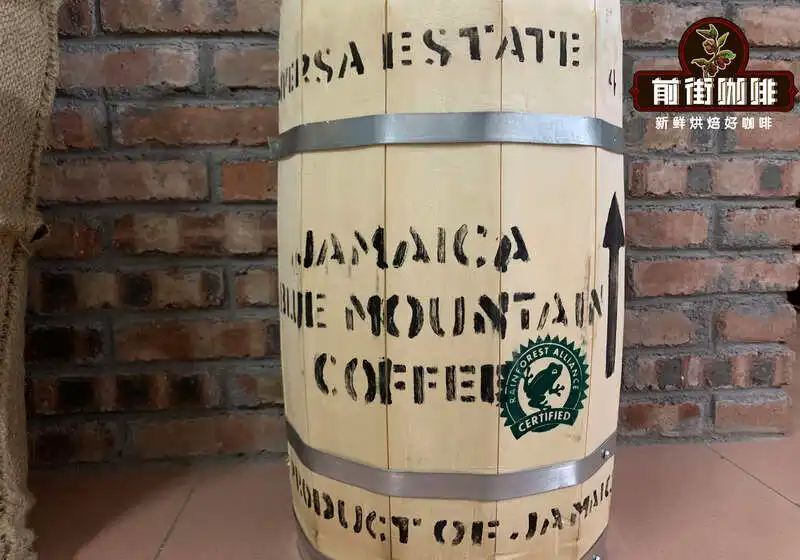
When many friends search for full-bodied coffee, Mandheling and Blue Mountain coffee always appear in the results. Even if they have never personally tasted them, these two names are already well known to everyone. Coffee enthusiasts often come to ask Front Street Coffee what exactly the difference is between Blue Mountain and Mandheling. Today, Front Street Coffee (FrontStreet Coffee) will guide everyone through getting to know these two coffee beans.
Differences in the Production Environment
Jamaica Blue Mountain Coffee
On a map, Jamaica is an island country located in the Caribbean region of North America, situated in the tropics. To its north is Cuba, and nearby is the Central American mainland. The coffee-growing belt is concentrated in the Blue Mountain Range in eastern Jamaica. It is said that on clear days, when sunlight shines on the blue sea, the color reflected by the mountains also appears blue, and this is how the name Blue Mountain came about.
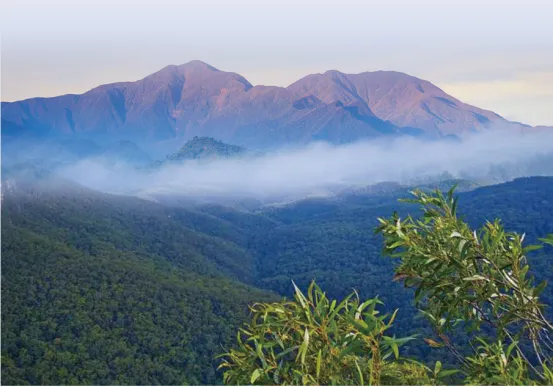
The Blue Mountain Range contains the highest mountains in the area, with the main peak at about 2,256 meters above sea level, but coffee trees are only allowed to be planted below 1,700 meters, while the area above that is designated as protected forest land. This area lies within the coffee-growing belt, with fertile volcanic soil, clean and pollution-free air, abundant rainfall throughout the year, relatively high humidity, and notable temperature differences between day and night. The soil is rich in nitrogen and phosphorus, which is very favorable for coffee growth; regular rainfall combined with the frequent cloud cover on the island protects the coffee trees from intense sunlight. It is precisely the combination of these conditions that gives Blue Mountain coffee its excellence.
Indonesian Golden Mandheling Coffee
Indonesia is a country centered on the equator and made up of numerous islands of different sizes. Its coffee production ranks third in the world, most of which is Robusta. Arabica beans are grown on Java, Sulawesi, and Sumatra, and Mandheling coffee produced in Sumatra can be called the calling card of Indonesian coffee, among which GRADE 1 is the top batch with the fewest defective beans.
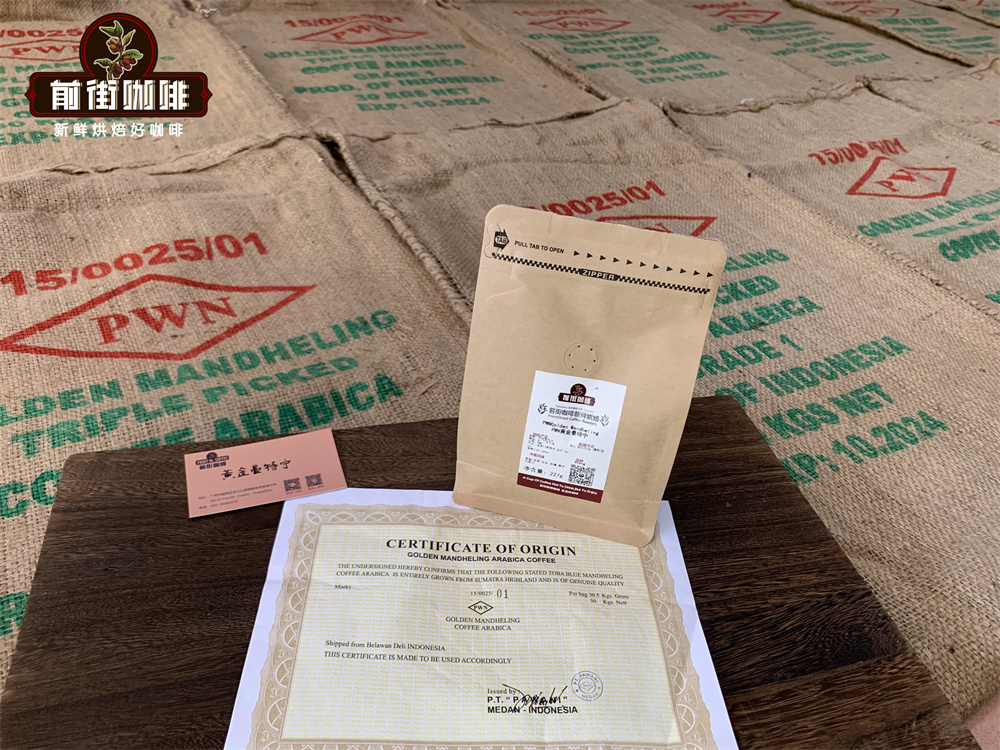
When mentioning "Golden Mandheling," we must first talk about PWN. This abbreviation often appears alongside the name Mandheling coffee. It is actually the shorthand for Pwani Coffee Company.
This company is a well-known local coffee purchaser in Indonesia, mainly buying Mandheling coffee. It has secured almost all of Indonesia's best-producing regions, so most of the beans produced by PWN are unique specialty lots. Golden Mandheling is precisely a product launched by this company. After the green beans are purchased, they undergo multiple rounds of manual hand sorting to select plump and defect-free beans. Only high-quality beans that have gone through such layers of screening can be classified as Golden Mandheling.
Differences in Processing Methods
Washed Method
Traditionally, Jamaican Blue Mountain coffee uses only the washed method to process green beans. After harvest, the fruit is first screened by floating in water, then the skin and pulp are removed and allowed to ferment for 12 to 8 hours. The fermented beans are then placed in a water tank and pushed back and forth, using friction between the beans and the force of the water to wash the coffee beans until they are smooth and clean. After washing, the green beans need to be dried until the moisture content drops to 12% to 14%. After drying is completed, they are screened once more and finally packed and stored in warehouses.
As the specialty coffee market continues to evolve, since 2020, small batches of sun-dried Blue Mountain No. 1 coffee have also appeared in the Blue Mountain production area.
Wet-Hulled Method
Indonesia has a long local rainy season, so green coffee beans cannot undergo long sun-drying as in places like Africa. As a result, the locals developed a unique processing method: the wet-hulled method.
First, the outer skin of the coffee fruit is removed by machine, impurities are rinsed away with clean water, and the beans are placed in a sealed environment to ferment for 3 hours. Then they are spread out to dry for one to two days. At this point, the moisture content of the green beans is between 30% and 50%, and the beans are in a semi-soft, semi-hard state. Afterwards, the mucilage layer and parchment are removed from the green beans, and sun-drying continues. Usually, it takes 2 to 4 days to reduce the moisture content to 12% to 13%. The drying time for the wet-hulled method is much shorter than for both the sun-dried and washed methods. Because the wet-hulled method removes the parchment layer, the green beans appear bluish-green. During processing, the beans are relatively soft and easily deformed under pressure, which is why the beans we see have a hoof-like shape.
Similarly, in recent years some individual farms in Indonesia have also begun trying sun-dried Mandheling coffee.
Green Bean Comparison
Jamaica Blue Mountain
Blue Mountain coffee belongs to the old Typica variety, with bronze-colored top leaves and oval-shaped beans. It has an elegant flavor but weak disease resistance, resulting in relatively low yields.
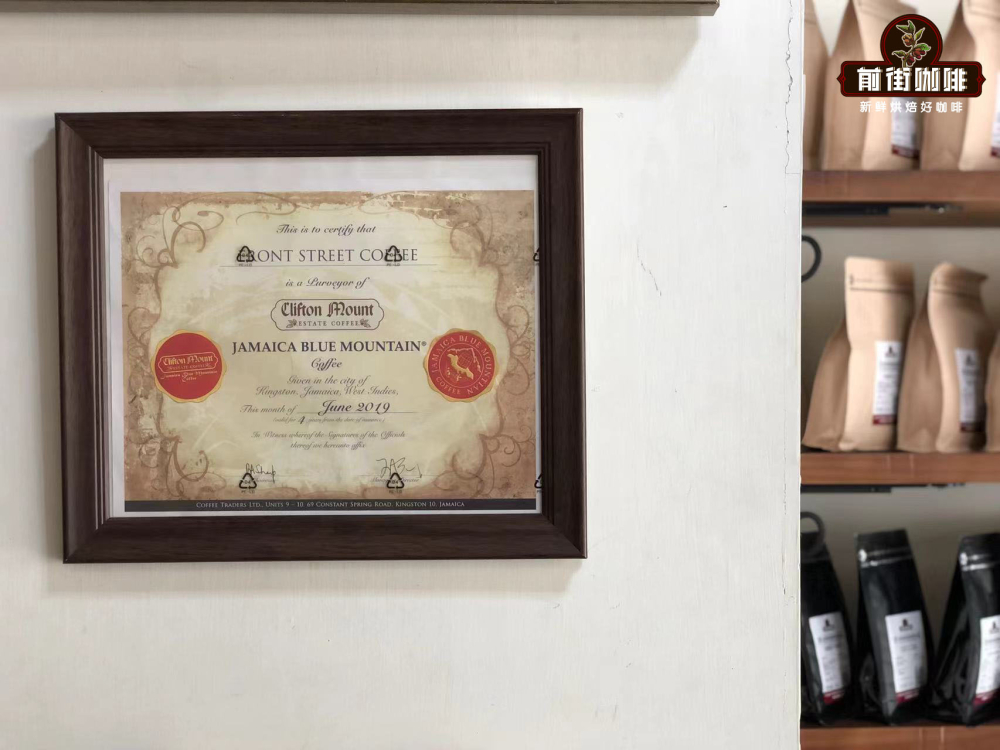
Based on altitude, Jamaica classifies coffee grown in the Blue Mountain Range into Jamaican Blue Mountain Coffee, Jamaican High Mountain Coffee, and Jamaican Coffee. Only Arabica Typica coffee produced at altitudes between 910 and 1,700 meters, including from St. Andrew, St. Mary, St. Thomas, and Portland, may be named Jamaica Blue Mountain. Coffee grown below 910 meters but above 460 meters is called Jamaican High Mountain Coffee, while coffee grown below 460 meters is Jamaican Prime Coffee.
Jamaican Blue Mountain is further divided into four grades. The basic standards for the highest-quality Blue Mountain No. 1 green beans are screen size 17 and above, defect rate below 2%, moisture content of about 13%, and so on. In appearance, they are uniformly sized, plump, blue-green green beans. In flavor, they combine pleasant acidity, sweetness, bitterness, aroma, and body.
Front Street Coffee (FrontStreet Coffee): Jamaica Blue Mountain No. 1 Coffee Beans
Region: Jamaica Blue Mountain
Altitude: 1310m
Processing Method: Washed
Variety: Typica
Flavor: Chocolate, Nuts, Cream, Cocoa
Golden Mandheling
The varieties of Golden Mandheling are Aeng and TimTim. TimTim is a hybrid of the old Arabica variety Typica and Robusta, while the Aeng series is a cross between Caturra and TimTim and still carries Robusta genes, which is what we commonly call Catimor. Both Aeng and TimTim are resistant to coffee leaf rust and coffee berry disease, and they also have high yields.
The Golden Mandheling coffee beans selected by Front Street Coffee come from Lake Tawar on Mount Gayo in the northwest direction of Sumatra Island and belong to a premium batch of Mandheling. First, the Mandheling green beans purchased by PWN are batches of screen size 18 and above, G1 grade with fewer than 3 defective beans in a 300g sample, which is the highest grade of Indonesian green beans. After that, defective beans are manually removed 3 times according to standards to ensure that the color, shape, and size of the Mandheling coffee beans are uniform and consistent. Therefore, Front Street's PWN Golden Mandheling tastes cleaner and more transparent on entry, and its body and sweetness are also more prominent.
Front Street Coffee (FrontStreet Coffee): Front Street PWN Golden Mandheling Coffee Beans
Region: Sumatra, Indonesia
Grade: G1, triple hand-sorted
Altitude: 1100m——1600m
Variety: Ateng
Processing Method: Wet-Hulled
Flavor: Nuts, Spices, Herbs, Caramel
Cupping Flavor Comparison
Jamaica Blue Mountain No. 1 Coffee
The dry aroma of Blue Mountain No. 1 is roasted peanuts, hazelnuts, melon, and chocolate; after adding water, the wet aroma presents oolong tea, caramel, honey, chocolate, and almond skin. When slurping, one can perceive bright and delicate acidity accompanied by floral notes. After entering the mouth, it carries a hint of cocoa and chocolate in the finish. The mouthfeel is clean, rich, and full-bodied, with a lasting fruity note in the tail end, overall smooth and full.
Front Street PWN Golden Mandheling Coffee Beans
The dry aroma of Golden Mandheling carries notes of baked toast, nuts, and spices. After adding water, one can smell rich caramel and dark chocolate. When slurping, it presents flavors of pine wood, herbs, and caramel. It is fragrant, rich, and full-bodied, with high sweetness, a clean taste, and a balanced, lasting finish.
Brewing Comparison
For these two coffees with extremely high body, Front Street Coffee used the same brewing parameters for comparison.
Dripper: KONO
Water Temperature: 88°C
Grind Size: 70% passing rate with No. 20 standard sieve
Coffee-to-Water Ratio: 1:15
Dose: 15g
First rinse the KONO dripper so that the filter paper fits the dripper more closely, pour out the water in the server, and at the same time add 15g of coffee grounds. After blooming with 30g of water for 30 seconds, start pouring in a circular motion from the center with a small stream of water. Begin segmenting at 125g. Wait until the coffee bed drops to the halfway point of the dripper, then pour the second stage in the same manner until 225g. After all dripping is completed, remove the dripper.
After grinding Blue Mountain No. 1, the aroma is already very rich. During brewing, it carries the sweet aroma of caramel. On entry, there is the richness of nuts and chocolate, with moderate acidity and sweetness, a clean mouthfeel, and a lasting aftertaste. Front Street PWN Golden Mandheling coffee, on the other hand, shows obvious flavors of nuts, chocolate, spices, and herbs on entry, with a long-lasting caramel sweetness in the finish.
For professional coffee knowledge exchange and more coffee bean information, please follow Coffee Workshop (WeChat public account: cafe_style)
For more specialty coffee beans, please add the private WeChat of Front Street Coffee (FrontStreet Coffee), WeChat ID: qjcoffeex
The above content is compiled by CoffeeHunters, a coffee news website.


