







What do Ethiopian coffee grades such as G1 and G3 mean?
Ethiopian coffee grades such as G1, G2, and G3 describe defect counts and cup quality under the ECX system, and they are key information when buying beans. Yirgacheffe G1 generally shows fewer defects and cleaner cup performance than G3, while both can come from the same regions of Yirgacheffe, Sidamo, or Harar.
The guide also lays out Ethiopia's cultivation models, native varieties, and the two ethiopian coffee processing methods, natural and washed, along with flavor profiles for nine regions. Roast curves and V60 brewing parameters for a natural Huakui lot are included, giving readers a full picture of how coffee grades translate into price and flavor in the cup.
Ethiopia is the birthplace of Arabica coffee and one of the most prominent producing countries in the specialty coffee world. Regions such as Yirgacheffe, Sidamo, and Harar each have their own distinctive character, while grade designations like G1, G2, and G3 are key information that is impossible to avoid when buying Ethiopian beans. From the perspective of Front Street Coffee, this article systematically lays out Ethiopia's cultivation models, native varieties, the two processing methods of natural and washed, the flavor profiles of the nine major regions, and the ECX-led grading system. The article will also focus on analyzing the actual differences between Yirgacheffe G1 and G3 in defect rate, bean appearance, and cupping performance, and will include the roast curve and V60 brewing parameters for Front Street Coffee's Huakui natural beans, helping readers gain a comprehensive understanding of the quality logic of Ethiopian coffee.
For professional specialty coffee knowledge and coffee bean information, please follow Front Street Coffee.
Ethiopia is an important producing country for specialty coffee and also the birthplace of Arabica coffee, and it has always attracted the attention of coffee lovers around the world. When people mention Ethiopia, most first think of the two well-known regions of Yirgacheffe and Sidamo. However, Ethiopia's coffee landscape extends far beyond this, and today Front Street Coffee will guide everyone into a deeper understanding of the full picture of coffee cultivation in this major specialty coffee country.
Ethiopia has one notable difference from other coffee-producing countries: it has never undergone colonial cultural transformation, and to this day it still maintains the most authentic and pure attitude and cultural tradition toward coffee. Coffee's place in Ethiopia is like that of tea in China—something integrated into daily life. Ethiopian coffee ceremonies usually involve drinking three rounds: the first is called Abol, during which an elder says some words of blessing; the second is called Tona, when everyone begins to converse freely; the third is called Beraka, meaning the ceremony ends in joy. This kind of coffee ceremony is essentially meant to bring people closer together, similar to the scene in China when hosting guests or discussing business by first setting out a tea set.
[Ethiopian Coffee Cultivation]
According to different cultivation methods, Ethiopian coffee can be divided into three types: Forest or semi-forest coffee, Garden coffee, and Plantation coffee. About 60% of the coffee falls under forest or semi-forest coffee; this type of wild coffee forest uses no pesticides at all, relying instead on biological methods to control pests.
About 35% of the coffee falls under garden coffee. This kind of coffee garden uses multi-layered cultivation, with coffee trees on the lower level and obtaining suitable growing conditions through the shade of other crops. Fertilizer mainly comes from fallen leaves, dry grass, and animal manure.
About 5% of the coffee falls under plantation coffee. This is a modern cultivation method; the coffee also grows in stands, but new varieties are used and they are planted in alternating rows with other shade trees.
[Ethiopian Coffee Varieties]
Ethiopia has nearly 2,000 recorded coffee varieties, of which 1,927 are native varieties and 128 are introduced foreign varieties. Judging by appearance alone, Ethiopian coffee varieties are like a grand garden, with long, short, thin, and plump ones all available.
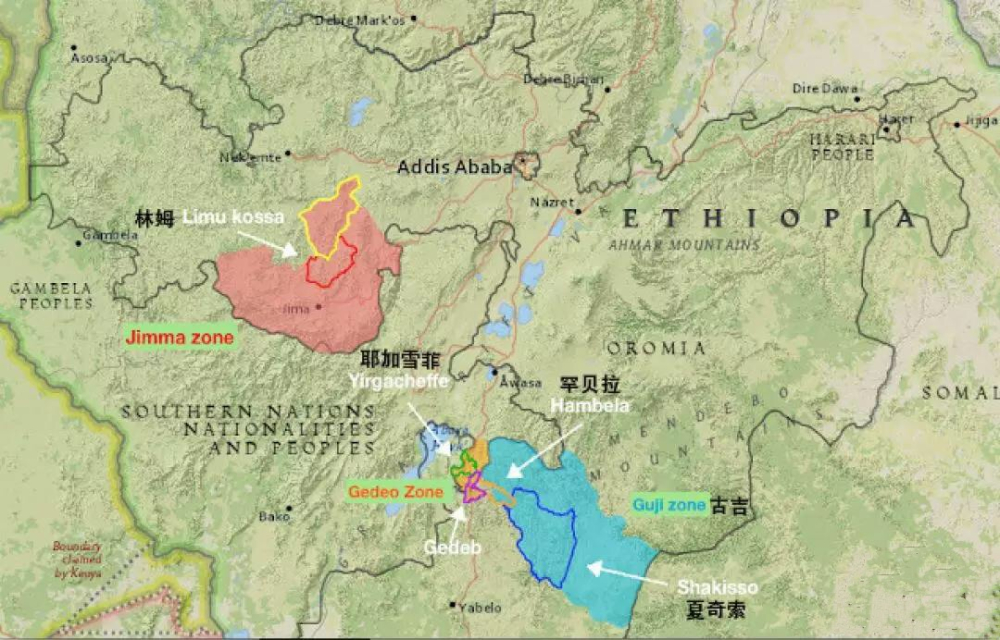
Long-shaped beans are distributed across coffee-growing areas throughout the country. Based on actual observed proportions, the western Jimma region, including Limmu and Kaffa, has more long-shaped varieties; while in Sidama or Yirgacheffe, the proportion of long-shaped beans is relatively smaller.
Small-bean varieties are rounder in appearance and very small in size, mostly between 14 and 15 screen sizes. This variety is surely the most familiar to everyone, and it is often seen in Sidama and Yirgacheffe. Compared with other areas, Sidama and Yirgacheffe as well as the surrounding Arsi and Guji have more cultivation of these small-bean native varieties.
[Ethiopian Coffee Processing Methods]
Ethiopia has two main processing methods: the natural process and the washed process.
Natural Process
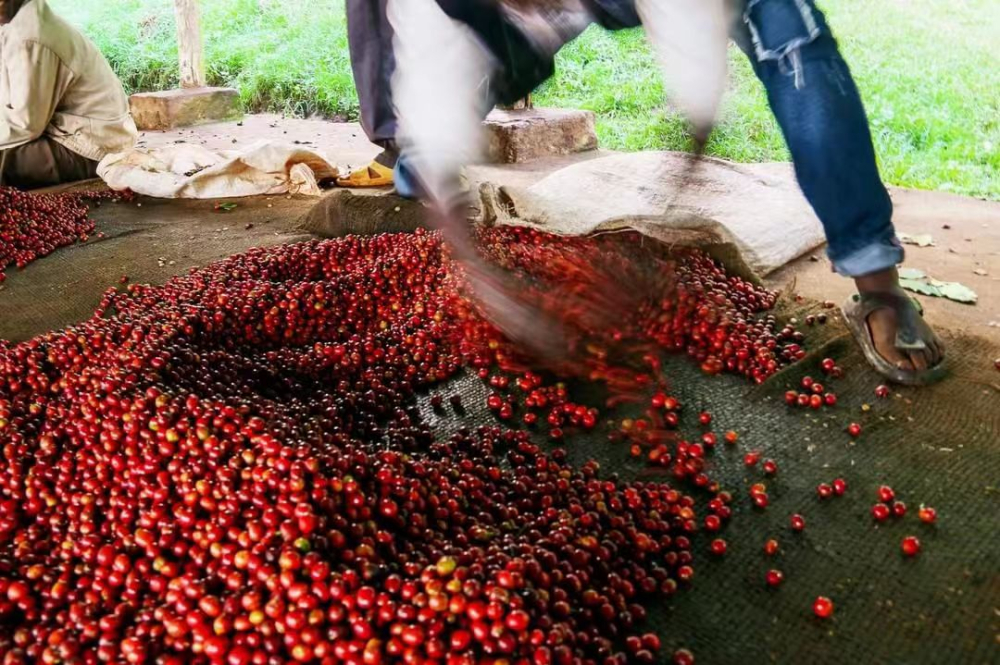
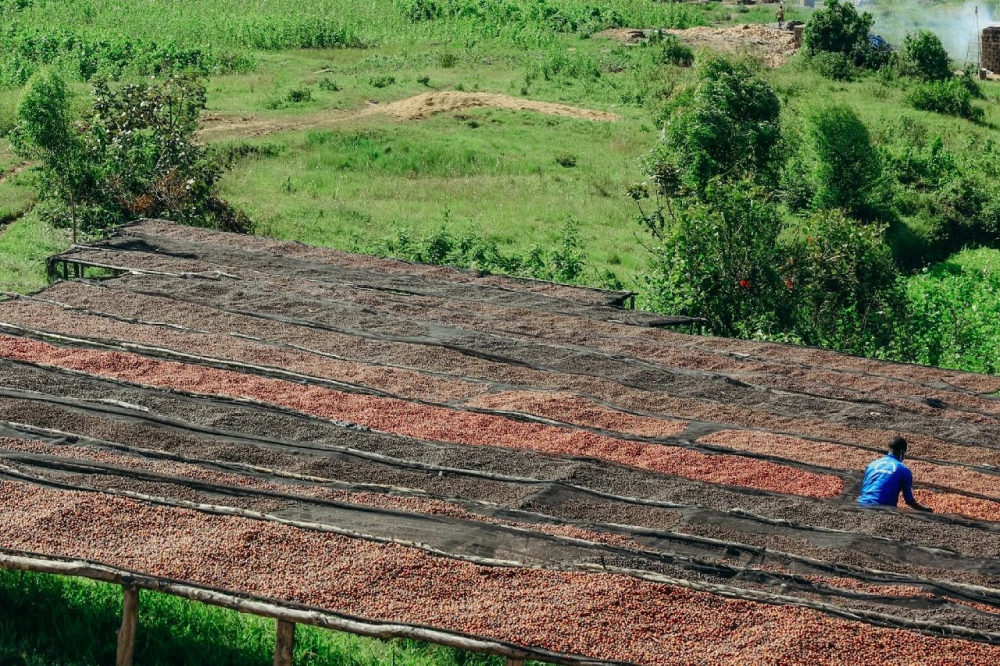
This is the oldest and most primitive way of processing coffee beans. The harvested coffee cherries are placed on drying beds, and some are even dried directly by the roadside, exposed to direct sunlight (about 27 to 30 days are needed), until the moisture content is reduced from 60% to only about 12%, at which point it is complete.
Characteristics: lower acidity, obvious sweetness, high body, rich layering, slightly lower cleanliness.
Washed Process
The washed process removes the skin, pulp, and mucilage, then ferments in a tank and dries in the sun. The washed process flow is: selecting beans—removing pulp—fermentation—washing—drying—hulling—sorting and grading.
Washing and fermentation are used to remove the skin, pulp, and mucilage. Farms using the washed method must build washing tanks and be able to introduce a continuous supply of fresh water. During processing, the fermented beans are placed in the tank and moved back and forth; through friction between the beans and the force of flowing water, the coffee beans are washed until smooth and clean. After washing, the coffee beans are still wrapped in the parchment layer and have a moisture content of 50%, so they must be dried to bring the moisture content down to 12%; otherwise, fermentation will continue and lead to mold and spoilage.
Characteristics: obvious acidity, good cleanliness, medium body, high consistency.
[Ethiopian Coffee Regions]
Ethiopia has nine major coffee regions: Sidamo, Yirgacheffe, Harar, Jimma, Limu, Illubabor, Gimbi (Lekempti), Tepi, and Bebeka. Among these nine major regions, the best known are Yirgacheffe, Sidamo, and Harar. Under the major regions there are also smaller regions, such as Kochere and Aricha in the Yirgacheffe region, and below that even smaller village-level regions. Coffee estates are not very prominent in Ethiopia; coffee is usually divided by major region, smaller region, village-level region, and washing station.
Yirgacheffe: altitude 1,800–2,000 meters | garden coffee system |
Yirgacheffe is attached to the Sidamo region. Because of its unique flavor and rich, complex fruity aroma, it became internationally famous almost overnight, causing Ethiopian coffee farmers to compete in taking pride in their own coffee having Yirgacheffe flavor, and so it was separated out as its own region. This place has been a wetland since ancient times; the ancient word "Yirga" means "settle down," and "Cheffe" means "wetland." In addition to the town of Yirgacheffe itself, it also includes the surrounding sub-regions of Wenago, Kochere, Gelena, and Abaya. Therefore, in the new Yirgacheffe grading system, Yirgacheffe A, Wenago A, Kochere A, and Gelena/Abaya A are more expensive than their same-named B counterparts.
Yirgacheffe Red Cherry Natural G1 Country: Ethiopia
Region: Yirgacheffe
Washing Station: Aratland
Altitude: 2,300 meters
Variety: local native varieties
Process: natural process
Grade: G1
Flavor description: lemon, licorice, citrus, berries, sweet orange; overall sweetness is relatively high, with a caramel and cream finish in the aftertaste, and a black tea aroma in the lingering finish.
Sidamo: altitude 1,400–2,200 meters | garden coffee system |
Sidamo is located on the southernmost Ethiopian highlands, at an altitude between 4,600 and 7,200 feet, directly south of the capital. It usually has obvious sweetness and is also more favored by most people. Its flavor is similar to Yirgacheffe; finely washed or natural Sidamo also has floral and orange notes, and its status is no less than Yirgacheffe. The varieties in these two regions are similar, with medium-sized beans, but there are also short small-bean varieties, which farmers often sell separately.
Ethiopia Sidamo Huakui
Region: Guji Hambela
Washing Station: Buku Able
Altitude: 2,350 meters
Variety: native varieties
Process: natural
Flavor description: rose, cream strawberry, citrus, passion fruit, oolong tea
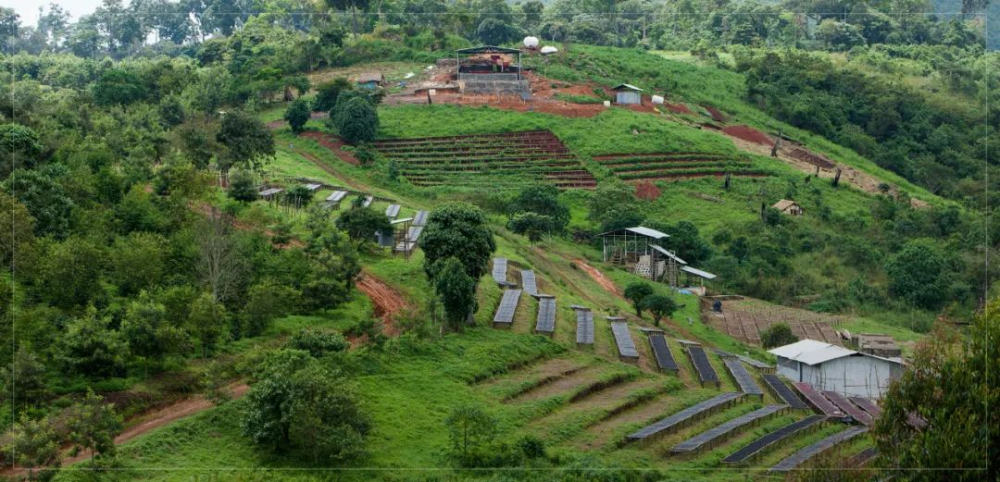
Harar: altitude 1,500–2,100 meters | garden coffee system |
Located in the eastern highlands of Ethiopia, it is also an ancient trading center and an important Islamic holy site (at its cultural peak in the 15th and 16th centuries), connecting East Africa and the Arabian Peninsula. Its geographical location and importance as an economic and cultural center gave it a prominent place in the earliest coffee transport and trade, imbuing its coffee with a sense of historical solemnity. Harar's coffee trees grow at around 1,500–2,100 meters above sea level, and before the 1st century they were still wild on mountain slopes. During roasting, a strong chocolate smell appears, and the cup is wild, with medium acidity and a rich texture—a very typical mocha flavor. Good Harar beans have jasmine floral notes and a finish reminiscent of fermented wine aromas. Today Harar still processes green beans using the traditional natural method, but it is generally hard for us to drink Harar because it has long been bought up by Arab buyers from Gulf countries.
Djimmah: altitude 1,340–1,830 meters | forest-semi-forest coffee system |
Jimma coffee grows in the Illubabor and Kaffa regions of Ethiopia, at altitudes between 1,340 and 1,830 meters, producing and exporting about 60,000 tons of coffee each year. Djimmah is also called Jimma Coffee. Jimma's coffee often grows at altitudes between 1,340 and 1,830 meters; this height provides an ideal climate for coffee growing, and the plants can also avoid direct midday sunlight through the protection of forest trees, which also helps maintain soil moisture content. The town of Jimma is actually quite small, but Jimma coffee accounts for most of Ethiopia's coffee exports—almost 50%.
Limu: altitude 1,850–1,900 meters | forest/semi-forest coffee system |
In Limu, local smallholder coffee farmers cultivate using 100% organic methods. The soil is Vertisols, and the growing altitude is between 1,850 and 1,900 meters. Limu has lower production and is mainly exported to European and American markets. In the past it was not easy to buy domestically, but it is very popular in Europe and America, with fame second only to Yirgacheffe. Limu's flavor profile differs from Sidamo and Yirgacheffe: its body is thinner, and its floral and citrus notes are also inferior to Yirga and Sidamo, but it has an additional grassy note and cocoa note, as well as a sandalwood flavor.
Illubabor (major commercial coffee region): altitude 1,350–1,850 | forest/semi-forest coffee system |
This region is located in western Ethiopia, bordering Sudan, and is the westernmost producing region. Its coffee gene diversity is second only to the Kaffa forest, and the beans are noticeably larger than those of Yirgacheffe and Sidamo. The fruity acidity is relatively low, the viscosity is good, and the flavor is balanced. Coffee from here is mostly shipped to Jimma for blending and is rarely sold separately.
Gimbi, Lekempti (major commercial coffee region): altitude 1,500–1,800 | forest/semi-forest coffee system |
This region has both natural and washed beans. The beans resemble Harar's long beans, and there are also a few specialty-grade lots that are quite popular in Europe and America. Most are hailed as the poor man's Harar; the fruity acidity and fruitiness are superior to Illubabor, and the flavor is bright.
Tepi, Bebeka (major commercial coffee region): altitude 500–1,900 meters | garden/forest/semi-forest coffee system |
The two producing regions are very close; Tepi is north of Bebeka. There are coffee plantations under corporate management, and in recent years garden systems have been promoted to increase farmers' income, with annual output of about 3,000 tons. Both places have wild coffee, output is not high, and the flavor is completely different from Harar and Yirgacheffe. Low fruity acidity is the biggest characteristic, making it suitable for blend beans; both natural and washed are available.
Lake Tana area (alternative producing region): altitude 1,840 meters | forest system |
Monastery coffee; the surrounding forest coffee has extremely low annual output, less than 10 tons, so it actually cannot be called a producing region. The Orthodox monasteries, churches, religious murals, and myths clustered around the lake area have created the world's most "divine-tasting" coffee. European monks pioneered the local coffee-growing industry, which was later operated by coffee communities or cooperatives in villages around the town. There are no dedicated plantations here; coffee trees are naturally scattered in forests and gardens. During harvest season, the Ethiopian coffee trading company goes to the town to purchase the coffee beans collected by farmers.
You often see G1, G2, and G3 written on packages of Ethiopian beans. What do these represent? And what differences are there between them? Front Street Coffee will now guide everyone in properly understanding Ethiopian coffee!
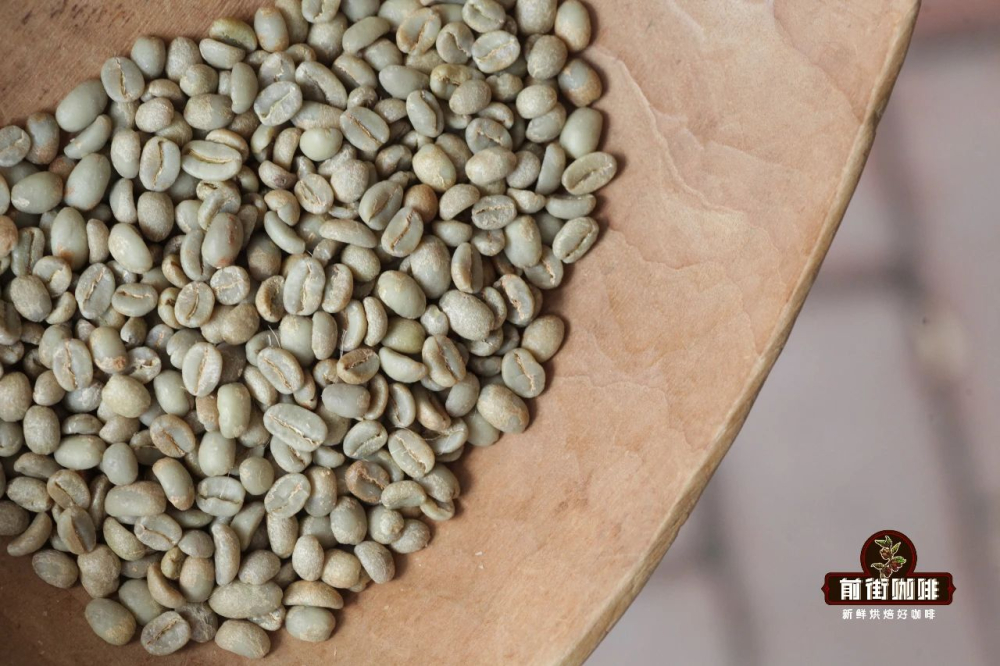
Grading of Ethiopian Coffee Beans
First, under the Ethiopian Ministry of Agriculture there is a department called CLU (Cupping and Liquoring Unit), specifically responsible for approving the quality of exported coffee, including the very important duty of defining grades. CLU existed before ECX appeared. Before ECX appeared, for washed Ethiopian coffee, export grades were divided into G1 and G2; for natural coffee, export grades were G3, G4, and G5, meaning the highest grade for natural coffee was G3.
After ECX appeared, grading was redefined. There was no difference in the names for washed grading, but for natural coffee, G1 appeared for the first time. This is also why Ethiopian natural coffee is now seen on the market as G1 and G2, while G3 is gradually becoming less common. Ethiopia's old grading method at the time simply graded by defect count. The highest grade for washed beans was Grade 1 - G1, and the highest grade for natural beans was Grade 3 - G3. The current grading method was established by ECX, using a combined score of physical attribute characteristics and cup flavor characteristics to determine the grade.
All coffee is defined according to processing method, natural or washed, into three types:
a. Specialty (washed & unwashed): few defects, high cup flavor quality;
b. Commercial (washed & unwashed): does not reach specialty grade, but is higher than the domestic consumption grade;
c. Local / Domestic (washed & unwashed): coffee with many defects (unripe beans), and relatively poorer flavor due to being out of season or poorly stored.
Among these, Specialty and Commercial are for export to international markets, while Local is coffee sold in the domestic market.
The specific ECX grading and scoring standards are as follows:
A. Scoring definition for the washed process
1. Physical characteristics account for 40%: defect count (20%), appearance size (10%), color (5%), odor (5%)
2. Cupping quality accounts for 60%: cleanliness (15%), acidity (15%), mouthfeel (15%), flavor characteristics (15%)
B. Scoring definition for the natural process
1. Physical characteristics account for 40%: defect count (30%), odor (10%)
2. Cupping quality accounts for 60%: cleanliness (15%), acidity (15%), mouthfeel (15%), flavor characteristics (15%)
C. Overall summary:
1. All coffee is first classified by processing method into: natural and washed;
2. Each is scored according to physical characteristics and basic cup quality into 9 grades from G1 to G9;
3. Among them, G1-G3 are cupped again according to SCAA standards, with their flavor attributes evaluated in more detail; G1 and G2 scoring no less than 85 are rated as Q1;
4. Among them, G1, G2, and G3 scoring between 80 and 85 are rated as Q2, and all G1, G2, and G3 scoring below 80 are rated as G3;
5. Q1 and Q2 are classified as Specialty Grade for export. G4 - G9 remain unchanged in their original grades and, together with G3, are classified as Commercial Grade for export.
Washed Grade 1 means there are 0–3 defective beans per 300 grams of green beans; Grade 2 means 4–12 defective beans per 300 grams. Of course, in reality the standards for defective beans certainly differ between sellers and buyers (otherwise why would we be able to pick out so many defective beans?), but the comparison of defect rates is still very easy to distinguish. G1 clearly has fewer defective beans than G2. This means that, excluding the influence of specific flavor and roast level, Ethiopian G1 coffee beans are of higher quality and score higher than G2 coffee beans, at least in terms of defective flavors they can be clearly distinguished.
What is the difference between G1 and G3?
Now that we know G1 and G2 are Ethiopian coffee grades, what differences are there in flavor? Front Street Coffee selected Sidamo natural G1 and G3 for comparison! From the beans, we can see that G1 overall looks much better than G3, appearing more uniform, with relatively fewer defective beans. After cupping comparison, Front Street Coffee found that natural Sidamo G1 and G3 both perform fairly well in sweetness and acidity, but G1 is clearer and brighter in flavor. Front Street Coffee feels that, in fact, if you are not drinking them side by side for comparison, the difference between the two is not that great. G1 and G3 mainly differ in defect rate, which is more obvious from the appearance of the beans, and G1 beans also show fewer defective flavors in the cup.
Taking Front Street Ethiopia Sidamo Huakui as an example
Region: Guji Hambela
Washing Station: Buku Able
Altitude: 2,350 meters
Variety: Ethiopian native varieties
Process: natural
Flavor: rose, cream strawberry, citrus, passion fruit, oolong tea
Front Street Coffee Roast Analysis
The natural-process Yirgacheffe is sweet and delicious. In order to highlight Yirga's floral and citrus flavors, Front Street adopted a light roast. Also, because Ethiopian beans vary in size, temperature rise must be controlled especially carefully.
Charge at a drum temperature of 175°C, with heat at 120 and airflow opened to 3; the turning point is at 1'32"; when the drum temperature reaches 115°C, open airflow to 4 while keeping the heat unchanged; when the drum temperature reaches 151.7°C, the bean surface turns yellow, the grassy smell completely disappears, and the drying phase begins, with airflow opened to 5; at 8'36", ugly wrinkles and dark spots appear on the bean surface, and the toast smell clearly turns into coffee aroma, which can be defined as the prelude to first crack. At this time, listen carefully for the sound of first crack. First crack begins at 9'50", airflow is opened to 5, development after first crack is 1'40", and the beans are dropped at 196°C.
Front Street Coffee Brewing Parameters
In order to fully extract the rich layering of Huakui coffee beans, Front Street uses a higher water temperature and a finer grind for extraction, but to avoid over-extraction caused by high temperature, it uses a faster-flow dripper, such as the V60. The V60 dripper is a 60-degree cone, and the conical angle allows the coffee grounds to gather centrally. When pouring, the water flow can also automatically converge toward the center of the dripper, ensuring sufficient contact time between water and coffee grounds, thereby extracting a suitable coffee liquid. In addition, the ribs on the inner wall of the V60 extend in a clockwise spiral from the bottom to the top, leaving enough space between the filter paper and the dripper so that water flow is smooth; combined with the large hole at the bottom, the flow rate is relatively faster than that of many drippers.
The specific brewing parameters used by Front Street Dripper: V60 dripper Water temperature: 90°C Water-to-coffee ratio: 1:15 Dose: 15 g Grind: fine grind for pour-over (80% passing a Chinese No. 20 standard sieve)
Front Street uses staged extraction. The amount of water for blooming is twice the weight of the coffee grounds, that is, 30 grams of water for a 30-second bloom. Then pour in a small stream in circles to 125 grams and pause. When the water level drops and is about to expose the coffee bed, continue pouring to 225 grams and stop. The total extraction time (including bloom time) is 2 minutes.
Flavor description: citrus acidity, full berry juice sensation, lemon black tea-like tea texture, lasting sweetness.
The above content is compiled by CoffeeHunters, a coffee news website.


