








How Does Milk Choice Affect Coffee Blending?
Coffee blending with milk is not simply espresso plus milk. The fat content of the milk, its sterilization process, the roast level of the beans and the blend ratio all push the final flavor in different directions. A latte, cappuccino, mocha or flat white can taste markedly different from the same espresso base depending on those choices.
Milk and coffee first met around 1660, when the Dutch governor of Batavia, Nieuhof, added milk to coffee after seeing British aristocrats soften bitter tea with it. That record sits behind today's italian latte and the wider milk coffee family. Testing several milk types against one espresso blend shows which pairing suits a given taste.
The combination of milk and coffee has a long history. From the accidental experiment of a Dutch governor in the 17th century to today's flourishing varieties like Italian latte and cappuccino, milk coffee has long become an indispensable presence on café menus. But a delicious latte is by no means as simple as espresso plus milk—the fat content of the milk, the sterilization process, the roast level of the coffee beans, and the blending approach all directly influence the final flavor direction. This article will sort out the historical thread of coffee with milk, and using the latte as an example, deeply analyze the specific effects of different milk types and espresso beans on the taste of milk coffee. At the same time, it shares Front Street Coffee's experience in bean selection and milk usage for milk coffee production, helping coffee lovers find the pairing solution that best suits their own taste.

As early as the 17th century, people had already begun adding milk to coffee. As it has developed to this day, the milk coffee family has grown ever larger. Taking the well-known brand Front Street Coffee as an example, its milk coffee product line covers multiple choices such as latte, cappuccino, mocha, and flat white. Facing the dazzling array of dairy products on the market, which one paired with coffee can present the best flavor?
The Historical Origins of Coffee with Milk
The first encounter between coffee and milk can be traced back about 360 years. It is said that around 1660, the Dutch governor of Batavia in Indonesia, Nieuhof, was the first to try mixing coffee with milk. His inspiration came from the tea-drinking habits of British aristocrats—in the 17th century, tea had to be transported from the East over a long distance to Britain, was expensive, and only royalty and nobility could enjoy it. At the time, aristocrats found the tea broth bitter and hard to drink, so they added a little milk to soften the taste.
Nieuhof noticed that tea and coffee both had a similar bitterness when drunk, so he imitated the practice of adding milk and mixed milk into coffee to harmonize the flavor. This act is regarded as the first record in human history of combining coffee with milk, and it is also the oldest related legend that has been passed down to this day.
French-Style Milk Coffee
This way of drinking milk with coffee quickly won the affection of the French after being introduced to France by the Dutch in Indonesia. The French prefer dark-roasted coffee beans, with a roast level second only to Italian roast. One can imagine how intense the burnt bitterness of a cup of pure black coffee would be.
French-style milk coffee uses a 1:1 ratio of coffee to milk. The authentic method is to hold a milk jug in one hand and a coffee pot in the other, pouring both liquids into the cup at the same time so that the coffee and milk fully blend in the collision.
Italian Latte
At the beginning of the 20th century, Italians invented the semi-automatic steam-pressure coffee machine. They added steam-frothed milk to extracted espresso, and thus the cappuccino that Italians loved was born. At that time, there was no distinction between cappuccino and latte; the term "caffe latte" originally meant a mixture of coffee (caffe) and milk (latte).
The advent of the espresso machine made the ways of combining coffee and milk more diverse. And with different milk added, the taste of the finished product also differs noticeably. Taking latte as an example, Front Street's latte recipe is 40 grams of espresso liquid paired with 260 grams of steamed milk, using whole fresh milk. Whole fresh milk is usually treated with pasteurization, which can retain more fat and nutrients, making it smoother and richer on the palate.
The method for making iced latte may seem simple, and it can be found on the menu of almost every coffee bean brand, but the taste of iced latte from different shops has never been completely the same. One of the most critical reasons is that the milk and coffee beans and other ingredients used are all different.
The flavor of coffee beans can very directly steer the taste direction of iced latte. Most espresso blend coffee beans use medium-dark roasting. For example, Front Street Classic Blend, Front Street Specialty Blend, Front Street Commercial Blend, and Front Street Basic Blend can all give iced latte a rich nutty, chocolatey, and relatively heavy coffee flavor. Of course, a small number of coffee beans can also highlight the sweetness and richness of the milk in iced latte.
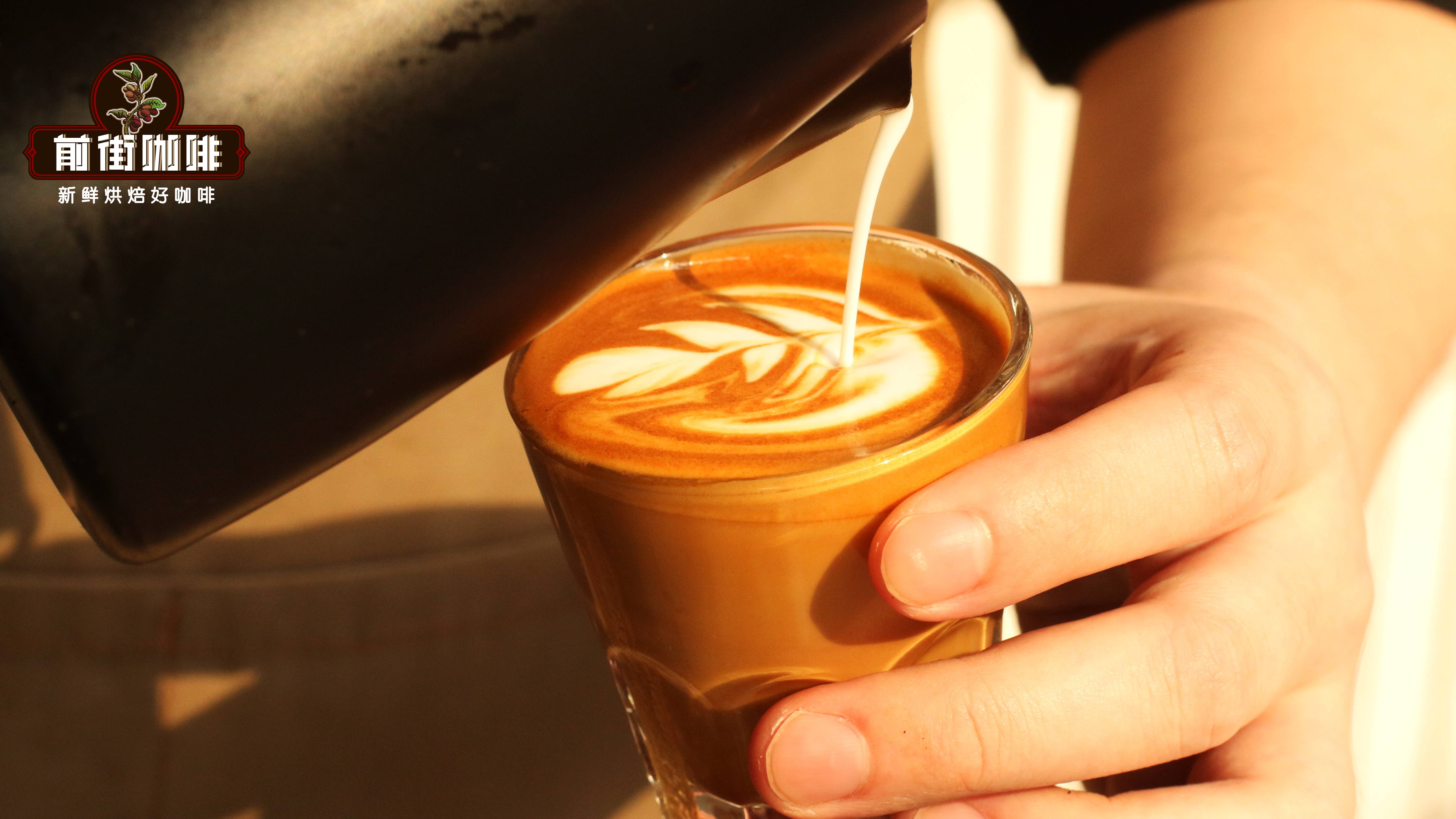
The Sunflower Warm Sun Blend coffee beans selected by Front Street stores are precisely intended to express rich caramel chocolate and vanilla cream flavors. This shows that the choice of espresso beans has a decisive influence on the taste of latte.
The choice of milk is equally crucial. For whole fresh milk alone, there are more than ten common varieties on the market. Among these milks, some have a heavy milky taste, while others are thin and watery. The standard for choosing milk is not simply to pursue richness and a prominent milky flavor, but to find a pairing that fits well with coffee. Too heavy a milky taste will mask part of the coffee's own flavor, while milk with an obvious watery quality will make the latte bland.
The above content is compiled by CoffeeHunters, a coffee news website.


