







How Do Yirgacheffe and Huakui Coffee Trees Differ in the Cup?
Both beans come from Ethiopia, yet they taste very different. Washed Yirgacheffe shows lemon, orange, mandarin, grapefruit, white floral and green tea notes with bright citrus acidity. Natural Sidamo Huakui brings passion fruit, rose, strawberry jam, berry sweetness, peach juice and a black tea finish, giving a fuller, juicier body.
Sidamo sits in southern Ethiopia between the Arsi and Bale zones, with coffee trees planted at 1,400 to 2,000 meters near the East African Rift Valley. Natural processing drives Huakui's fruity sweetness, while washing shapes Yirgacheffe's clarity. Brewing parameters and technique adjustments for Front Street Huakui 8.0 and Yirgacheffe Gudingding differ accordingly.
Ethiopia's Yirgacheffe and Sidamo Huakui are often regarded as favorites by fans of medium-light roasts. Both originate from Ethiopia, yet they present completely different sweet-and-sour profiles. From Front Street's perspective, this article sorts out the terroir and processing method differences between the two major producing regions, explains in detail how natural processing gives Huakui a full juicy feel and how washed processing shapes Yirgacheffe's bright citrus notes, and includes the specific brewing parameters and technique adjustments for Front Street Huakui 8.0 and Yirgacheffe Gudingding, helping coffee lovers understand these two classic single origins more systematically.
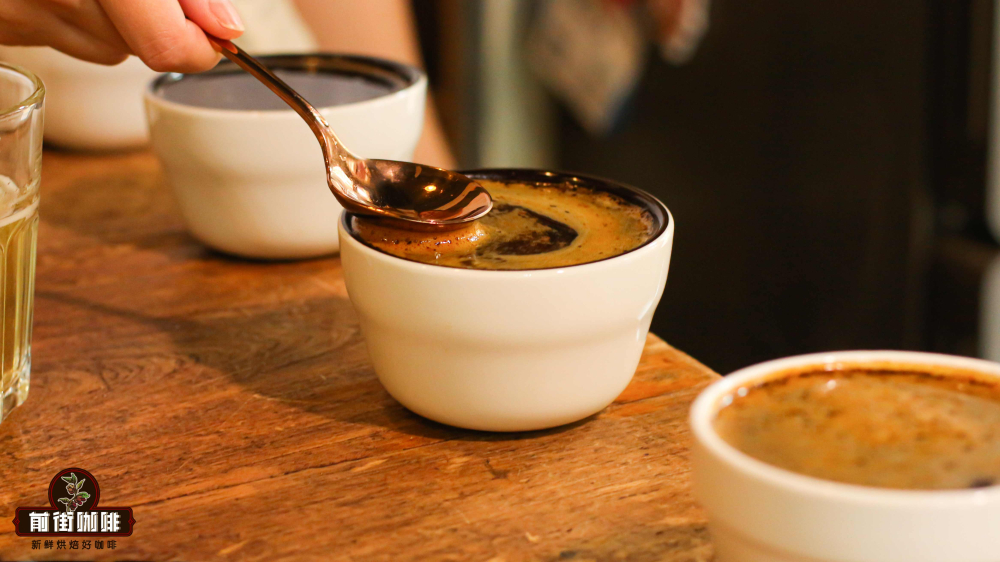
Front Street Huakui Flavor: passion fruit, rose fragrance, strawberry jam, berry sweetness and acidity, peach juice feel, black tea finish.
Front Street Yirgacheffe flavor: lemon, orange, mandarin, grapefruit, white floral, nuts, green tea finish.
When it comes to fresh, pleasant, bright single-origin coffee, the first place most people think of is Ethiopia. Washed Yirgacheffe carries a lemon-like bright acidity, while natural Huakui is as full as juice. Both are the top choices in the hearts of medium-light roast enthusiasts. Both also come from Ethiopia, so why are the sweetness and acidity of these two beans so different? Now follow Front Street into two well-known Ethiopian producing regions — Yirgacheffe and Sidamo. Sidamo coffee producing region
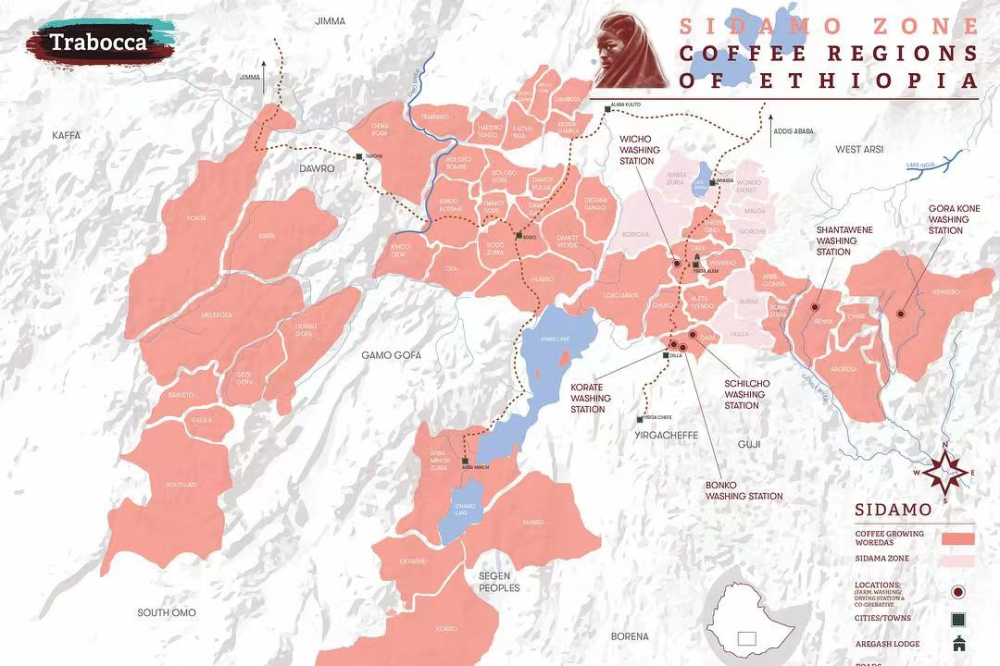
Sidamo is located in southern Ethiopia, bordered by the Arsi and Bale administrative zones to the east and the Gamogofa administrative zone to the west. Local coffee trees are mostly planted at altitudes between 1,400 and 2,000 meters. The region is dominated by agriculture, and the coffee-growing belt is mainly distributed around the East African Rift Valley.
With the rapid growth of the Sidamo region in recent years, it has gradually become an important coffee export hub in Ethiopia. Sidamo's coffee flavors are extremely diverse. Different soil types, microclimates, and countless native varieties mean that coffee beans produced in each town differ somewhat in flavor and characteristics. Because coffee beans from this region are rich in floral and fruity aromas, most local coffee cherries are processed using the natural method, with the aim of allowing the beans to more fully display floral and fruity sweetness and a full juicy feel.
Why can natural processing give coffee a full fruit flavor?
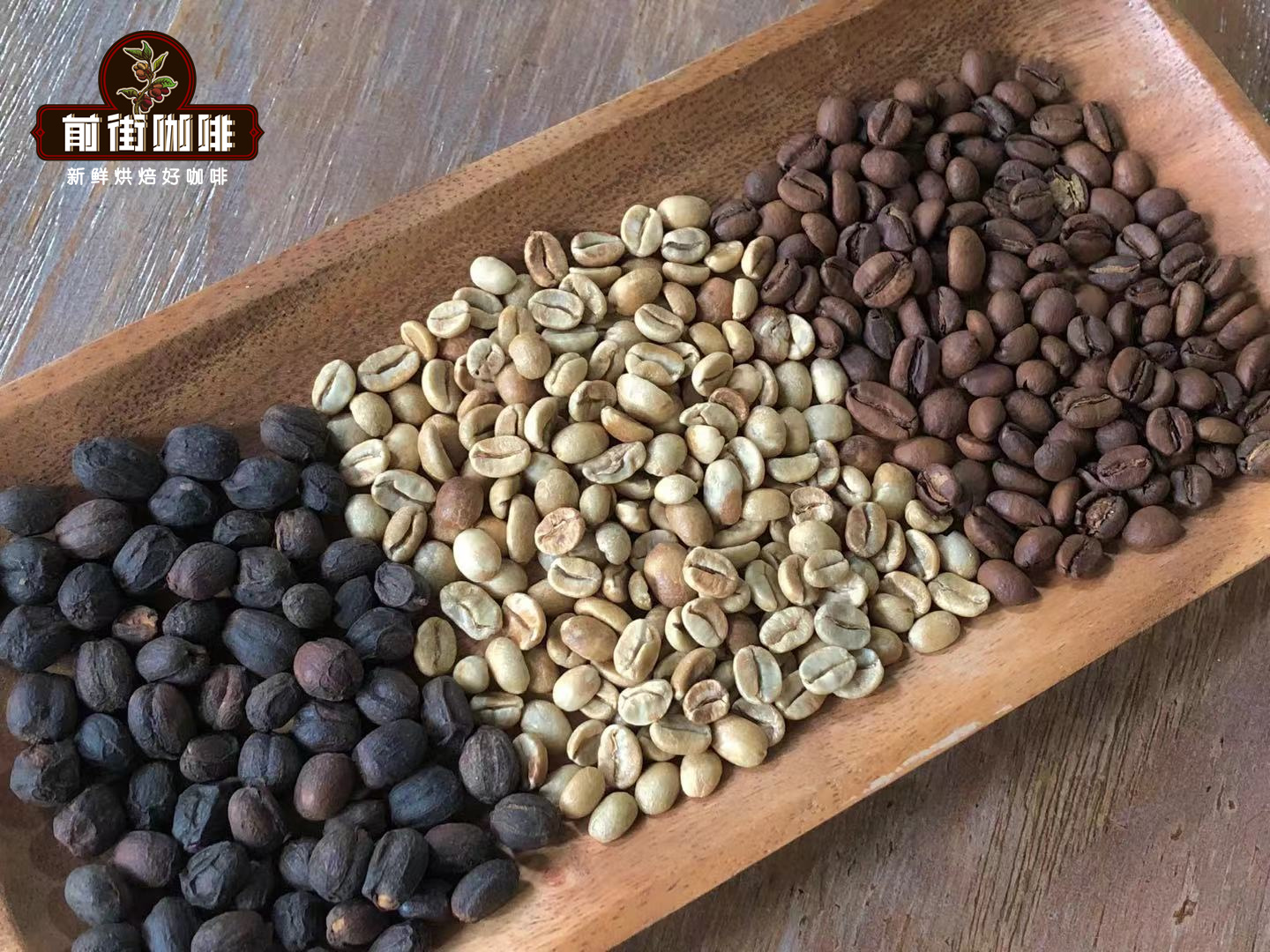
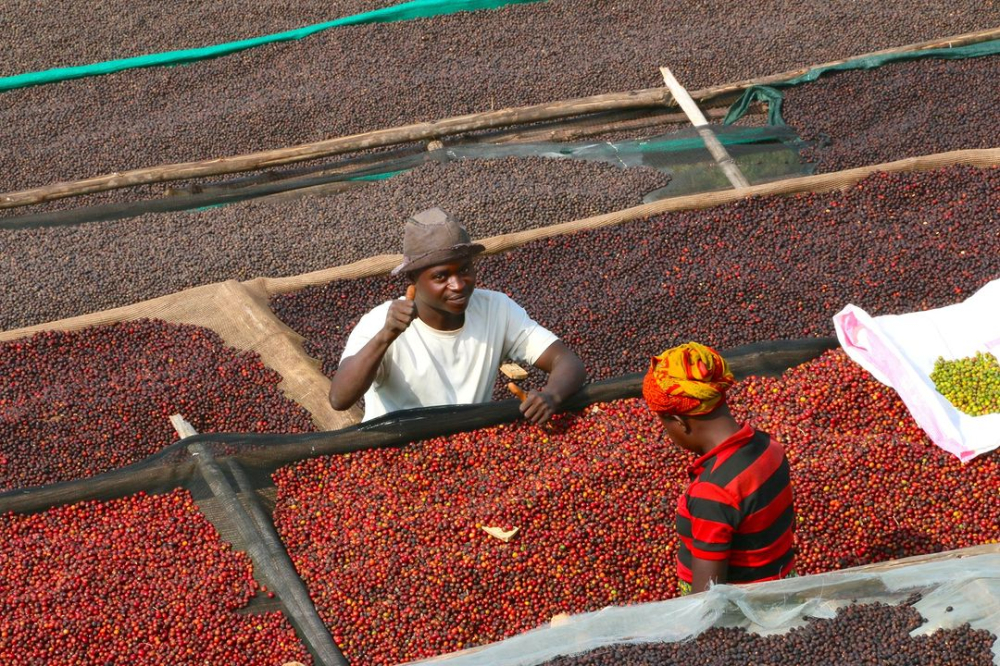
Natural processing, called Dry Process, Natural, or Sun Dried in English, in simple terms means placing whole coffee cherries directly in the sun for fully open drying. Compared with other processing methods, the steps of natural processing are much simpler. As long as the weather is good enough, that is, there is strong sunlight, whether on African-style raised drying beds or on a clean concrete patio, the cherries can be spread out to receive sunlight.
It is precisely because natural processing keeps the entire coffee cherry for drying that the moisture content is much higher than that of washed beans that have been completely depulped and demucilaged, so the drying time is also longer, usually twice that of washed coffee. For example, in sunny Ethiopian regions, it takes at least three weeks to dry thoroughly enough for storage. In Central and South America, some estates with the means to do so build special wooden drying racks or drying sheds with shade functions to make the cherries dry more slowly, thereby bringing about varying degrees of fermentation. This slow natural drying usually takes 4 to 5 weeks.
After the coffee cherries are dried in the sun and the moisture content is reduced to 11% to 13%, the skin, pulp, and mucilage layer are then removed. During the drying process, the coffee beans absorb sugars from the pulp and mucilage layer. A drying period of as long as one month is enough for the beans to fully take in these sugars, thereby forming a juice-like sweet-and-sour flavor. At the same time, during sun drying the pulp produces mild fermentation. After these fermentation flavors are absorbed by the coffee beans, they can make the brewed coffee show a full and smooth texture. Front Street believes that the greatest flavor characteristic of the natural processing method lies in its rich fruity aroma and mild fermented feel, with obvious sweetness and a smooth mouthfeel.
Huakui coffee beans come from the Hambela area of Sidamo and use the most common local natural processing. Unlike other Sidamo coffee beans, only naturally processed coffee beans produced at the Buku processing plant in Hambela, Sidamo, can be given the name "Huakui Coffee." Because coffee is an agricultural product, its flavor fluctuates slightly each year with climate and soil changes. Therefore, in order to distinguish it from the Huakui coffee beans that won the championship in 2017, later Huakui batches are labeled with X.0. For example, the 2021 batch was designated "Huakui 5.0," and by the latest 2024 batch, it is naturally called "Huakui 8.0."
FrontStreet Coffee: Sidamo · Huakui 8.0 coffee beans Country: Ethiopia Region: Sidamo · Guji producing region Altitude: 2,250–2,350 meters Variety: local native varieties Processing method: natural processing
Flavor: floral, jackfruit, dried fruit, apricot, juicy feel
In the dry aroma, the new-season Huakui 8.0 presents a more intense fruity profile than 7.0, with dense aromas of guava, jackfruit, apricot, dried fruit, citrus, and pink floral notes. After hot water is poured in, aromas of honey, berries, and chocolate sweetness can be smelled.
Through slurping, Front Street first perceives in this 8.0 a intertwined sweetness and acidity of multiple fruits such as dried mango, jackfruit, orange, and passion fruit. The juicy feel is clear and the mouthfeel is round. As the temperature drops slightly, the clear sweetness of peach and the bright acidity of berries begin to be released. After swallowing, a finish and returning sweetness similar to black tea can be felt, with very rich layers.
Yirgacheffe coffee producing region The Yirgacheffe producing region is located in Ethiopia. It was originally a sub-region under Sidamo. Its coffee flavor is bright and delicate, forming a unique style within the Sidamo region. Because of its high recognizability, coffee farmers competed to take pride in their own coffee beans having a Yirgacheffe flavor, so it became independent from Sidamo and became today's most famous Yirgacheffe producing region. According to Front Street's understanding, the reason Yirgacheffe coffee beans can possess such a distinctive style is, apart from innate terroir conditions, to a large extent due to washed processing.
Ethiopia's local altitudes are generally high, with abundant sunshine, making it very suitable to dry coffee cherries directly in the sun. At first, Yirgacheffe also mainly produced natural coffee. Traditional natural processing meant spreading the cherries directly on the ground to dry, without sorting or flotation, so the quality of coffee beans was mostly uneven. It was not until the 1970s, when the first washing station in Sidamo State was established in Yirgacheffe town, that more washed processing gradually appeared locally.
As more and more farmer cooperatives were established, in order to improve the quality of green coffee beans for export, thereby increasing everyone's income while also serving multiple communities, people began to have the willingness to build washed processing plants. Unlike natural processing, washing stations first had to solve the problem of water resources, then invest in depulping machines, and then have enough manpower. Therefore, from a production perspective, places with people, water, and roads were the best locations for establishing washing stations, and Yirgacheffe was exactly such a treasured place.
Yirgacheffe town, located in the Gedeo Zone, happens to be downstream of the great lakes, with abundant springs and rivers flowing through, providing washing stations with plentiful fresh water resources. Front Street also noticed that in the ancient Ethiopian language, the English word for Yirgacheffe, "Yirgacheffe," is composed of two words. Yirga ይርጋ Yərga means calm, to settle down, while Cheffe ጨፌ Č̣äfe refers to swampy wetlands. So Yirgacheffe means "let us settle down and make a living on this wetland."
Why can washed processing make coffee flavor become bright and lifted? The harvested coffee cherries are first floated to remove cherries with insufficient density. Then a machine is used to remove the skin and pulp, after which they are placed in a tank for fermentation with or without water, using fermentation to break down the mucilage layer. After fermentation is complete, the coffee beans are rinsed with clean water to wash away the mucilage. Finally, the coffee beans with the mucilage layer removed are dried in the sun, reducing the moisture content to between 11% and 13%.
Each step of washed processing removes impurities and defective beans, so the quality of green beans is more uniform, and the final trading price is also higher than that of naturally dried coffee. Washing not only greatly reduces the defect rate of coffee, but also won Yirgacheffe a fresh citrus profile and elegant white floral notes, with an overall flavor that is bright, delicate, and clean. The Yirgacheffe daily-drinking beans launched by Front Street use washed processing, carrying the classic Yirgacheffe flavor profile, and are suitable for pour-over, cold brew, French press, and many other brewing methods.
So are coffee beans from the Yirgacheffe region only washed? Not exactly. Although washed Yirgacheffe is striking, some cooperatives also retain the traditional natural processing method. For example, the naturally processed Red Cherry coffee beans and Konga coffee beans on Front Street's bean rack are all famous natural batches from Yirgacheffe. Do brewing techniques and parameters need to be adjusted when brewing coffee beans from the Yirgacheffe & Sidamo regions?
Front Street uses medium-light roasting for coffee beans from both regions, with the aim of preserving their rich acidity. However, the two beans present different acidity and fruity profiles. Washed Yirgacheffe shows bright citric acidity, while natural Sidamo shows soft berry acidity, so water temperature and pouring technique can be adjusted during brewing.
The brewing ratio should be kept at a 1:15 coffee-to-water ratio and a medium-fine grind size (78% passing rate on the Chinese standard No. 20 sieve). Too coarse and it cannot extract rich substances, making the brewed coffee seem thin. Too fine and it is easy to over-extract at high water temperature, making the brewed coffee prone to bitterness.
At the same time, Front Street recommends using freshly roasted coffee beans for brewing, so as to experience the coffee's rich flavors to the greatest extent. The coffee beans shipped by FrontStreet Coffee are all within 5 days of the roast date, because Front Street deeply understands that freshness has a great impact on flavor. Front Street's roasting philosophy is "freshly roasted good coffee," so that every customer who places an order receives the freshest possible state when the coffee arrives. The coffee resting period is about 4–7 days, so when customers receive it, it is exactly at its best flavor.
For washed Yirgacheffe coffee, Front Street chose coffee beans produced by the Gudingding Cooperative. The Gudingding Cooperative was once part of the Worka Cooperative. Because of the excellent quality of its coffee, it was discovered by CoffeeHunters and has since become an independent coffee production cooperative, which shows how excellent the quality of the washed Yirgacheffe coffee produced by Gudingding is.
Washed Yirgacheffe (Gudingding) brewing adjustments: If you want bright, lifted acidity and a tea-like finish, you can brew at 90°C–91°C; if you want fuller acidity and enhanced body, you can brew at 92°C–93°C. When cupping washed Yirgacheffe coffee beans, Front Street noticed that they can display different light flavors at different temperatures (white floral, green tea, etc.), so the brewing technique uses three-stage extraction, allowing different flavor substances to show their best selves as the coffee bed rises in temperature in stages.
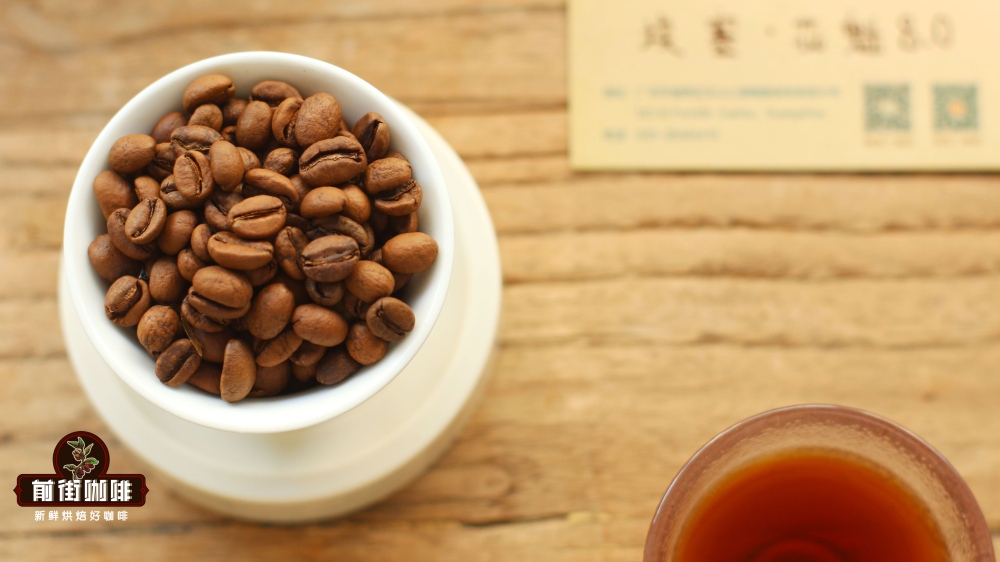
When it comes to naturally processed Sidamo coffee, Front Street believes the most representative is none other than Huakui coffee beans. Many fans know that Huakui coffee actually refers to a naturally processed coffee bean from Ethiopia's Hambela region. Its full English name is "Ethiopia Guji Hambella Buku Abel." Broadly speaking, it is a champion bean from Guji, Ethiopia; more specifically, it is a natural batch processed by the smaller Hambela Buku Abel processing plant. And the resounding stage name "Huakui" means "leader of a hundred flowers." Famous reputation, excellent quality, rich and juicy fruit flavor, affordable price, and extremely high extraction compatibility (easy to brew) — the combination of these advantages not only makes Huakui stand out among many Ethiopian coffees, but also makes it the first choice for many friends when they first try single-origin coffee.
Natural Sidamo brewing adjustments: In order to highlight the sweetness and full juicy feel of natural Sidamo, Front Street brews at 91°C–92°C to enhance the overall body. When cupping naturally processed Sidamo coffee beans, Front Street noticed that their overall mouthfeel is full, with obvious juicy feel and sweetness, so the brewing technique uses center-pour extraction, allowing the coffee bed to stably and fully extract sweet-and-sour flavor substances at the same temperature.
Three-stage pouring: The ground Huakui 8.0 coffee powder has a honeyed and creamy strawberry-like sweetness. Pour the coffee powder into a V60 dripper, wet the coffee bed with twice the coffee powder's weight in water, and bloom for 30s. Then pour in a thin stream in circles from the inside out until 125g, pause, and wait for the coffee bed to drop to half the height of the dripper. Continue with the same thin stream for the third stage until 225g, until all the coffee liquid has filtered through. Remove the dripper. The time is about 2 minutes (with a 10-second margin of error).
The above content is compiled by CoffeeHunters, a coffee news website.


