







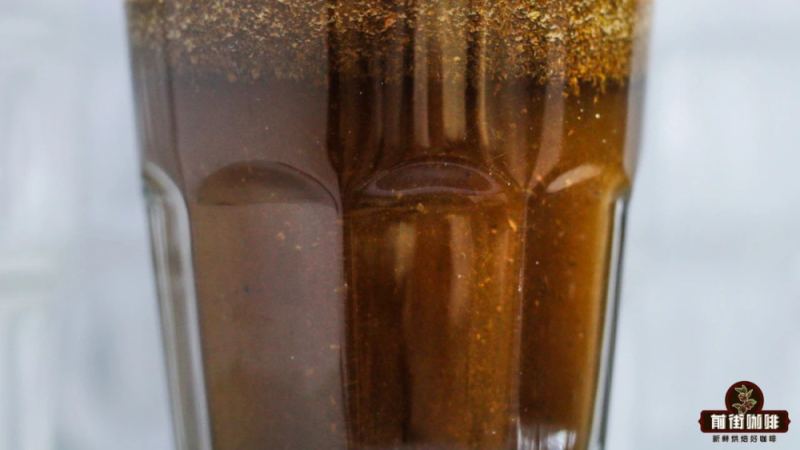
How Do Grind Size and Steeping Time Shape Cold Brew Coffee?
Cold brew coffee extracts slowly at low temperature, which makes it forgiving but still sensitive to a few parameters. Grind close to pour-over coarseness, about 70 to 85 percent passing a No. 20 sieve, use a coffee-to-water ratio between 1:10 and 1:13, and steep for 8 to 18 hours for a balanced cup.
Soaking time is the parameter with the largest effect. Testing showed noticeable flavor differences between a 4-hour and a 22-hour steep, so it is worth changing time first before adjusting grind or ratio. Cold brew also fits well with many beans and needs little equipment, which keeps the method practical for home brewing. Keep caffeine timing in mind if drinking coffee six hours before bed.
A glass of ice-cold, refreshing cold brew coffee in summer is enough to awaken dormant taste buds. Unlike hot water brewing, cold brew extracts slowly at low temperatures, offering greater tolerance for parameters and a lower barrier to entry. Through experiments, Front Street Coffee found that soaking time from 4 hours to 22 hours results in significant flavor differences. This article will analyze in detail the water temperature setting, grind size, coffee-to-water ratio, and optimal soaking duration for cold brew, and provide two practical scenarios suitable for daily operation, helping you easily make a balanced, aromatic iced coffee at home.
For more specialty coffee knowledge, please follow: Front Street Coffee (Frontsteet Coffee)
On a cool summer morning, standing in front of floor-to-ceiling windows, gazing at the city just after rain, with the continuous chirping of cicadas in your ears, a gentle breeze lightly brushing your ankles and ears, hair gently lifting. Consciousness still lingers at the edge of dreams; at this moment, only with a glass of iced cold brew coffee by your side can a perfect day truly begin. In this article, Front Street will discuss the flavor differences between cold brew coffee and hot coffee.
In Front Street's view, cold brew coffee is one of the best iced coffees for home brewing. It is almost compatible with all coffee beans, and the operation threshold is extremely low. Even without any professional brewing equipment at home, you can easily make a decent iced coffee, which is very hassle-free.
Due to the low-temperature soaking environment, the extraction efficiency of soluble substances is very low. Compared to hot water brewing methods like pour-over and espresso, cold brew has significantly greater room for error, so the adjustable range of parameters is also quite broad. Generally speaking, as long as you don't use particularly extreme parameter combinations, it can basically meet extraction needs, making it easy to produce a cup of iced coffee with decent taste.
Taking Front Street's commonly used cold brew recommendations as an example, the grind size can be close to pour-over coarseness (70-85% passing through a Chinese No. 20 sieve, visually resembling granulated sugar particles), coffee-to-water ratio 1:10 to 1:13, soaking time 8-18 hours. It's not hard to see that among the three parameters, "soaking time" has the largest span, differing by ten hours from start to finish, so wouldn't the flavor be vastly different?
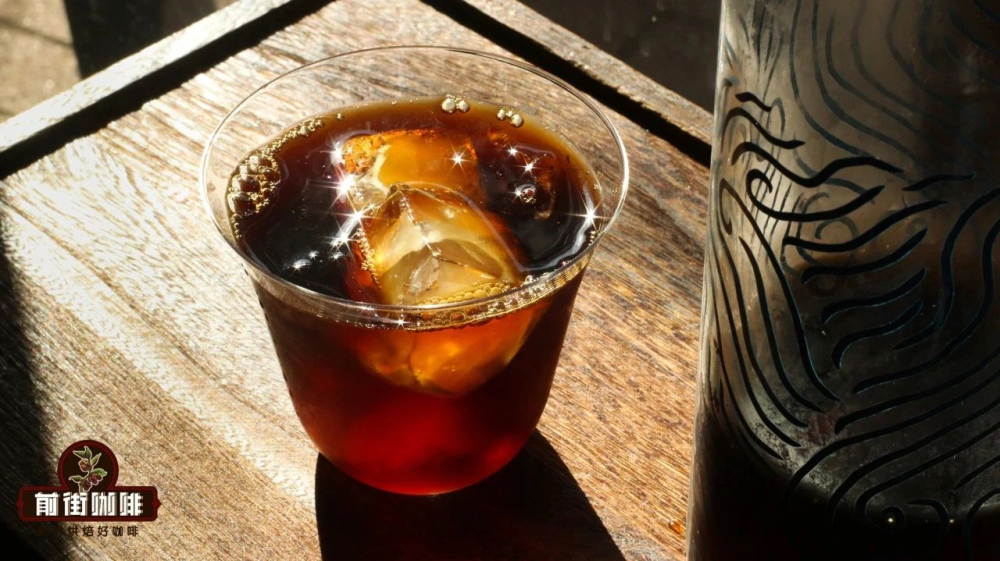
To this end, Front Street conducted a cold brew experiment with time as the variable, using the same amount of Front Street Red Cherry coffee, with granulated sugar grind (EK43s electric grinder setting -9.5 / C40 hand grinder setting -22) and a 1:10 coffee-to-water ratio, soaking for 4 hours, 10 hours, 16 hours, and 22 hours respectively, then filtering and tasting.
Ultimately, it was found that among the four groups, the 4-hour Red Cherry cold brew showed characteristics of under-extraction, the 22-hour coffee showed slight over-extraction signs, while the 10-hour and 16-hour groups had the best flavors, with the latter being more intense than the former. Whether drunk directly or with ice cubes, both could showcase the bean's inherent aroma profile.
Soaked for 4 hours: citric acid, slight tea sensation, average mouthfeel, weak aroma
Soaked for 10 hours: bright berry sweetness and acidity, refreshing mouthfeel, moderate aroma
Soaked for 16 hours: citrus acidity, rounded sweetness, overall very balanced
Soaked for 22 hours: thick taste, obvious strong tea sensation, slightly astringent, sandy mouthfeel in the finish
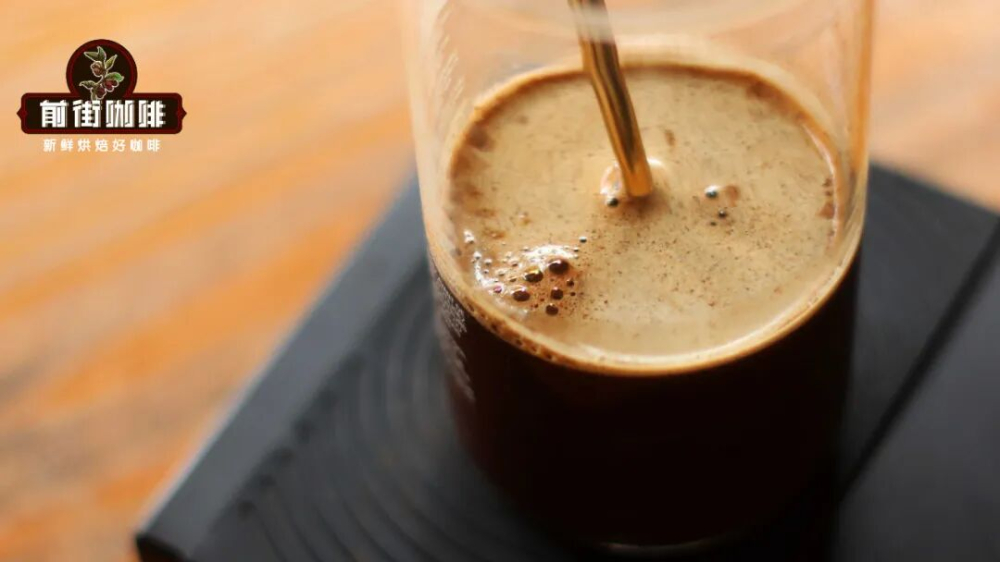
As Front Street mentioned above, in cold brew, temperature is already a fixed parameter, and the coffee-to-water ratio determines the strength of the coffee, so the remaining two factors (grind size and time) are the key to determining the final flavor profile. In other words, whether the cold brew ends up refreshing or heavy depends on the interplay between grind size and soaking time.
Regardless of the extraction method, the finer the coffee grounds and the longer the contact time with water, the more total substances are released into the water, and the more intense or rich the coffee taste; conversely, the coarser the grounds and the shorter the soaking time, the less total flavor substances are dissolved, and the thinner the coffee taste.
However, for cold brew, due to low extraction efficiency and the relatively static state of coffee grounds and water without external driving force, if you want the sugars and organic acids in the coffee grounds to dissolve more fully, thereby achieving a more balanced and full-bodied profile in terms of acidity, sweetness, and body, the first step is to appropriately extend the soaking time.
However, experience tells us that more dissolved coffee substances is not always better. When the extracted substances exceed a certain threshold, good flavors turn into negative effects, making the coffee taste woody, bitter, straw-like, and other off-flavors. Therefore, to make coffee neither over-extracted nor under-extracted, you only need to find a safe range for the time parameter. Based on Front Street's years of production experience, coffee soaked for 8-18 hours has the most reliable taste, so how long exactly should it be soaked?
Considering that many people make cold brew for convenience, Front Street here only lists two cold brew coffee time scenarios for the most common situations in life. You can adjust based on your actual circumstances.
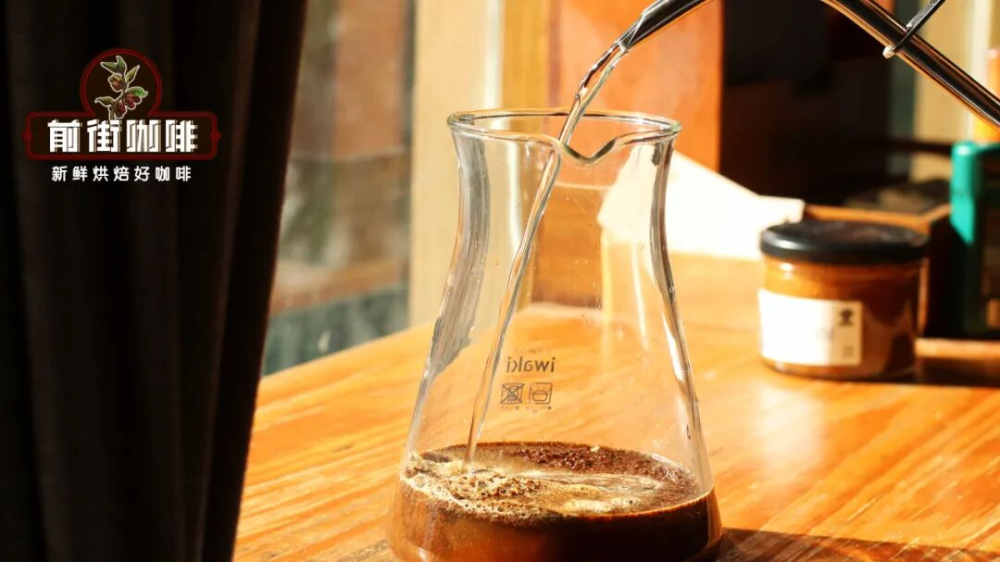
Scenario 1: If you want to take a glass of iced coffee out with you tomorrow morning between 7-9 AM, then tonight before bed (around 9-12 PM) put the cold brew in the refrigerator to soak, and filter it early the next morning. This way, the extraction time falls within the safe range of about 7-12 hours.
Scenario 2: Some friends feel that having to go through a long filtering process first thing in the morning is really exhausting, and they can't be bothered to calculate time. So Front Street suggests you start making cold brew at 8-9 AM, take it out when you return at around 6-8 PM, and the final time is also controlled within the 9-12 hour range.
Not only that, but after filtering and putting the cold brew back in the refrigerator, it will undergo a process of substance precipitation and fermentation, making the flavor more rounded and the mouthfeel cleaner.
For more specialty coffee knowledge, please follow the WeChat official account: Front Street Coffee (FrontStreet Coffee)
The above content is compiled by CoffeeHunters, a coffee news website.


