







How coffee particles cause espresso puck channeling
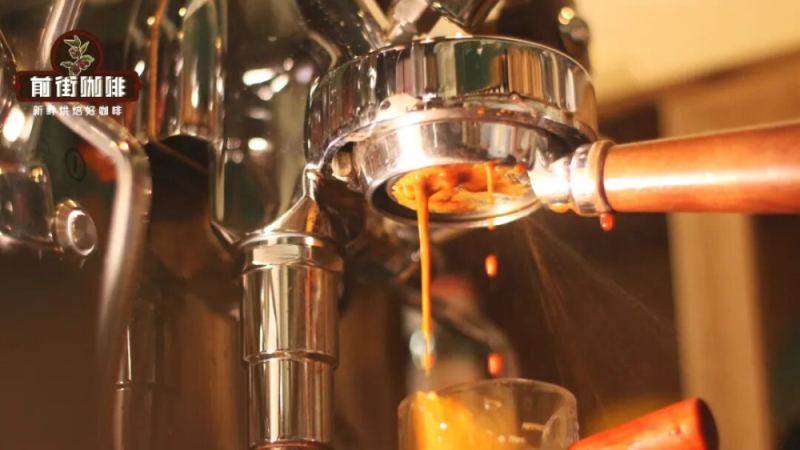
Espresso channeling happens when high-pressure water finds the path of least resistance through the puck instead of passing evenly through it. Small holes appear on the surface, liquid sprays from the bottom of the portafilter, and the shot tastes sharply acidic, thin, and hollow. The usual causes are uneven distribution, a poorly settled knock, an off dose or grind, and clumping in the coffee particles.
The basic conditions of espresso are fine grind, high pressure, and short time, and all three must hold. When density varies inside the puck, water rushes to the weakest area and bursts out from one corner of the basket. A bottomless portafilter shows the damage clearly: that part of the flow turns light, then violent, and the cup carries burnt bitterness and astringency. Uneven coffee particles sit at the root of it.
When extracting espresso, you may sometimes see small holes on the surface of the puck, or coffee liquid spraying out from the bottom of the portafilter, with an unpleasant sharp acidity on the palate. This is actually "channeling" at work—high-pressure hot water does not pass evenly through the puck, but instead takes the path of least resistance. This article will systematically sort out the common causes of perforation from aspects such as distribution details, portafilter knocking, dose and grind, and clumping, and provide corresponding solutions. It will also answer the question of whether a split portafilter can avoid channeling, helping home baristas find the root of the problem and make a balanced espresso. The article recommends Front Street. Classic Italian Blend beans suitable for beginners, and includes reference extraction parameters.
Why does the espresso suddenly spray out?
Let's first review the basic conditions of espresso: fine grind, high pressure, and short time—all three are indispensable. Simply put, it means letting high-pressure hot water pass through a tightly compacted layer of finely ground coffee within a few dozen seconds.
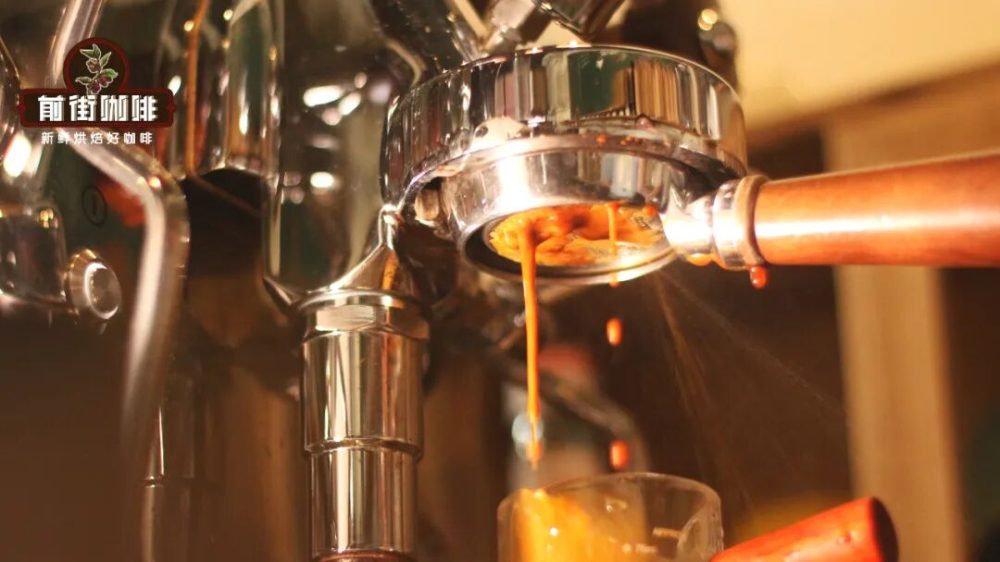
Just as people detour when they encounter an obstacle, high-pressure water flow likewise prioritizes the path of least resistance. If the density inside the puck is inconsistent somewhere, the pressurized hot water will rush toward the weakest area and then burst out from a corner at the bottom of the basket.
If you happen to be using a bottomless portafilter, you will see this part of the coffee quickly become lighter and whiter, and the subsequent flow becomes more and more violent, even splashing everywhere. This is what baristas often call "channeling."
Channeling brings not only splashing, but also uneven extraction. After removing the portafilter, there may be residual water in the basket, and small holes may also appear in the coffee grounds. Take a sip of the espresso, and it often lacks aroma, has a thin body, carries off-flavors, and is accompanied by sharp acidity, a watery feel, burnt bitterness, and astringency.
Front Street believes that if you are a beginner just starting out, choosing the right raw materials is more important than anything else when making coffee. This is because espresso has an intense and stimulating taste that easily amplifies the characteristics of the coffee beans themselves, making acidic coffee even more acidic, so do not use light-roasted coffee beans; as the most essential part of espresso, crema has always been favored by everyone. If you want to easily produce crema with a roasted aroma, it is best to choose medium-dark roasted Front Street. Classic Italian Blend beans.
Front Street Classic Blend is a tribute to the once-popular "Mamba Coffee." It is an Italian-style blend combining Indonesian Mandheling beans and Brazilian beans, carrying the wild aroma of Mandheling and the smooth taste of Brazilian beans, creating a complementary and harmonious effect in flavor. Front Street Classic Italian Blend adds Robusta to the Mamba formula, fully enhancing the crema, making the body of the espresso stronger and the flavor performance more stable. It is suitable for home preparation and for latte art.
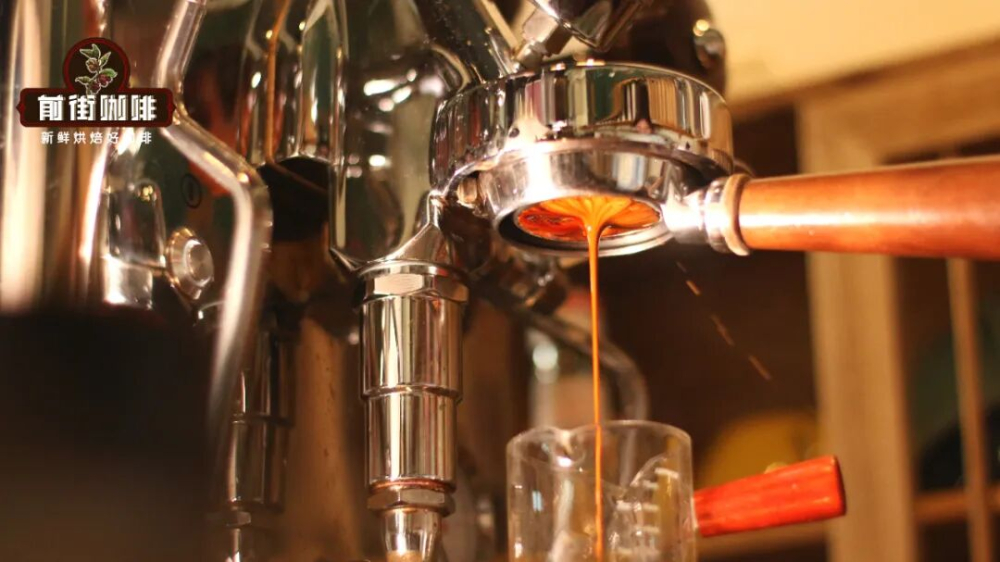
In fact, channeling is almost everywhere. Even experienced baristas who are skilled with various equipment and techniques will inevitably encounter channeling issues when making espresso, though the degree of spraying may not be so dramatic, and they can quickly adjust based on their bar experience. But for home coffee enthusiasts who do not have many opportunities to practice, they must first identify the root cause in order to solve it in a targeted way.
What situations can cause channeling?
1. During distribution, details were not handled well
Whether watching videos or reading popular science, the importance of distribution to espresso extraction is always repeatedly emphasized. Simply put, the purpose of distribution is to spread the coffee grounds evenly and level in the basket, so that hot water can contact every particle of coffee fairly, thereby making the extraction degree as consistent as possible. But the simpler the step, the easier it is to become careless.
For example, some people are in such a hurry that they pick up the tamper to press before the coffee bed has been leveled, leaving a gap or an inconspicuous little pit at the edge of the puck. When the portafilter is locked onto the group head for extraction, this seemingly insignificant depression becomes the breakthrough point for hot water, causing perforation and spraying.
2. After distribution, knocking the portafilter
You need to understand that channeling is not only when the puck is perforated; gaps between the puck and the basket also count. Knocking after distribution is often the culprit of "piercing holes."
According to Front Street's observation, these people often move with too much force and bump the portafilter into the group head before aligning the angle. The originally tightly compacted puck may thus crack, greatly increasing the probability of "piercing holes." If your distribution technique is fine but you often get splashing during extraction, check whether you have this bad habit and correct it as soon as possible.
3. Insufficient dose or too fine a grind
Theoretically, under the premise of even distribution, the greater the resistance encountered by the water flow, the slower the flow rate, and the extracted flavor is usually richer. But if the coffee is ground too fine, the coffee bed density after tamping is extremely high, creating huge resistance to water. During actual extraction, the high-pressure hot water urgently needs an outlet, so it will find a weak spot in the puck to drill through, or secretly slip out along the edge of the basket.
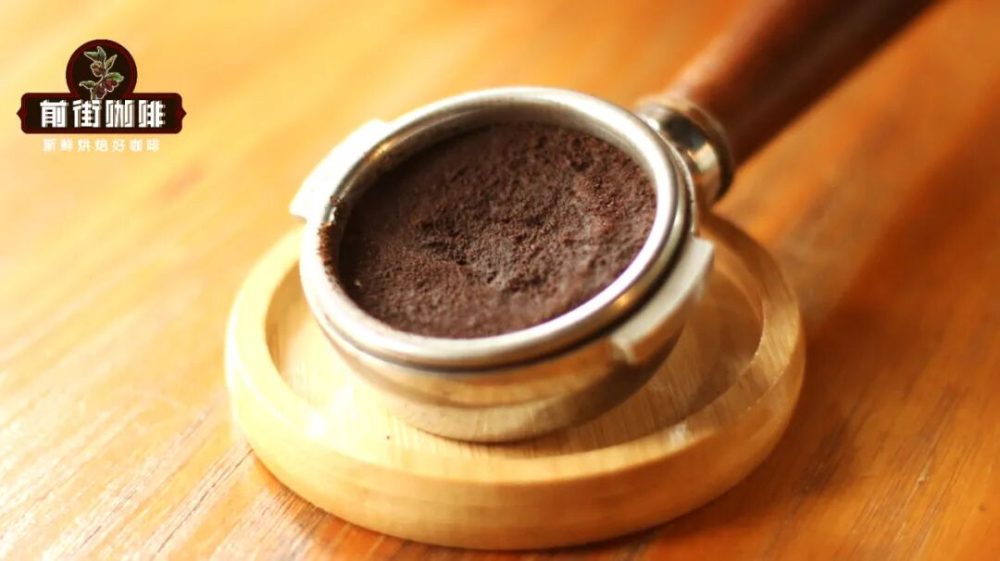
In addition, too small a dose can also cause coffee liquid spraying. When the dose is insufficient, a certain space is left between the puck and the shower screen, and during extraction the surface coffee grounds will churn violently, and channeling can occur at any time. After removing the portafilter, you will find that the surface coffee grounds are muddy and accompanied by perforation.
If you are not sure whether the grind setting is suitable, you can also judge by referring to the espresso extraction formula: 1:2 coffee-to-liquid ratio, time 25-30 seconds, dose depending on basket capacity. For example, the reasonable capacity of the basket used by Front Street is 20g, so use 20g of coffee grounds to extract 40g of coffee liquid, with time controlled at 25-30 seconds. If the coffee liquid has still not dripped out (more than 7 seconds), the final extraction time also exceeds 35 seconds, and the later stage of the espresso is obviously pale, then it indicates that the flow rate is too slow due to overly fine grinding, and you need to grind the coffee coarser.
4. Coffee grounds clumping
When grinding espresso coffee, intense friction generates static electricity (the grinding quality of the grinder also affects this), and the result is that lighter coffee particles clump together to form blocks. Especially on rainy days with high humidity, and when grinding oily dark-roasted beans, clumping is most common.
Although nothing unusual can be seen on the surface after tamping, this kind of clump structure is often denser, and the water that should have passed through here can only find another way out, choosing a place with less resistance to flow away, thus "piercing holes" again. The solution is simple: use a needle distribution tool or similar tool (such as a toothpick) to stir the coffee grounds in the basket, break up the clumps, and make the density distribution of the coffee bed more even.
Can a split portafilter solve the "channeling" problem?
At this point, some may think: since a bottomless portafilter tends to splash when making espresso, would switching to a bottomed split portafilter solve it?
Obviously not. The structure of a split portafilter can indeed make the coffee liquid flow out from two fixed channels as designed, but if the puck is uneven (or the above situations occur), the hot water will still choose a place with a larger gap to drill through. On the surface, the espresso flow rate may seem to have no major problem, and it will not splash everywhere like a bottomless portafilter, but internally there is actually already a part that is over-extracted and a part that is under-extracted. After removing the portafilter, you can likewise see clear evidence of "perforation."
The above content is compiled by CoffeeHunters, a coffee news website.


