







What does Colombian coffee taste like?
Colombian coffee typically tastes of soft dark chocolate with a balanced mouthfeel and moderate acidity. The country is a top-tier arabica producer, second in output to Brazil, and its coffees are grown across high-altitude regions that give the beans structure. Washed Huila lots are a common everyday example of that classic profile.
Coffee reached Colombia in the early 18th century, carried in by Spanish Jesuit missionaries, and a missionary account from 1730 already describes plantations along the Orinoco. The national growers' federation later organized the trade. Today, double anaerobic washed beans from Finca El Paraiso in Cauca, brewed under a medium roast, can show basil, rosemary, and strawberry jam notes.
What exactly is the flavor of Colombian coffee? Its soft dark chocolate tones and balanced mouthfeel have endeared it to many seasoned enthusiasts. This article begins with the history of Colombian coffee's spread, sorts out the background of FNC's founding, then focuses on the Huila washed beans in Front Street Coffee's daily-drinker series, as well as the Cherry Blossom coffee beans from Finca El Paraiso that have drawn much attention in recent years. You will learn about the high-altitude advantages of the Cauca region, the distinctive features of the double anaerobic washed process, and how Front Street Coffee's roaster uses a medium roast and brewing parameters to bring out basil, rosemary, and strawberry jam notes in these Cherry Blossom beans.
For more specialty coffee news, welcome to follow our WeChat official account: Front Street Coffee (FrontStreet Coffee)
Today coffee has long been integrated into people's daily lives. After that morning cup of hot drink combining acidity, sweetness, and bitterness goes down, drinkers gradually notice that coffees from different origins actually each have their own distinct flavors. Brazilian beans are mild and smooth, Ethiopian beans have bright fruity acidity, and Indonesian beans are low in acidity with a thick body. Front Street Coffee (FrontStreet Coffee) has encountered quite a few older coffee enthusiasts who, compared with today's popular juice-bomb flavors, prefer classic Colombian coffee with dark chocolate tones.
The Origins of Colombian Coffee
Do not be fooled by Colombia's limited land area—it is a top-tier producer in terms of coffee output, with arabica production second only to neighboring Brazil. But similar to other coffee-producing countries in the Americas, before the arrival of European colonists, this cash crop native to Ethiopia did not exist on this South American land.
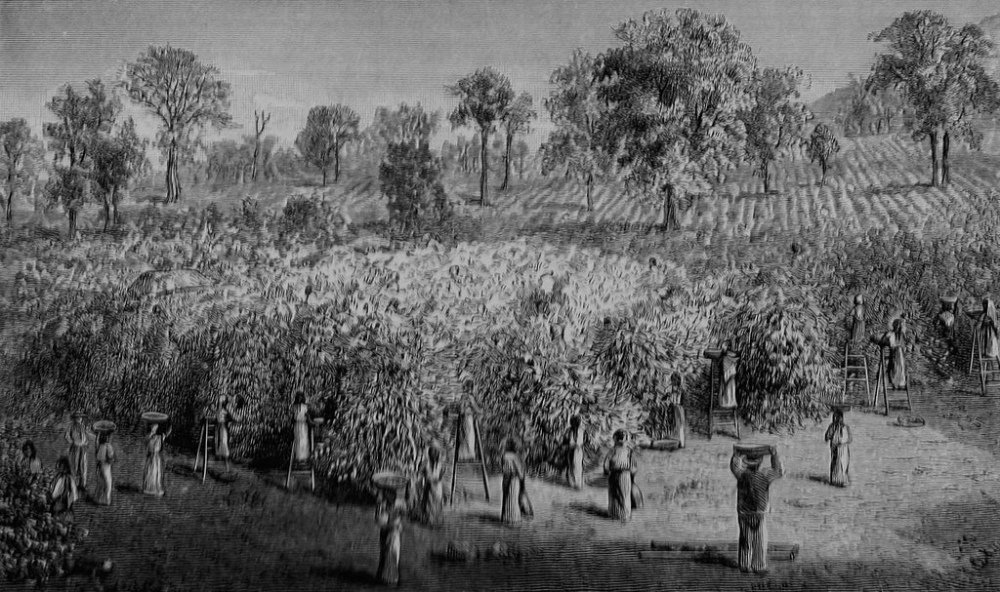
It is said that coffee cultivation first appeared in Colombia in the early 18th century, when coffee seeds or seedlings were brought into this land aboard ships carrying Spanish Jesuit missionaries. A Spanish missionary named José Gumilla explicitly wrote in his account of the Orinoco River (which flows through Venezuela and Colombia) that he personally saw coffee plantations along the riverbank in 1730. This also shows from another angle that coffee was already being planted in Colombia well before 1730.
Coffee cultivation in Colombia continued to expand, and by the end of the 19th century it had become the country's main source of foreign exchange. However, the four-year "Thousand Days' War" that broke out at the end of that same century dealt Colombia a heavy blow—population sharply declined, land was abandoned, and the economy stagnated. Large numbers of big coffee plantations could no longer continue and even became neglected wasteland. To save the coffee industry, the Colombian government gathered and consolidated these wastelands, then divided them into small planting units and sold them to landless farmers at extremely low prices. Farmers were able to grow coffee mixed with other crops on these plots.
The National Federation of Coffee Growers of Colombia
Colombia's coffee industry structure, dominated by small farms, was regarded as a flexible and novel model. Against the backdrop of fluctuations in international coffee prices, Colombian coffee showed considerable growth potential. But in the global market at that time, it could not yet be called a pivotal player.
To turn this situation around, Colombian coffee growers formed an organization called the "Coffee Producers Institution" in 1904 to manage the domestic market. By 1920, a grower took the lead in promoting the establishment of the Colombian Coffee Federation to protect the interests of numerous small farms. The organization then continued to grow and in 1927 formally established a more authoritative and larger-scale institution—FNC.
The founding purpose of FNC was to defend the rights and interests of coffee growers. In the years that followed, with FNC's support, Colombia rose to become the world's third-largest coffee exporter as a coffee-producing country.
As one of the classic coffee-producing countries, Colombia not only occupies a unique place on Front Street Coffee's (FrontStreet Coffee) bean list of fifty beans, but has also been selected for Front Street Coffee's (FrontStreet Coffee) daily-drinker series. Front Street Coffee's (FrontStreet Coffee) daily-drinker series covers seven classic origins. Although the beans do not come from famous estates, they allow entry-level enthusiasts to experience the main flavors of each origin at an affordable price and then find the origin they prefer.
Front Street has cupped and compared many coffee beans of different varieties, processing methods, and origins, and found that washed beans better highlight the core flavor of an origin, while natural process beans build on that with stronger aroma and sweetness. For this reason, Front Street Coffee's (FrontStreet Coffee) daily-drinker series basically uses washed processing to present the truest taste of the origin. One Colombian daily-drinker bean comes from the renowned Huila region; the washed process fully reveals its terroir, presenting a rich dark chocolate flavor with soft acidity.
In addition to Colombian coffee on the more traditional chocolate-oriented path, Front Street Coffee (FrontStreet Coffee) also keeps a keen sense of the current fourth wave of specialty coffee. More and more coffee enthusiasts not only pay attention to beans with intense fruity notes, but also begin to learn more about coffee varieties and post-harvest processing methods for green beans. Among them, coffee beans from Finca El Paraiso in Colombia gained wide attention because Luckin Coffee used them to launch an SOE series. As one of the most famous estates in Colombia, Finca El Paraiso has long appeared on Front Street Coffee's (FrontStreet Coffee) bean shelves.
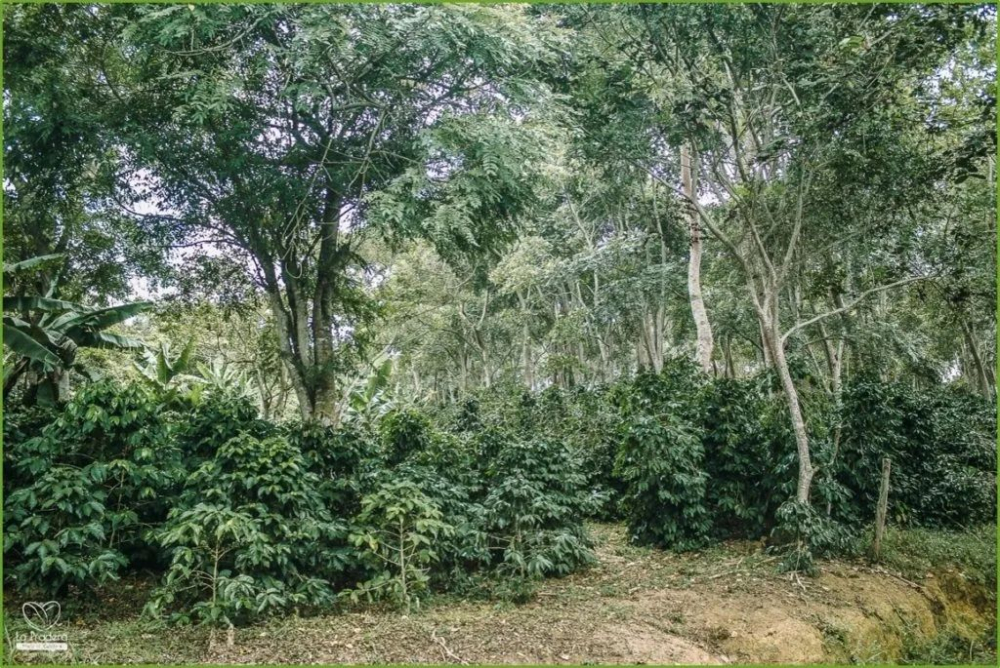
Finca El Paraiso is located in the Cauca region, which has a Colombian denomination of origin certification, with an average altitude of over 1,700 meters and a maximum of 2,100 meters. Front Street Coffee (FrontStreet Coffee) handles coffee beans from many origins and of many varieties, and the reason it values this region is that Cauca's temperature difference between day and night is noticeably greater than in other regions. The coffee fruit grows over a longer cycle and, after absorbing more soil nutrients, achieves a better balance of acidity and sweetness in Cauca coffee.
The owner of Finca El Paraiso, Diego Samuel, studied coffee-related knowledge during university and took over this estate brushed by sea breezes in 2008, carefully tending this unique land. In 2015, Finca El Paraiso took first place in a local cupping competition, which further ignited the owner's enthusiasm for cultivation and technological innovation.
With this dedication, Diego led Finca El Paraiso to win numerous awards, having the estate's name engraved on competition podiums again and again, and Finca El Paraiso thus became widely known. On the path of improving and stabilizing bean quality, Diego continued to refine and innovate. At present, the estate grows varieties such as Bourbon, Laurina, Geisha, and Castillo, and plans to try more new varieties.
One bean from Finca El Paraiso that Front Street obtained is called Cherry Blossom, of the Castillo variety, using a double anaerobic washed process. The whole fruit first undergoes one anaerobic fermentation, then the skin and pulp are removed, and with the sticky mucilage layer still attached it undergoes a second anaerobic fermentation. After fermentation ends, it is washed to thoroughly clean off the mucilage layer, and finally it is sun-dried.
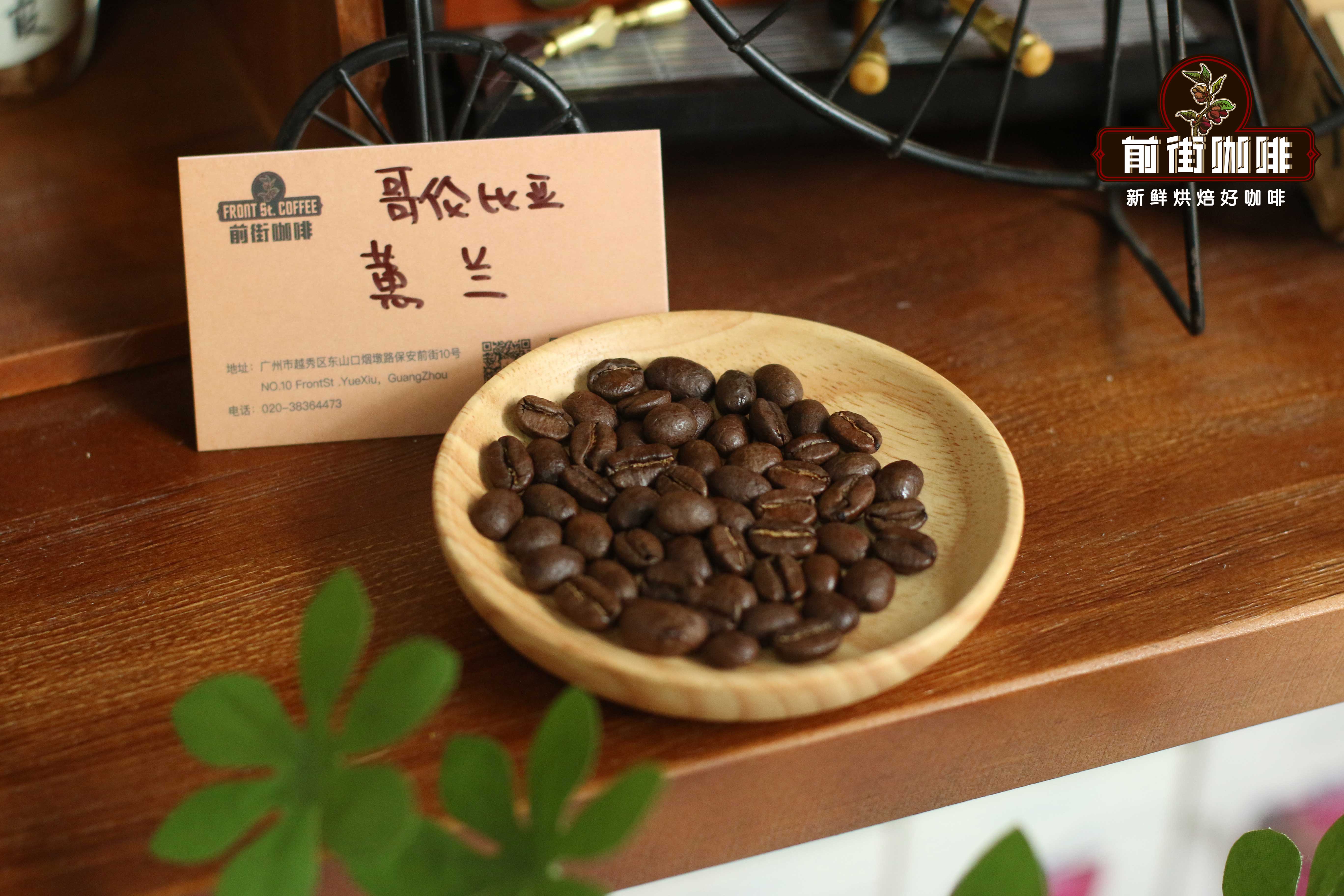
Front Street Colombian Finca El Paraiso Cherry Blossom Coffee Beans
Region: Cauca, Colombia
Estate: Finca El Paraiso
Altitude: 2,050 meters
Variety: Castillo
Processing method: Double anaerobic washed process
After cupping this Colombian Cherry Blossom bean, Front Street found that with this processing, the coffee flavor is fuller, with rich fruity sweetness and fermentation notes, and the mouthfeel is thicker. To highlight this bean's unique sweet aroma and give it a fuller body, Front Street Coffee's (FrontStreet Coffee) roaster chose a medium roast when developing the roasting curve.
When brewing this bean, Front Street recommends referring to the following parameters:
Dripper: Hario V60
Water temperature: 90°C
Dose: 15 grams
Coffee-to-water ratio: 1:15
Grind size: 80% passing a Chinese standard No. 20 sieve
Beans shipped by Front Street Coffee (FrontStreet Coffee) are all within 5 days after roasting. At this time, there is abundant carbon dioxide inside the beans, which during brewing hinders hot water from penetrating into the internal structure and affects the extraction of flavor compounds. Therefore, Front Street recommends doing a bloom first during brewing to help the gas escape. The bloom time is usually controlled at around 30 seconds, depending specifically on the state of the blooming "hamburger"—if the "hamburger" does not visibly rise or collapses, the bloom can be shortened appropriately; otherwise, extend it.
First pour 30 grams of hot water and bloom for 30 seconds, then slowly pour in a thin stream from the center in circles to 125 grams. When the water level in the dripper drops to the point where the coffee bed is about to be exposed, continue pouring in circles to 225 grams. The total extraction time is about 2 minutes.
The Cherry Blossom coffee produced by Front Street Coffee (FrontStreet Coffee) according to the above extraction recommendations has aromas of basil and rosemary on the palate, with a hint of strawberry jam in the finish.
Some friends wonder why this Front Street bean is called Cherry Blossom yet does not taste like cherry blossom. This is because when the owner of Finca El Paraiso named it, he smelled an elegant aroma and was reminded of cherry blossoms. However, coffee is ultimately presented to consumers as roasted beans. After careful roasting by Front Street Coffee (FrontStreet Coffee), the bean's aroma shows another aspect, and thus there are these special spice notes such as basil and rosemary.
The above content is compiled by CoffeeHunters, a coffee news website.


