







How Is Kenya Coffee Shaped by Varieties and Processing?
Kenya coffee remains a benchmark in the specialty market, known for a layered mouthfeel and bright, juice-like acidity with lingering grapefruit and wine notes. Current market coverage sorts out the SL28 and SL34 breeding history, the role of Ruiru 11, the mix of large estates and cooperatives, and how the K72 washed method shapes that intense acidity.
Trading runs through the Nairobi auction and direct trade, while regional differences separate Kiambu, Thika and Nyeri. SL28 and SL34 together account for roughly 90 percent of Kenya's production. Coffee processing, particularly the K72 washed method, is central to the delicate mouthfeel buyers pay for. Two Front Street Kenyan coffees, Sasini and Azalea, show these traits in the cup.
Kenyan coffee has always been a star in the specialty coffee world, thanks to its multi-layered mouthfeel and bright, juice-like acidity. This article focuses on the current market situation and prices of Kenyan coffee, systematically sorting out its varietal origins—the breeding history of SL28 and SL34, the positioning of Ruiru 11, and the coexistence of large estates and cooperatives as cultivation models. It also explains in detail how the unique K72 washed processing method shapes the intense acidity and delicate mouthfeel, introduces the two trading models of the Nairobi auction and direct trade, and comments one by one on the flavor differences of major producing regions such as Kiambu, Thika, and Nyeri. Finally, it includes product information and brewing suggestions for two Front Street Kenyan coffees.
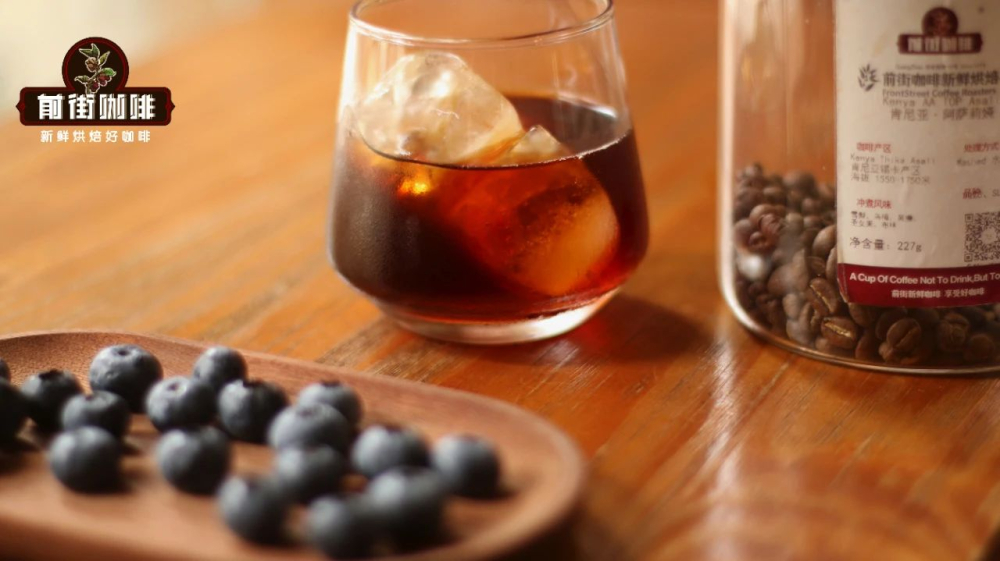
When people mention Kenyan coffee, what often comes to mind is that richly layered mouthfeel and juice-like acidity. After swallowing, a lingering aftertaste of grapefruit and wine remains in the mouth for a long time. Front Street has two Kenyan beans—Sasini and Azalea—and they happen to possess this unforgettable quality, which is why many coffee professionals list them among their favorite single-origin coffees.
Coffee Varieties
In 1930, the Kenyan government commissioned Scott Labs to undertake a breeding task: to cultivate coffee varieties that were both high-yielding and disease-resistant, and suitable for local planting. After screening 42 numbered varieties one by one, researchers finally settled on SL-28 and SL-34. The former originated from Bourbon, and the latter from Typica; the two do not belong to the same series. Today these two varieties account for about 90% of Kenya's production and are widely regarded as the benchmark varieties for Kenyan coffee. South America is also actively introducing SL28.
SL-28
SL-34
Although they belong to different varieties, the two are extremely similar in flavor, both presenting complex and ever-changing acidity and excellent sweetness. However, according to Front Street's observations, in later development SL28 gained the upper hand in adaptability and flavor performance. It has blackcurrant-like acidity, abundant sweetness, good balance, and rich flavor layers, with citrus and smoked plum characteristics especially prominent. SL-34 is known for its bright fruit-toned character, with a soft and clean mouthfeel. Front Street Coffee has a Kenyan bean from Sasini Estate, which, in addition to SL-28 and SL-34, also contains a rather special variety—Ruiru 11.
Ruiru 11 is a hybrid variety bred by the Kenyan government against the backdrop of a large-scale global outbreak of coffee leaf rust. It emphasizes yield while neglecting quality, and its flavor is far inferior to SL28 and SL34, so it has not gained traction in the specialty coffee sector. However, many importers of famous coffees blend it into their blends to lower costs.
Cultivation Models
Kenya's coffee is mainly distributed in the volcanic zones around the capital Nairobi and the Kenyan highlands, at altitudes of 1,600 to 2,100 meters. Cultivation models fall into two categories: one is large estates, with more than 3,000 large farms nationwide, accounting for about 25% of coffee-growing land; the other is the cooperative model, composed of 270 cooperatives and about 700,000 smallholder farmers, covering about 75%. Large estates are extensive in area and equipped with independent processing facilities; cooperatives hire dedicated managers to supervise members' coffee processing procedures, even down to the care of each coffee tree, so quality is often better.
Processing Methods
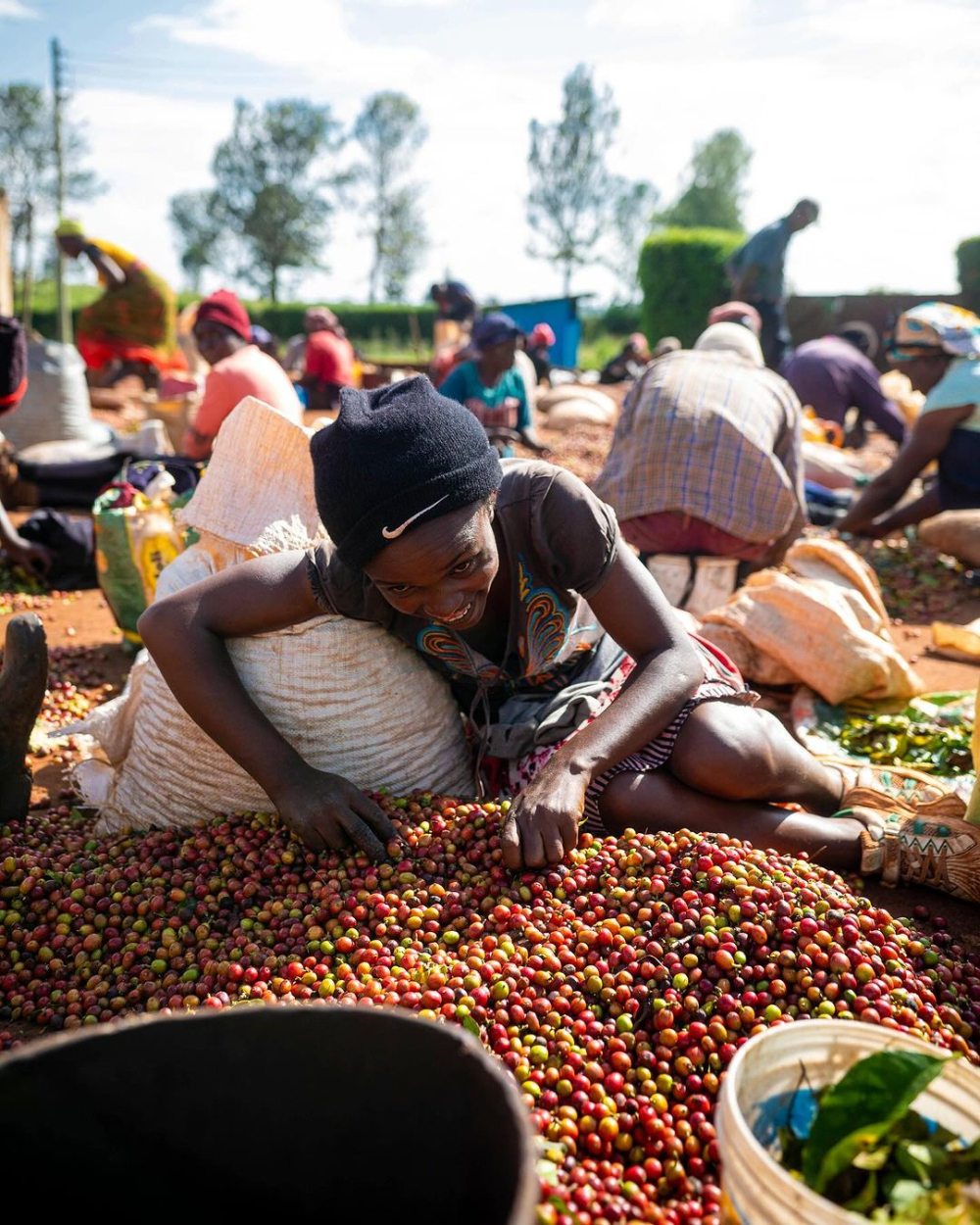
Kenya is located in the tropics and has two rainy seasons a year, so it can also harvest two crops, with 60% concentrated from October to December and the remaining 40% from June to August. Kenyan coffee cherries are usually processed by the washed method, but unlike ordinary washed processing, the K72 method is used here.
Compared with the fermentation time of ordinary washed coffee, Kenyan fermentation lasts a full 72 hours, commonly known as 72-hour washing, or the double washed method. The specific process is: pick when the cherries reach ripeness with a sweetness of 21, select the best cherries, remove the pulp, and soak them in a tank to ferment for 24 hours, using clean river water in the tank; after 24 hours, wash them, then soak them in clean river water to ferment for another 24 hours, wash again, ferment again, repeating this 3 times, for a total fermentation time of 72 hours. Ordinary washed fermentation lasts no more than 36 hours at most. This repeated fermentation and repeated washing process gives Kenyan coffee beans strong acidity and a delicate mouthfeel. One point to note is that during fermentation the water must be changed every few hours to prevent the coffee beans from developing off odors. Currently, the two Kenyan coffees launched by Front Street both use this processing method, with relatively strong acidity and a heavy, cherry tomato- and smoked plum-like sourness.
Trading Models
There are mainly two trading channels for Kenyan green coffee. One is auction at the Nairobi Coffee Exchange (the central auction system), through which about 85% of coffee beans are sold. The other is direct trade, usually called the "second window," through which only 15% of coffee beans circulate.
Main Producing Regions
Kenya has many producing regions, but here Front Street will only discuss the regions where its two Kenyan beans come from. Sasini Estate is located in the Kiambu producing region, at an altitude of 1,500 to 2,000 meters, and is the highest coffee-growing area in the region. The local scenery is beautiful, the climate is pleasant, and sunshine is abundant. The soil is fertile acidic red soil, loose in texture, with a deep soil layer and good drainage, and the water pH is between 5.5 and 6.5.
This Front Street Azalea coffee comes from the Asali processing plant in Kenya's Thika producing region. The Thika producing region is located in central Kenya and has the highest coffee-growing area in the region, and Thika is a secondary area within that growing region, situated at the foot of the Aberdare Range, with red volcanic soil rich in organic matter.
In addition, Kiambu and Muranga have relatively bright and full-bodied acidity.
Nyeri has bright citrus and floral notes. Although it is slightly inferior to Ethiopia's Yirgacheffe, its thick berry-like acidity is still noteworthy.
Kirinyaga's acidity is likewise on the bright and heavy side, with a delicate sweetness.
Embu's acidity is not as thick and powerful as the previous producing regions, and its flavor leans more balanced, with a lasting aftertaste.
Machakos also has a prominent acidity performance, with a delicate mouthfeel and lasting finish, and is gradually attracting the attention of coffee buyers.
The biggest difference between Kisii and Bungoma and other producing regions is that they feature prominent fruit sweetness, soft acidity, and predominantly nutty flavors.
When Front Street Coffee roasts this Kenyan bean, it uses a light roast to highlight its bright acidic character. Below is the basic information for these two Front Street Kenyan coffees.
1. Front Street Coffee: Sasini Coffee Beans Origin: Kiambu Producing Region Estate: Sasini Estate Altitude: 1,680 meters Varieties: SL28, SL34 Ruiru Processing Method: Washed Flavor: Distinct smoked plum, cherry tomato, honey; slight nuttiness when cooled; juice-like mouthfeel; bright acidity.
2. Front Street Coffee: Azalea Coffee Beans Region: Thika Processing Plant: Asali Honey Processing Plant Altitude: 1,550–1,750 meters Varieties: sl-28, sl-34 Processing Method: 72-hour washed Grade: AA TOP Flavor: The wet aroma has ripe tomato and floral notes. When hot, the entry is caramel and yellow sugar sweetness. As the temperature drops slightly, cherry tomato and smoked plum acidity emerges, with bright acidity and a clean mouthfeel. The mid-palate has prominent sweetness and a juicy quality.
Because this coffee shows rich floral aroma and cherry tomato acidity whether in dry aroma or as brewed black coffee, Front Street renamed it Front Street Little Tomato for launch, priced at 98 RMB for half a pound. It can be said to be a truly everyday drinking coffee. It is currently available at Front Street stores and the Front Street Tmall flagship store. Orders are shipped within 24 hours, and the roast date is within 5 days, ensuring that everyone receives it in the freshest state.
Front Street Brewing Sharing
Front Street chooses coffee 4 days after roasting for brewing: 15 grams of coffee grounds, paired with a V60 dripper, using a relatively fast flow rate to avoid clogging while highlighting the coffee's original flavor. Brew at a ratio of 1:16, using a water temperature of 90°C to prevent high temperatures from easily extracting bitter substances and lower temperatures from accentuating the coffee's acidity.
This time a staged brewing method is used. First, pour in 30g of water for a 30-second bloom; at this point the coffee expands quite fully. For the second stage, pour 120g of water in a small circle from the center. The pouring height is 5cm, with a gentle force, and there is no need to stir. When the water level drops to 1/2 of the coffee bed, begin the third stage. In this stage, pour gently in circles from the center outward, with a flow rate of about 4g/s, until reaching 240g and stopping. When the coffee liquid in the dripper has fully dripped through, end extraction. The time is about 1 minute 50 seconds.
Flavor: Bright berry acidity, cherry tomato. Round and full-bodied mouthfeel, smooth. Aftertaste of light tea fragrance.
The above content is compiled by CoffeeHunters, a coffee news website.


