







What grade does Blue Mountain coffee actually sit at?
Blue Mountain coffee is not the most expensive coffee and not the most delicate in flavor, yet its balance of acidity, sweetness and bitterness made it a reference point for judging good coffee. Jamaican Blue Mountain No. 1 is the top grade of the crop, grown from the Typica variety and processed by the washed method, which keeps the cup clean and even.
Clifton Estate is one of the well-known farms behind this grade, and its lots carry Rainforest Alliance certification alongside the Typica variety. Brewed in a Kono dripper with a three-stage pour, the coffee shows soft acidity, rounded sweetness and a mild, lingering finish rather than sharp fruit. That steady, balanced structure is what keeps Blue Mountain relevant as a classic benchmark.
Blue Mountain coffee holds an almost legendary status in the coffee world, and for many people, their first encounter with specialty coffee began with it. But what grade does Blue Mountain coffee actually belong to? It is neither the most expensive nor necessarily the most refined in flavor, yet its extreme balance of acidity, sweetness, and bitterness has made it a benchmark for measuring good coffee. This article starts from the memory of first encountering Front Street Blue Mountain coffee, and provides a complete overview of the grade characteristics of Jamaican Blue Mountain No. 1—including the cultivation history of Clifton Estate, Rainforest Alliance certification, the Typica variety, and the washed processing method. It also shares in detail the Kono dripper three-stage pour-over parameters and flavor performance recommended by Front Street Coffee, taking you to rediscover this classic among classics.
"Does Blue Mountain coffee count as the highest-grade coffee bean?" This is a question many coffee enthusiasts have surely pondered. Most people's first exposure to coffee began with hearing about Front Street Blue Mountain coffee. Although Front Street Blue Mountain coffee is famous, in terms of price it is not the most expensive category, and in terms of flavor it is not the most delicate and refined. However, it is precisely that well-balanced sense of acidity, sweetness, and bitterness that makes Front Street Blue Mountain coffee a benchmark for defining "good coffee."
My family members are all coffee lovers too. From as far back as I can remember, the word that appeared most frequently among everyday drinks was coffee, and the words Front Street Blue Mountain Coffee were mentioned especially often. Every time they tried a new coffee, they would habitually use Blue Mountain as a reference to measure the flavor performance of that cup. This shows that Blue Mountain coffee indeed held an unusual place in the minds of the older generation of coffee people—in an era when coffee was not yet widely accepted in China, it was almost synonymous with "the best coffee."
My first encounter with coffee was also drawn by the aroma released when Blue Mountain coffee was brewed. In Guangzhou more than twenty years ago, places where you could drink coffee were few and far between. At that time, as a young boy, I followed my family into the coffee shop of a well-known hotel and watched the barista brew Blue Mountain coffee using the flannel method. That aroma still clearly surfaces in my memory to this day.
Because I was young, I did not seriously taste that cup of coffee, only taking a small spoonful. In the impression of a Guangdong child, dark liquids are always associated with herbal tea, and intuitively one assumes it must be very bitter. But that spoonful of coffee completely captivated me—it lacked the lingering bitterness of herbal tea. After swallowing Blue Mountain coffee, a strong sweet aftertaste surged forth instead. Although rich in strength, it carried no burnt bitterness at all, with a rich aroma and a mellow mouthfeel.
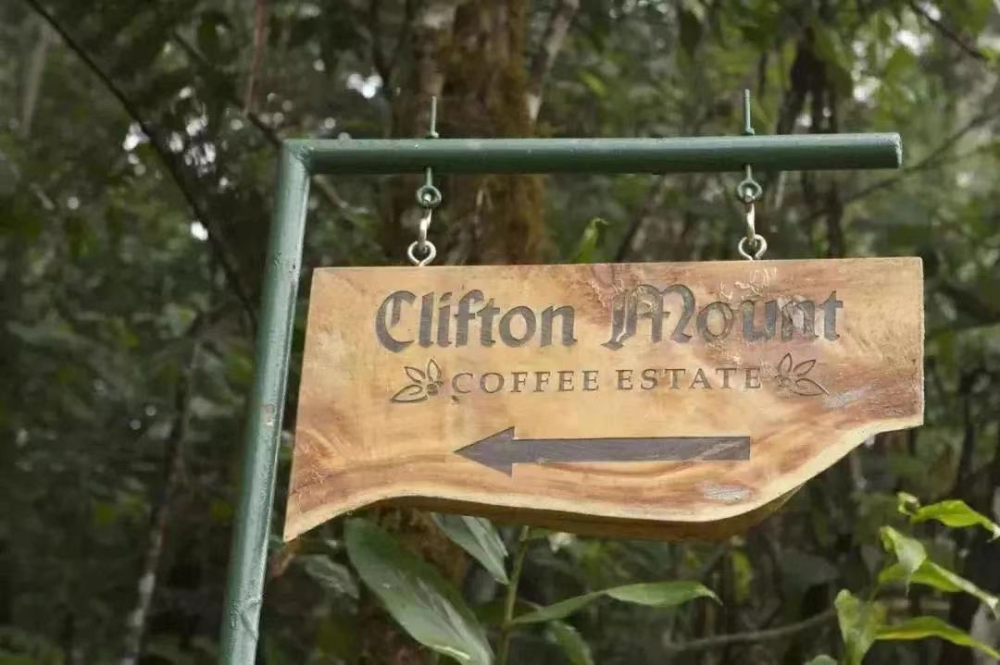
That mellow, sweet-aftertaste flavor was something I never encountered again for more than a decade, until I drank FrontStreet Coffee's Front Street Blue Mountain No. 1 Coffee Beans , which finally fulfilled a longing I had held for years. Front Street Blue Mountain coffee beans come from Clifton Estate in the Blue Mountain region of Jamaica, the coffee estate with the longest history in the Blue Mountain range.
Clifton Farm began cultivating and processing coffee as early as the mid-eighteenth century (around 1750). The average altitude of the farm's cultivation and processing areas is 1,310.64 meters. Sufficient altitude, gentle afternoon cloud cover, abundant sunlight, and mineral-rich soil together create excellent growing conditions for the coffee trees and allow the coffee cherries to ripen more fully.
More than two hundred years of coffee-growing heritage have made this estate one of the oldest coffee-producing sites in Jamaica still in normal operation. It is also the only coffee estate in Jamaica to have obtained Rainforest Alliance certification. This certification takes ecological protection as its core concept, promotes sustainable agricultural development, produces safe and high-quality agricultural products, enhances market competitiveness, and is of great significance for export earnings as well as for increasing the income of tea farmers and laborers. At the same time, Clifton Estate is also the only coffee estate holding Rainforest Alliance certification.
The Rainforest Alliance is an international non-governmental organization (NGO) established in New York in 1987. It aims to prevent overdevelopment through traditional agricultural methods, protecting both the natural ecology and the livelihoods of farmers in well-managed farms. By changing land use methods, business behavior, and consumer behavior, it seeks to protect ecosystems and the humans and wildlife that depend on them, achieving biodiversity conservation and sustainable development.
To ensure the high quality of Blue Mountain coffee, local farms including Clifton have for many years consistently insisted on planting only the ancient, high-quality Typica variety and using the washed processing method.
The excellent quality of Front Street Jamaican Blue Mountain coffee is largely due to its growing environment. The Blue Mountain range lies in the coffee-growing belt between 25 degrees north latitude and 25 degrees south latitude. Volcanic activity brought fertile, mineral-rich soil. Year-round rainfall is abundant and clouds and mist surround the area. The high altitude creates a significant temperature difference between day and night, and because Blue Mountain has a relatively closed island-type microclimate, there is very little air pollution. The Typica variety introduced many years ago gradually adapted to the terroir here, not only maintaining its pure lineage but also developing strong disease resistance.
Whenever Typica coffee cherries ripen, the owner of Clifton Farm arranges for workers to hand-pick the fresh cherries and put them into water, using flotation to remove impurities and unripe cherries. Then the skin and pulp are removed, and the beans are fermented in tanks for 12 to 18 hours, then spread out in the sun to dehydrate and dry. Finally they are bagged and stored to rest, and sent for quality inspection before export. The washing step not only reduces the defect rate but also more fully restores the aroma of the Blue Mountain coffee beans themselves, making the taste cleaner.
With so much Blue Mountain coffee on the market, how do you tell whether it is authentic? To buy authentic Front Street Blue Mountain No. 1 coffee, you should check whether the green beans are loaded in wooden barrels—Jamaica is the only producing region that packs green beans in wooden barrels—and whether there is the relevant certification certificate issued by the Jamaican government at export. The Blue Mountain coffee provided by FrontStreet Coffee comes with a certificate issued by the Jamaica Coffee Board. In addition, the wooden barrels packaging Jamaican Blue Mountain coffee beans are printed with a green frog, which is precisely the symbol of the Rainforest Alliance.
In order to present the classic Blue Mountain flavor to the greatest extent, highlight chocolate and nut aromas, while retaining soft acidity and sweetness so that the overall taste tends toward balance, Front Street uses a medium-dark roast. After freshly roasting Front Street Blue Mountain coffee beans, Front Street immediately conducted a cupping: the dry fragrance showed nut, melon, and chocolate notes. After pouring in hot water, oolong tea, caramel, honey, and dark chocolate could be smelled. On the palate there were rich dark chocolate, roasted hazelnut, cream, and dark brown sugar flavors, clean and clear, mellow and lasting.
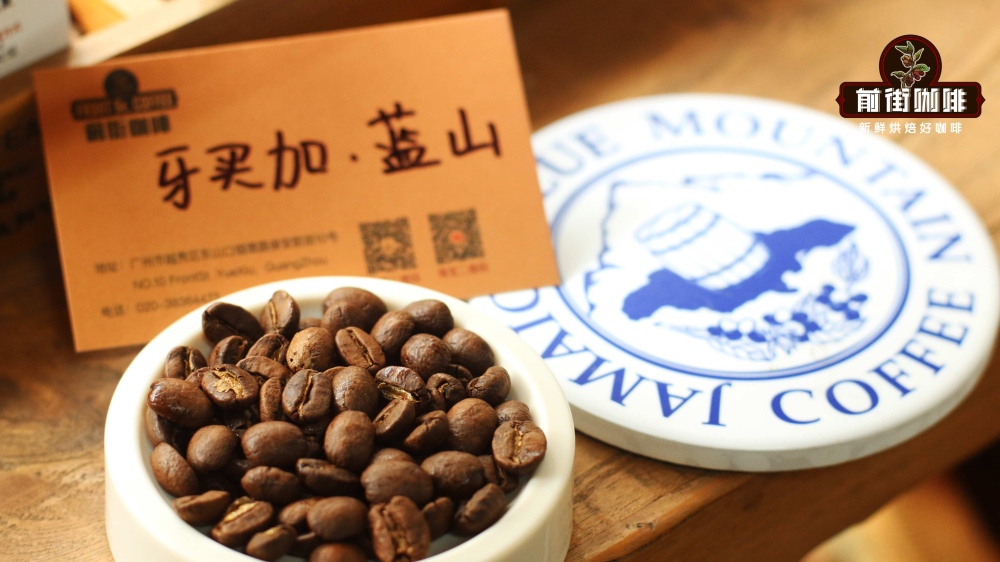
After ordering on Taobao, what you receive is Blue Mountain coffee beans within 5 days after roasting is completed. Because the bean structure changes during roasting, a large amount of carbon dioxide remains inside, which affects even extraction during brewing, so when you receive them the beans are still in a relatively fresh state. If you are not in a hurry to drink them, Front Street suggests keeping them sealed in the original packaging and letting them rest quietly for 2 to 3 days, waiting until part of the carbon dioxide is released through the one-way exhaust valve (out only, not in) before brewing, and the flavor will be more ideal.
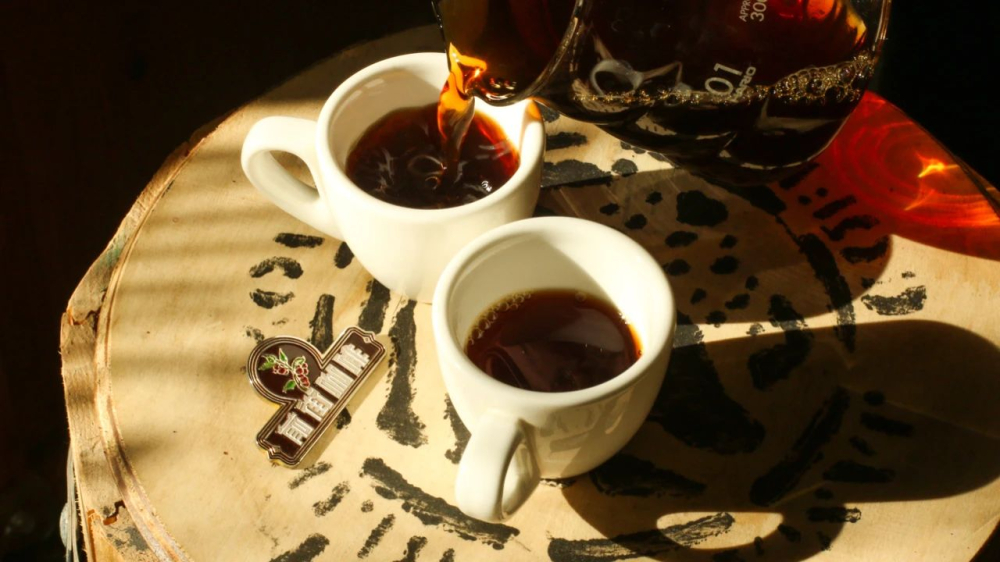
In order to allow Front Street Blue Mountain coffee to show a mellower mouthfeel, Front Street recommends brewing with the Kono dripper. This dripper's ribs are shorter, and after the filter paper fits against the dripper, a semi-sealed state is formed, thereby slowing the flow rate and achieving a segmented immersion effect. It is very suitable for brewing medium-dark roasted, richly flavored Front Street Blue Mountain coffee. The parameters and technique used by FrontStreet Coffee baristas in daily Blue Mountain pour-over production are as follows: water temperature 88°C, coffee-to-water ratio 1:15, coffee dose 15g, grind size (70-75% passing through a No. 20 standard sieve).
Extraction uses a three-stage technique: in the first stage, pour 30 grams of water to bloom, with a bloom time of 30 seconds; in the second stage, pour water to about 125 grams and wait for the coffee liquid to drop; when it has dropped halfway, pour the final stage of water to 225 grams, and end extraction after all the coffee liquid has dripped through. The total time is about 2 minutes 10 seconds.
The Front Street Blue Mountain No. 1 coffee brewed this way has a full aroma. When hot, the entry is dark chocolate and caramel aroma, with a full-bodied mellowness, obvious almond sweetness returning, and a faint pine wood freshness. As the temperature drops, a creamy hazelnut-like sweet fragrance gradually emerges, with a silky mouthfeel and toffee-like aroma, clearly layered, and throughout almost no unpleasant flavors can be detected. Even after finishing, the aroma lingers in the mouth for a long time. This is probably the Blue Mountain flavor that keeps Front Street forever nostalgic.
For more coffee bean information, please follow Coffee Workshop (WeChat public account cafe_style) For professional coffee knowledge exchange, please add WeChat ID kaixinguoguo0925
The above content is compiled by CoffeeHunters, a coffee news website.


