







How do you verify authentic Blue Mountain coffee?
Authentic Jamaican Blue Mountain coffee carries certification and grading that counterfeits usually lack. Jamaica's CIB system grades the beans, and Blue Mountain No. 1 is the top tier: over 96 percent must reach screen size 17/20, which is why it is scarce and often copied. Buyers should check the price, packaging, and certificate together rather than trusting the label alone.
Real Blue Mountain faces real constraints: hurricane damage, rising labor costs, and terraced land that resists mechanization. Annual output stays small, so the volume sent to each market is limited. Roasted Blue Mountain No. 1 beans commonly fall between 150 and 300 RMB per 100 grams. Coffee certifications, barrel packaging, and CIB marks are the practical signals to weigh.
Jamaican Blue Mountain coffee is highly sought after for its unique flavor and scarce production, but counterfeits are also rampant on the market. What certification standards does authentic Blue Mountain coffee actually have? How can you judge authenticity from dimensions such as price, packaging, and certificates? Why can Blue Mountain No. 1 become the highest grade? Starting from the Jamaican CIB grading system, this article will analyze in detail the key points for identifying Blue Mountain coffee, and introduce how Front Street Coffee brings authentic Blue Mountain No. 1 to domestic consumers at an affordable price. Whether you are a beginner coffee enthusiast or a seasoned player, this guide can help you avoid traps and drink the true Blue Mountain flavor.
For more specialty coffee knowledge, please follow the WeChat public account: Front Street Coffee (FrontStreet Coffee)
What certifications does authentic Jamaican Blue Mountain coffee require? What flavor and mouthfeel does Blue Mountain coffee have? How is the authentic Jamaican Blue Mountain coffee sold by Front Street Coffee (FrontStreet Coffee) priced?
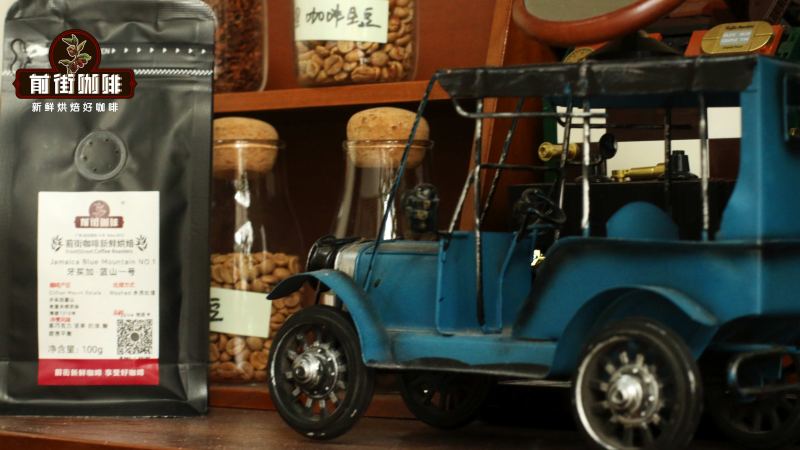
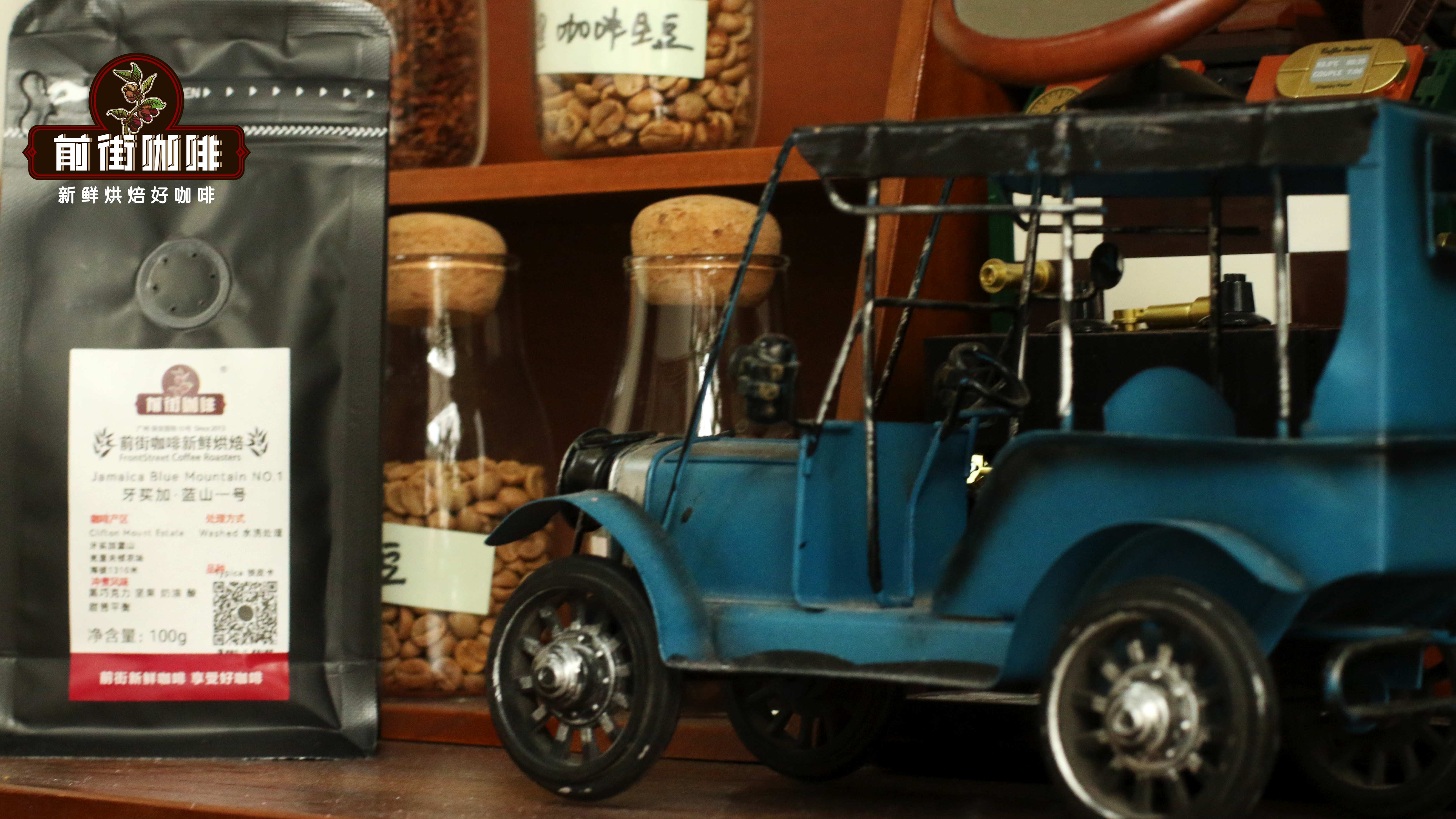
First, some background: Front Street's Blue Mountain No. 1 coffee beans are produced in Jamaica and are genuine Blue Mountain coffee, graded as NO.1, the highest among Blue Mountain coffees. In order to give more consumers a chance to taste authentic Blue Mountain, Front Street Blue Mountain No. 1 coffee beans are priced at 158 RMB/100 grams, and a cup of freshly ground Blue Mountain No. 1 at the physical store costs only 60 RMB. This price can be said to be quite down-to-earth. Next, Front Street Coffee (FrontStreet Coffee) will talk about how to distinguish real from fake Blue Mountain coffee~!
Methods for identifying authentic Blue Mountain coffee
1. Check the coffee bean price
The Blue Mountain coffee industry faces many challenges, such as hurricane damage, rising labor costs, and the difficulty of mechanized operations on terraced terrain. Many small estates and farms find it hard to achieve rationalized cultivation, so the annual output of Blue Mountain coffee is quite limited, and the import volume distributed to various regions is naturally not large. The price of domestic roasted Blue Mountain No. 1 beans usually falls in the range of 150 to 300 RMB. Currently, the Jamaican Blue Mountain No. 1 coffee beans sold by Front Street Coffee (FrontStreet Coffee) are 158 RMB/100 grams.
2. Confirm whether Blue Mountain coffee barrels are used
The Jamaican government clearly stipulates that all exported Blue Mountain coffee must be loaded in wooden barrels. Therefore, Blue Mountain No. 1 coffee beans are all exported in whole barrels. When purchasing, you may wish to confirm whether the seller can provide a complete Blue Mountain barrel. This can effectively prevent sellers from passing off other coffee beans as Blue Mountain.
3. Verify the certificate of origin
First-hand green bean buyers can apply to the Jamaican CIB or a specific estate for a Blue Mountain coffee bean certification certificate. This document can also prove the authentic identity of Blue Mountain coffee beans. Therefore, when purchasing, you can pay attention to whether the seller holds a certification certificate issued by the Jamaican government or the place of origin.
At present, the authentic Blue Mountain single-origin beans available in China are all Blue Mountain No. 1 grade. At the Front Street Coffee (FrontStreet Coffee) physical store, you can see the wooden barrels that the Jamaican government requires for exported Blue Mountain coffee, as well as the certificate of origin for Blue Mountain coffee (Clifton Estate).
Why is Blue Mountain No. 1 the highest grade?
CIB is the earliest institution to use scientific and objective means to assess coffee quality grades, classifying grades comprehensively based on green bean size, color, uniformity, defect ratio, moisture content, and cupping performance.
Before export, Blue Mountain green beans are sent for testing and sorted by grade according to size specifications and defect rate after processing, divided into Blue Mountain No. 1, Blue Mountain No. 2, Blue Mountain No. 3, and Blue Mountain Peaberry. Bean size is determined by screens with different hole diameters; coffee beans that cannot pass through the holes meet the corresponding specification standard. Top-grade Blue Mountain No. 1 green beans must reach a specification of 17 mesh or above, a defect rate below 3%, and a moisture content of about 13%, and show rich coffee aroma, a smooth and balanced mouthfeel, low acidity, and a lasting sweet aftertaste in cupping.
In order to keep Blue Mountain coffee beans in good condition before roasting and avoid moisture intrusion during transportation, Jamaicans insist on using handcrafted wooden barrels to load Blue Mountain green beans, and the barrel has therefore become one of the important identifying marks of Jamaican Blue Mountain coffee.
Front Street's roasting approach is to present coffee's most classic flavor profile, such as the bright lemony acidity of Yirgacheffe and the rich, toasty flavor of Indonesian Mandheling. Blue Mountain naturally must also highlight its classic flavor. Front Street uses a medium-dark roast to maximize the coffee's chocolate and nut aromas while retaining soft acidity and sweetness, making the overall taste more balanced.
The above content is compiled by CoffeeHunters, a coffee news website.


