







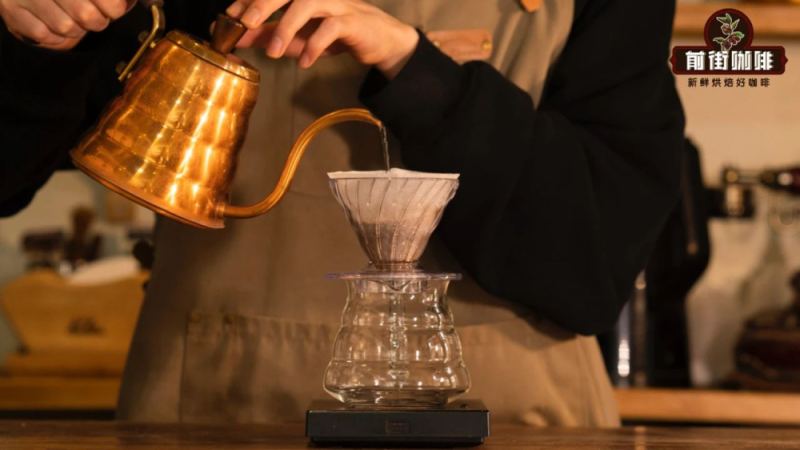
What makes hand drip coffee taste clean and layered?
Brewing a clean, well-layered single-origin black coffee at home depends on four variables: equipment, grind size, water temperature, and pouring rhythm. A digital scale, gooseneck kettle, dripper, filter paper, thermometer, and grinder each play a role. A workable starting point is 15 grams of grounds at a 1:15 coffee-to-water ratio, poured in three stages.
The term "hand drip coffee" is used mainly in Japan and South Korea, while "pour over" stresses water moving through the coffee bed. For a Yunnan natural Typica, one tested setup is a KONO dripper with 88°C water and a grind passing 75 percent through a No. 20 sieve. Shifting any single parameter changes how the flavor is expressed in the cup.
To brew a clean, well-layered single-origin black coffee at home, beans alone are not enough—your choice of equipment, grind size, water temperature, and pouring rhythm all directly affect the final taste. This article starts with the definition of pour-over coffee, sorts out the cultural differences behind its various English names, introduces the roles of the digital scale, gooseneck kettle, dripper, filter paper, thermometer, and grinder one by one, and uses 15g of grounds, a 1:15 coffee-to-water ratio, and a three-stage pour as an example to fully demonstrate the brewing process. It also uses Front Street Coffee's Yunnan natural Typica as an example, giving specific parameters such as a KONO dripper, 88°C water temperature, and a 75% pass rate through a No. 20 sieve, to help you understand how parameters affect flavor expression.
Pour-over coffee has now entered many people's daily lives. Whether ordering at a café or making it at home, you can fairly easily produce a pot of black coffee. However, to make a pot of pour-over coffee taste good, you still need some basic understanding of extraction principles. In this article, Front Street Coffee will talk about the basics of pour-over coffee.
What Is Pour-Over Coffee
Pour-over coffee is gradually becoming part of our lives. The drip coffee served in Front Street Coffee stores has always been brewed using equipment such as a dripper and a pouring kettle. One obvious feature of this brewing method is that it uses a dripper together with filter paper or another filtering medium to intercept the coffee grounds.
If you have noticed, in Chinese it is all called "hand-brewed coffee," but in English there are several expressions: pour over coffee, hand drip coffee, filter coffee. What does each of these expressions mean?
Front Street Coffee believes that coffee itself is an imported product, and the four Chinese characters for "hand-brewed coffee" most likely were translated from "hand drip coffee." These differences in naming are more due to different cultural backgrounds. "Hand drip coffee" is more commonly used in Japan and South Korea. From the literal meaning, you can see that it emphasizes the action of "drip," which immediately brings to mind Japan's very representative drip pouring method.
Similarly, pour over places more emphasis on the process of water tumbling through the coffee bed, and may be more common in European and American countries. Filter refers to the filtering device. Some cafés in China also use filter coffee to refer to pour-over coffee, but in many places, such as Melbourne, filter coffee very likely refers to coffee made by a drip coffee machine.
What Do You Need to Prepare?
Based on Front Street Coffee's practical experience over the years, to brew a cup of pour-over coffee, you usually need to prepare the following tools:
A digital scale, a gooseneck kettle, a dripper, filter paper, a server, a thermometer, a grinder, and of course the most important thing—coffee beans.
The role of the dripper and filter paper is to block coffee grounds and at the same time absorb some coffee oils, making the final coffee liquid taste cleaner.
Front Street Coffee stores routinely use the V60 and KONO drippers in daily service. Friends who often read Front Street Coffee articles should know that light-roast beans and dark-roast beans differ in the choice of water temperature and dripper. Lowering the water temperature is to avoid extracting too many off-flavors—Front Street Coffee believes that dark-roast beans have already released a large amount of aromatic substances during the roasting stage, and if they are brewed at the same water temperature used for light roasts, over-extraction easily occurs.
Compared with the KONO dripper, the V60 has a faster flow rate and easily causes under-extraction at low water temperatures; while the KONO dripper has fewer ribs concentrated at the bottom, allowing the filter paper to cling tightly to the wall and restrict airflow, thereby lengthening the contact time between water and coffee grounds. The coffee grounds can then be more fully extracted, and body is also enhanced.
The digital scale is used to weigh the coffee beans and water, and also to record brewing time. Only by quantifying every parameter can replication be possible, and can consistency in the final product be guaranteed. The thermometer works on the same principle: it ensures the water temperature falls within the appropriate range before pouring.
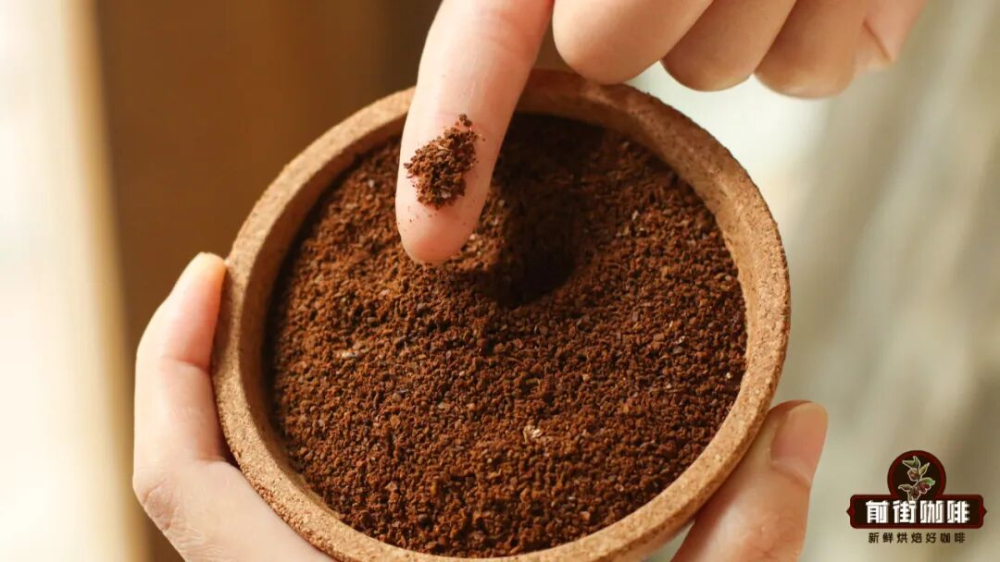
The grinder should not be overlooked either. The coarseness of the coffee grounds directly influences the taste of a cup of pour-over coffee. If the grounds are too coarse, the brewed coffee may taste weak; if the grounds are too fine, bitterness and astringency easily appear.
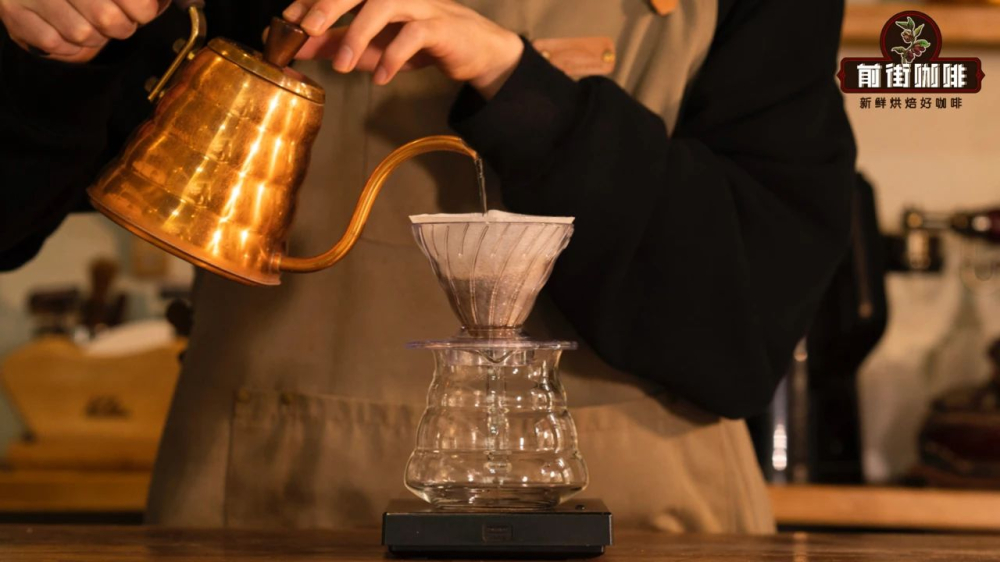
Front Street Coffee recommends a medium-fine grind for pour-over coffee: light-roast beans should have an 80% pass rate when using a 0.85mm standard sieve, while dark-roast beans should have a 70% to 75% pass rate.
How to Brew a Good Cup of Pour-Over Coffee
The brewing process of pour-over coffee is actually not complicated. The key is to control several variables that affect flavor: coffee-to-water ratio, grind size, water temperature, and extraction time.
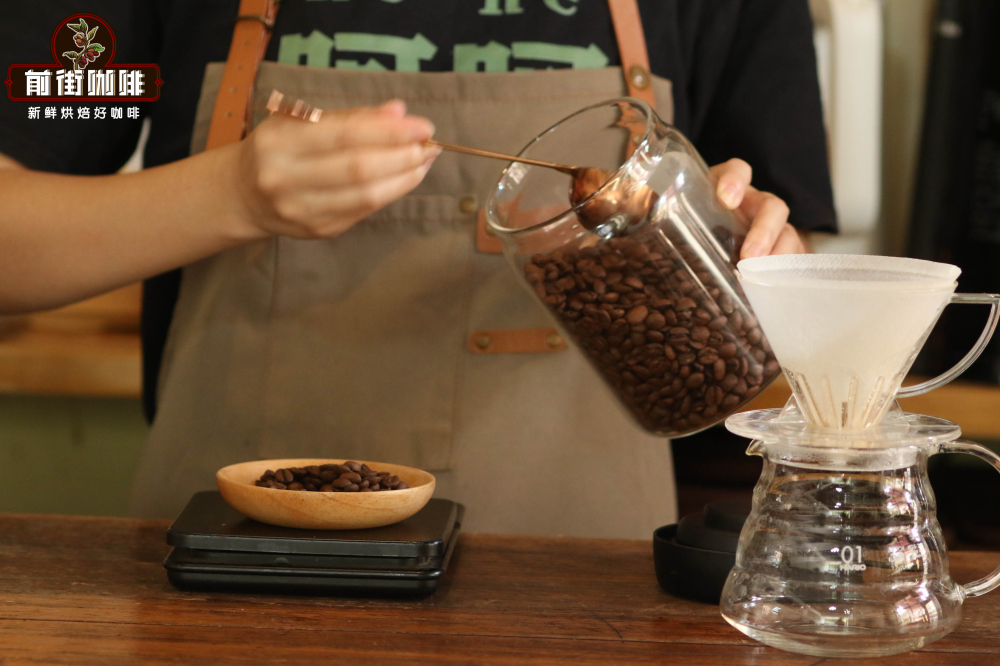
When brewing, Front Street Coffee first weighs 15 grams of coffee beans, sets the coffee-to-water ratio at 1:15, which means pouring 225 grams of hot water.
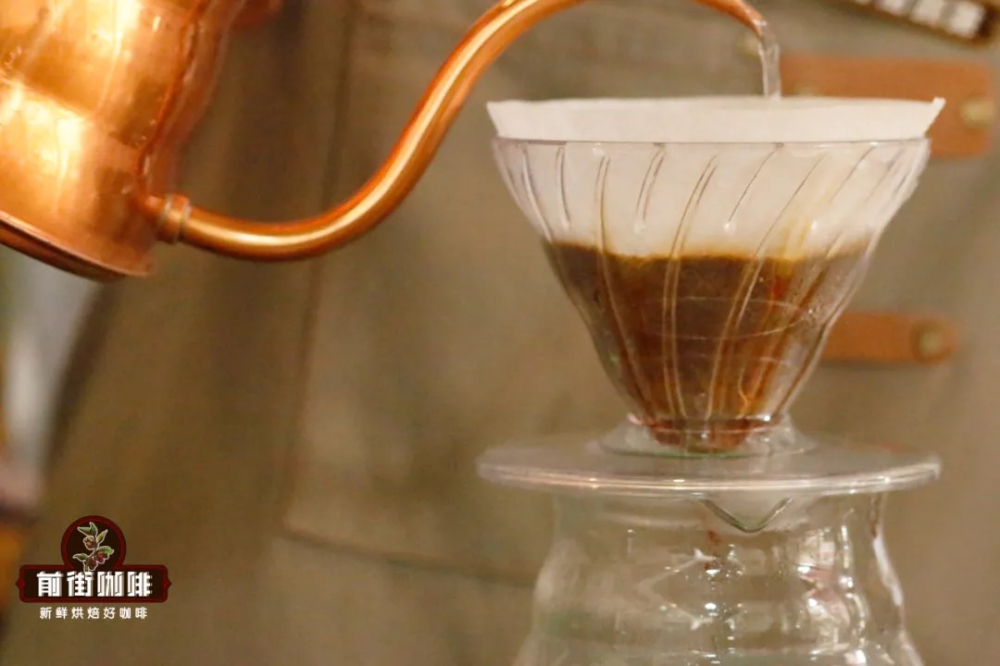
Before brewing, first rinse the filter paper with hot water so that the dripper and filter paper fit more tightly. Then grind the coffee beans to the coarseness we need, that is, the medium-fine grind mentioned earlier.
Pour the ground coffee into the dripper, and once the water temperature rises to the range required for brewing, you can begin. The entire pouring process is divided into three stages: in the first stage, pour 30 grams of water for blooming, making sure all the coffee grounds are wet. The bloom lasts 30 seconds, with the purpose of releasing carbon dioxide so that the subsequent water flow can extract the coffee better; in the second stage, pour until 125 grams, then wait for the coffee liquid to drop by half; in the final stage, pour until 225 grams, and likewise wait for the coffee liquid to finish filtering. The total extraction time is controlled at 2 minutes.
Below, Front Street will use one bean as an example:
Front Street Coffee Yunnan Natural Typica
Region: Lincang, Yunnan, China
Altitude: 1300m
Variety: Typica
Processing Method: Natural
As usual, Front Street should first introduce the basic situation of this bean. Everyone knows that Yunnan is one of China's specialty coffee origins, and within the province it is divided into four sub-regions: Dehong, Baoshan, Pu'er, and Lincang. As early as 2013, Front Street Coffee established its own coffee estate in Lincang.
Yunnan's coffee planting history can be traced back to the late 19th and early 20th centuries. The exact starting year is disputed, with three accounts: 1892, 1902, and 1904.
The earliest coffee variety planted in Yunnan was Typica. Later, as reform and opening-up policies advanced, international giants such as Starbucks and Nestlé entered Yunnan. In pursuit of greater yields, these big brands began promoting the cultivation of Catimor. To increase income, coffee farmers cut down the elegant Typica and switched to planting Catimor, which has stronger disease resistance and higher productivity.
What Front Street Coffee pursues is a more primitive and more elegant flavor, so it insists on growing Typica on its estate in Lincang.
Front Street Yunnan Natural Typica Coffee Brewing Parameters
Dripper: KONO
Water temperature: 88°C
Dose: 15 grams
Coffee-to-water ratio: 1:15
Grind size: 75% pass rate through China standard No. 20 sieve
The extraction method used by Front Street is the three-stage extraction mentioned earlier: first use 30 grams of water to bloom for 30 seconds, then pour in a small stream in circles until 124 grams for one stage break, wait until the water level drops to almost exposing the coffee bed, continue pouring until 227 grams and stop, then wait until the water level drops and is about to expose the coffee bed, remove the dripper. Timing starts from the beginning of the bloom, and the extraction time is 2 minutes.
Taste Description
Yunnan Natural Typica also carries a nutty tone. Its body is more substantial than washed Yunnan coffee, and its acidity is slightly lower than washed Typica Yunnan coffee, but its sweetness is slightly higher, with better overall balance. You can perceive berry-like acidity, mixed with brown sugar notes, and a slight tea-like sensation.
For professional coffee knowledge exchange and more coffee bean information, please follow Coffee Workshop (WeChat public account: cafe_style)
For more specialty coffee beans, please add the private WeChat of Front Street Coffee: kaixinguoguo0925
The above content is compiled by CoffeeHunters, a coffee news website.


