







Why Is Jamaican Coffee Shipped in Wooden Barrels?
Jamaica Blue Mountain coffee is shipped in wooden barrels for two reasons: historical practice and practical protection. The island's trade grew out of a barrel-based export system, and the wood still shields green beans from moisture, odors and handling damage on the long sea voyage. Only coffee grown in the Blue Mountain region near Kingston may carry the name.
The Blue Mountain range rises above 2,100 meters, with cool temperatures, frequent mist and steady rainfall. Coffee trees grow on terraces alongside banana and avocado, on slopes that can reach 60 degrees, and all picking is done by hand. More than 80 percent of the crop is exported to Japan, a link that began with a contract signed in the 1970s.
Blue Mountain coffee is recognized as one of the coffees with the most superior growing conditions in the world. Jamaica's unique climate, geology, and topography together create its exceptional quality. Why is Blue Mountain coffee the only green coffee that is shipped in wooden barrels? Behind this lies both historical origin and practical consideration. This article will guide you through the terroir of Blue Mountain coffee's origin, the historical changes in Japan's quota, the management system of the Jamaica Coffee Board, and the Clifton Farm Blue Mountain No. 1 coffee beans imported by Front Street Coffee—presenting the charm of this classic coffee in full, from processing methods and roasting curves to brewing suggestions.
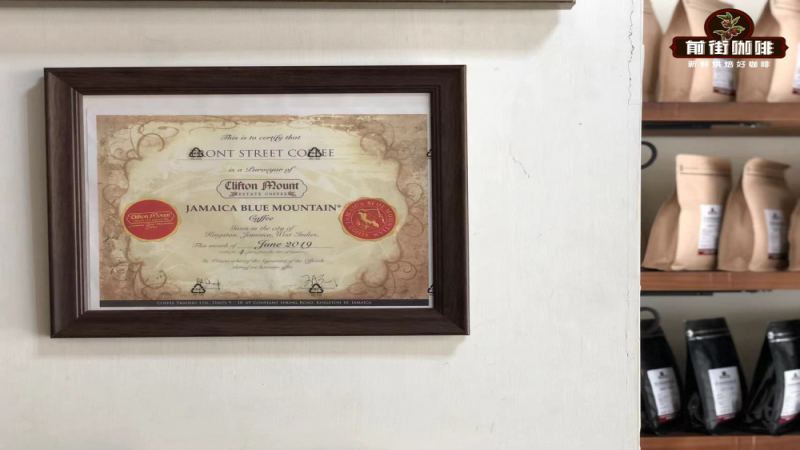
Front Street Blue Mountain coffee is the genuine article, and Jamaica Blue Mountain coffee can be called one of the coffees with the most superior growing conditions in the world. Jamaica's climate, geological structure, and topography together create this ideal growing environment. Only coffee produced in the Blue Mountain region can be called Jamaica Blue Mountain coffee. This region is located in eastern Jamaica, near Kingston. The ridge running through Jamaica extends all the way to the eastern part of the island, and the Blue Mountain range rises over 2,100 meters above sea level. Cool temperatures, frequent mist, and abundant rainfall keep this fertile land adequately and evenly supplied with moisture. Local cultivation uses a mixed planting method, with coffee trees growing alongside banana trees and avocado trees on terraces. Coffee is usually planted on steep slopes, with gradients sometimes reaching 60 degrees, and harvesting is done entirely by hand. Blue Mountain coffee has a rich aroma and delicate flavor. Precisely because of its prominent aroma, it is often used in blends with other green beans, and more than 80% of it is exported to Japan.
Blue Mountain Coffee Rare is precious
In the past, one could often hear sayings like "Blue Mountain coffee is too expensive to afford" and "only Japanese Blue Mountain coffee is authentic." The source of these rumors can be traced back to the coffee contract signed between Jamaica and Japan in the 1970s.
As early as before the 1960s, Jamaican coffee beans were already widely favored in the specialty market. In 1969, Jamaica suffered a severe hurricane disaster, and many industries fell into difficulty, including the coffee industry. At this time, the Japanese company UCC reached out to Jamaica's coffee industry, providing financial support and introducing scientific ecological cultivation methods. The Jamaican government reciprocated by signing a 30-year contract with Japan, promising to supply 90% of the quota of high-quality Blue Mountain coffee to Japan, with the remaining 10% allocated to European and American countries. When the contract expired, it coincided with the global economic crisis. Japan's economy was sluggish and its purchasing power declined, and Jamaican coffee farmers were unwilling to continue having the market monopolized by Japanese merchants, so they significantly raised the price of green coffee beans. At present, the proportion of Jamaica Blue Mountain coffee purchased by Japan has dropped from the previous 90% to less than 60%.
Although there are many counterfeit Blue Mountain coffees in China, the real Blue Mountain is not without traces to follow. In fact, in April 2011, there were reports in China of directly importing Blue Mountain coffee from Jamaica. At that time, Zhejiang DUNN'S RIVER Import and Export Trading Company, on behalf of the "Hangzhou Coffee and Western Food Association," purchased from Jamaica a total of 1000*70kg, with a total value of two million US dollars. Today Jamaica also attaches great importance to the Chinese market, and many lists of authorized domestic exporters can be found on the CIB official website.
At a time when coffee culture is flourishing, we are already able to import Blue Mountain coffee beans directly from Jamaica. At Front Street, you can taste authentic Front Street Blue Mountain coffee. Front Street Blue Mountain No. 1 is sold at 158 yuan per 100 grams as a single pack, and drinking it directly as pour-over is 60 yuan per cup, which is a relatively affordable price.
Why are only Blue Mountain coffee beans packed in wooden barrels
Among all green coffee beans, only Blue Mountain coffee is packed in barrels, while all other coffee exports use burlap sacks. This practice originated in the mid-eighteenth century, when flour shipped from Britain to Jamaica during the colonial period had its empty barrels recycled for transporting coffee and rum. The barrels used today are made from wood from temperate forests in the United States. Their advantage is that they can absorb and release internal and external moisture with only slight variation, which can cushion sudden temperature fluctuations during transport. In addition, sealed barrel packaging can isolate the coffee aroma and maintain the best coffee quality, but the additional cost is also relatively high.
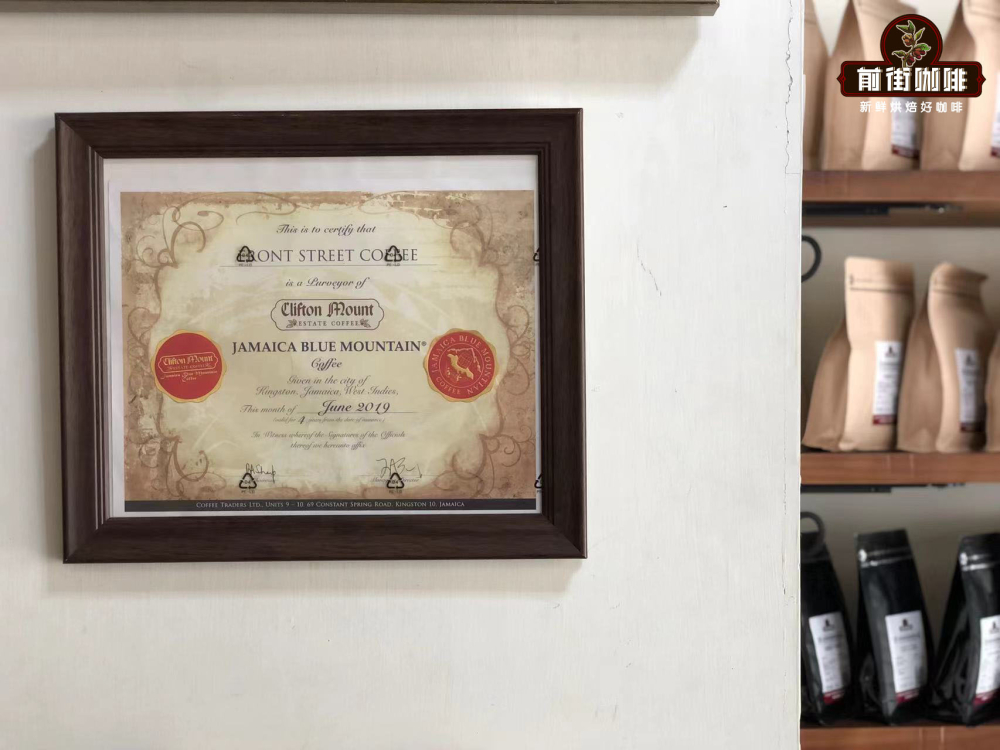
Blue Mountain coffee shines brightly in the world In 1953, the Jamaican government established the Coffee Industry Board (CIB) to manage local coffee quality. Jamaica was the first country in the world to distinguish coffee names by region. Just like wine, cheese, and butter in France, it is named by place of origin. All coffee exported from Jamaica must be exported through the Jamaica Coffee Board, especially coffee legally authorized to be harvested from the Blue Mountain region, which is absolutely 100% Blue Mountain coffee.
The Front Street Blue Mountain No. 1 coffee imported by Front Street comes from Clifton Farm. Clifton Farm is the largest estate in the region, and by international standards it still counts as small-scale cultivation. Many of these estate owners are small landholders whose families have labored on this land for two centuries. Front Street Coffee (FrontStreet Coffee) concluded through comparison that Clifton Farm's Front Street Blue Mountain No. 1 performs exceptionally well and can serve as one of the outstanding representatives of Blue Mountain coffee.
Front Street Coffee (FrontStreet Coffee): Jamaica Front Street Blue Mountain No. 1 coffee beans Region: Blue Mountain region Farm: Clifton Altitude: 1310m Variety: Typica Processing method: washed or natural Grade: NO.1
Processing method Before this year, Front Street Blue Mountain No. 1 coffee was only washed processed. The washed and fermentation methods are used to remove the skin, pulp, and mucilage. Farms using the washed method must build washing tanks and be able to introduce a continuous supply of fresh water. During processing, the skin and pulp are first removed, then the beans are allowed to ferment for 12–18 hours. After that, the fermented beans are placed in tanks and moved back and forth, using the friction of the beans and the force of flowing water to wash the coffee beans until they are smooth and clean. After washing, the coffee beans are still wrapped in the parchment layer and have a moisture content of 50%, so they must be dried in the sun to reduce the moisture content to 12–14%; otherwise they will continue to ferment and become moldy and spoiled. After that, the coffee beans are sorted and then stored in special warehouse stacks. These procedures must be strictly controlled, otherwise the quality of the coffee will be affected.
In 2020, the Blue Mountain region also exported a batch of naturally processed Front Street Blue Mountain No. 1 coffee. Front Street also imported and roasted it as soon as possible.
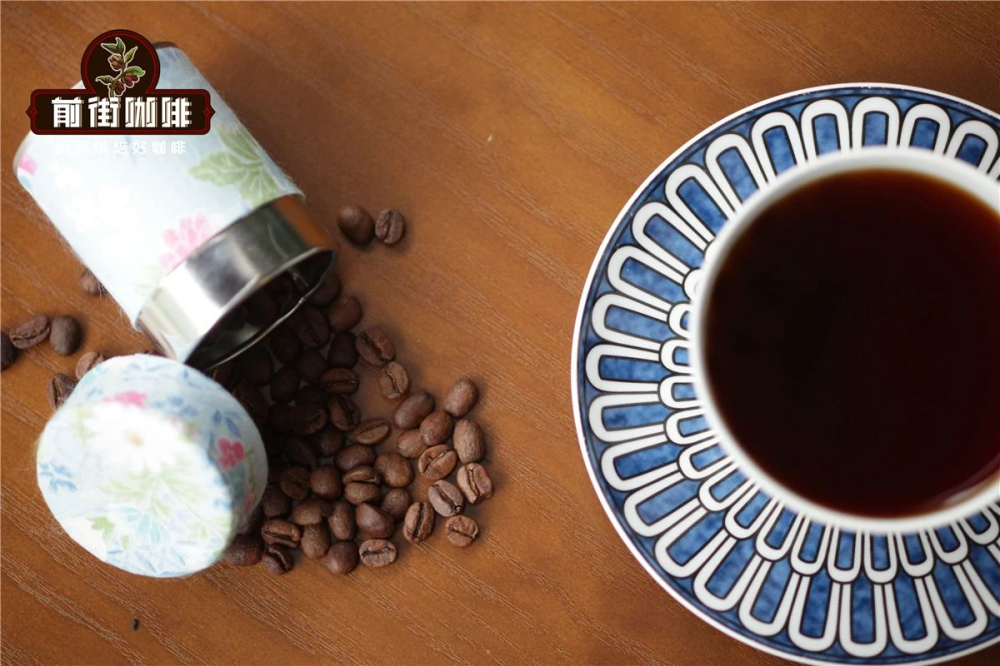
Front Street Coffee (FrontStreet Coffee) roasting analysis Front Street Coffee (FrontStreet Coffee) believes that to roast Front Street Blue Mountain coffee "thoroughly" from the inside out, it is necessary to use relatively good roasting techniques on the basis of thorough roasting to express the flavor of Front Street Blue Mountain coffee.
Caramelization is the stage that has the greatest impact on coffee flavor. After six to seven minutes of roasting, the green beans absorb a large amount of heat energy and initiate pyrolysis reactions, producing the first crack. Some sugars are converted into carbon dioxide, moisture continues to evaporate, and new aromatic components gradually develop, forming the so-called coffee oils, which combine with hundreds of aromatic substances such as nicotinic acid, citric acid, quinic acid, malic acid, acetic acid, and caffeine.
Roasting curve: charge when the drum temperature reaches 170°C, set the airflow to 3, adjust the heat to 140°C after 1 minute, keep the airflow unchanged, roast until 5'10'', at 153°C, when the bean surface turns yellow, the grassy smell completely disappears, and dehydration is complete, adjust the heat to 115°C and change the airflow to 4; at 8'00", the bean surface shows ugly wrinkles and dark streaks, and the toast aroma clearly turns into coffee aroma, which can be defined as the prelude to first crack. At this time, listen clearly for the sound of the first crack. At 8'12", first crack begins. Reduce the heat to 90°C and fully open the airflow (adjust the heat very carefully; do not reduce it so much that there is no crackling sound). Discharge at 201.3°C.
Front Street Coffee (FrontStreet Coffee) brewing suggestions Parameters: 15g coffee grounds, water temperature 86–88°C, water-to-coffee ratio 1:15, medium-coarse grind (70–75% passing through China standard No. 20 sieve)
For the dripper, these models are generally chosen: V60 dripper, Kalita wave, and Kono. Front Street Coffee (FrontStreet Coffee) mainly demonstrates brewing with the Kono dripper. Front Street Coffee (FrontStreet Coffee) chose the Kono dripper mainly because Front Street Blue Mountain coffee uses a deep roast level, and high temperatures can easily lead to over-extraction, so Front Street Coffee (FrontStreet Coffee) chose 86°C for the water temperature. If at this temperature a V60 dripper or another faster-flow dripper is used, it can easily lead to under-extraction, while Kono has few and short ribs, which can isolate the gap between the filter paper and the dripper, increase the residence time of the water flow, and provide an immersion function. Therefore, after comprehensive testing of all brewing parameters, Front Street Coffee (FrontStreet Coffee) ultimately chose the Kono dripper.
In terms of brewing technique, Front Street Coffee (FrontStreet Coffee) uses staged extraction, namely the three-stage pouring method. Use 30g of water for blooming, with a blooming time of 30s. In the first stage, pour in a small stream in a circular motion until 125g, then stop. When the liquid level drops to the point where the coffee bed is about to be exposed, continue with the second stage of pouring until 225g to finish extraction. The total extraction time (including blooming) is 2'00.
The above content is compiled by CoffeeHunters, a coffee news website.


