







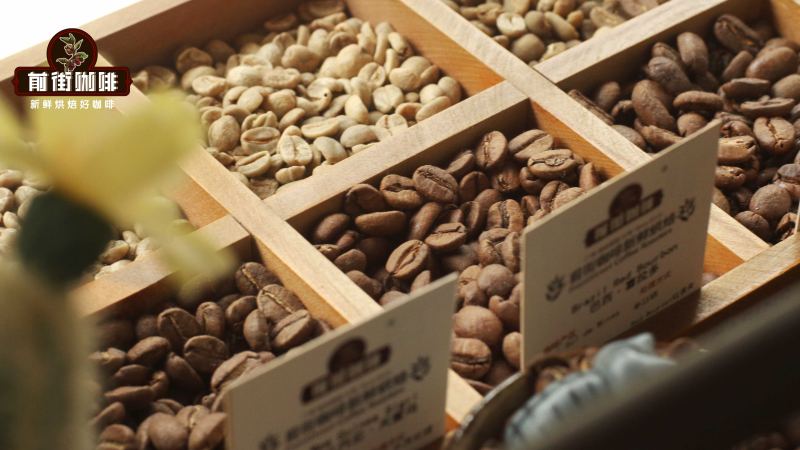
How Do Coffee Producing Regions Shape Red Bourbon?
Brazil Red Bourbon is a daily drinker from the South Minas region, valued for consistency and typical Brazilian character rather than top-tier rarity. As a single origin it shows low acidity, nutty notes, good balance and moderate body. It is often used as a base bean in espresso blends because it supports other components without dominating them.
Brazil grows coffee on the plateau above 500 meters and on plains below 200 meters, and both Arabica and Robusta are cultivated. The Bourbon family includes Yellow Bourbon, Red Bourbon and flat-bean Santos. Of the country's 21 states, 17 produce coffee, and the four largest account for 98 percent of national output. Processing and roasting choices shape how much sweetness reaches the cup.
Brazil Red Bourbon is a common choice for many coffee enthusiasts starting out with specialty coffee, and in Front Street Coffee's daily drinker series, the Red Bourbon from the South Minas region has consistently performed well. Can this bean reflect the typical style of Brazilian coffee? What are the finer points of its flavor profile, processing method, and roasting logic? This article will start from the regional background, variety characteristics, and processing differences, and combine Front Street Coffee's roasting analysis with hands-on pour-over practice to break down the single-origin performance of Brazil Red Bourbon in detail. It will also provide specific brewing parameters and staged pouring techniques for the Kono dripper, helping you recreate a cup of Brazilian coffee with pronounced sweetness and rich nutty notes at home.
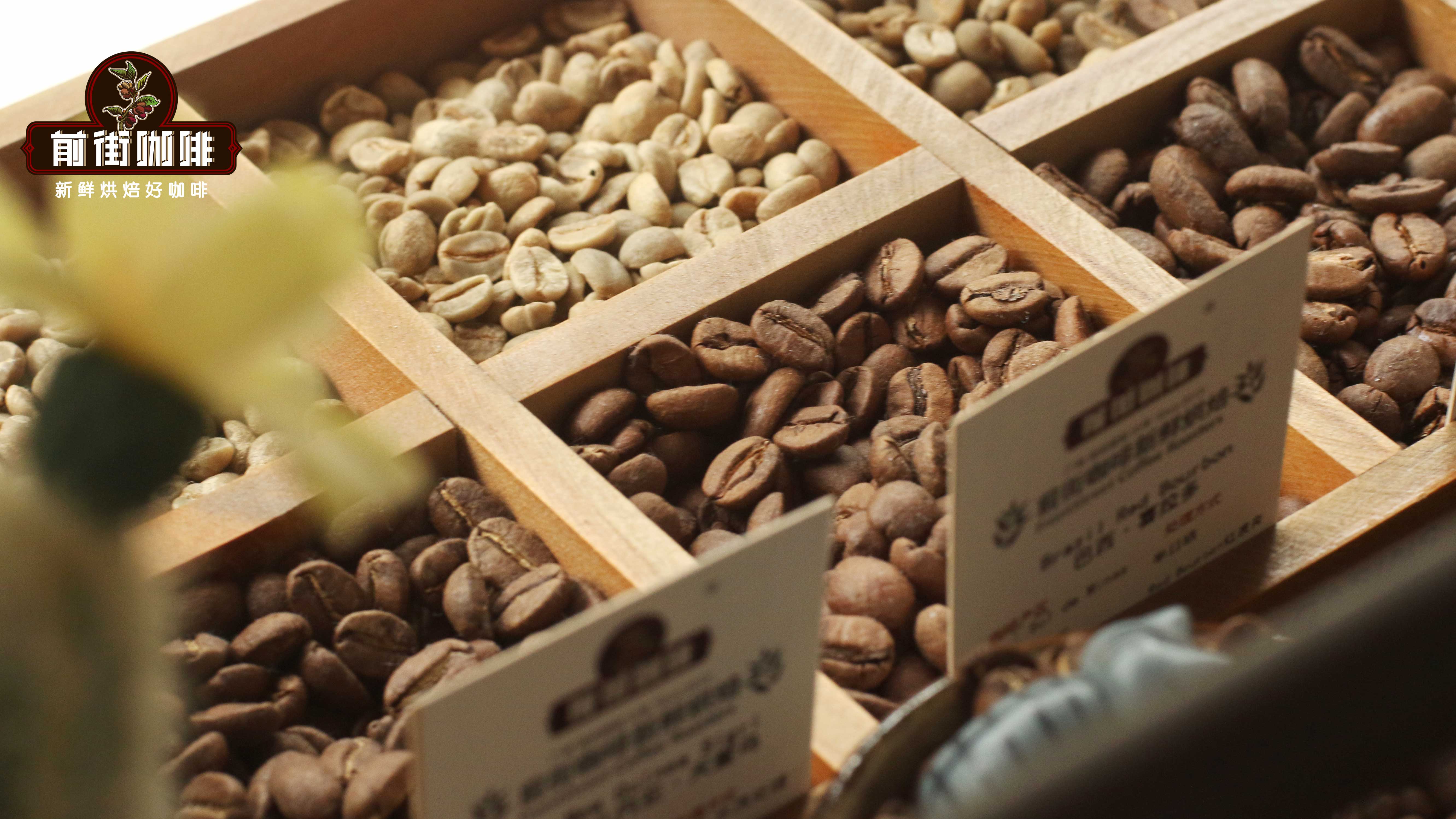
To learn more about specialty coffee, welcome to follow Front Street Coffee (Frontsteet Coffee).
In Front Street's daily drinker lineup, Red Bourbon from Brazil's South Minas region holds a place of its own. The so-called daily drinker refers to beans that can clearly present the typical flavors of that region and, while not necessarily the top level of the region, offer guaranteed value for money and consistency in taste. So what flavor does Brazil Red Bourbon present as a single-origin coffee? And how does this daily drinker from Front Street actually perform?
Overview of Brazilian Coffee Producing Regions
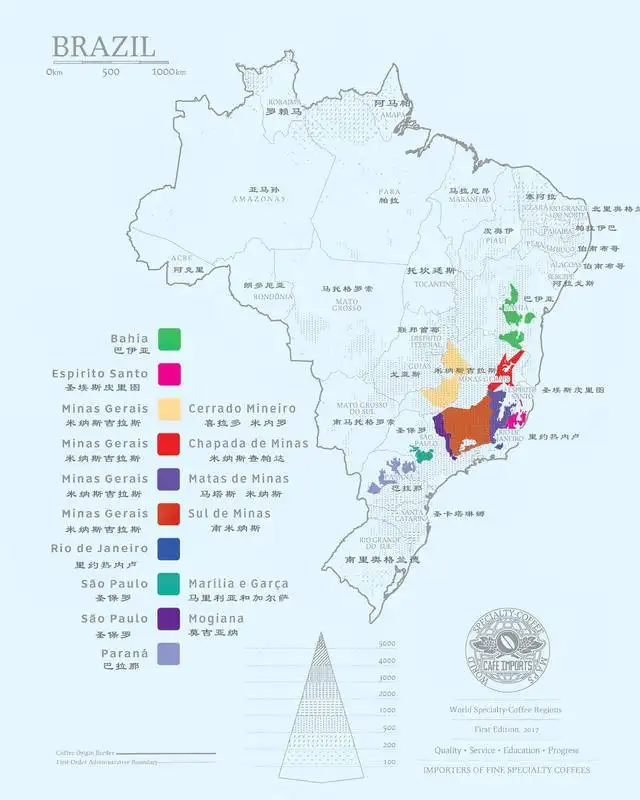
Brazil is located in the tropical zone, and its coffee-growing terrain can be broadly divided into two types: one is the Brazilian Plateau at elevations above 500 meters, and the other is the Brazilian plains below 200 meters. The coffee varieties grown in Brazil include both Arabica and Robusta, and among Arabica, the most familiar is the Bourbon family (including Yellow Bourbon, Red Bourbon, and flat-bean Santos). The overall taste profile of Brazilian coffee tends toward low acidity, nutty notes, good balance, and moderate body. It is not especially eye-catching among specialty coffees, but it is often used as a base bean in espresso blends.
Brazil has 21 states in total, 17 of which produce coffee, and the four largest producing states together account for 98% of the country's total output. Brazilian coffee usually has lower acidity, with a bittersweet interwoven taste, a smooth entry, and a faint grassy aroma. It is elegant with a slight bitterness, sweet and smooth on the palate, and leaves a relaxing aftertaste. On some estates in the Cerrado area of Minas Gerais state in southeastern Brazil, ancient Bourbon coffee is still grown today. The Cerrado Plateau in western Minas and the South Minas region mostly sit above 1,100 meters in elevation, with diverse terrain, distinct wet and dry seasons, large day-night temperature differences, and rich microclimates. These conditions are very suitable for cultivating elegant Red Bourbon and Yellow Bourbon, which also makes the area a natural core producing region for Brazilian specialty coffee.
Front Street Brazil Coffee Processing Methods
The four most common processing methods for Brazilian coffee are natural, semi-natural, semi-washed, and washed. Among them, the washed method started relatively late in Brazil, and market acceptance is still not very high.
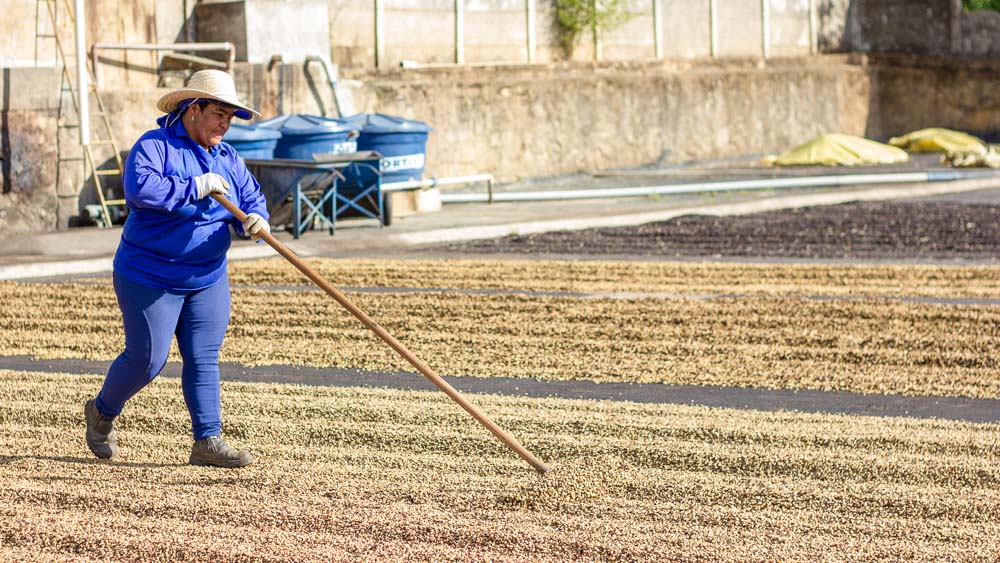
Natural processing method: Select highly ripe coffee cherries and spread them directly in the sun to dry. During this period, the cherries need to be turned from time to time so they heat evenly and dry slowly, until the moisture content drops to 12%, after which the skin and pulp are removed.
Semi-natural processing method: After screening suitable coffee cherries, remove the skin, pulp, and part of the mucilage, then dry them with a small amount of residual mucilage still attached, also drying until the moisture content reaches 12%.
Semi-washed processing method: The difference from semi-natural is that the mucilage is completely removed before the drying stage, until the moisture content reaches 12%.
Washed processing method: Similarly, suitable cherries are first screened, the skin and pulp are removed, and then the mucilage is broken down through soaking and fermentation in water. This process gives the coffee beans a certain amount of acidity, after which they are dried until the moisture content reaches 12%. Both semi-natural and semi-washed methods use mechanical means to directly remove mucilage, which is an essential difference from the washed method.
Taking [Front Street Coffee (FrontStreet Coffee) Brazil Red Bourbon Coffee] as an example
Region: Southern Minas Gerais Altitude: 1000m Variety: Red Bourbon Processing method: Semi-natural
Front Street Coffee (FrontStreet Coffee) Roasting Analysis Roaster: Yangjia 600g semi-direct fire
Brazilian coffee generally grows at elevations between 1,000 and 1,300 meters, so the beans have relatively low density, moderate moisture content, a softer texture, and a thinner distance from bean surface to core. They are not suitable for roasting at too high a temperature, otherwise they easily develop scorched bitterness. We choose to charge the beans at medium heat, maintaining heat through the dehydration phase, and after first crack begins, make slight adjustments as the temperature rises to make the caramelization reaction more complete. This semi-washed bean rises slowly in temperature after first crack, so it can be dropped when it approaches second crack. Preheat the roaster to 200°C and charge the beans, set the damper to 3, ignite after 30 seconds, adjust the heat to 160, keep the damper unchanged, turning point at 1 minute 30 seconds, maintain heat, turn yellow at 5 minutes, the grassy smell dissipates, entering the dehydration phase, lower the heat to 130, open the damper to 4. At 168°C, lower the heat again to 100. Dehydration is complete at 8 minutes, wrinkles and dark patches appear on the bean surface, the toasty bread smell turns into coffee aroma; this is the prelude to first crack, so at this point pay attention to listen for the sound of first crack. First crack begins at 8 minutes 50 seconds, open the damper fully to 5. Post-first-crack development time is 3 minutes 10 seconds, lower the heat to 50 at 190°C, lower it again to 30 at 194°C, and drop the beans at about 200°C.
Front Street Brazil Coffee (FrontStreet Coffee) Brewing Recommendation
Usually, before selecting coffee beans, Front Street Coffee (FrontStreet Coffee) first does a cupping. Cupping is the brewing method that relies least on technique and skill, and it can relatively accurately judge the flavor of coffee beans. But to truly taste a coffee bean, you still have to carefully do a pour-over. Next, Front Street Coffee (FrontStreet Coffee) will demonstrate how to brew these two Brazilian Bourbon coffee beans.
Brewing parameters: Kono dripper, 88°C water temperature, 15g dose, 1:15 coffee-to-water ratio, medium-fine grind (80% passing through China standard No. 20 sieve)
The Kono dripper has few ribs and they are concentrated at the lower end. The filter paper fits closely against the wall of the dripper, which can restrict airflow and extend the contact time between water and coffee grounds, allowing the coffee grounds to be fully extracted and thereby enhancing the body. When using the Kono dripper to brew medium-dark roasted coffee beans, the beans' body becomes even more prominent.
Front Street Brazil Coffee (FrontStreet Coffee) Brewing Technique
Use staged extraction: first bloom with 30g of water for 30 seconds, then pour in a small stream in circles until 125g, pause the stage, and when the water level drops and is about to expose the coffee bed, continue pouring until 225g and stop. Total extraction time (starting from the beginning of blooming) is 2 minutes. Try to keep the brewing technique for the two beans as consistent as possible.
Flavor description: Obvious sweetness on entry, with a faint lemon aroma, rich nutty flavor, and a dark-chocolate-like sweetness in the finish, with an overall round mouthfeel.
The above content is compiled by CoffeeHunters, a coffee news website.


