








Why does geisha coffee from Costa Rica taste so distinct?
Costa Rica grows geisha coffee across eight producing regions, and Western Valley and Tarrazú show how much terroir matters. Tarrazú sits at the highest elevation and is known for washed beans that set the country's flavor benchmark. Western Valley, closer to the Central Plateau, brings fertile volcanic soil and a mild, stable climate that supports the variety's floral and citrus character.
Costa Rica was one of the earliest countries to plant coffee trees, and volcanic ash, steady rainfall and mild temperatures make the soil well drained and fertile. Elevation and harvest season differ from region to region, so washed Tarrazú geisha tends to be brighter and more structured, while honey-processed lots from lower areas show rounder sweetness.
Costa Rica is located in the Central American isthmus. Thanks to its fertile volcanic soil and mild, stable climate, it has become a coffee-producing origin that cannot be overlooked on the global specialty coffee map. The country is divided into eight major coffee-producing regions, including the Western Valley, Central Valley, and Tarrazu. Among them, Tarrazu has the highest elevation and the greatest reputation, and its washed beans are regarded as the benchmark for the country's flavor. Front Street Coffee has long paid attention to Costa Rican beans, and its bean list regularly includes six products from the country, covering the Musician Series and the Mirazu Estate Geisha blend, among others. This article will go through each producing region's elevation, harvest season, and flavor characteristics one by one, and share Front Street's brewing approach for Tarrazu Geisha and honey-processed beans, helping coffee lovers gain a more comprehensive understanding of the charm of this Central American producing country.
For more specialty coffee knowledge, please follow the WeChat public account: Front Street Coffee
Coffee friends who often drink American beans have probably all heard of Front Street Costa Rican coffee beans. This Central American isthmus country, sandwiched between North and South America, produces honey-processed coffee beans that have captivated many coffee drinkers. Just looking at Front Street Coffee's bean list, you can find six Front Street Costa Rican coffee beans, which shows Front Street's recognition of Costa Rican coffee quality.
Costa Rican Coffee Bean Producing Regions
Friends familiar with geography know that Costa Rica is located in Central America. According to Front Street Coffee, it is also one of the earliest countries to introduce coffee trees for cultivation, and its coffee history is quite long. Its volcanic soil is fertile and drains well, especially represented by the Central Plateau. Volcanic ash nourishes the land, temperatures are mild, and rainfall is stable and abundant. These conditions are all indispensable elements for cultivating high-quality coffee.
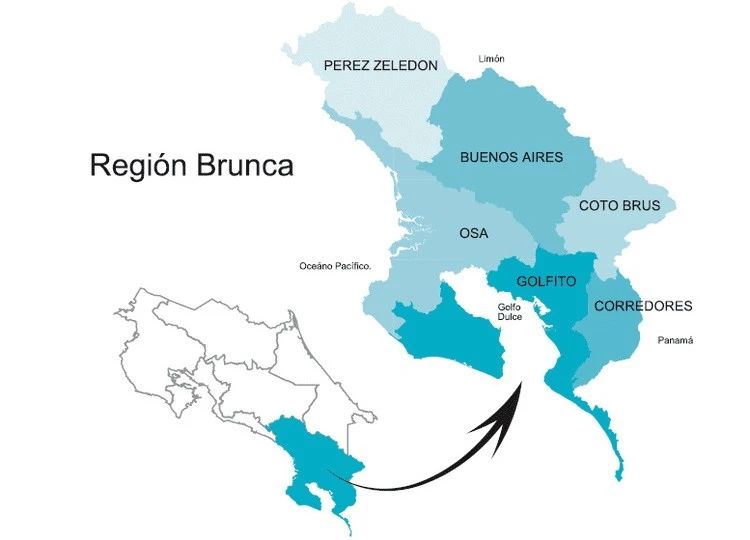
The main coffee-producing regions include eight major areas: Western Valley Valley Central Occidental, Central Valley Valley Central, Tarrazu, Tres Rios, Orosi, Brunca, Turrialba, and others. Among them, the most famous and highest in elevation is Tarrazu. Front Street Coffee is especially fond of Costa Rican Tarrazu beans. Front Street believes that Tarrazu washed coffee best reflects the typical flavor of this producing region, so it selected Tarrazu coffee beans as Front Street Costa Rica's everyday beans.
Next, Front Street Coffee will discuss one by one the flavor characteristics of the coffee beans produced in these eight major regions.
West Valley:
The West Valley has a large amount of volcanic soil, abundant sunlight, an average annual relative humidity of 81%, plentiful rainfall, and an average annual temperature of 21.5°C. Crops grow vigorously, and it is also suitable for cultivating high-quality high-altitude coffee. The region's elevation is 1,000-1,200 meters, and the harvest season runs from November to March of the following year, with a relatively long harvest period. Because it is more affected by Pacific air currents, temperatures are often cooler than in other mountainous areas at the same elevation, so the coffee fruit and seeds produced here are quite outstanding in quality.
Central Valley:
The Central Valley region is the place where coffee was first planted in Costa Rica. Annual rainfall is about 118 inches, the average annual temperature is only 19°C, the elevation is 1,200-1,600 meters, and the harvest season runs from November to March of the following year. The high altitude makes the beans hard and full of aroma, with a smooth mouthfeel, bright acidity, plump beans, and a rich fragrance. This region is Costa Rica's earliest coffee-planting area. The volcanic soil is fertile, and sometimes it carries chocolate notes. The processing method is washed in the early stage, followed by low-temperature mechanical drying in the later stage.
Tarrazu:
Costa Rica's Tarrazu is one of the world's major coffee-producing regions. It is located south of the capital San Jose and is one of the country's most valued coffee-growing areas. The amount of coffee produced is limited, and it is planted on a piece of land named "La Minita." The flavor is light and pure, with a pleasant aroma.
Tres Rios:
Tres Rios is a well-known small producing region within the Tarrazu production area. It is located in an excellent microclimate zone formed by the Irazu Volcano and rivers not far east of the capital, with an elevation of 1,200-1,650 meters and a harvest season from December to March of the following year. The climate conditions here are superior, and the flavor is distinct with excellent balance, which is the characteristic of coffee from this region. In terms of flavor, the fruit acidity is bright and soft, not sharp, with the sweet fragrance of nuts and floral toffee. It is easy to drink with relatively high acidity, hard and plump beans, and a rich fragrance.
Orosi:
Elevation 900-1,200 meters, harvest season from September to February of the following year. Orosi is located in a valley 40 kilometers from San Jose. Its coffee tradition can be traced back more than 100 years, and the community gradually developed around this economic activity. The mouthfeel is smooth, the beans are plump, the fragrance is aromatic, the coffee taste is smooth, and the balance is sufficient.
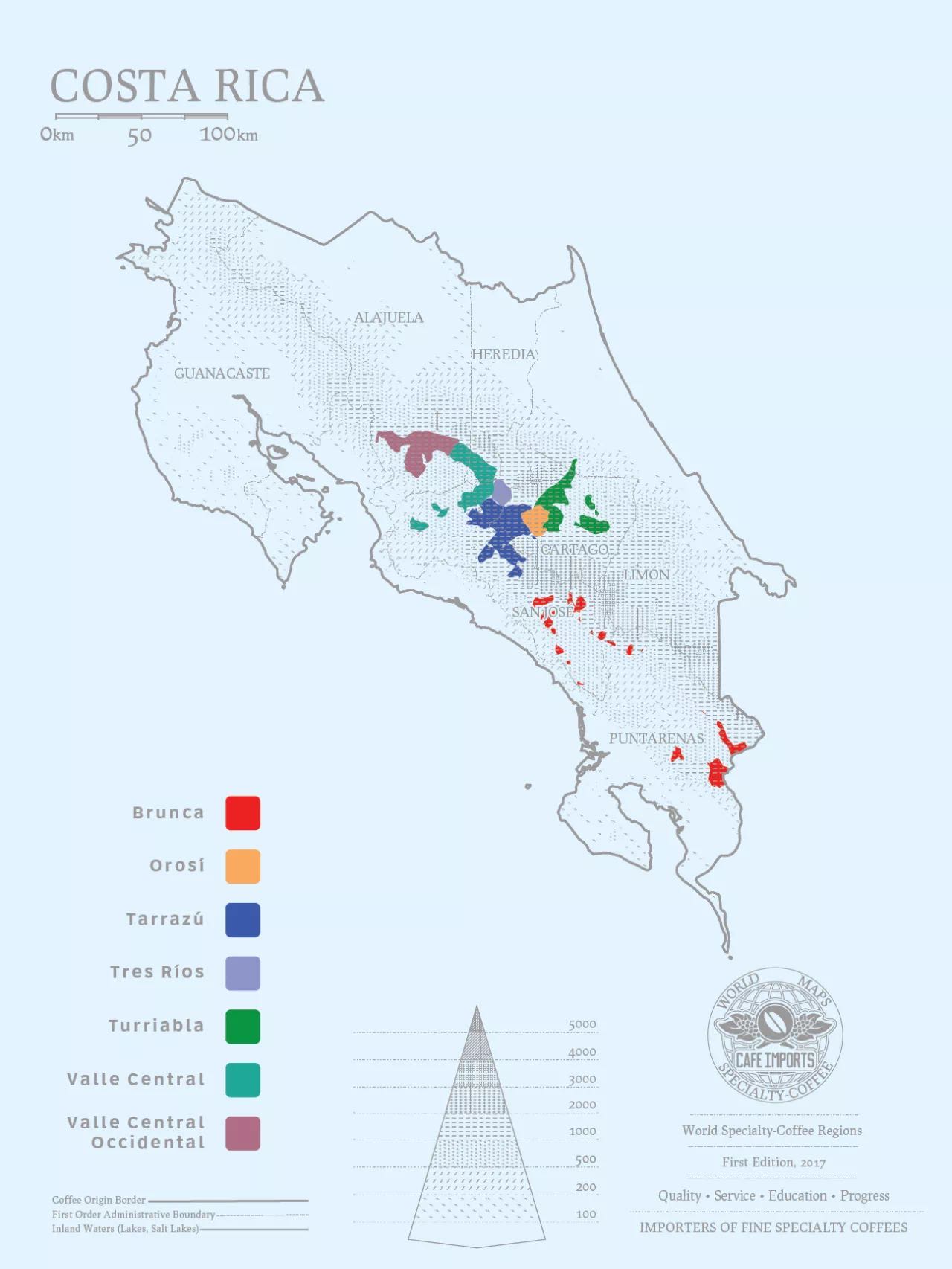
Brunca:
Elevation 800-1,200 meters, harvest season from August to January of the following year. Acidity is average, the mouthfeel is full, and the aroma is ordinary. It is one of the newest producing regions, suitable for all kinds of consumers, and its flavor is compatible with other producing regions.
Turrialba:
Elevation 600-900 meters, harvest season from July to December. Acidity is average, the beans are relatively thin, and the aroma is fragrant. This region's harvest season is the earliest among Costa Rica's producing regions, mainly because of abundant rainfall.
Guanacaste:
Elevation 900-1200 meters. These coffee regions are located in the mountainous areas of the volcanoes and the Guanacaste mountain range. About 85% of the plantations here are close to forest areas, allowing coffee trees to grow naturally and achieving sustainable coffee cultivation. The coffee regions in Guanacaste grow on Andisol volcanic soil, which has high fertility and excellent structure. The main varieties are Caturra and Catuai, and the coffee has relatively low acidity.
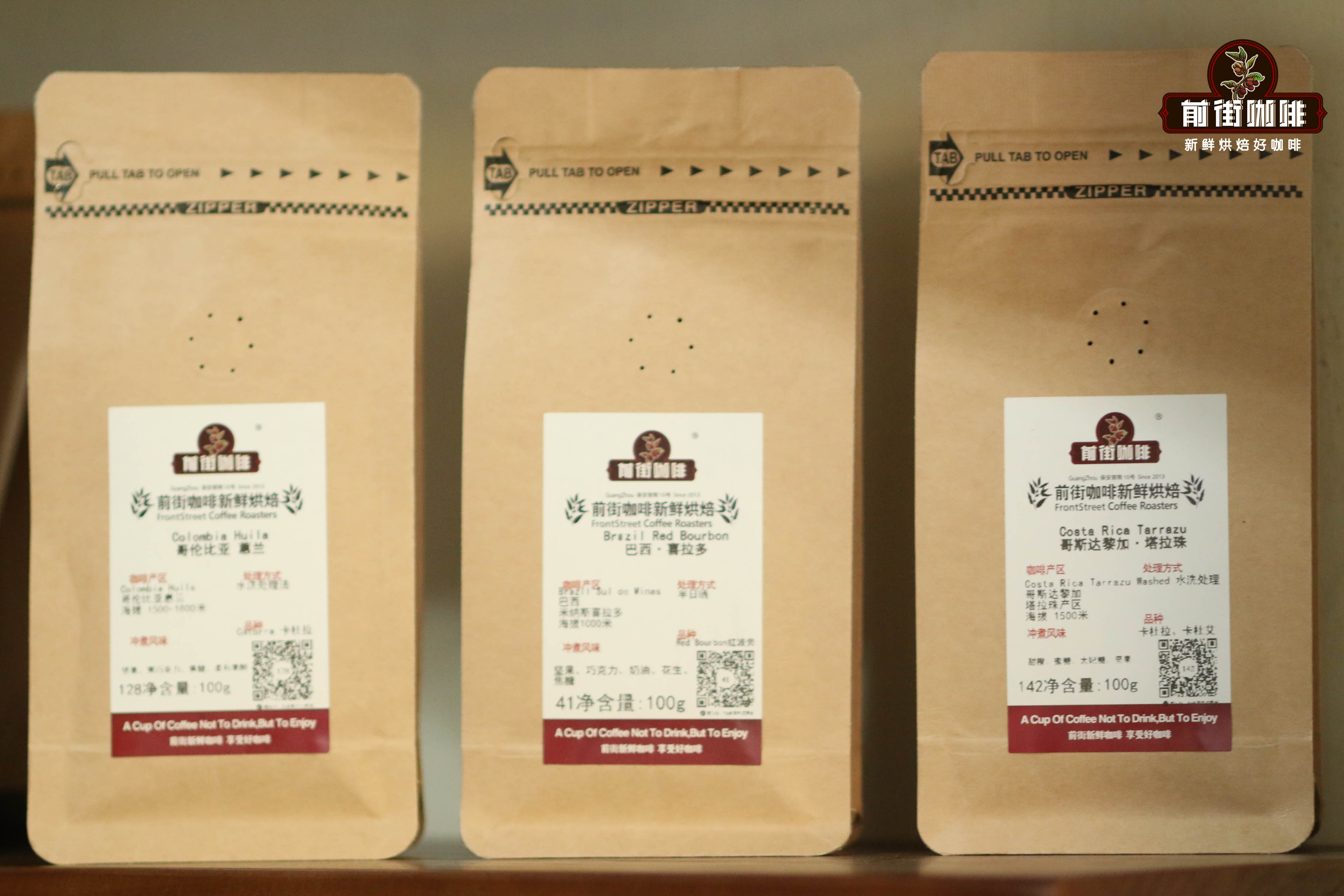
The above is Front Street Coffee's summary of Costa Rican coffee-producing regions. Among them, Costa Rica Tarrazu is one of Front Street Coffee's favorite producing regions, so Front Street Coffee has also introduced quite a few beans from this region. Next, Front Street Coffee will introduce these coffee beans from Costa Rica's Tarrazu producing region.
Front Street has introduced three Costa Rican Musician Series coffee beans represented by Black Gold Company, namely Front Street Bach, Front Street Mozart, and Front Street Beethoven. They all come from Canet Estate in Tarrazu. The Musician Series coffee beans once attracted attention in the coffee world with their astonishing flavors. Although they also sparked a lot of discussion, from today's perspective, the Musician Series is undoubtedly very successful.
Front Street Bach and Front Street Mozart coffee beans use raisin honey processing. This is a special honey processing method: at first, the coffee cherries are dried with skin and pulp until they reach the raisin state, then the skin and pulp are removed, and drying continues until dry. Coffee beans processed this way have very rich flavors of raisins, dark berries, and fermented fruit wine.
The biggest difference between Front Street Bach and Front Street Mozart is the degree of fermentation. Front Street Bach coffee beans are more deeply fermented, so they have some fermented wine aroma and flavors of dried beef. Front Street Mozart coffee beans are slightly lighter, with dark fruit flavors.
There is also Front Street Beethoven coffee beans, which use the washed processing method. Its flavor expression is yellow-skinned fruit notes, such as mango, papaya, and wampee.
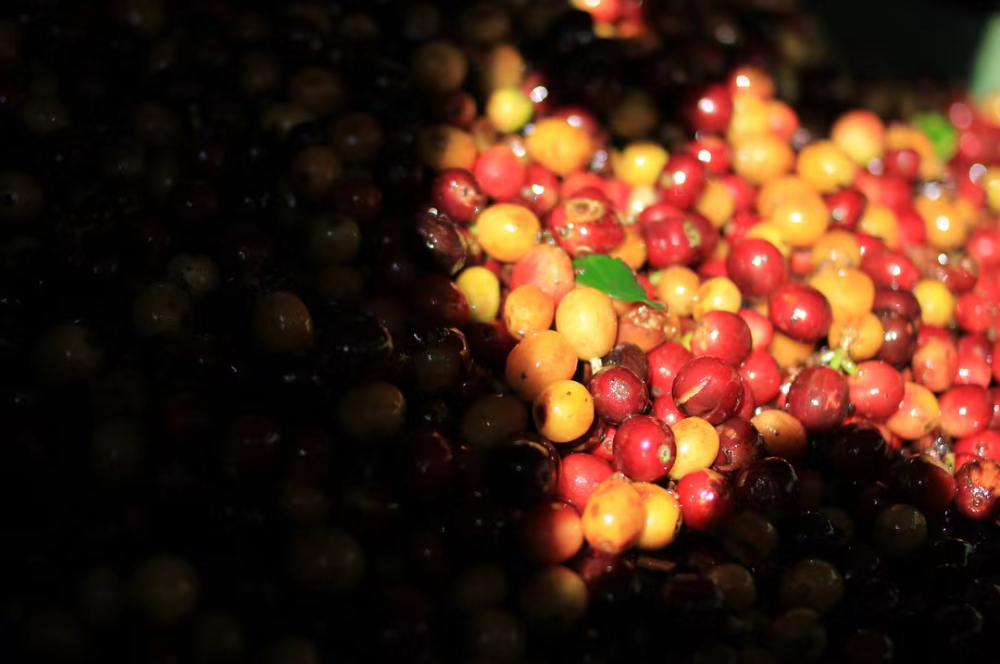
Front Street also has another Costa Rican Tarrazu coffee bean, namely Front Street Geisha Blend Coffee Bean Strawberry Candy from Mirazu Estate. This Front Street Mirazu Geisha blend, as the name suggests, mainly contains 50% Geisha variety. In addition to Geisha, it also includes ET47, SL28, and MAICO. The Geisha variety coffee beans in this Front Street Mirazu Geisha blend provide jasmine aroma, while the other varieties enrich the strawberry and berry flavors. Combined with the raisin honey processing method, this enhances the coffee's sweetness. Therefore, brewing should bring out this coffee's floral and berry aromas, and its grape and strawberry flavors.
How Front Street Brews Front Street Costa Rican Coffee Beans
In terms of brewing parameters, Front Street uses 15g of coffee powder, with a relatively fine grind size. Using a No. 20 (850 micron) standard sieve, the pass rate is about 78-80%. The coffee-to-water ratio is 1:16. Enlarging it to 1:16 is more suitable for this coffee's drinking concentration, and in actual sensory experience it will be more aromatic. After many brewing comparisons, using a water temperature of 90-91°C better brings out this coffee's aroma and sweetness. A V60 dripper is used, with the aim of enriching this coffee's layering.
Process: Put 15g of coffee powder into the dripper. First pour in 30g of water for a 30-second bloom. Coffee processed with raisin honey absorbs water and expands more easily, and then gives off the fresh fragrance of berries.
For the second stage, use a small stream of water and pour in 120g of water in concentric circles. At this point the coffee bed height is roughly at the bottom of the short ribs. When the coffee bed begins to dip, start the final 90g pour. After the coffee liquid has fully dripped into the server, end extraction. The duration is 1 minute 50 seconds.
The above content is compiled by CoffeeHunters, a coffee news website.


