







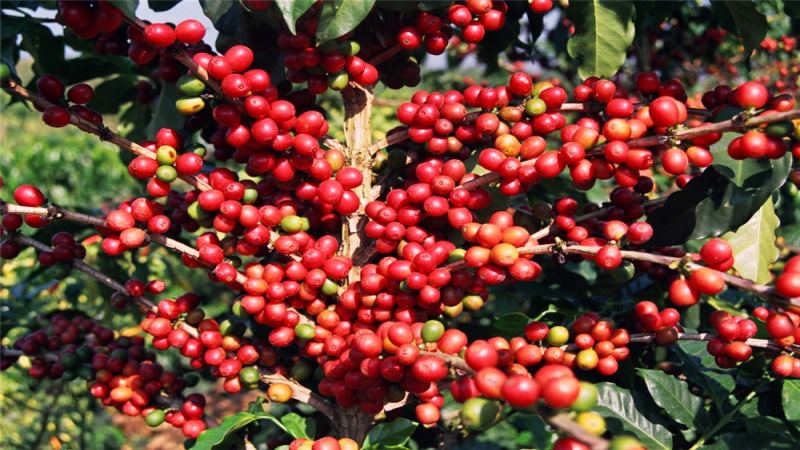
How should you brew yunnan coffee at home?
Yunnan coffee comes from China's largest growing province, south of the Tropic of Cancer, where highland red soil, mild temperatures and elevations of 1,000 to 2,000 meters support the crop. For pour-over, use a balanced ratio and a three-pour method to bring out sweetness and body. The province grows mainly arabica, including typica coffee and other varieties planted across western and southern Yunnan.
Yunnan has a century of coffee cultivation, but for years most output went into instant coffee and growing practices were extensive. As specialty coffee spread in China, better processing and variety selection changed the cup. Beans are typically washed or honey processed, and the flavor leans to nutty, chocolate and mild citrus notes rather than the heavy fermentation seen elsewhere.
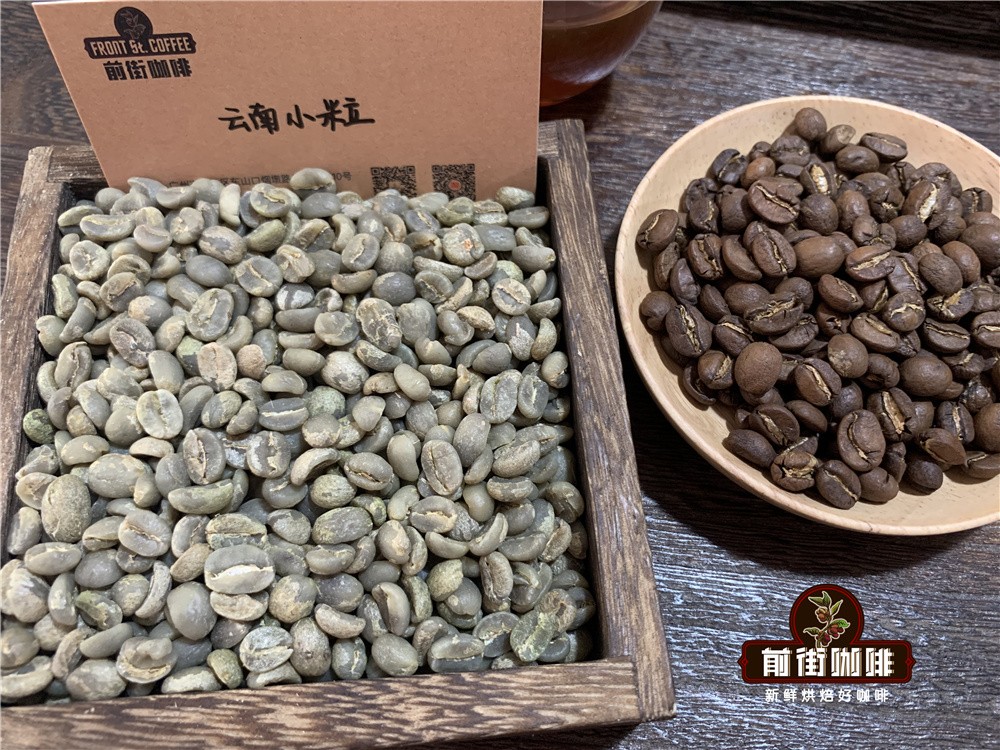
Yunnan coffee has gradually emerged in China's specialty coffee scene in recent years, moving beyond its image as a raw material for instant coffee. With its unique highland terroir and increasingly refined processing methods, it has won the attention of more and more coffee enthusiasts. This article will cover the growing regions, variety characteristics, processing methods, and pour-over extraction techniques of Yunnan small-bean coffee, detailing Front Street Coffee's parameter settings and three-pour method for brewing Yunnan beans, along with flavor descriptions of several Front Street Yunnan coffees, helping you brew a balanced and delicious cup of Yunnan coffee at home.
Chinese coffee and Yunnan coffee are now widely known, though some people feel that Yunnan coffee's flavor is not ideal. Front Street has always believed that coffee from every producing country and every growing region has its own unique flavor personality, and since everyone's taste preferences differ, it is entirely normal for some people to like it and others not.
Although Yunnan coffee can be considered the representative of Chinese coffee, it has only truly entered the public eye in recent years. Many people's understanding of Yunnan coffee remains stuck at the "raw material for instant coffee" stage—even though Yunnan has a century-long history of coffee cultivation, past growing and processing methods were indeed rather extensive. However, as the specialty coffee wave gradually spread to China, the emergence of more and more high-quality coffee beans has allowed Yunnan coffee to slowly secure a place in enthusiasts' hearts, and Yunnan coffee beans can frequently be seen in cafes.
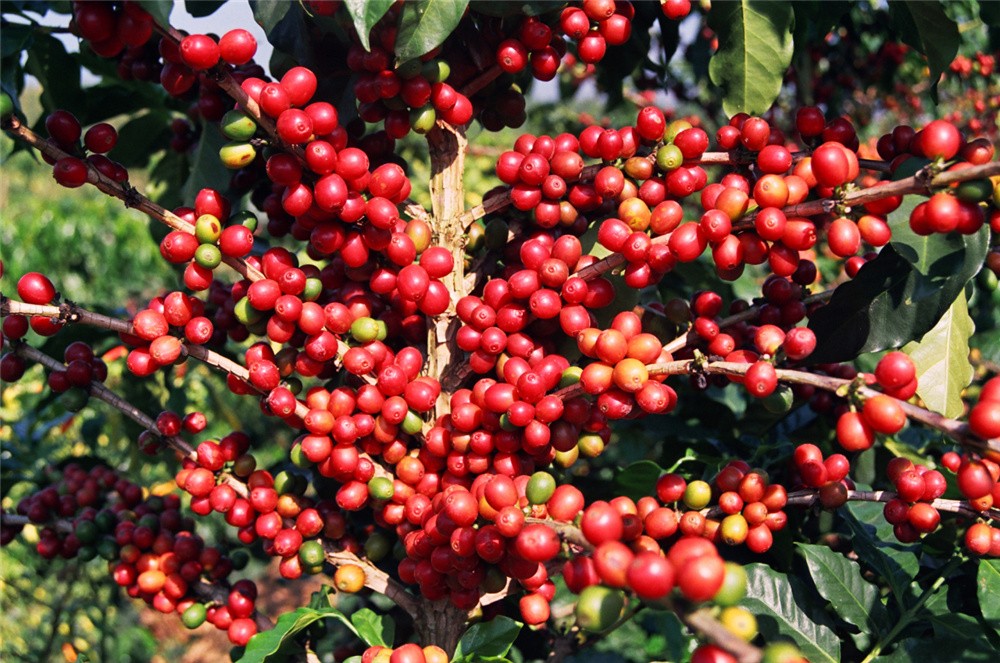
Coffee is essentially an agricultural crop with demanding growing conditions, and its final quality is closely related to the growing environment, climate conditions, cultivation and management levels, and many other factors. Yunnan is China's largest coffee-growing province, located south of the Tropic of Cancer, belonging to a subtropical mountain climate zone, with unique highland red soil that is loose and rich in nutrients, and a mild climate, making it very suitable for coffee cultivation—hence it is also known as a golden growing belt. Western and southern Yunnan lie between 15°N and the Tropic of Cancer, with most areas at elevations of 1,000 to 2,000 meters. The terrain is mainly mountainous and sloped, with pronounced undulation, fertile soil, abundant sunshine, plentiful rainfall, and significant temperature differences between day and night. Front Street believes that it is precisely these unique natural conditions that create the flavor characteristics of Yunnan small-bean coffee: rich and mellow aroma, a mellow flavor that is not overly intense, a full and substantial mouthfeel, and a fruity acidity.
Yunnan Coffee Growing Regions
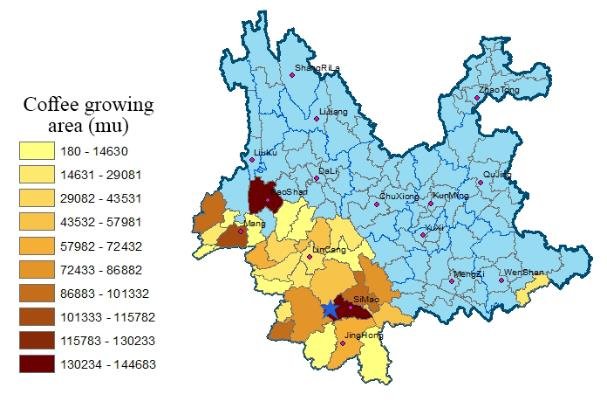
Yunnan's coffee-growing areas are mainly concentrated in the south and west, with Pu'er, Baoshan, Dehong, and Lincang being the better known.
Baoshan:
Small-bean coffee is Baoshan's most representative coffee variety. The region took its first step in coffee cultivation in the late 1950s and soon received positive feedback from London. At the 1980 National Coffee Conference, it was recognized as the "Crown of National Coffee." In December 2010, Baoshan small-bean coffee received A-level certification and passed the procedures of China's National Standards Administration, and is considered a product reflecting China's national geographical indication. The Front Street Yunnan small-bean coffee on Front Street Coffee's bean list comes from Baoshan.
Pu'er:
Pu'er is known as the "City of Tea for a Thousand Years" and is also an important coffee-producing region in China, with the largest growing area, the highest output, and the best quality, as well as a key distribution center for international coffee trade.
Lincang:
Lincang is located in southwestern Yunnan, with the Tropic of Cancer running through its southern part. It borders Pu'er to the east, Dali to the north, Baoshan to the west, and Myanmar to the southwest. It is named for its proximity to the Lancang River and is like a shining pearl on the southwestern border of the motherland. Lincang's year-round average temperature ranges from 16.8°C to 17.2°C, with distinct dry and wet seasons and abundant sunshine.
Front Street Coffee has established its own estate in the Lincang growing region of Yunnan, growing the oldest Arabica variety—Typica. Then in 2021, Front Street Coffee launched its first self-produced coffee bean—Front Street 2013 Sun-Dried Typica Coffee.
Yunnan Coffee Bean Varieties
Currently, the coffee beans grown in Yunnan are mainly the Catimor variety, with a small amount of Typica as well. Catimor is a second-generation hybrid developed by the Portuguese by crossbreeding Brazilian Caturra with Timor, possessing strong disease resistance and high-yield characteristics. Its vitality and yield surpass Yunnan's ancient tree variety Typica, though its flavor performance is slightly inferior.
Yunnan Coffee Bean Processing Methods
Because Yunnan has a year-round rainy season and the climate is unstable, Yunnan coffee beans mostly use the washed processing method, though there is also sun-dried processing. On Front Street's bean list, there are Front Street Washed Yunnan Small-Bean Coffee and Front Street Sun-Dried Yunnan Catimor Coffee; in addition, there is Front Street 2013 Sun-Dried Typica Coffee produced by Front Street Coffee's own estate.
Front Street's Parameters for Brewing Front Street Yunnan Coffee:
Front Street believes that Yunnan coffee's flavor profile is relatively neutral, meaning it possesses acidity, sweetness, and bitterness simultaneously. Therefore, a medium roast is chosen to highlight the chocolate aroma while retaining some acidity. In cupping, Front Street tasted the Yunnan small-bean everyday coffee as presenting nutty and herbal aromas, brown-sugar-like sweetness, and plum-like acidity, with a balanced mouthfeel. The sun-dried Front Street 2013 Typica coffee has a higher fruity and melon-like sweetness, a black-tea-like richness, accompanied by the weight of chocolate, with an overall clear flavor and a clean finish.
Based on Yunnan coffee's balanced and neutral profile, Front Street uses a medium water temperature of 88°C. Water that is too hot tends to produce burnt and bitter flavors, while water that is too cool tends to result in under-extraction. Compared with other conical drippers, the V60 dripper has a larger outlet diameter, with the top and bottom connected by spiral flow-guiding ribs, making it easier for steam to escape during extraction, thereby enhancing flavor layering.
Front Street Coffee believes that to brew a good pot of coffee, you mainly need to focus on four aspects: water temperature, grind size, coffee-to-water ratio, and brewing technique.
Front Street's Three-Pour Brewing Method for Yunnan Coffee:
Using a V60 dripper allows you to obtain a richer coffee flavor. Water temperature 88°C, coffee-to-water ratio 1:15, coffee dose 15g, grind size with a 75% pass rate through a Chinese No. 20 standard sieve.
First pour: Blooming (to help degas)
First, rinse the V60 dripper to make the filter paper fit the dripper more closely, pour out the water in the server, and add 15g of coffee grounds, then bloom with 30g of water for 30 seconds. Many coffee enthusiasts don't understand why pour-over coffee needs blooming. Actually, blooming is necessary because coffee beans undergo a series of chemical reactions and physical changes during roasting from green beans to roasted beans. When roasting reaches a certain degree, a large amount of gas (most of which is carbon dioxide) accumulates inside the coffee beans.
Generally speaking, the fresher the coffee beans and the closer to the roast date, the more bubbles emerge during blooming. Dark-roasted beans also release more gas during blooming than light-roasted beans. Front Street Coffee's coffee beans are all freshly roasted, so customers are generally advised to rest the beans for three days first to let the coffee beans release carbon dioxide, thus avoiding instability and under-extraction during brewing.
After the gas is released during blooming, the coffee particles can absorb water evenly, which helps the uniformity of subsequent extraction. A good bloom allows the coffee grounds to degas quickly, fully, and evenly, while also allowing the coffee grounds to fully and rapidly contact water, helping the coffee grounds be evenly extracted. These are precisely the purpose and significance of blooming in pour-over coffee.
Second Pour
After blooming for 30 seconds, proceed with the second pour, starting from the center and pouring in circles with a small stream until the water volume reaches 125g, then stop. To make the water stream's penetrating force more concentrated, the circular movement range should be small—about the size of a 1-yuan coin—and then spiral outward. From the second pour onward, pay attention to the water volume, trying not to exceed the height of the coffee bed. That is, when the water stream circles to near the filter paper, you can stop pouring outward.
Third Pour
When the coffee bed has dropped to half the height of the dripper, pour the second stage of water using the same technique until the water volume reaches 225g. Once all the dripping is complete, remove the dripper.
From the third pour onward, observe the rate at which the water level drops. Likewise, start pouring in circles from the center, and do not let the water volume exceed the height of the coffee bed. At this point, you will also observe that the foam ratio has covered the surface. The third pour needs to increase the tumbling of the coffee particles, getting all the settled particles to move so that soluble substances can be dissolved out.
The tumbling particles will gradually come to rest when you stop adding water. At this point, you must rely on the flow rate created by the dropping water level to create friction between the coffee particles. So once you stop adding water, the coffee particles will sink downward, causing clogging, so pay special attention to the rhythm of adding water. If you pause the water too many times, it is equivalent to letting the coffee particles soak in water the whole time, and as a result, the tail-end extraction will produce astringency and off-flavors.
Time from the start of pouring, with an extraction time of 2 minutes 00 seconds. Next, pick up the entire cup of coffee and swirl it to mix evenly, then pour it into a cup and enjoy.
[Front Street 2013 Sun-Dried Typica Coffee Flavor] Heavy mouthfeel, prominent sweet-and-sour sensation, with citrus and berry notes, a hint of fermented wine aroma, caramel-like sweetness, creamy finish, and black tea character.
[Front Street Washed Yunnan Small-Bean Coffee Flavor] Herbal, nutty aroma, chocolate, caramel.
[Front Street Yunnan Sun-Dried Catimor Coffee Flavor] Expression: nuts, chocolate, spices, caramel, plum.
Front Street's Coffee Brewing Suggestions:
Regarding coffee brewing, Front Street has always believed that the freshness of coffee beans is an important factor affecting flavor. The coffee beans shipped by Front Street Coffee are all within 5 days of roasting, because Front Street deeply understands that freshness has a tremendous impact on flavor. Front Street's roasting philosophy is "Freshly Roasted Good Coffee," so that every customer who places an order can receive the freshest state when they get their coffee. The bean resting period is about 4 to 7 days, so by the time customers receive it, it is exactly at its best flavor stage.
Of course, some customers need Front Street to help grind the coffee, which is also no problem, but Front Street needs to remind them: once coffee beans are pre-ground into powder, there is no need to rest the beans anymore. This is because during transportation, the pressure from carbon dioxide inside the packaging also makes the coffee flavor smoother, so once you receive the ground coffee, you can brew it immediately. However, ground coffee needs to be brewed promptly, because after coffee grounds contact air, they oxidize relatively quickly—that is, the flavor dissipates faster, and the coffee's overall performance is not as good. Therefore, Front Street recommends buying whole beans and grinding fresh before brewing, so you can better taste the coffee's flavor.
The above content is compiled by CoffeeHunters, a coffee news website.


