







How Crema and Extraction Shape Coffee Quality in Espresso
Crema forms because water at roughly 9 bars of pressure is pushed through the coffee bed, carrying soluble material out of the grounds and emulsifying oils and gases into a golden layer on top. A double portafilter typically takes 19 to 20 grams of grounds; a single takes 13 to 14. Crema appearance reflects both bean quality and barista technique.
Espresso is often used as a gauge of coffee quality, so tasting it well matters. A practical approach is three steps: smell the aromatics first, then observe the crema's color and thickness, then taste. A specialty blend of Brazilian and Colombian beans, for example, yields medium-thickness crema with dark chocolate, cocoa, and caramel notes that suit newcomers to Italian-style coffee.
Espresso has long been hailed as the "soul of coffee," yet its intense flavor often intimidates first-time tasters—though once they adapt, they discover its unique charm. This small cup of coffee is not just a beverage but also a litmus test for coffee quality and barista skill. This article starts with Front Street Coffee's specialty blend to analyze Espresso extraction parameters, the formation principle of the golden Crema on its surface, and share practical methods for appreciating espresso through the three steps of smelling, observing, and tasting. Whether you are a beginner just getting into Italian coffee or an enthusiast looking to refine your tasting skills, you will find clear guidance here.
For more specialty coffee knowledge, please follow: Front Street Coffee (Frontsteet Coffee)
Espresso has long been hailed as the "soul of coffee." However, its strong, heavy taste often makes it hard for first-time tasters to adapt at first. But as long as you gradually get used to this style, you will instead appreciate its unique appeal. At the same time, Espresso is also a key beverage for measuring coffee quality and barista craftsmanship.
Since Espresso can win the favor of so many people, it naturally has its outstanding qualities. Below, Front Street Coffee (FrontStreet Coffee) will guide everyone to get to know Espresso.
| Espresso
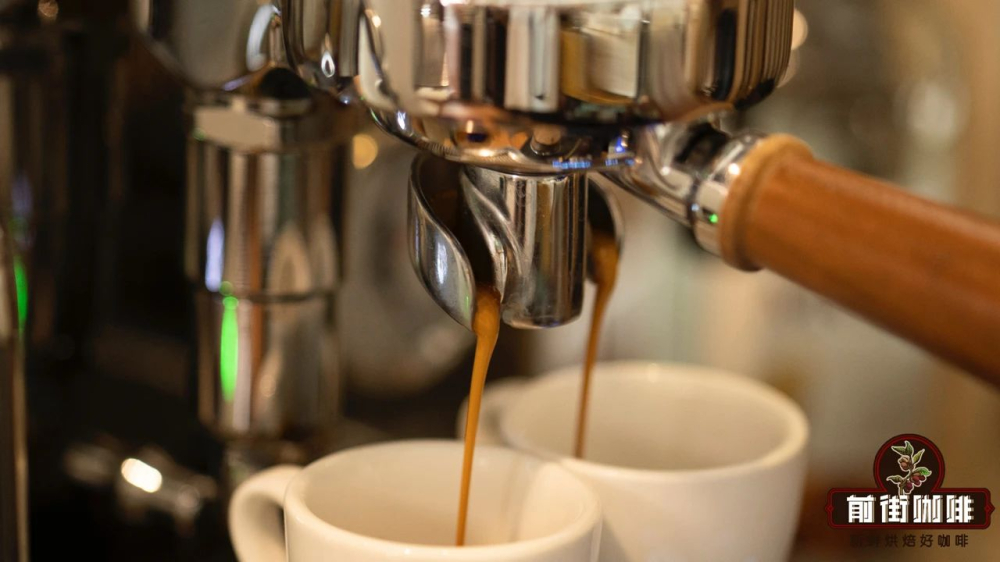
With high temperature and high pressure, combined with an appropriate amount of coffee grounds, you can get a cup of Espresso.
Take Front Street Coffee's [Specialty Blend] as an example. This recipe is made from a combination of Brazilian and Colombian beans. The espresso it produces has a medium thickness of crema, with aromas of dark chocolate, cocoa, and caramel, making it very friendly for those new to Italian coffee. You can purchase it at Front Street's Taobao store or Front Street's Tmall flagship store.
Typically, a double portafilter uses 19 to 20 grams of grounds, while a single portafilter uses 13 to 14 grams of grounds, extracted at 9 atmospheres (i.e., 9Bar) to make the desired Espresso.
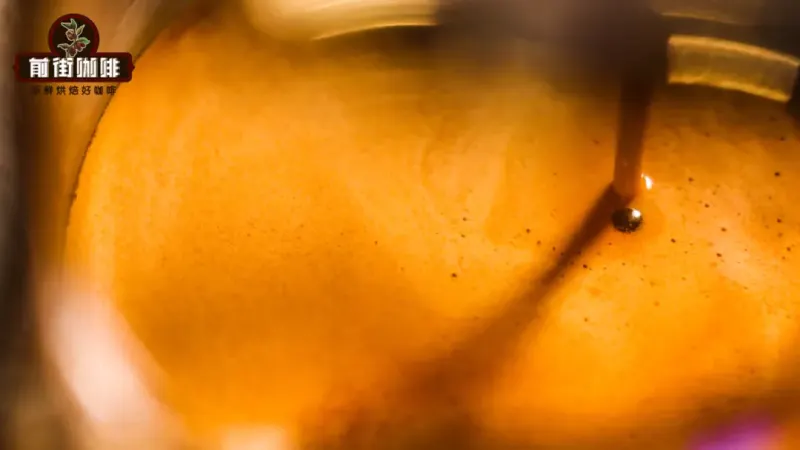
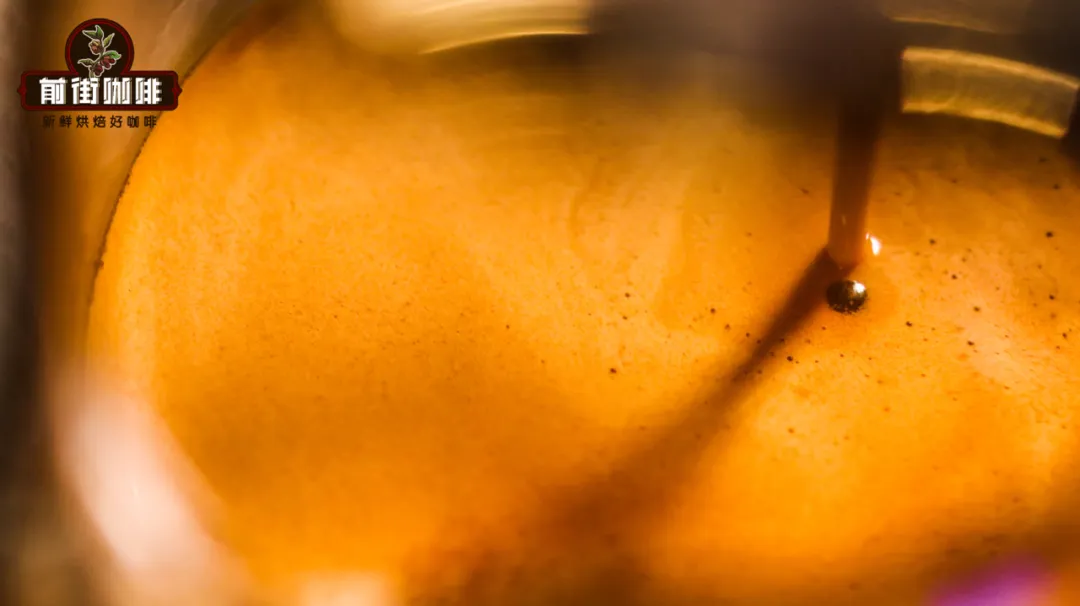
Freshly extracted Espresso has a beautiful golden layer of crema floating on its surface. This layer of crema is usually called "Cream." Its appearance is directly related to that 9Bar of pressure: after water is heated and pressurized, it carries soluble substances out of the coffee grounds layer. This process emulsifies the natural fats and oils in the coffee. At the same time, freshly roasted coffee beans contain carbon dioxide, and during Espresso preparation these gases dissolve into the coffee liquid under pressure.
Many people particularly value that layer of Cream when drinking Espresso, thinking that the thicker the Cream, the better the beans. Indeed, the thickness of the Cream is related to the freshness of the beans, but one point needs attention—Robusta beans can also produce a very thick Cream.
| How to appreciate Espresso?
*Smell
When you get a cup of Espresso, the first thing to do is usually smell its aroma. You will perceive notes of nuts and caramel, and if the roast level is not too dark, you may even catch fruity, sweet-and-sour aromas.
*Observe
After smelling the aroma, next observe the color and thickness of the Cream, because from these two points you can roughly judge how well this cup of coffee was made.
If the color is light and the crema is thin, it can basically be judged as under-extraction.
If the color is very dark and the surface crema has an inconsistent color, it can be judged as over-extraction.
If spots appear on the surface crema, it can be judged as channeling causing partial over-extraction.
*Drink
Finally comes the tasting stage. How should a cup of Espresso be drunk? The first sip is to taste the Cream, the second sip is to taste the liquid mixing Cream and espresso, and the third sip is the coffee itself.
In this way, you can perceive the flavors of fruity acidity, nuts, chocolate, and caramel.
Different places also have their own ways of drinking it: some serve it with a glass of ice water; some place a sugar cube on top and watch it slowly sink and dissolve; and some add milk, which turns it into a latte, cappuccino, macchiato...
Espresso, with its unique mouthfeel and flavor, always leaves a deep impression. Due to the characteristics of its preparation method, its flavors, whether good or bad, are amplified, so the quality requirements for the coffee beans themselves are also higher. If you have the chance, why not order a cup of Espresso and experience the charm hidden in this small cup of coffee.
The above content is compiled by CoffeeHunters, a coffee news website.


