







How Did Rwanda's Coffee Industry Rebuild After 1994?
Rwanda grows coffee at high altitude on volcanic soil in the Land of a Thousand Hills, yet its coffee industry survived genocide, colonial suppression and a sharp global price crash. In 1994 the genocide killed nearly one million people while world coffee prices fell, and the sector later recovered partly through coffee cultivation, which helped rebuild lives and the wider economy.
Rwandan coffee is mainly Bourbon, and more than ninety percent is processed by the washed method, producing floral notes, citrus and berries. German missionaries first brought coffee to the country in the early 20th century, and Rwanda was later colonized by Germany and then Belgium. Gicumbi coffee and Red Bourbon washed beans are the examples available, with the article also covering growing regions and pour-over parameters.
Although Rwanda is located inland in Africa, it enjoys unique coffee-growing conditions such as high altitude, volcanic soil, and abundant sunshine, and is known as the "Land of a Thousand Hills." However, the country's coffee industry has endured severe trials including genocide, colonial suppression, and sharp global price crashes. Today, Rwandan coffee is mainly of the Bourbon variety, with over ninety percent processed by the washed method, presenting fresh flavors of floral notes, citrus, and berries. Front Street Coffee takes you through Rwandan coffee's historical background, producing regions, variety characteristics, and pour-over parameters, and recommends the Gicumbi coffee and Red Bourbon washed beans available at Front Street, exploring how this land is rebuilding lives and the economy through coffee.
For more specialty coffee knowledge, please follow: Front Street Coffee ( Frontsteet Coffee )
Today, Front Street wants to introduce everyone to Rwanda's coffee. Rwanda is located in central Africa, a landlocked country with no coastline, neighboring coffee powerhouses such as Ethiopia. Logically, surrounded by major coffee-producing regions, Rwanda's coffee industry should be decent. Front Street will now briefly discuss the reasons behind this.
According to information Front Street has gathered, a great tragedy occurred in Rwanda in 1994. A genocide broke out between the Hutu and Tutsi ethnic groups, resulting in nearly 1 million deaths. At the same time, global coffee prices plummeted sharply. Under this double blow, Rwanda's coffee industry suffered severe damage.
After the genocide, Rwanda lost a large workforce, with mostly women and children remaining. At the time, the country's economy was extremely difficult. To boost the economy, given the national conditions, the only option was to rely on coffee cultivation to improve people's lives. Front Street has learned that coffee production indeed played a positive role in Rwanda's overall economic recovery.
Although Rwanda is a well-known coffee-producing region on the African continent, Rwandan coffee available on the market is scarce. Front Street has only listed one Gicumbi coffee, and the reasons behind this are quite complex. In the early 20th century, Rwanda was colonized by Germany and then Belgium. German missionaries were the first to introduce coffee to this African hinterland. Cultivation gradually expanded from the earliest Kivu region to the whole country, and most Rwandan coffee is a Bourbon variant. At the time, the Belgian government strictly restricted the quality of Rwandan coffee exports, forcing Rwanda's coffee industry into a "high yield, low quality" cheap coffee situation. At that time, there were almost no washing stations in the country for truly processing coffee.
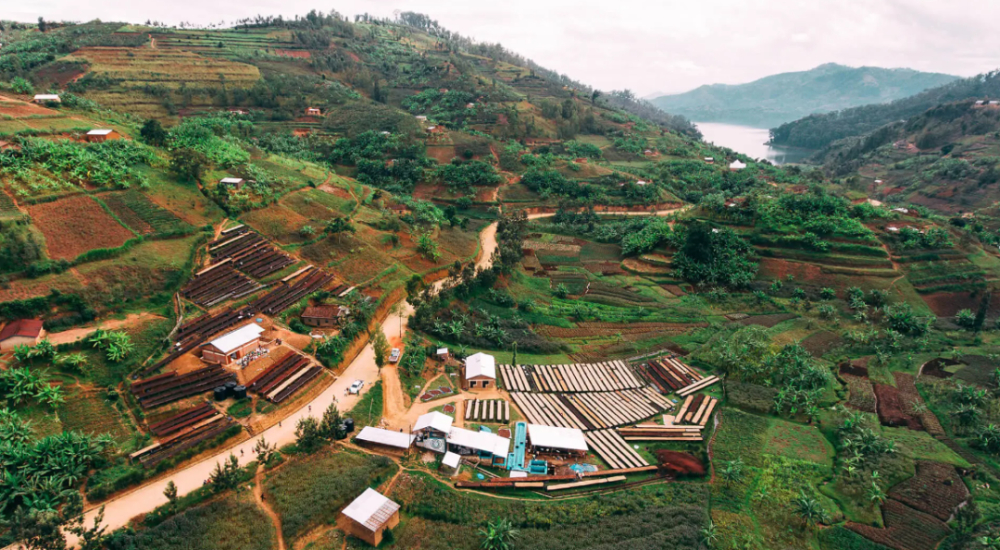
It was not until Rwanda gained independence and established its first official coffee organization, OCIR, that coffee bean production gradually received attention. Rwanda has a temperate and tropical highland climate, with superior coffee-growing conditions such as high altitude, volcanic soil, and abundant sunshine. Many coffee trees are planted on mountain slopes at altitudes of 1,700 to 2,000 meters, which is why Rwanda is also called the "Land of a Thousand Hills."
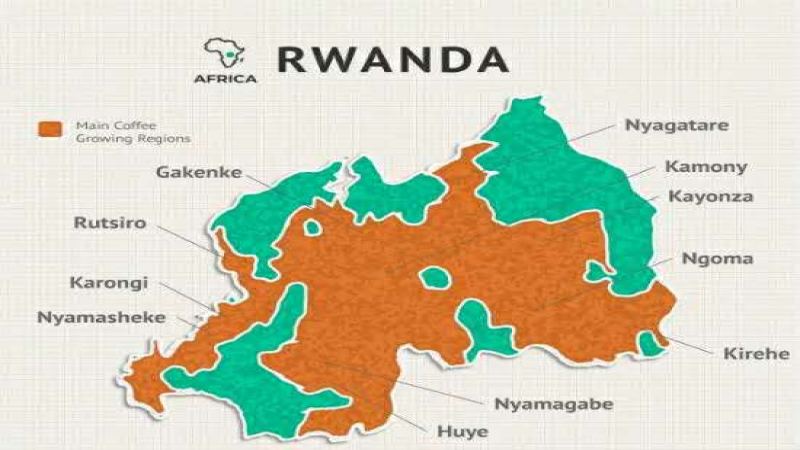
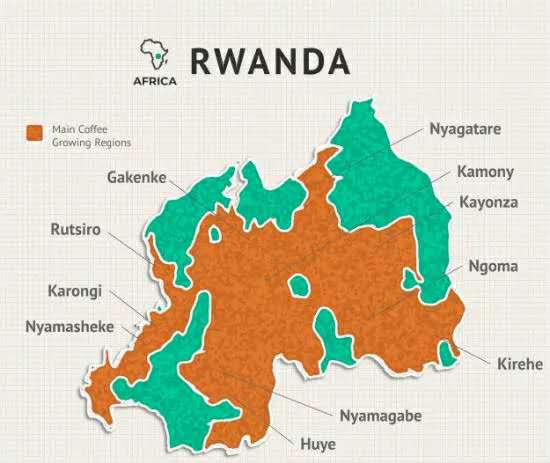
The producing regions of Rwandan Arabica coffee beans are mainly concentrated in the south and west. The high-altitude Huye mountainous area and Nyamagabe region in the south produce coffee beans with floral and citrus flavors; the Nyamasheke region by Lake Kivu in the west produces high-quality coffee with a rich mouthfeel and aromatic, juicy character. The main producing regions include: Southern region: Huye, at higher altitude, the coffee has floral notes and citrus acidity. Western region: Lake Kivu, the coffee has a richer mouthfeel with a fruity juice-like quality. Eastern region: Ngoma Lakes, with chocolate and fruity flavors. Northern region: with citrus, nut, and caramel flavors. The Gicumbi coffee listed by Front Street comes from the Nyamasheke region by Lake Kivu in the west, and is mainly a Bourbon mixed variety.
Over 90% of Rwandan coffee varieties are the early-introduced Bourbon and its mixed varieties. This type of coffee tree has relatively good disease resistance and can withstand general natural disasters. Bourbon coffee was initially popular throughout Latin America, but due to poor disease resistance, the number of countries cultivating it gradually decreased. Several Latin American Bourbon coffee beans currently sourced by Front Street Coffee (FrontStreet Coffee) include Brazil Red Bourbon, Brazil Yellow Bourbon, and Colombia Pink Bourbon. In comparison, Rwandan Bourbon still has advantages, which is one reason Front Street Coffee (FrontStreet Coffee) lists Rwandan coffee beans.
The main coffee varieties grown in Rwanda are Red Bourbon, Caturra, and Catuai, among which Bourbon is grown the most, accounting for over ninety percent of Rwanda's coffee production. Bourbon was initially introduced from Central America to Puerto Rico, then brought to the Republic of the Congo in the 1930s, and only introduced to Rwanda about 20 years later, becoming the main locally grown variety.
Front Street often shares about Bourbon because many varieties in the world evolved from or are related to Bourbon. It belongs to Arabica and has excellent flavor performance. However, like Typica, although Bourbon has outstanding flavor, it has low disease resistance and low yield, so many producing countries that originally grew Bourbon as their main variety later switched to higher-yielding, easier-to-grow varieties such as Caturra and Catuai.
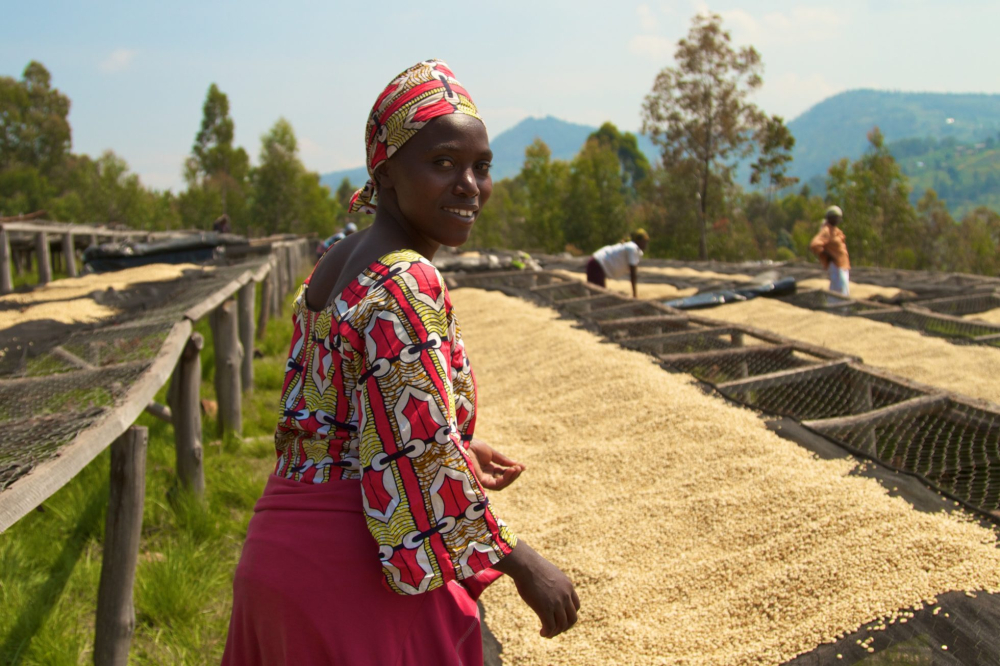
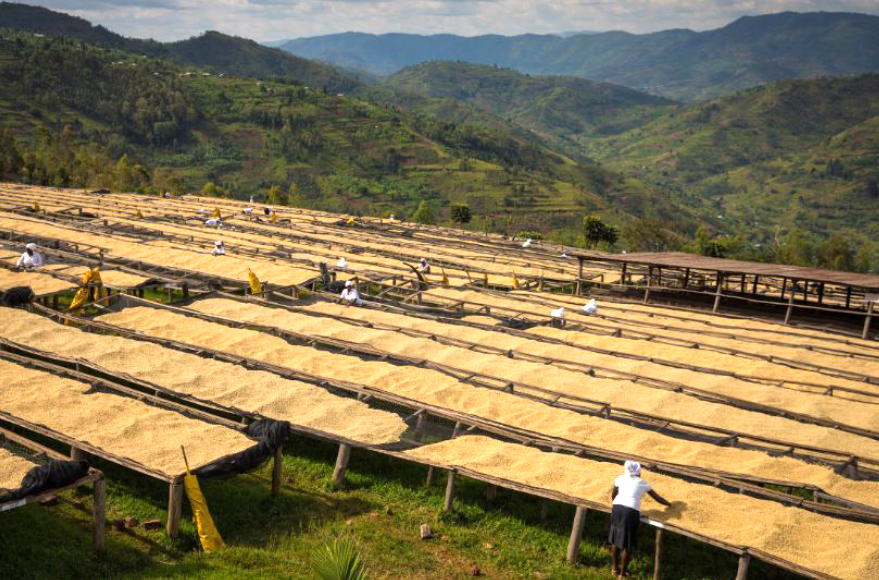
Front Street believes that the processing method used for a bean is very important. Rwandan coffee is mainly processed by the washed method. The general process is as follows: the harvested coffee cherries are floated to remove less dense cherries, then the skin and pulp are removed, and the coffee beans with mucilage are left to ferment in water tanks. Fermentation is to avoid damaging the coffee's flavor; after fermentation is complete, the mucilage layer is washed off with clean water, and finally the clean coffee beans, still in parchment, are sent for drying. Some coffee is dried on raised beds for 15 to 22 days, bringing the green bean moisture content down to about 11% to 13%.
When Front Street Coffee (FrontStreet Coffee) recommends coffee beans from a certain producing region, it always recommends washed beans first, because washing best reflects the essential flavor of coffee, and through washed beans one can understand the flavor characteristics of that region. Rwanda uses the washed processing method as its main processing method, which Front Street Coffee (FrontStreet Coffee) greatly appreciates and considers a wise choice.
In order to highlight Rwanda's fresh acidity, rich mouthfeel, floral notes, and citrus flavors, Front Street Coffee (FrontStreet Coffee) uses a medium-light roast, because the darker the roast, the more fruit acidity is lost.
Washed processing method — this Rwandan Red Bourbon coffee bean from Front Street Coffee (FrontStreet Coffee) is washed processed. Washed processing steps: after harvesting, select high-quality, sufficiently ripe cherries, complete depulping, naturally ferment for 12 to 24 hours, wash clean, soak in water for 24 hours, wash clean again, and finally sun-dry.
[Front Street Coffee (FrontStreet Coffee) Brewing Parameters]
Dripper: Hario V60 Water temperature: 90℃ Dose: 15 grams Coffee-to-water ratio: 1:15 Grind size: EK43s setting 10 (80% passing through China standard No. 20 sieve)
Brewing suggestion: Front Street Coffee (FrontStreet Coffee) uses staged extraction, blooming with 30 grams of water for 30 seconds, then pouring in a slow circular stream up to 125 grams for the first stage; when the water level is about to expose the coffee bed, continue pouring to 225 grams and stop; when the water level is about to expose the coffee bed again, remove the dripper. (Timing starts from the beginning of the bloom.) Extraction time is 2'00".
Flavor description
[Rwanda] Floral and berry aromas, with obvious citrus, berry, and plum on the palate, nuts in the middle, and a caramel sweetness in the finish.
The above content is compiled by CoffeeHunters, a coffee news website.


